
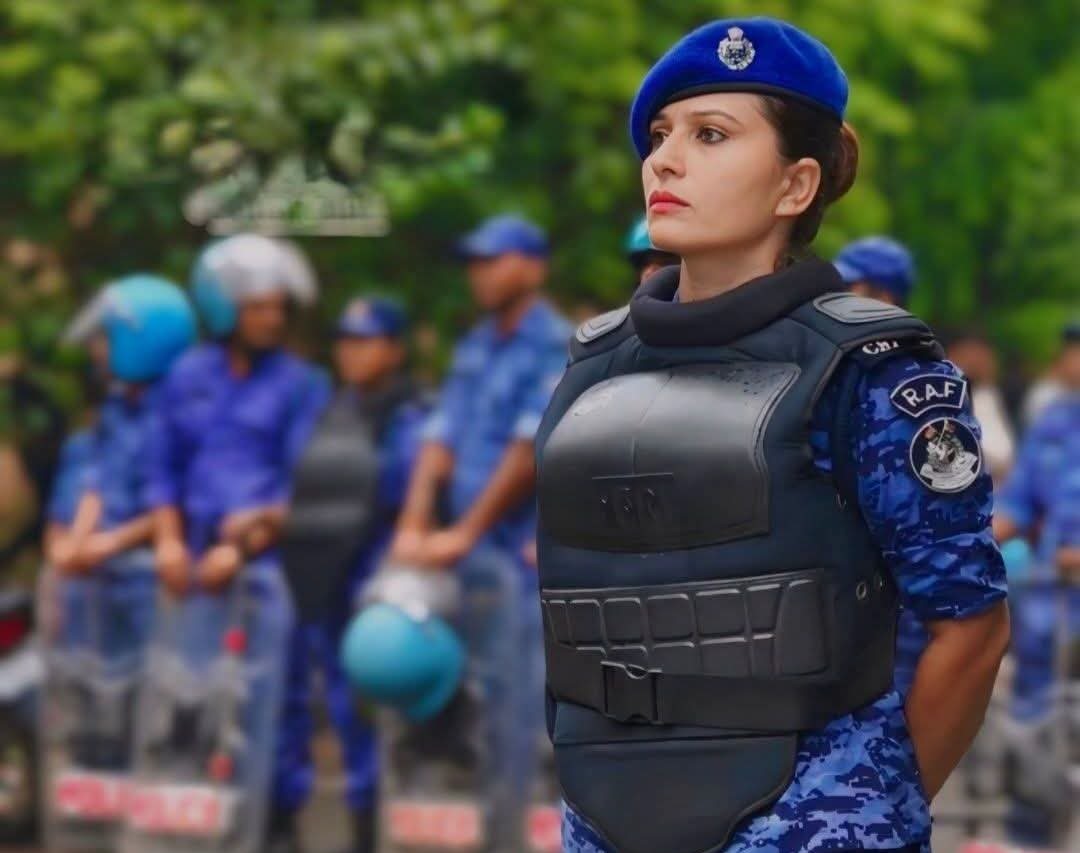
 Assistant Commandant Sonia Sehrawat. (Photo: X)
New Delhi: An Instagram story posted by a serving paramilitary officer has become the unlikely flashpoint of a national argument over political neutrality in India’s security forces. The issue erupted days after a protest march in the capital ended in lathi charges, tear gas and dozens of injuries.
Sonia Sehrawat, an assistant commandant with the Central Reserve Police Force’s Rapid Action Force (RAF), was deployed in central Delhi on July 20, 2026, when thousands of demonstrators from the Cockroach Janata Party (CJP) attempted to march from Jantar Mantar to Parliament.
The march, framed by its organizers as a peaceful protest, descended into chaos after police moved to block the crowd, deploying smoke bombs and tear gas and resorting to baton charges. Several students were injured in the clashes and remain under hospital treatment, and Delhi Police have registered multiple FIRs as investigations continue.
Two days later, on July 22, screenshots of an Instagram story attributed to Sehrawat’s verified account began circulating widely. One image showed an upturned dead cockroach captioned with a jibe suggesting the protesters were unable to organize themselves yet wished to reform the country.
Further stories referenced picking fights only in retaliation and offered a sardonic gloss on constitutional free-speech provisions. The posts, since deleted, were criticized by Trinamool Congress MP Mahua Moitra, who shared a screenshot of the story on social media. It drew the controversy into the political mainstream.
The CJP itself responded pointedly on X, accusing the officer of dehumanizing peaceful protesters and defiantly reclaiming the cockroach jibe as a symbol of resilience.
An officer with a public profile
Sehrawat’s prominence did not begin with the row. Long before the controversy, she had built a substantial online following – reports put her Instagram audience at more than 600,000 – through fitness content, dance reels and glimpses of her professional life.
One widely viewed reel traced her journey from what she described as an ordinary upbringing to a commissioned officer, drawing on footage from her training at the CRPF’s officer academy.
According to her own account in an earlier podcast interview, Sehrawat grew up in Haryana, where prevailing social attitudes often constrained opportunities for girls, and has said that experience motivated her to pursue a career in the armed forces and push back against gender stereotypes.
She began with the National Cadet Corps before clearing the Union Public Service Commission’s Central Armed Police Forces examination, one of the more demanding recruitment routes into the Group A cadre of India’s paramilitary organizations and went on to join the CRPF.
She has also spoken of a serious training injury requiring 52 stitches and of an operational posting in Jammu and Kashmir that she credits with sharpening her leadership under pressure.
Speaking separately to a national daily about the July 20 clashes, Sehrawat defended the personnel under her command against allegations of assaulting women during the crackdown, saying her jawans were trained to protect rather than harm women and had not been responsible for the reported mistreatment.
Disciplinary questions and a wider debate
The episode has reportedly stirred unease within the CRPF and RAF ranks themselves. A CRPF officer, speaking to a news outlet on condition of anonymity, said such posts risked damaging the reputation of forces meant to function as professional, apolitical units, and suggested that overtly political commentary from personnel involved in an active law-and-order operation ought to be treated as a disciplinary matter. It remains to be seen whether the force's leadership will act on that view.
More broadly, the row has reopened a long-running argument about the extent to which serving government officials, and particularly uniformed personnel, should be visible on social media at all.
Conduct rules governing the paramilitary and civil services generally require officers to remain politically neutral and to avoid public commentary that could be read as partisan, especially where it touches on operations they are themselves executing.
Sehrawat’s case, given her substantial following and the timing of her remarks, has been cited by critics as a test of how seriously those rules are enforced in the age of Instagram Stories and viral reels.
Whatever view one takes of the underlying protest, the controversy has, for now, made Sehrawat one of the most searched paramilitary officers in the country – for reasons rather different from the fitness and motivational content that first built her online following.
Follow us on social media for quick updates, new photos, videos, and more.
X: https://x.com/indiasentinels
Facebook: https://facebook.com/indiasentinels
Instagram: https://instagram.com/indiasentinels
YouTube: https://youtube.com/indiasentinels
© India Sentinels 2026-27