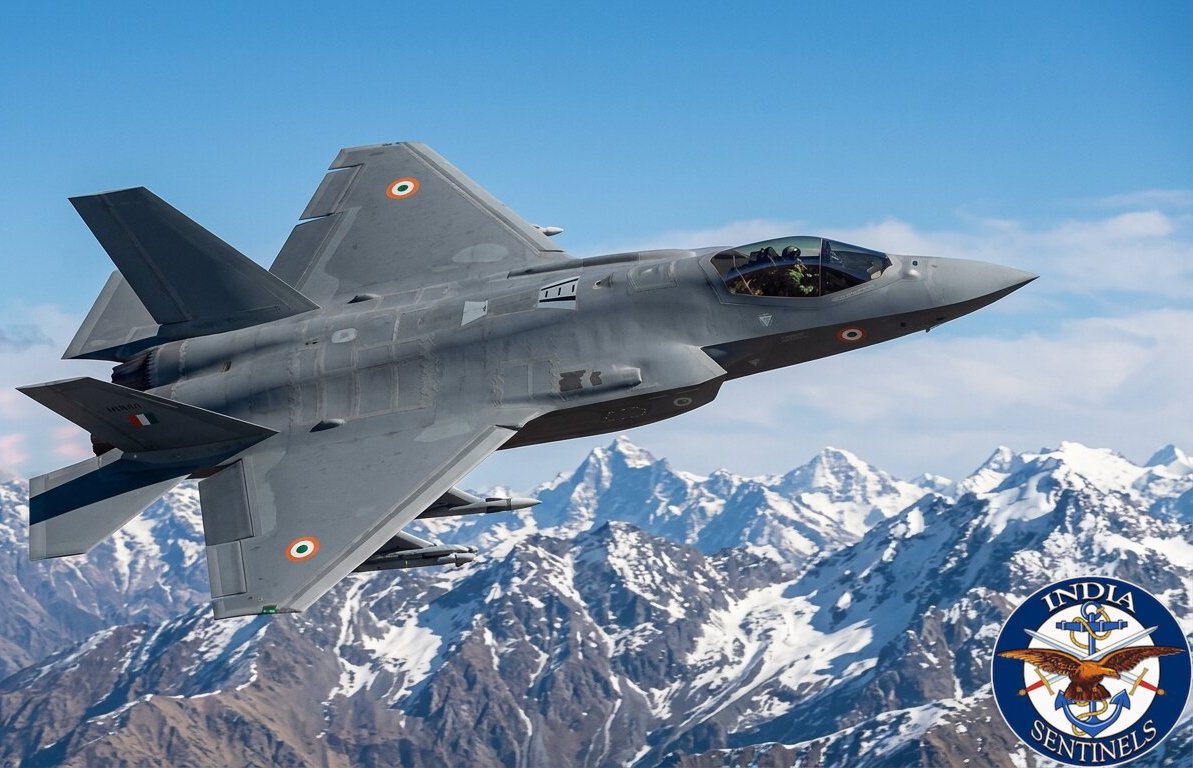
 Illustration for representation. (© India Sentinels 2026–27)
New Delhi: Rolls-Royce has formally proposed to co-develop a purpose-built jet engine for India’s fifth-generation stealth fighter programme and to set up a dedicated aero gas-turbine complex on Indian soil. This move could mark a major shift in India’s long pursuit of propulsion self-reliance.
The company’s executive vice-president for transformation in India, Sashi Mukundan, told Times of India that Rolls-Royce, backed by the UK government, has offered to build the complex with a complete transfer of technology. The proposal is directed at developing an engine to power the advanced medium combat aircraft (AMCA) – the Defence Research and Development Organisation (DRDO) and Aeronautical Development Agency’s (ADA) flagship fifth-generation stealth fighter project.
While the initial AMCA-Mk1 variant is expected to be powered by the American GE F414 engine, the more advanced AMCA-Mk2 will require a new, more powerful powerplant in the 110–130kN thrust class to realise its full performance potential. It is for this higher-end variant that Rolls-Royce is pitching its offer.
Read also: Govt issues proposal requests for AMCA project to private parties bypassing HAL
Rolls-Royce has confirmed that the engine being offered is an entirely new design – not derived from any existing engine in the company’s portfolio – and will provide India with a scalable propulsion architecture capable of supporting future upgrades. The engine’s thrust specifications – 110kN wet thrust, with growth potential to 120–130kN – are distinct from the powerplant Rolls-Royce is developing for the UK-Italy-Japan Global Combat Air Programme (GCAP). The company has targeted ground trials by 2032 and a first flight by 2034.
Mukundan was explicit about the intellectual property dimension of the offer. He said the entire engine design activity could be conducted in India, with all newly generated intellectual property jointly owned with India – granting New Delhi the freedom to independently upgrade, adapt, and develop future engine variants without external restrictions. This offer of joint IP ownership goes further than what American competitor GE has put on the table: GE has proposed an enhanced version of its F414, but has so far withheld full technology transfer.
The Rolls-Royce proposal is backed by the UK government under the Defence Partnership–India (DP-I) initiative, announced at Aero India 2025. At that time, Alex Zino, the company’s executive vice-president for business development and future programmes, told Business Standard that Rolls-Royce is prepared to “co-design and co-develop the engine in India, for India,” with full transfer of engine “know-how and know-why”. He added that the offer extends beyond the AMCA programme itself, with the aim of building an aerospace ecosystem capable of supporting India’s future requirements. The company is awaiting a formal request for proposal (RFP) from the Indian government before the next steps can be defined.
Rolls-Royce has a longstanding presence in India and maintains joint ventures with Hindustan Aeronautics Limited (HAL). The company has previously powered Air Force aircraft including the SEPECAT Jaguar, giving it institutional familiarity with India’s military aviation ecosystem.
Three-way contest
Rolls-Royce is not the sole contender. France’s Safran has offered a joint development programme based on technology derived from the M88 engine used in the Rafale and has promised 100 per cent technology transfer, including full intellectual property rights, with no export restrictions. Safran’s pitch is strengthened by its existing relationship with the Air Force, which operates the Rafale fleet powered by M88 engines. GE, meanwhile, offers developmental risk reduction through an evolutionary approach using the F414’s proven architecture but remains less forthcoming on technology transfer – a sticking point for New Delhi.
DRDO chief Dr Samir V Kamat, speaking at Aero India 2025, confirmed that discussions are ongoing with all three companies and indicated that a decision was expected by the end of 2025. No formal selection has been announced as of publication.
India’s engine deficit
The Rolls-Royce offer arrives against the backdrop of one of India’s most stubborn defence technology shortfalls – the inability to produce a combat-ready indigenous jet engine.
The challenge is not new. India’s first indigenous fighter, the HAL HF-24 Marut, which flew in the 1960s and 1970s, failed to achieve its potential as a supersonic combat aircraft for want of an adequate engine.
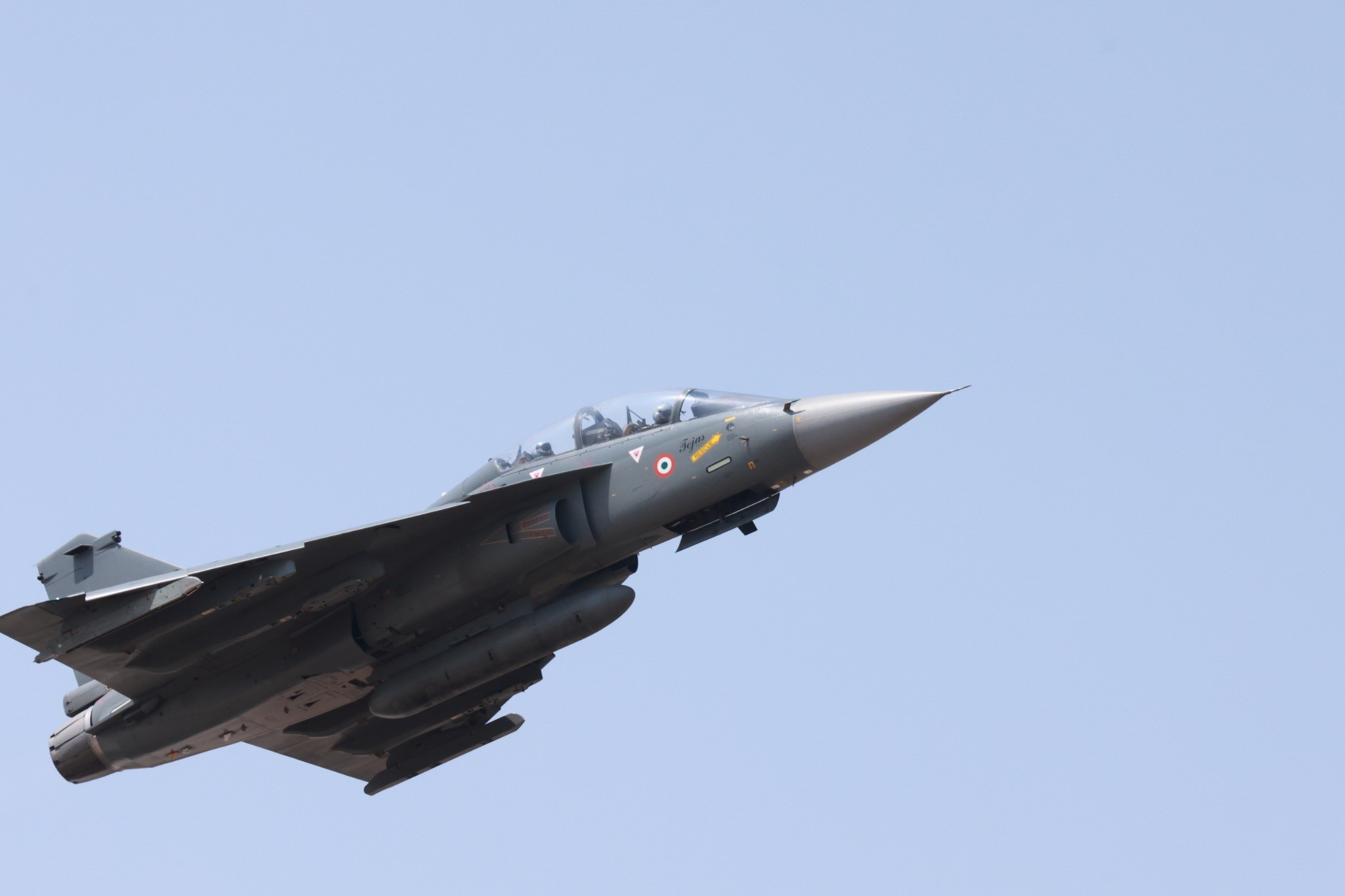
In 1986, DRDO’s Gas Turbine Research Establishment (GTRE) in Bengaluru was tasked with developing the Kaveri engine to power the then-nascent light combat aircraft (LCA) Tejas. GTRE developed nine prototype Kaveri engines and four core variants that collectively accumulated 3,217 hours of testing, including trials in Russia. Despite the effort, the programme failed to meet the required parameters. Instead of the specified wet thrust of 81kN, the Kaveri produced only 70.4kN – a shortfall that disqualified it from operational use.
The Comptroller and Auditor General’s 2011 report was unsparing: it found that GTRE had been unable to deliver a serviceable engine despite a cost overrun of 642 per cent and a delay of approximately 13 years. In September 2008, the Kaveri was formally removed from the Tejas programme. The Tejas-Mk1 and Tejas-Mk2 subsequently adopted the American GE F404 and GE F414 engines, respectively. India had built a competitive fighter airframe – but lacked the engine to drive it.
The Kaveri has since found a secondary role in a non-afterburning configuration, with DRDO exploring its potential for unmanned aerial vehicles, particularly the Ghatak stealth drone programme.
The AMCA
The AMCA developed under the Atmanirbhar Bharat (self-reliant India) initiative, represents India’s most credible attempt to break from this cycle of dependence. Initial prototypes will use foreign engines, but the co-developed 110kN-class powerplant – whichever partner is ultimately selected – is expected to power future variants and reduce reliance on external suppliers for one of the most strategically sensitive components in modern air power.
The choice between Rolls-Royce, Safran, and GE is not merely a procurement decision. It will define the terms on which India participates in advanced aero-engine development – and whether the country finally acquires the design sovereignty that has eluded it for more than six decades. New Delhi has spent over four decades and several hundred crore rupees without producing a combat-ready indigenous engine. The cost of another misjudgement is one the Air Force, and India’s broader defence ambitions, can no longer easily absorb.
Follow us on social media for quick updates, new photos, videos, and more.
X: https://x.com/indiasentinels
Facebook: https://facebook.com/indiasentinels
Instagram: https://instagram.com/indiasentinels
YouTube: https://youtube.com/indiasentinels
© India Sentinels 2026-27