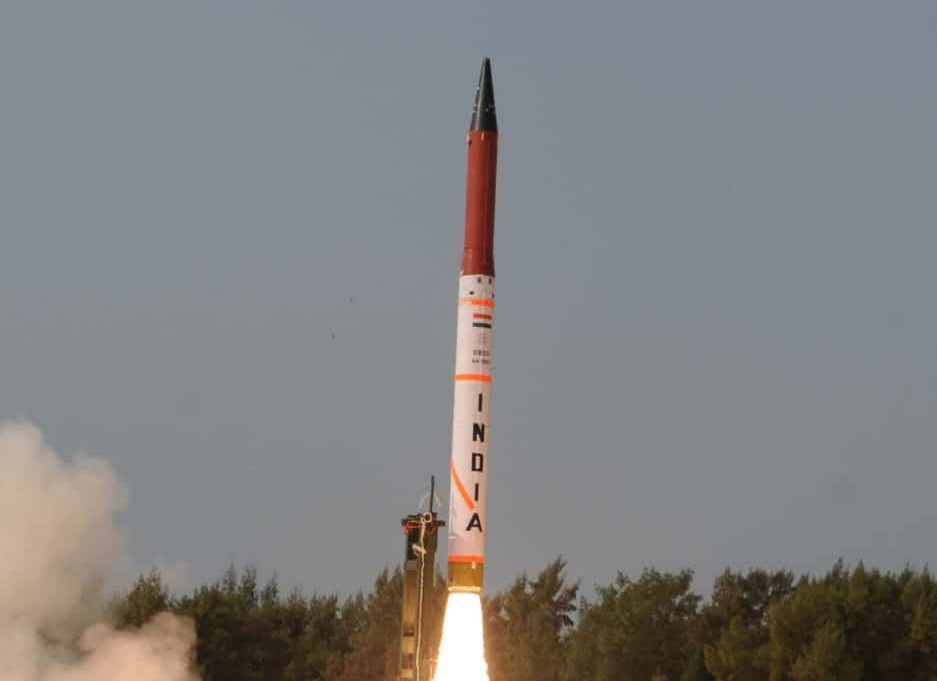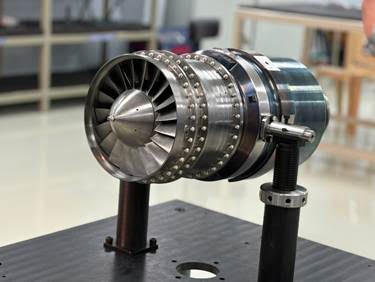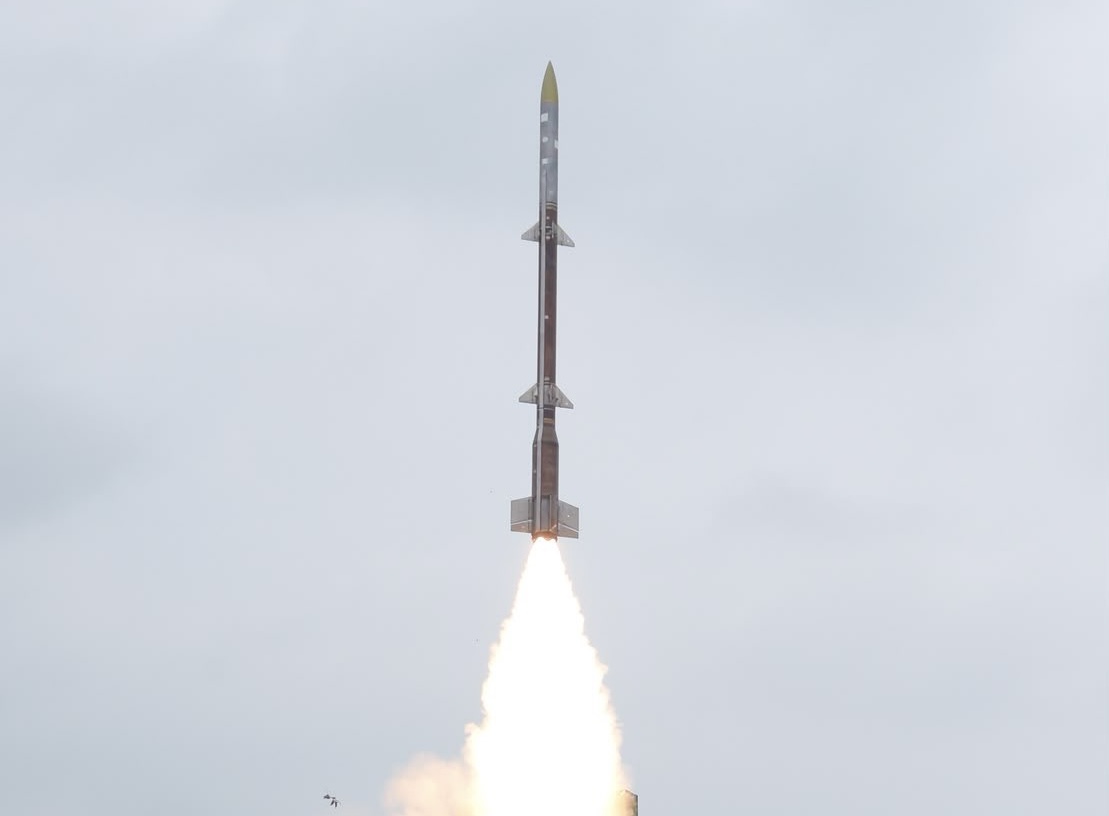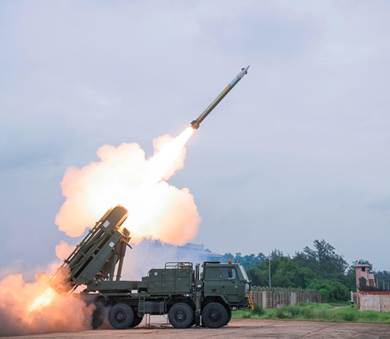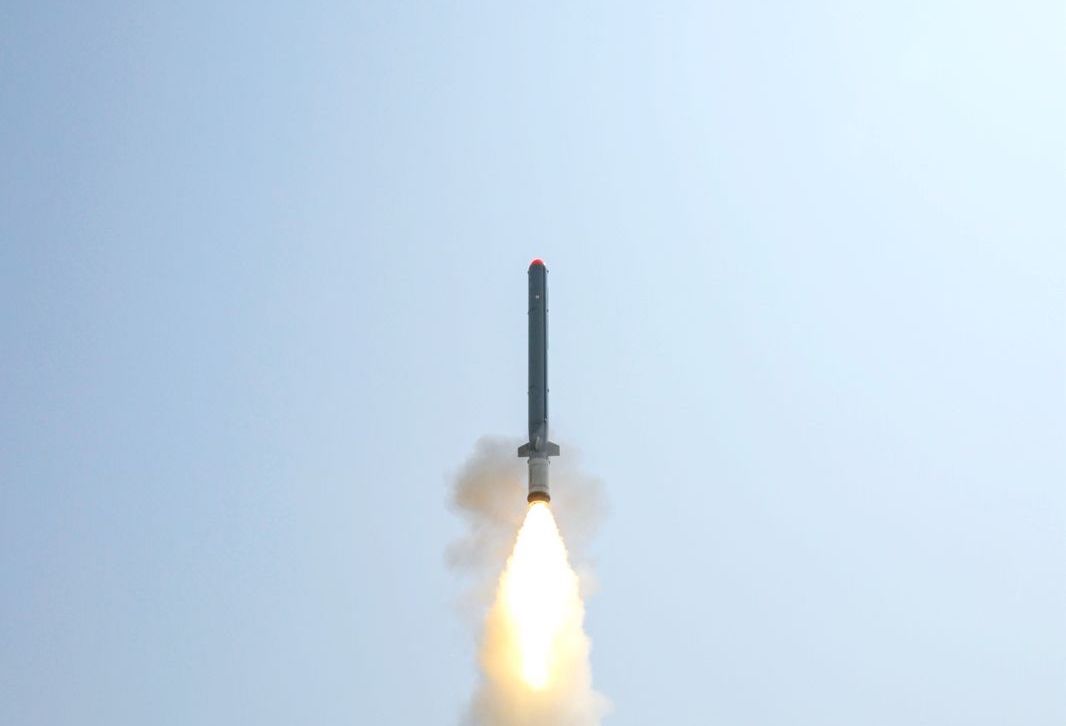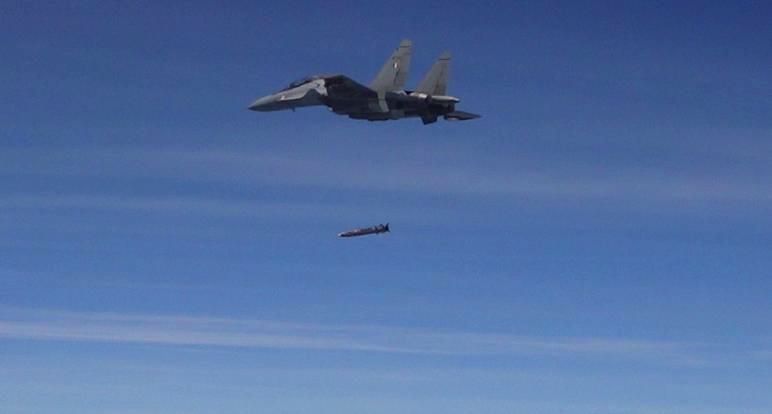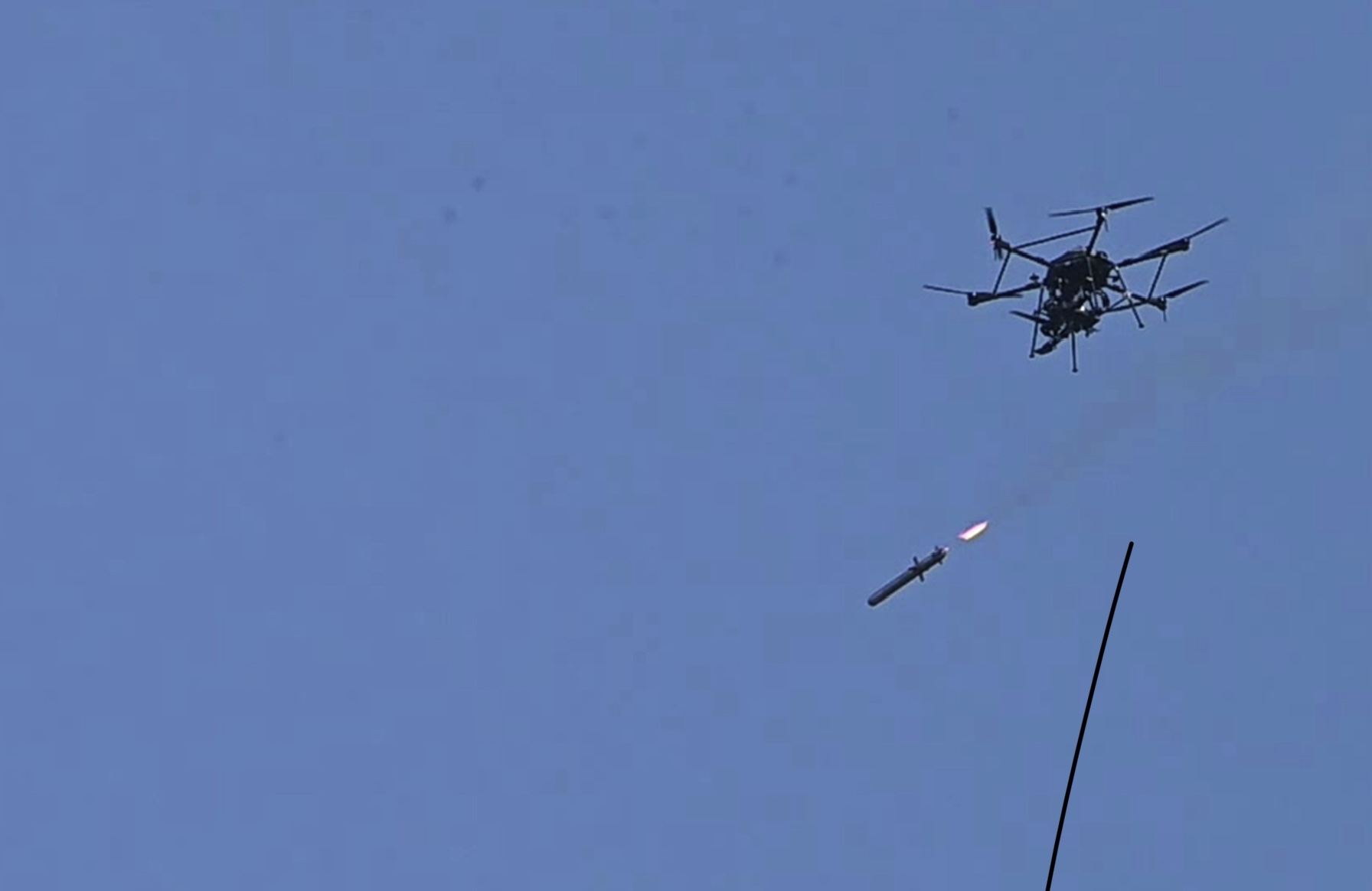
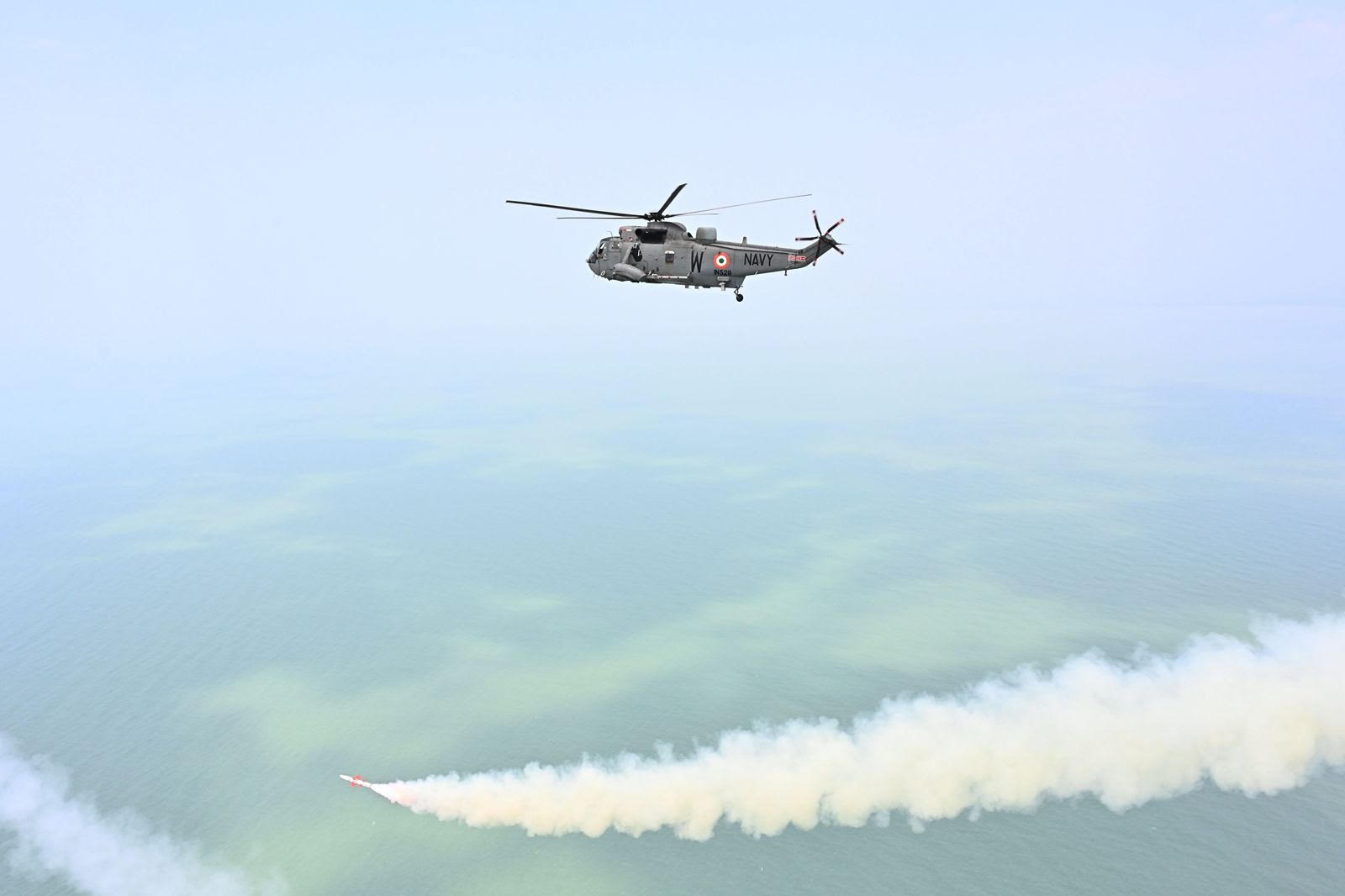
 Indian Navy helicopter fires NASM-SR missile in the Bay of Bengal (Photo: DRDO)
New Delhi: In a boost to the country’s maritime defence capabilities, the Defence Research and Development Organisation (DRDO) and the Indian Navy have successfully conducted the maiden salvo launch of the naval anti-ship missile – short range (NASM-SR), firing two missiles in quick succession from a Navy helicopter over the Bay of Bengal, off the coast of Odisha.
The test marked a historic first for India, as it was the country's first-ever salvo launch of an advanced air-launched anti-ship missile system.
Both missiles, fired one after the other from the same helicopter platform, accurately struck their targets at the waterline, meeting all intended test objectives.
Data captured through radar, electro-optical systems, and telemetry deployed by the Integrated Test Range (ITR) at Chandipur confirmed the complete success of the trial.
All about NASM-SR
The NASM-SR is a short-range, air-launched missile built specifically to seek out and destroy enemy warships. At the heart of its design is a solid-fuel booster that provides the initial thrust, paired with a long-burn sustainer for sustained flight.
The missile is guided by a fibre-optic gyroscope-based Inertial Navigation System combined with a radio altimeter, allowing it to fly at low altitudes with remarkable precision.
A high-bandwidth, two-way data link enables real-time communication and mid-course corrections, while an advanced seeker system allows the missile to independently home in on enemy vessels. Jet-Vane Control technology gives it the high maneuverability needed to navigate modern combat scenarios.
The missile was primarily developed by the Research Centre Imarat (RCI) in Hyderabad, in collaboration with the Defence Research and Development Laboratory (DRDL) also based in Hyderabad, the High Energy Materials Research Laboratory (HEMRL) in Pune, the Terminal Ballistics Research Laboratory (TBRL) in Chandigarh, and ITR Chandipur.
All critical subsystems were developed indigenously by DRDO laboratories in partnership with Indian industries and start-ups, with production now being carried out by Development-cum-Production Partners (DcPP).
The successful test carries significant strategic weight. The salvo launch capability means a helicopter can fire multiple missiles in rapid succession, greatly increasing the chances of overwhelming an enemy vessel's defences.
Combined with pinpoint waterline accuracy, the missile is designed to cause maximum structural damage to target ships. Its potential compatibility with both Indian Navy and Indian Air Force platforms further broadens its operational value.
The trial was witnessed by senior DRDO scientists, representatives from the Indian Navy and the Indian Air Force, and Development-cum-Production Partners.
Defence Minister Rajnath Singh congratulated all teams involved, saying the development of this missile will greatly enhance the capabilities of India's defence forces. DRDO Chairman Dr. Samir V. Kamat also praised the scientists and engineers behind the achievement.
The successful test is seen as a major step forward in India's Aatmanirbhar Bharat initiative in the defence sector, demonstrating the country's growing ability to develop, test, and produce world-class missile systems entirely within its own borders.