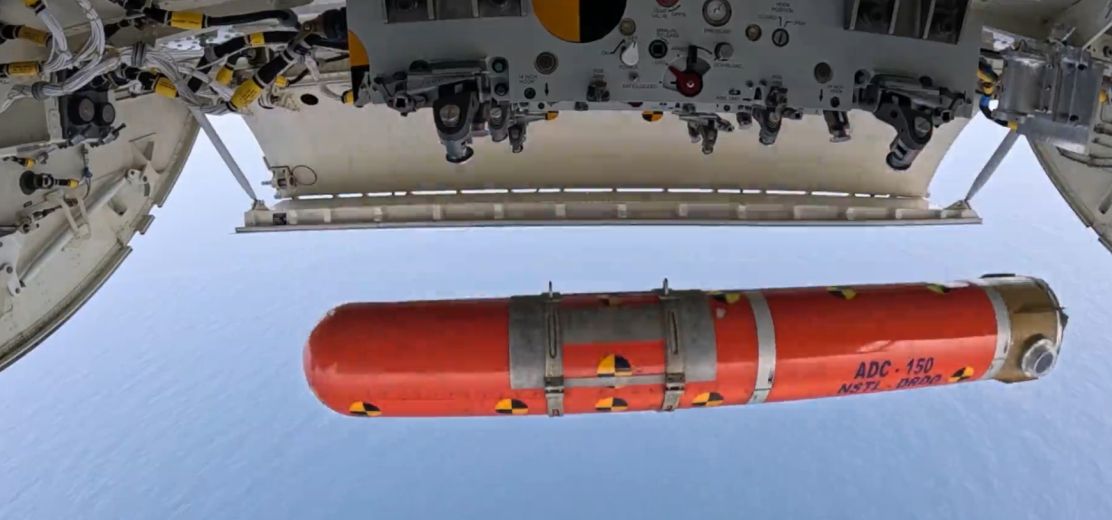
 Indigenous air-droppable container ADC-150 (Photo: DRDO)
New Delhi: India’s defence establishment has cleared a key milestone in naval logistics with the successful completion of four in-flight release trials of the air-droppable container ADC-150 from a P8I maritime patrol aircraft. The trials, conducted between February 21 and March 1 off the coast of Goa, tested the system under varied and extreme release conditions, and all four sorties met their objectives.
The system is now expected to be inducted into the Indian Navy in the near term.
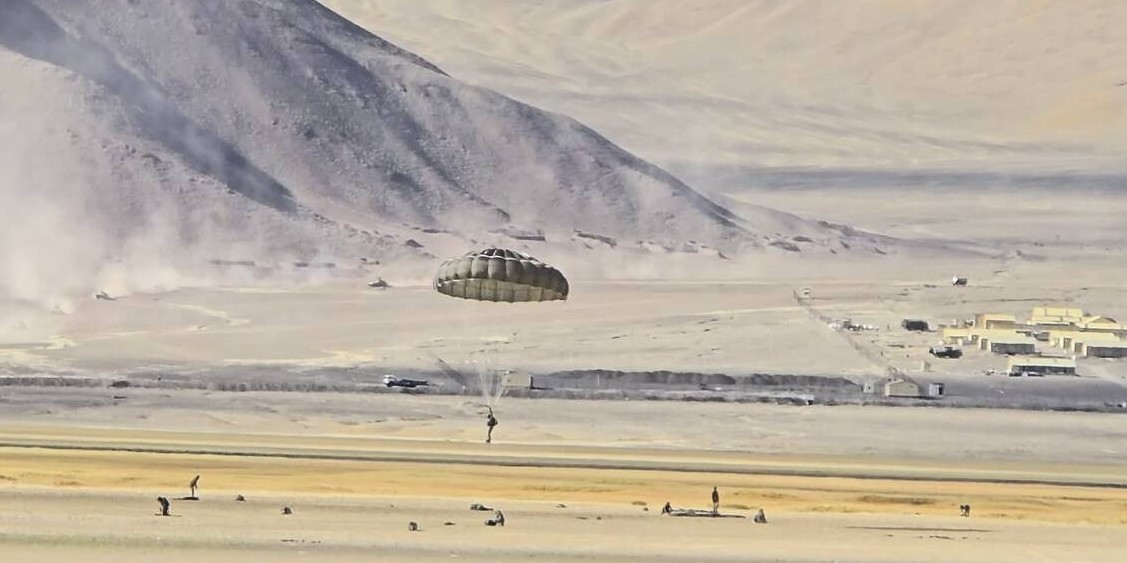
The ADC-150 is designed to deliver up to 150kg of payload – including critical stores, equipment, and medical supplies – to ships deployed far out to sea, with an operational range exceeding 2,000 km from the coastline. It addresses a longstanding gap in the Navy’s ability to render swift logistical support to vessels in distress or those on extended blue-water missions, without requiring them to break deployment.
The project was led by the Naval Science and Technological Laboratory in Visakhapatnam, which served as the nodal agency. The parachute system – critical to ensuring safe deployment and recovery of the container – was developed by the Aerial Delivery Research and Development Establishment in Agra.
Flight clearance and airworthiness certification were handled by the Centre for Military Airworthiness and Certification in Bengaluru. The involvement of three specialized DRDO establishments reflects the layered technical complexity involved in qualifying an air-drop system for military use.
The P8I, manufactured by Boeing and operated by the Navy since 2013, is the platform of choice for the ADC-150’s operational deployment. The aircraft is already integral to the navy's long-range maritime reconnaissance and anti-submarine warfare roles; adding an air-drop logistics capability expands its utility further. Notably, the first proof-of-concept trial of the ADC-150 was conducted from a different aircraft – the Soviet-origin IL-38SD – off Goa on April 27, 2023, before the programme was adapted for the P8I.
The development timeline from that first trial to the completion of P8I qualification – roughly two years – is considered swift by the standards of defence procurement, where such programmes routinely stretch over longer periods. Officials have not disclosed a formal date for fleet induction, but the language used – “expected to be inducted soon” – suggests the process is now primarily administrative rather than technical.
The ADC-150 is part of a broader push under India’s push for self-reliance in defence to reduce dependence on foreign-sourced logistics and support systems. Several Navy vessels, including its growing fleet of destroyers and frigates, operate for extended periods in the Indian Ocean Region, the Arabian Sea, and the Bay of Bengal. The ability to resupply these ships without diverting them from mission areas or relying on foreign assets has strategic implications that go beyond routine logistics.
India currently operates 12 P8I aircraft, with an order for six more placed in 2019. The platform is central to the Navy’s surveillance and response architecture in the Indo-Pacific. Equipping it with an air-drop container adds a humanitarian assistance and disaster relief dimension alongside its warfighting role – a consideration that has gained relevance given the Indian Navy’s recurring deployments in response to crises across the region.