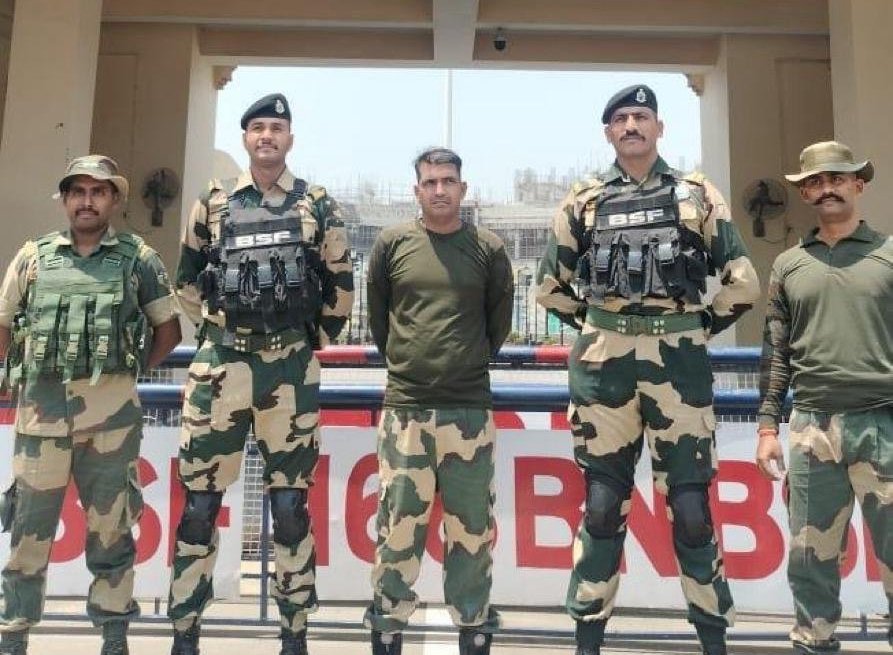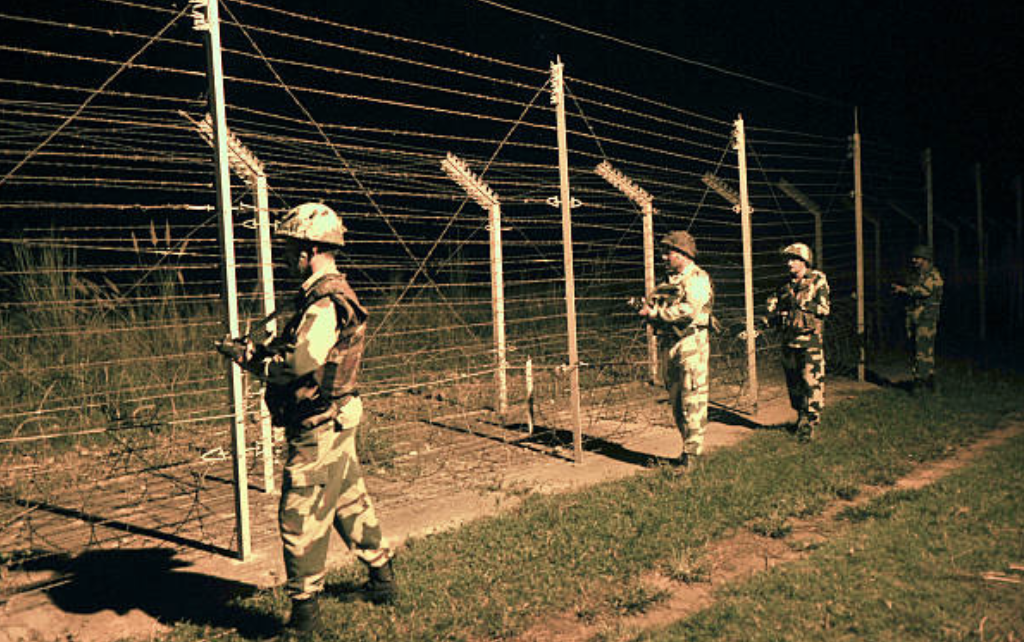
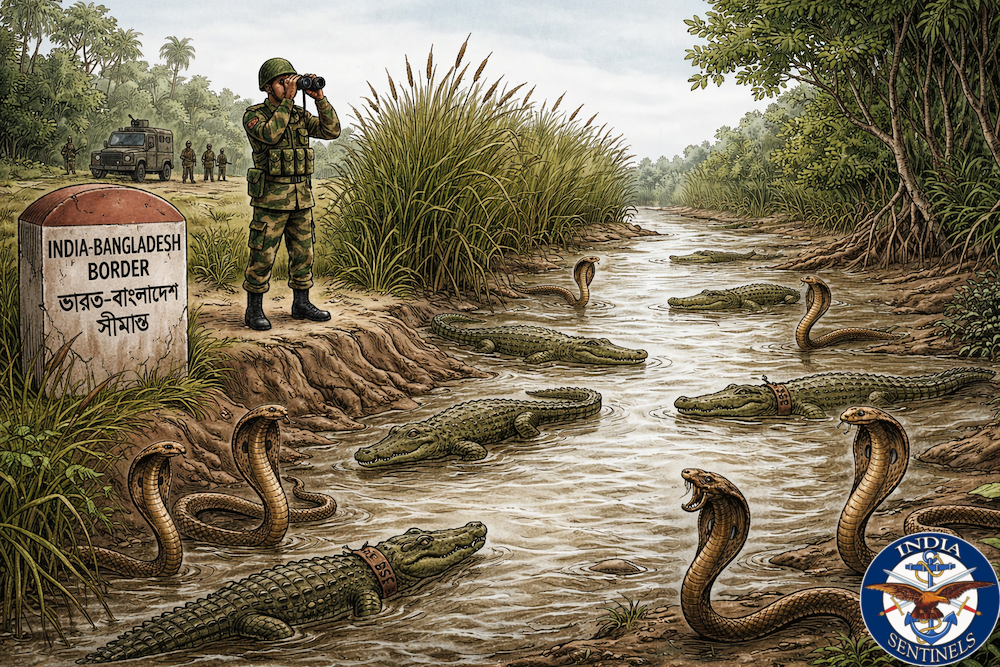
 Illustration for representation. (© India Sentinels 2026–27)
New Delhi: In what is being widely described as one of the most unconventional border-security proposals in the country’s history, the Border Security Force (BSF) is actively exploring the possibility of deploying snakes and crocodiles as biological deterrents along vulnerable riverine stretches of the India-Bangladesh border. The directive, according to multiple credible reports, comes from none other than the Union home minister, Amit Shah.
According to some sections of the media, a confidential signal message, circulated to senior frontier-level officers in the BSF’s eastern and northeastern sector headquarters on March 26, reportedly read: “Exploring use of reptiles in riverine gaps in line with Honourable HM’s direction. Feasibility of deploying reptiles (such as snakes/crocodiles) in vulnerable riverine gaps is to be explored and examined from operational perspectives.”
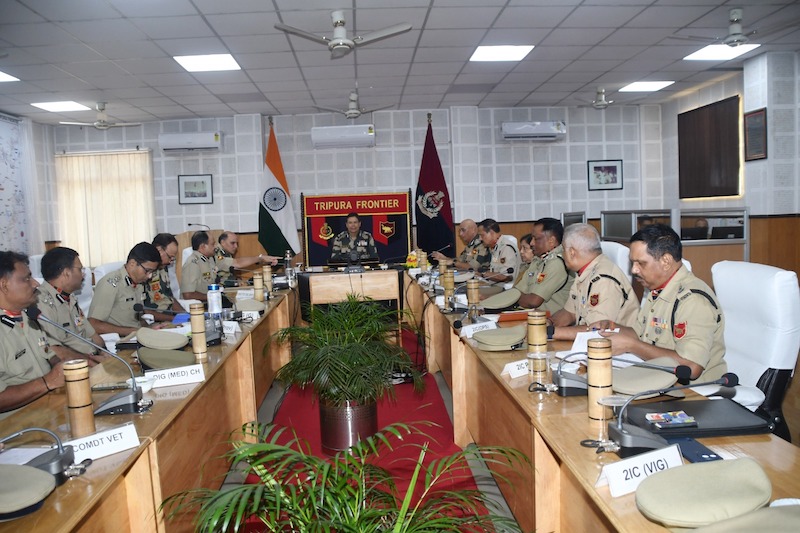
The matter was considered significant enough for the BSF top brass to discuss and deliberate upon in a meeting chaired by the director general, Praveen Kumar, on February 9. Subsequently, on March 20, after another meeting of senior officials at BSF’s New Delhi headquarters, signal messages were sent to senior frontier-level officers in the east.
Read also: Animal support for border guarding
Border gaps present persistent problems
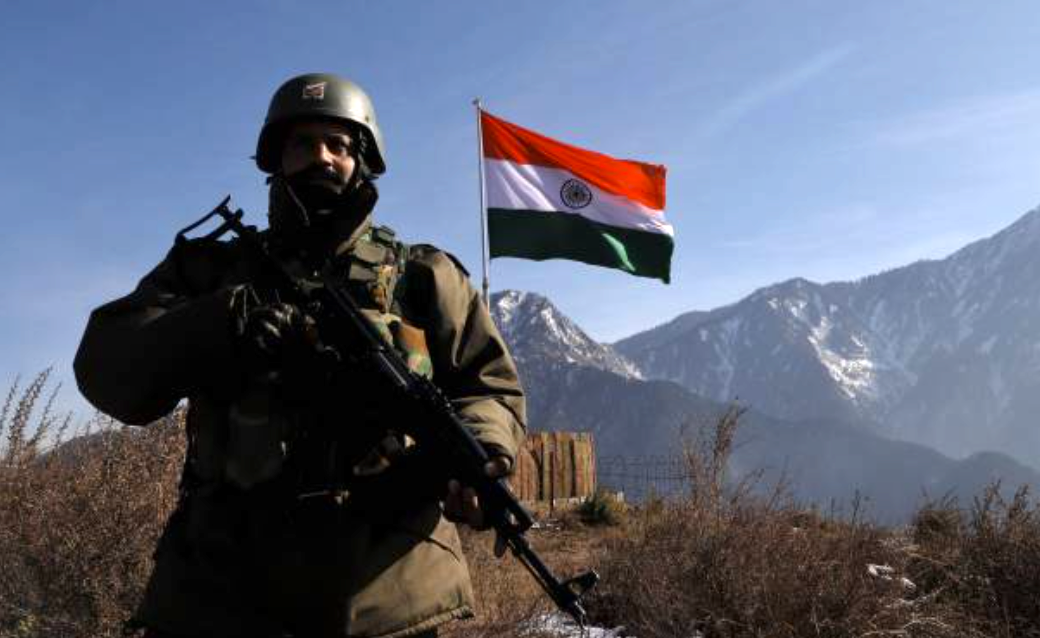
Out of the 4,096-kilometre border between India and Bangladesh, approximately 175 kilometres consists of rivers and marshy terrain where traditional fencing is difficult or physically impossible to install. Infiltration from Bangladesh is a major challenge for the BSF, often considered India’s first line of defence. These areas have also become hubs for illegal activities, including smuggling. The topography and constant flooding make the fencing of this eastern border stretch almost impossible, with 371 kilometres of the border remaining unfenced.
The plan targets areas primarily in states such as West Bengal and Assam, where significant challenges for traditional fencing exist due to difficult terrain and marshy conditions.
Over the past few years, the BSF has relied increasingly on a technology-driven approach to secure the border. Key measures already in use include fast-tracked fencing that is difficult to cut or climb, and under the “Comprehensive Integrated Border Management System” (CIBMS), the border is monitored around the clock with sensors, infrared and night-vision cameras, and drones. Over 5,000 body cameras with night-vision equipment are in use by BSF personnel, while AI-enabled cameras are in the process of being deployed to track illegal cross-border movement.
Yet, these efforts have apparently not been sufficient to plug the riverine gaps, prompting the home ministry to consider what critics are already calling a drastic and potentially dangerous alternative.
The proposal has drawn immediate comparisons to a controversial American initiative. The centre’s move has an uncanny parallel with the Donald Trump administration’s detention centre in Florida, dubbed “Alligator Alcatraz”. The facility, surrounded by the Everglades wetlands, relies on alligators, crocodiles, and pythons as natural deterrents to prevent detainees from escaping.
Critics in India have been quick to draw this comparison unfavourably, arguing that what may be defensible – however controversially – as a containment measure around a bounded detention facility is an entirely different matter when applied to a 175-kilometre open border running through densely inhabited terrain.
While the idea has been floated at the highest levels, the BSF’s own field officers are said to be apprehensive. A BSF official said the directive on reptile deployment has not yet been implemented, noting several challenges, including the potential impact on local populations along the riverine stretches.
The BSF is well aware that an overpopulation of reptiles could affect civilian lives on either side of the border. When the water bodies burst their banks, the presence of these animals could cause an issue for civilians, as these regions contain several densely populated villages.
Experts and civil society voices have also pointed out that introducing dangerous wildlife would risk entire local populations and make land and rivers unviable for economic activities.
There was, moreover, no decision on who exactly would perform the on-the-ground task of catching snakes and crocodiles, or in what numbers, to execute the government’s plan. The absence of any operational roadmap has added to scepticism about whether the proposal can be translated into practice at all.
The reptile proposal does not exist in isolation. Last November, Shah announced a five-year plan to transform the BSF into one of the most modern and technologically advanced frontier forces in the world, with emphasis on implementing a new concept of “e-Border” security across India’s frontiers. Under this roadmap, the home ministry aims to fully roll out electronic border surveillance and management systems – integrating sensors, real-time monitoring, and advanced technological solutions – alongside infrastructure and welfare upgrades.
The communication from the BSF headquarters has also asked field units to employ technology to build non-physical barriers against infiltrators, and the government wants the BSF to illuminate border fences so that pitch-dark areas with limited connectivity cannot be exploited by cross-border criminal groups.
The reptile deployment proposal, then, appears to represent the government’s thinking that conventional and technological measures alone may not be adequate – and that nature itself must be conscripted into the task of border management.
BSF’s senior sector command officers – usually deputy inspectors general – have now been instructed to explore and examine the proposal from “operational perspectives” and to share “action taken” on the directive within a time-and-date deadline. Besides the proposal to use snakes and crocodiles, the March 20 meeting also instructed sector headquarters to “map and identify border outposts located in dark zones lacking mobile network connectivity”.
The field units have been asked only to explore whether such a move would work, not to implement it.
Whether the feasibility study will recommend moving forward, or whether the idea will quietly be shelved given the operational and humanitarian complexities involved, remains to be seen. What is clear, however, is that the proposal has already set off a charged national debate – one that cuts to the heart of how far a state can and should go in securing its borders, and at what cost to the communities living along them.
Follow us on social media for quick updates, new photos, videos, and more.
X: https://x.com/indiasentinels
Facebook: https://facebook.com/indiasentinels
Instagram: https://instagram.com/indiasentinels
YouTube: https://youtube.com/indiasentinels
© India Sentinels 2026-27