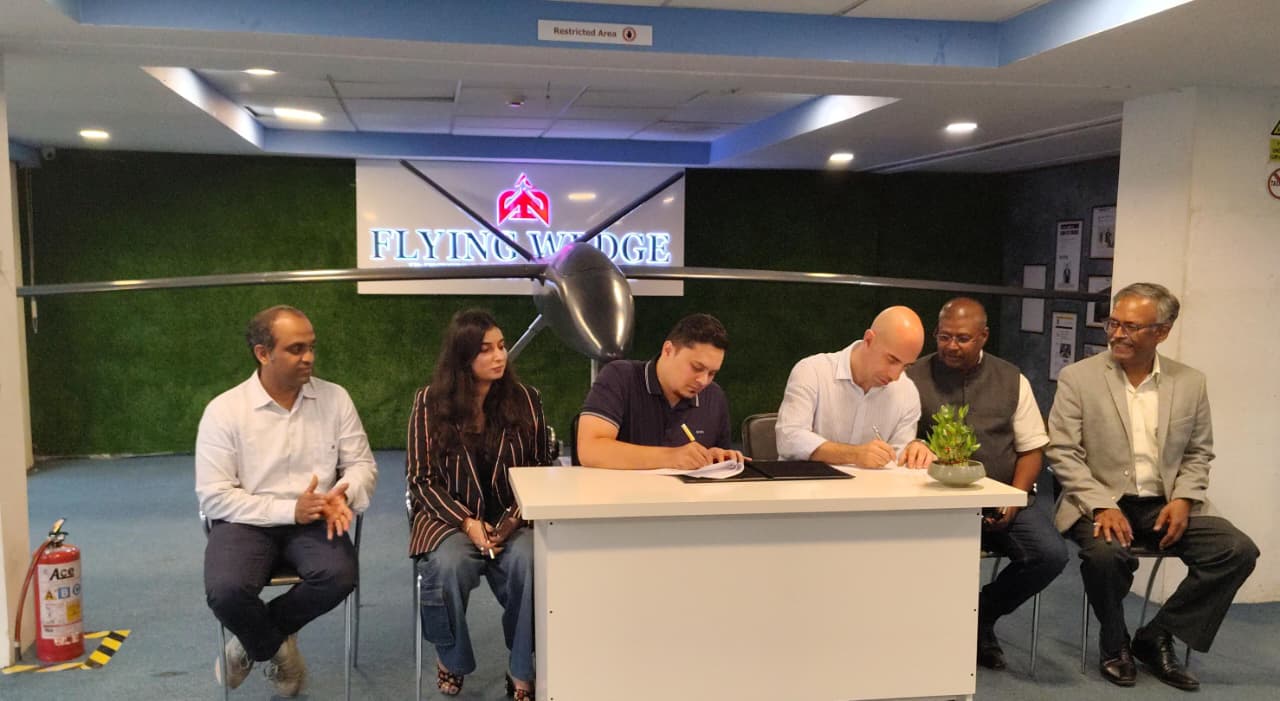
New Delhi: Bengaluru-based drone making company Flying Wedge Defence & Aerospace (FWDA) on Thursday announced that it has signed a partnership with SketchPixel LDA, a Portuguese technology firm to manufacture its Kaal Bhairava autonomous combat aircraft in Portugal.
If it goes to plan, this will be the first time an Indian-designed military aircraft is produced on European soil.
A significant deal
The deal is significant on several counts. Portugal is a NATO member state, which gives FWDA a potential gateway into the alliance’s procurement and interoperability frameworks.
SketchPixel has a track record in defence simulation, having built advanced training systems for the F-16 fighter, and brings with it expertise in AI integration, communications, and live-virtual-constructive (LVC) interoperability.
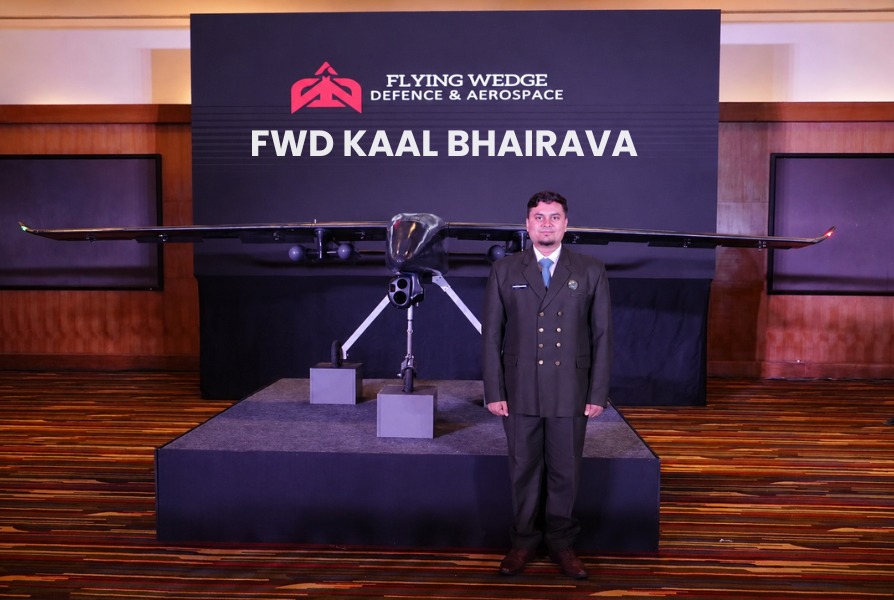
What is Kaal Bhairava?
Classified as a MALE (medium altitude long endurance) autonomous combat aircraft, the Kaal Bhairava is equipped with AI-driven target recognition, swarm coordination capabilities, and encrypted communications. It features place it broadly in the same category as General Atomics’ MQ-9 Reaper, though FWDA positions it at a fraction of the cost of Predator-class systems.
Kaal Bhairava has a range of 3,000 km and can stay airborne for more than 30 hours.
The aircraft was formally unveiled in August 2025, when FWDA announced the readiness of the Kaal Bhairava E2A2 programme.
The company said that the platform is built with zero foreign components, which it argues eliminates the risk of external “kill-switch” controls – a concern that has surfaced in Indian defence policy discussions given the conditions attached to some foreign-supplied systems.
The company stated that it has become the first Indian firm to secure a DGCA type certification for an indigenous unmanned aerial vehicle.
In September 2024, its FWD-200B unmanned bomber completed its maiden flight, another first for an Indian private defence company.
Operation 777: the bigger picture
The Portugal node is described by FWDA as the first step in Operation 777, a strategic initiative announced alongside the Kaal Bhairava unveiling in 2025.
The plan envisions manufacturing, integration, and deployment partnerships for Indian-origin autonomous warfare systems across seven continents and 77 countries.
The founder and chief executive of FWDA, Suhas Tejaskanda, said the collaboration reflected growing international interest in Indian-designed autonomous systems.
“Operation 777 is about taking our systems beyond borders with an aim to build a globally distributed defence technology network originating from India,” he said in a statement.
“Portugal’s strategic location and access to the NATO ecosystem strengthen our access into European defence networks, collaborative opportunities, and global deployment pathways.”
The ambition aligns with India’s broader push to grow its defence exports. The government has set a target of $5 billion in defence exports by 2025, a goal that has proved elusive but has spurred activity from private-sector firms including Adani Defence, Tata Advanced Systems, and a growing cluster of deep-tech startups. India’s defence exports crossed $2.6 billion in the financial year 2023-24, a record, but still modest by global standards.
The Portugal partnership in detail
Under the agreement, SketchPixel will contribute simulation technologies, AI integration, communications systems, and interoperability capabilities. FWDA retains intellectual property rights over the core autonomous systems and airframe design.
The chief executive of SketchPixel, Miguel Abreu, said work would span structural design, board design, firmware development, communications, control, and validation, all carried out to what he described as maximum standards of safety and technological sovereignty.
“New communications systems, LVC interoperability modules, and AI software would be developed jointly across laboratories in Portugal and India, with regular exchanges of engineering teams.”
Abreu said the initial focus would be on the Kaal Bhairava programme for Portugal and NATO countries, with a broader collaboration framework to follow.