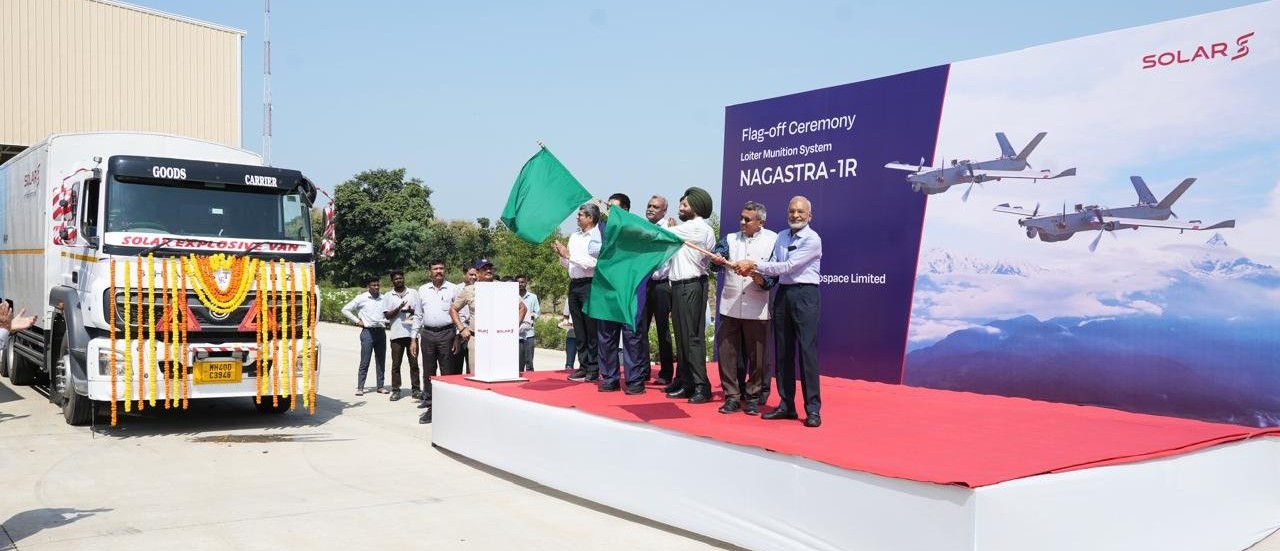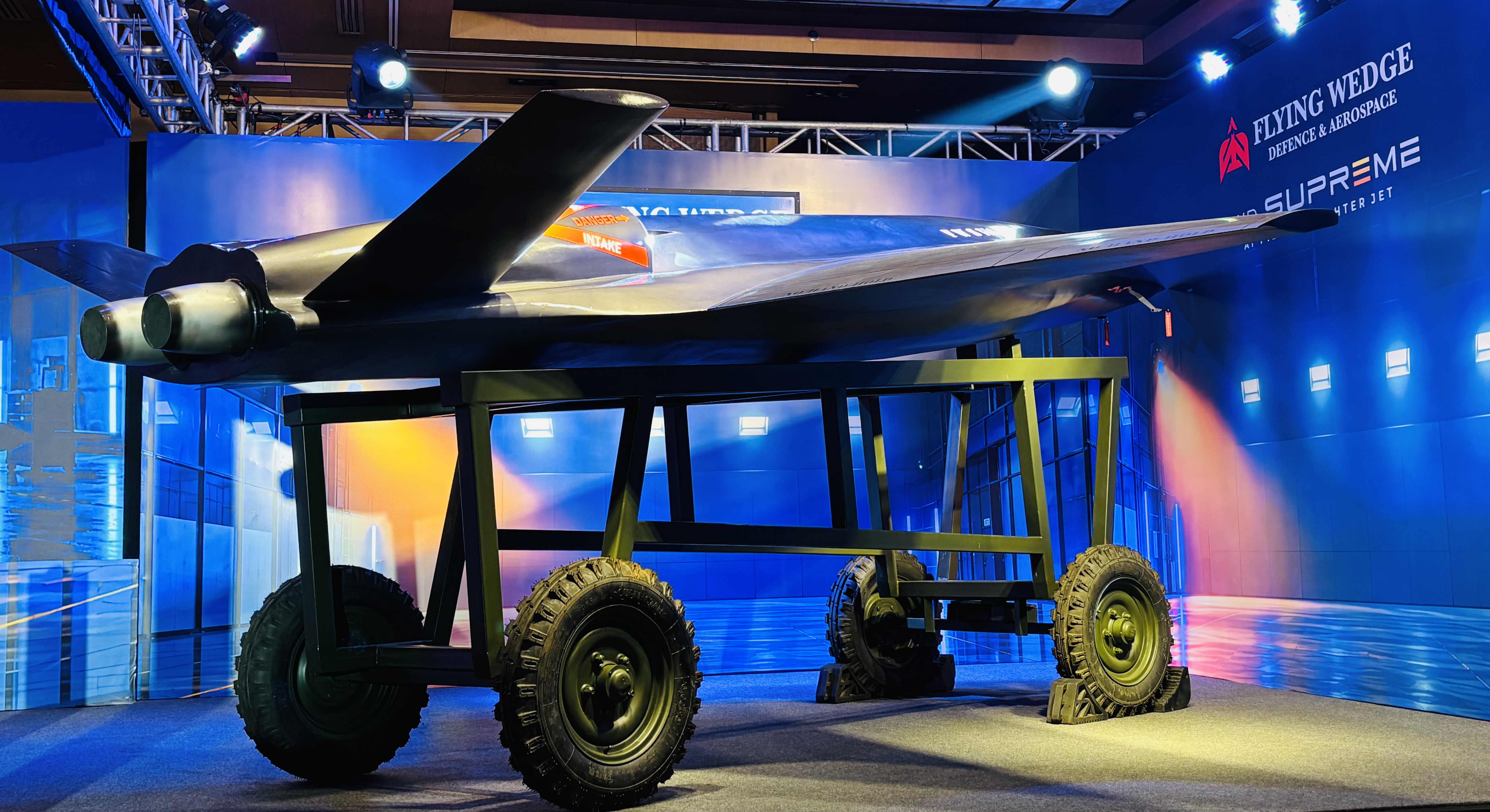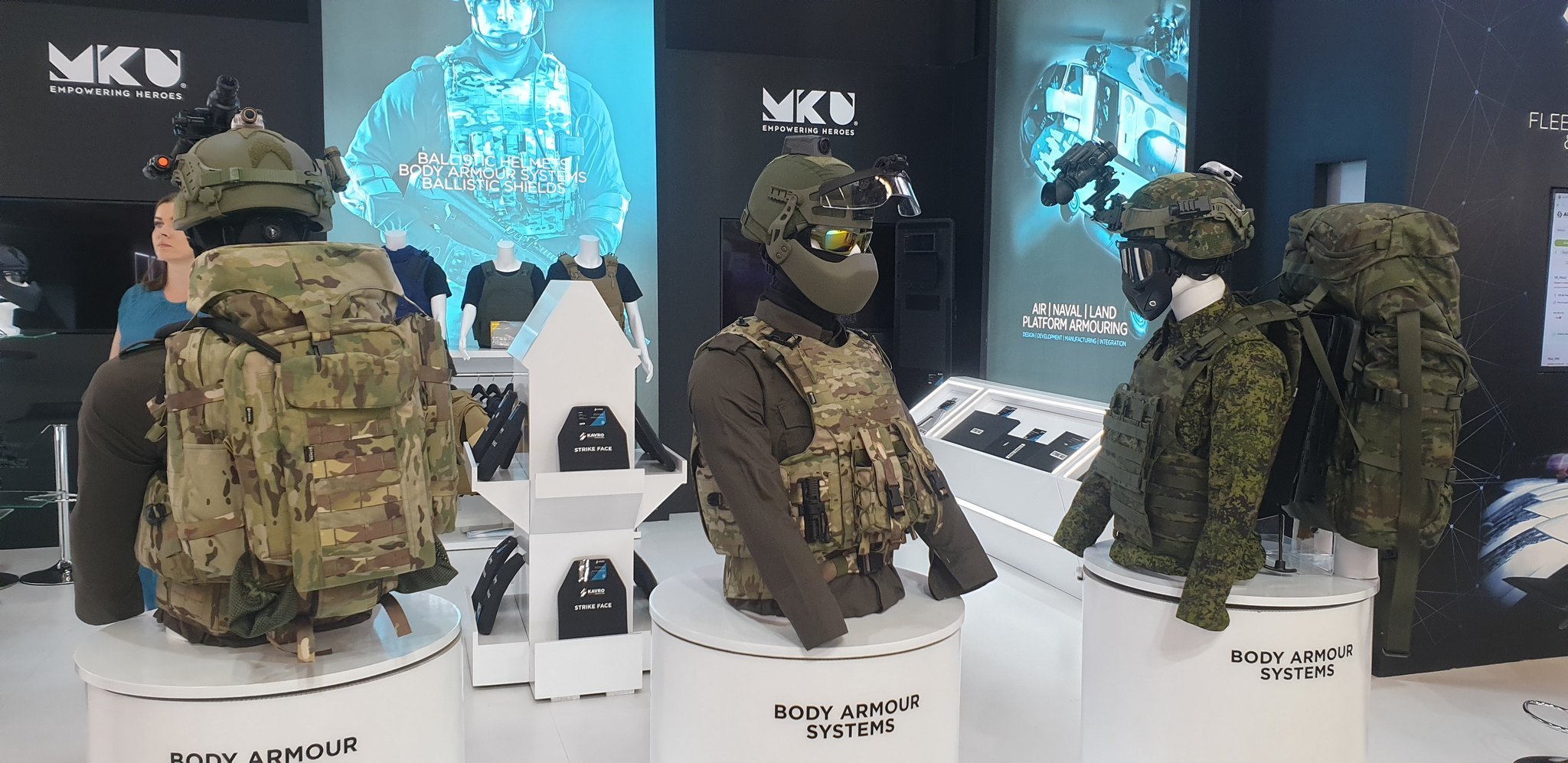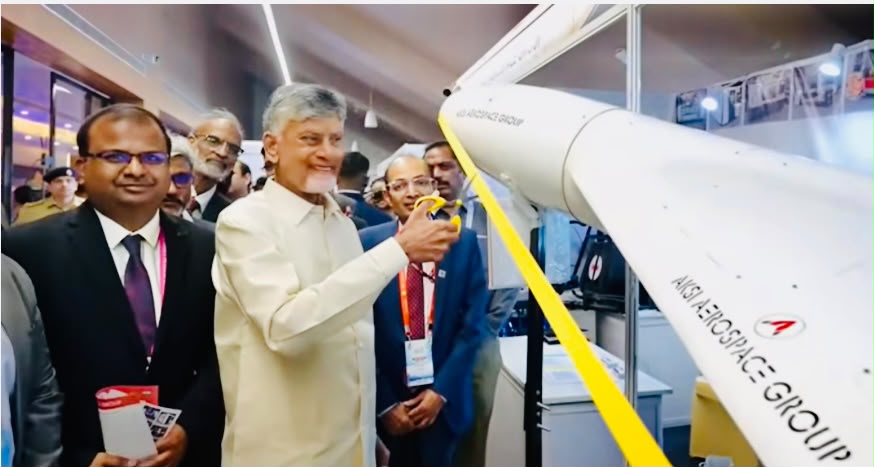
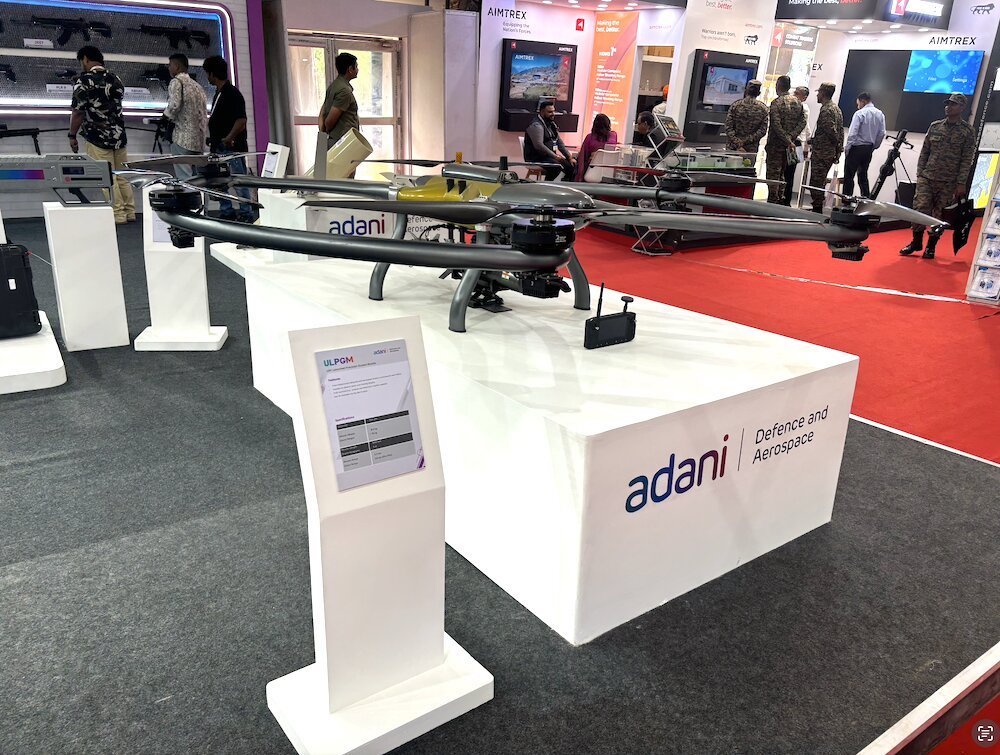
 An Adani Defence drone on display at Umroi where the Exercise Pragati 2026 was held. (Photo: Adani Group)
Shillong/New Delhi: India’s first multilateral military exercise, Pragati 2026, did more than test battlefield interoperability among 13 nations. It also served as a pointed demonstration that India’s private defence industry has moved well past the prototype stage and is producing systems ready for operational deployment.
The exercise – whose name stands for Partnership of Regional Armies for Growth and Transformation in the Indian Ocean Region – ran from May 18 to 31 at the Field Training Node, Umroi, near Shillong in Meghalaya. More than 400 military personnel from India and 12 partner countries – Bhutan, Cambodia, Indonesia, Laos, Malaysia, Maldives, Myanmar, Nepal, the Philippines, Seychelles, Sri Lanka and Vietnam – took part in a two-week programme of joint tactical drills, counter-terrorism operations in semi-mountainous and jungle terrain, and intelligence-sharing exercises. A 72-hour validation exercise concluded the programme, testing collective readiness and command coordination under simulated operational conditions.
The exercise was organized jointly by the Federation of Indian Chambers of Commerce and Industry (Ficci), the Army’s Headquarters Eastern Command and the Army Design Bureau. Alongside the military drills, an accompanying Industry Exposition gave Indian defence manufacturers direct access to procurement officials, military leaders and defence representatives from across the region.
Adani Defence in spotlight
Among the exhibitors, Adani Defence & Aerospace drew particular attention with a portfolio spanning counter-drone systems, loitering munitions, missile platforms, small arms and ammunition. The breadth of the display reflected a broader shift in India’s defence manufacturing landscape, where private-sector companies are increasingly developing and delivering systems that were once the exclusive domain of state-owned enterprises.
The company’s counterdrone architecture – featuring vehicle-mounted and SUV-mounted platforms capable of detecting, tracking and neutralizing hostile unmanned aerial systems within a 10-kilometre range – was among the more operationally relevant exhibits at the exposition. The platform, developed in collaboration with the Defence Research and Development Organisation (DRDO), integrates radar, signals intelligence, electro-optical sensors and jamming capabilities in a single deployable unit.
Beyond conventional jamming and kinetic neutralization, Adani Defence also showcased what it describes as a “cyber takeover” capability – a system designed to seize control of adversarial drones rather than simply destroy them. The distinction is operationally significant. Capturing a hostile drone intact preserves intelligence value and avoids the collateral risk of debris in densely populated or sensitive areas. The exhibit signalled that Indian industry is tracking the same electronic warfare priorities that have shaped conflicts in Ukraine and the Middle East, where drone warfare and spectrum dominance have proven decisive.
The company’s loitering munitions portfolio was also on display, including the Vayu Astra-1, which completed successful testing earlier in May 2026. These systems, capable of loitering over a target area before striking with precision, have emerged as critical force multipliers in modern asymmetric warfare.
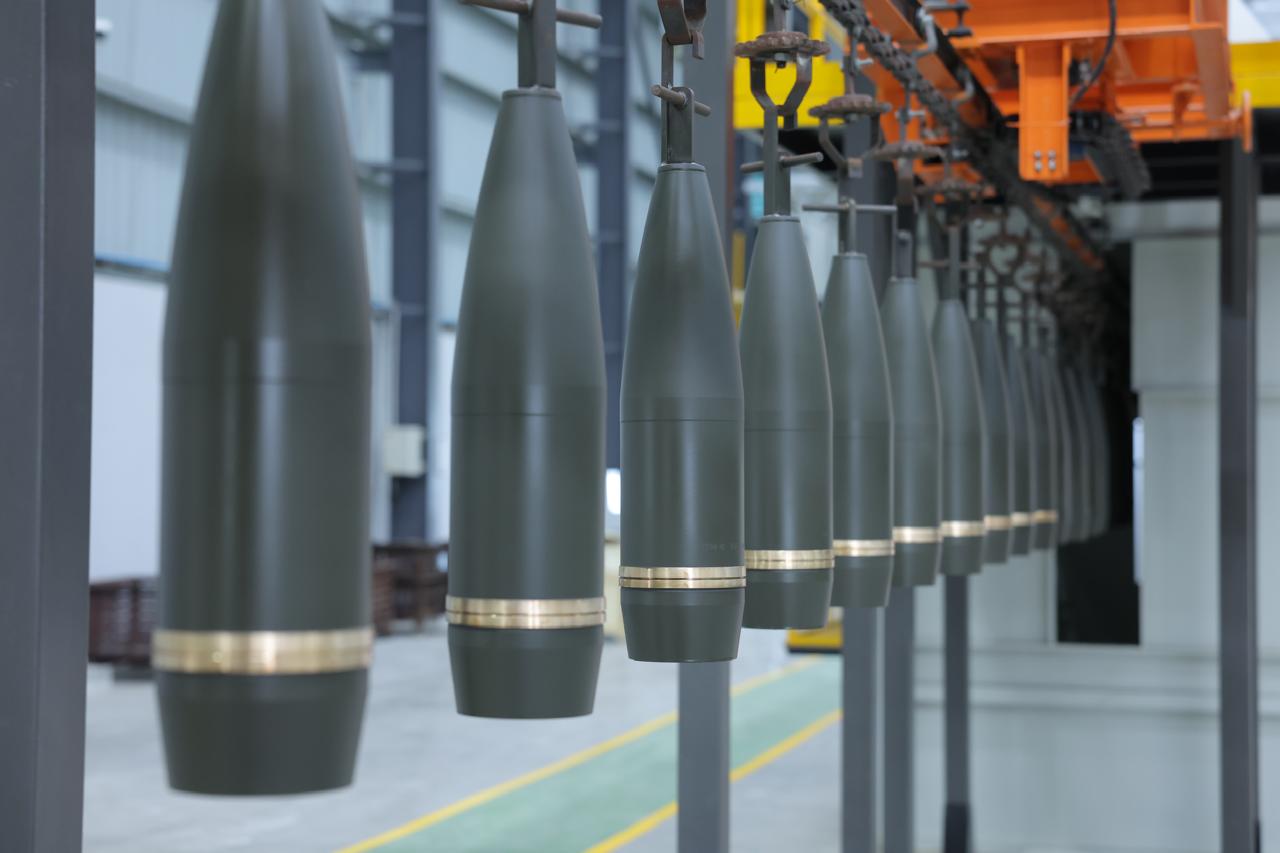
Complementing its unmanned and electronic warfare systems, Adani Defence exhibited the 7.62mm Prahar LMG (light machine gun), which has already been delivered to the Army from the company’s Gwalior manufacturing facility. The Prahar’s induction is notable not only as a product milestone but as evidence that indigenous small arms manufacturing in the private sector has reached the supply stage, not merely the development stage.
Defence export push
Pragati 2026 unfolded against a backdrop of strong momentum in India’s defence production and exports. India’s defence exports reached Rs 23,622 crore (approximately $2.66 billion) in FY25, and the government has set a target of Rs 50,000 crore ($5.63 billion) in exports by 2029. The Umroi exposition, with its audience of procurement officials from 12 countries, fit squarely into those strategic calculations.
The exercise’s focus on counterterrorism operations in the Indo-Pacific also carried a clear subtext. Several participating nations – including the Philippines, Vietnam, and Indonesia – are directly engaged in territorial and maritime disputes in the South China Sea, where the security environment has grown increasingly tense. India’s role as host and its positioning of indigenous defence products before these nations’ military representatives was as much a diplomatic signal as a commercial one.
India’s defence production surged to $14.36 billion in FY24, and with private-sector players like Adani Defence now delivering operational systems to the Army, the gap between the Atmanirbhar Bharat aspiration and battlefield reality is visibly narrowing. Platforms such as Pragati, which blend military training with regional defence diplomacy and industry engagement, are likely to become a recurring feature of India’s outreach to the Indo-Pacific.
Follow us on social media for quick updates, new photos, videos, and more.
X: https://x.com/indiasentinels
Facebook: https://facebook.com/indiasentinels
Instagram: https://instagram.com/indiasentinels
YouTube: https://youtube.com/indiasentinels
© India Sentinels 2026-27