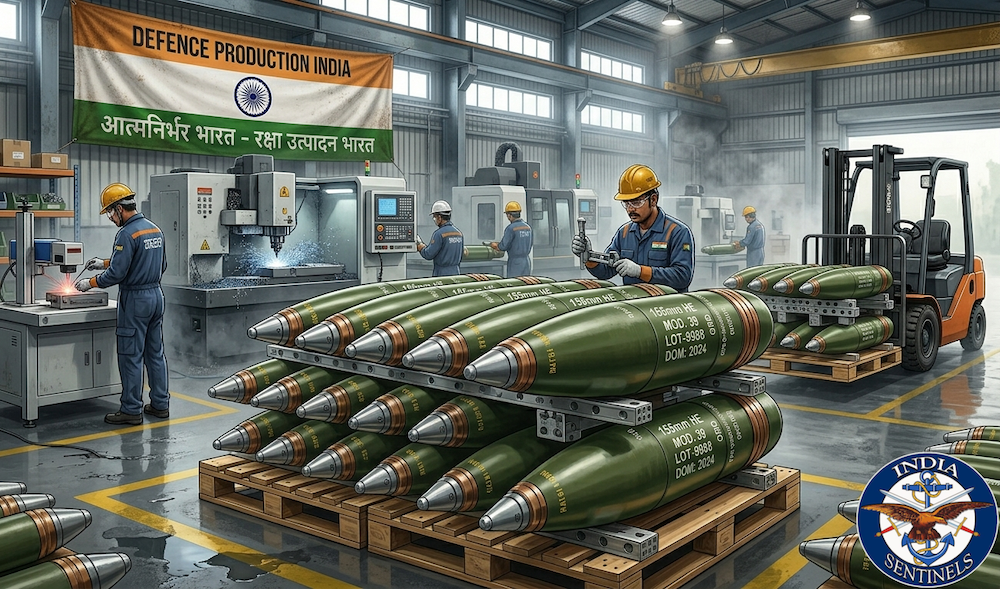
 Illustration for representation. (© India Sentinels 2026–27)
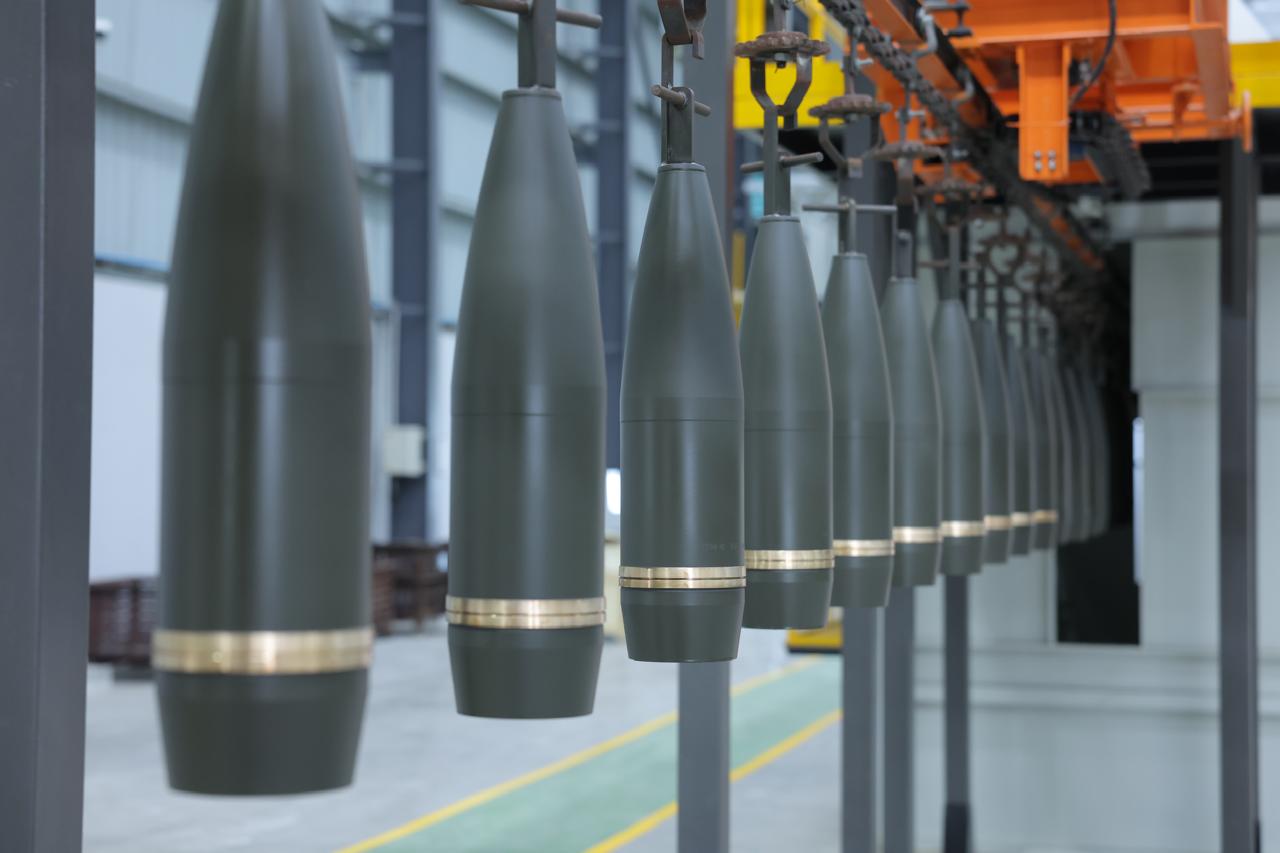
New Delhi: Pune-based defence technology startup Sagar Defence Engineering has obtained an industrial licence to manufacture explosives and ammunition at facilities in Maharashtra and Andhra Pradesh, marking a significant broadening of its business beyond autonomous systems.The company, founded by Nikunj Parashar, confirmed the development on Tuesday.
The company currently develops unmanned and autonomous platforms across maritime, sub-surface, aerial, and land domains – including weaponized boat swarms, autonomous underwater vessels, and unmanned aerial vehicles deployed in national security operations.
Parashar said the expansion would be anchored by a new dedicated facility at Juvvaladine Fishing Harbour in Andhra Pradesh, designed to scale up production capacity substantially. The company plans to integrate its new explosives and ammunition manufacturing capability with its existing autonomous systems portfolio over the next two years.
The move signals a broader ambition: to evolve from a niche autonomous systems developer into a full-spectrum defence manufacturer – a transition that places Sagar Defence among a growing number of private-sector players entering India’s historically state-dominated ammunition supply chain.
Crowded but growing market
India’s ammunition market presents a compelling commercial opportunity. It is projected to grow from $2.66 billion in 2026 to $4.44 billion by 2031, at a compound annual growth rate of 10.8%, driven largely by sustained military modernization and the government’s push to reduce dependence on imports.
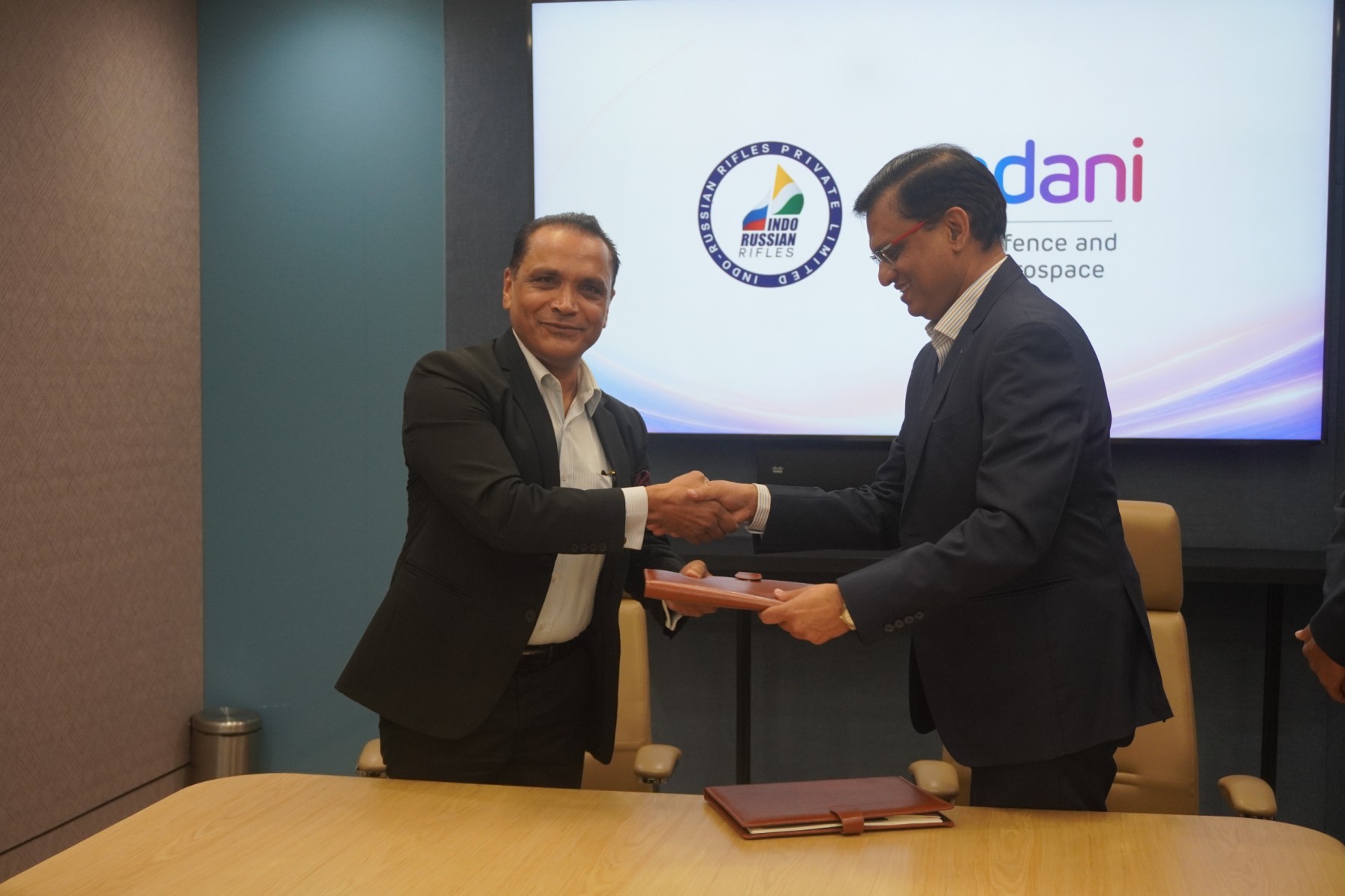
The state-owned Munitions India Limited received its highest-ever budget allocation – ₹745.45 crore in the 2024-25 financial year – to modernize infrastructure and expand output. On the private side, the competition is intensifying. Bharat Forge is establishing a dedicated explosives manufacturing facility with the aim of producing fully assembled, ready-to-fire ammunition rather than merely shell casings. The Adani Group has committed ₹7,000 crore to the sector; its 500-acre facility in Kanpur currently produces 150 million rounds annually, with targets set at 500 million rounds per year.
In December 2025, the Ministry of Defence announced that 154 of the 175 ammunition variants required by the Indian Army had been successfully indigenized – an indigenization rate of 88 per cent, reflecting the pace at which domestic production is being prioritized under the broader Aatmanirbhar Bharat defence framework.
Reducing import dependency
India has historically been among the world’s largest arms importers, and ammunition has been a persistent vulnerability in its logistics and supply chain planning. The 2019 Balakot air strikes and the prolonged stand-off with China along the Line of Actual Control from 2020 onward exposed critical shortfalls in war-reserve stocks, prompting the government to fast-track both public and private sector production licences.
Against that backdrop, licences extended to startups like Sagar Defence carry a dual significance: they accelerate domestic supply while also creating a more competitive, innovation-oriented ecosystem alongside established players such as the Ordnance Factory Board’s successor entities and larger conglomerates.
Whether a startup with Sagar Defence’s scale can compete meaningfully in high-volume ammunition production – where margins are thin and capital requirements are substantial – remains to be seen. Its advantage, if any, likely lies in integration: marrying precision munitions with its autonomous delivery platforms in ways that larger, more bureaucratic manufacturers may be slower to pursue.
Follow us on social media for quick updates, new photos, videos, and more.
X: https://x.com/indiasentinels
Facebook: https://facebook.com/indiasentinels
Instagram: https://instagram.com/indiasentinels
YouTube: https://youtube.com/indiasentinels
© India Sentinels 2026-27