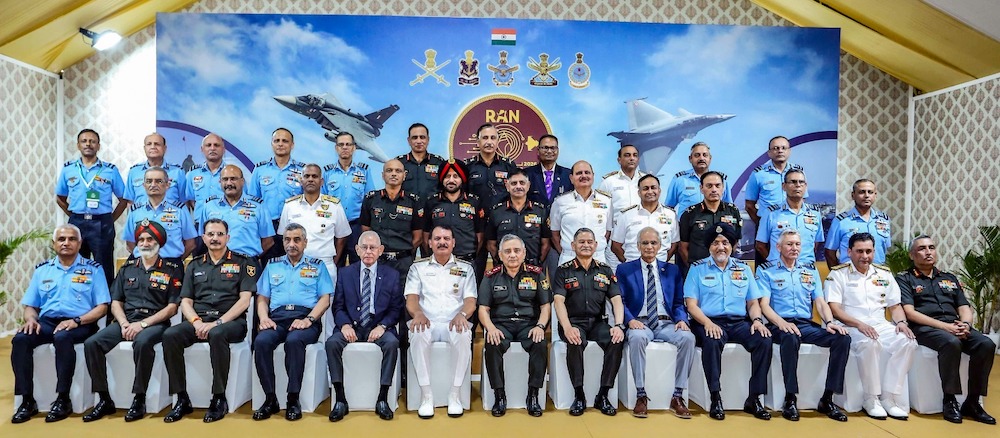
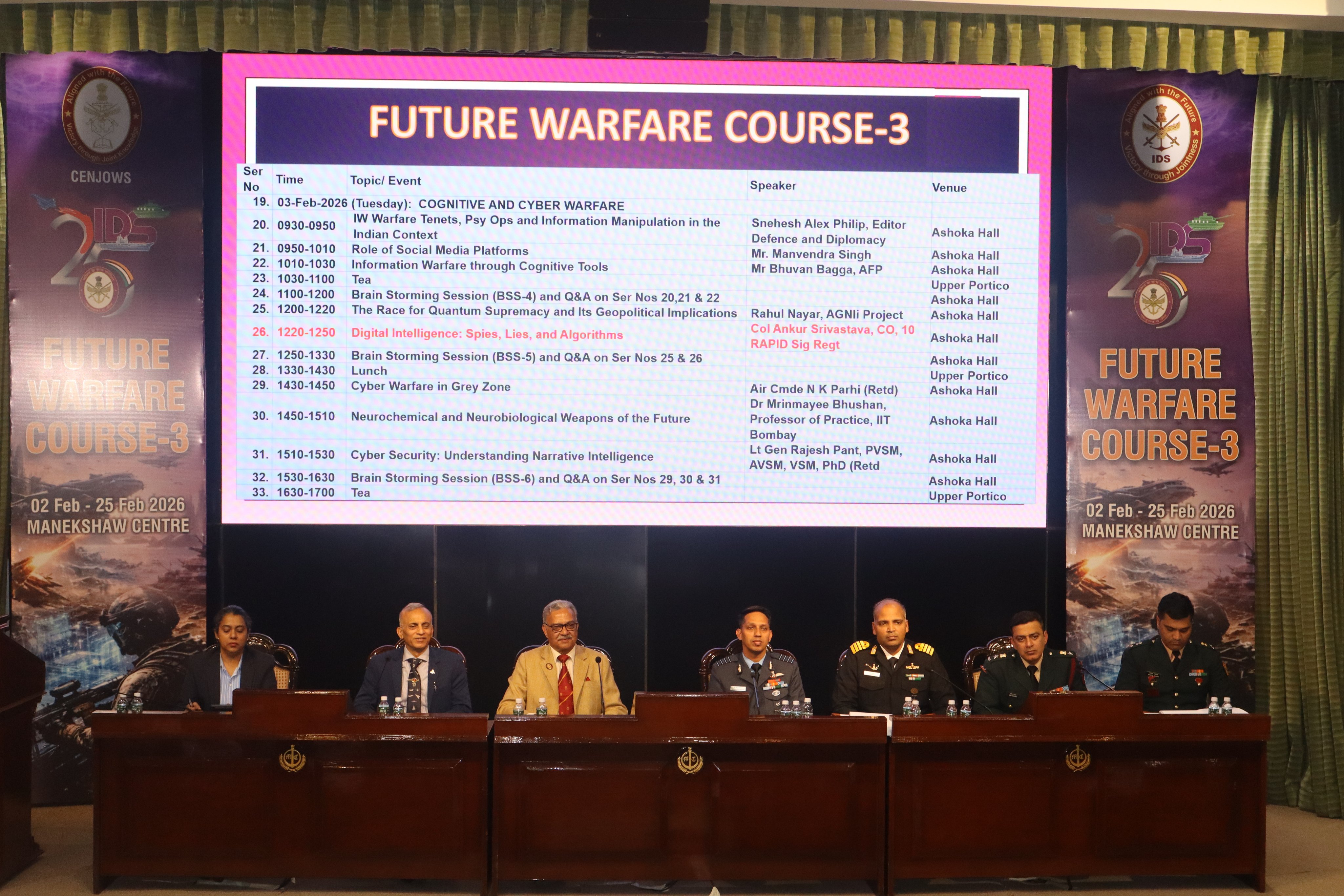
New Delhi: In collaboration with the Centre for Joint Warfare Studies (CENJOWS), the tri-services have commenced the third edition of the Future Warfare Course at the Manekshaw Centre, New Delhi, from February 2.
Conducted under the aegis of Headquarters Integrated Defence Staff, the course features an enhanced curriculum encompassing specialised subjects and domain-specific developments in contemporary and future military operations.
The programme aims to develop a nuanced understanding of how rapid technological advancements are transforming warfare, necessitating a re-examination of existing concepts, doctrines, strategies and tactics, techniques and procedures (TTPs).
It also provides for in-depth exploration of critical themes, practical demonstrations of emerging technologies, and visits to institutions of strategic importance to the Defence Forces’ capabilities.
#CENJOWS_FWC3
— CENJOWS INDIA (@CENJOWS) February 3, 2026
Future Warfare Course today completed its module on unconventional warfare. Air Cmde Air Commodore Niranjan Kumar Parhi (Retired) opened the session with a discourse on Cyber Warfare in the Grey Zone, followed by an expert analysis of Neuro-biological weapons by Dr… pic.twitter.com/GHT536blmN
Participants include officers from all three Services, alongside representatives from the defence industry, including startups, MSMEs, DPSUs and private sector companies. Among the Services’ participants, officer seniority ranges from Major to Major General (and equivalent ranks), blending the technical acumen of younger officers with the operational experience and strategic insight of senior leadership.
The Future Warfare Course seeks to align the operational priorities of the Armed Forces with the evolving capabilities of India’s indigenous defence industry, while enabling free-flowing and informed discussions on the multiple dimensions of modern and futuristic warfighting.
A diverse panel of experts—including veterans, serving officers, former ambassadors, industry specialists and academics—will facilitate comprehensive and professional deliberations on India’s security challenges.
The curriculum further incorporates expert perspectives on critical and rare earth elements, supply chain vulnerabilities, and regional and global geopolitical dynamics impacting future operations, significantly broadening the analytical scope required for military planning and execution.
Building on the success of the inaugural course held in September 2024, this expanded three-week programme seeks to realise the vision of Chief of the Defence Staff, General Anil Chauhan, to prepare officers for the complex and evolving challenges of modern warfare.