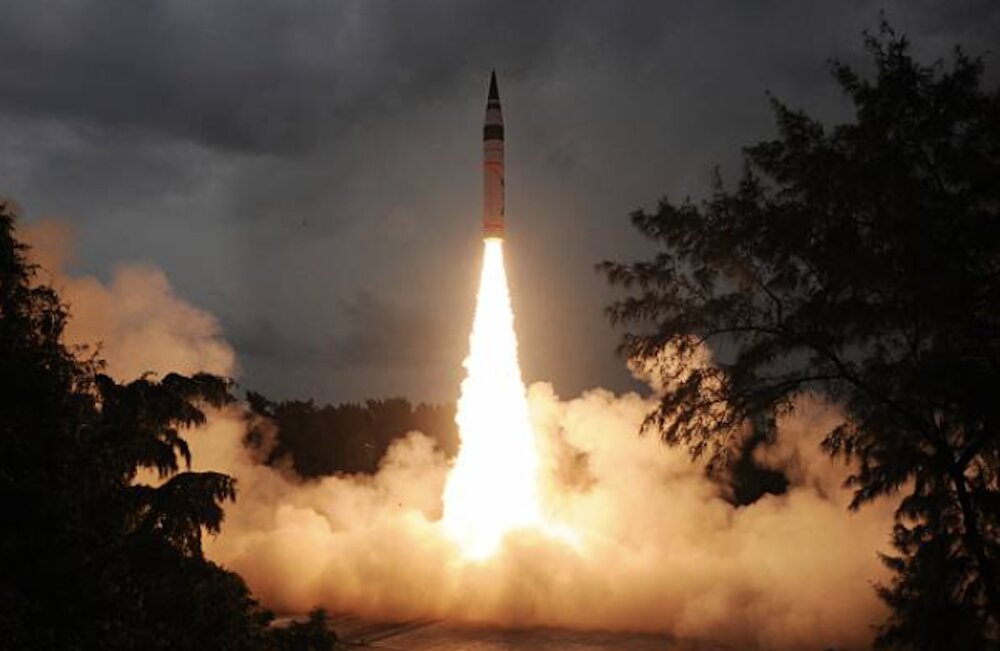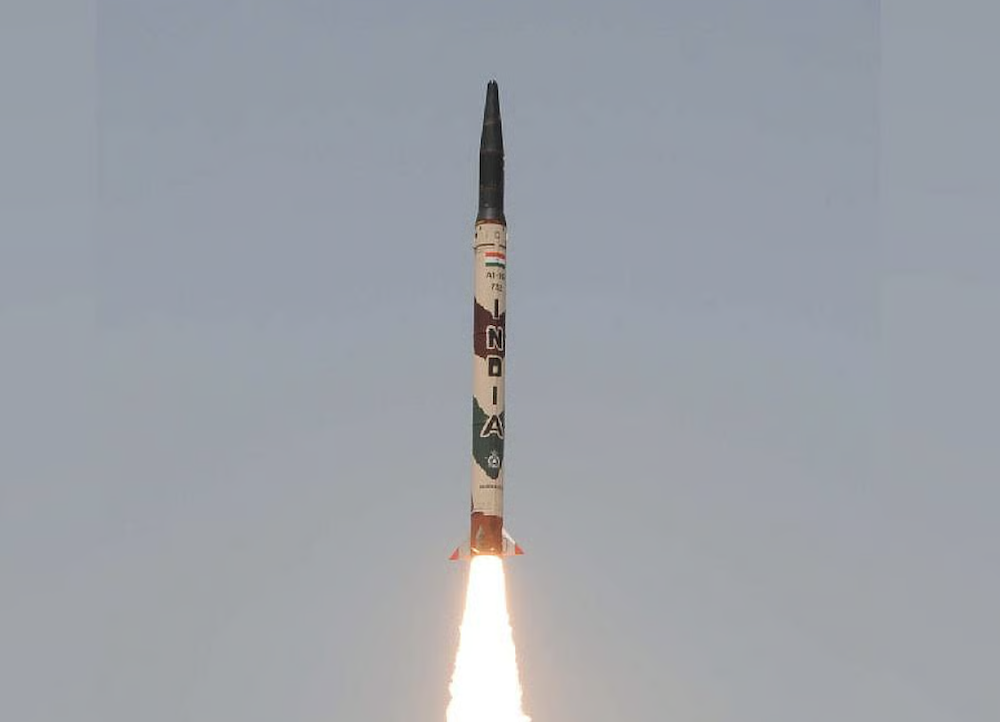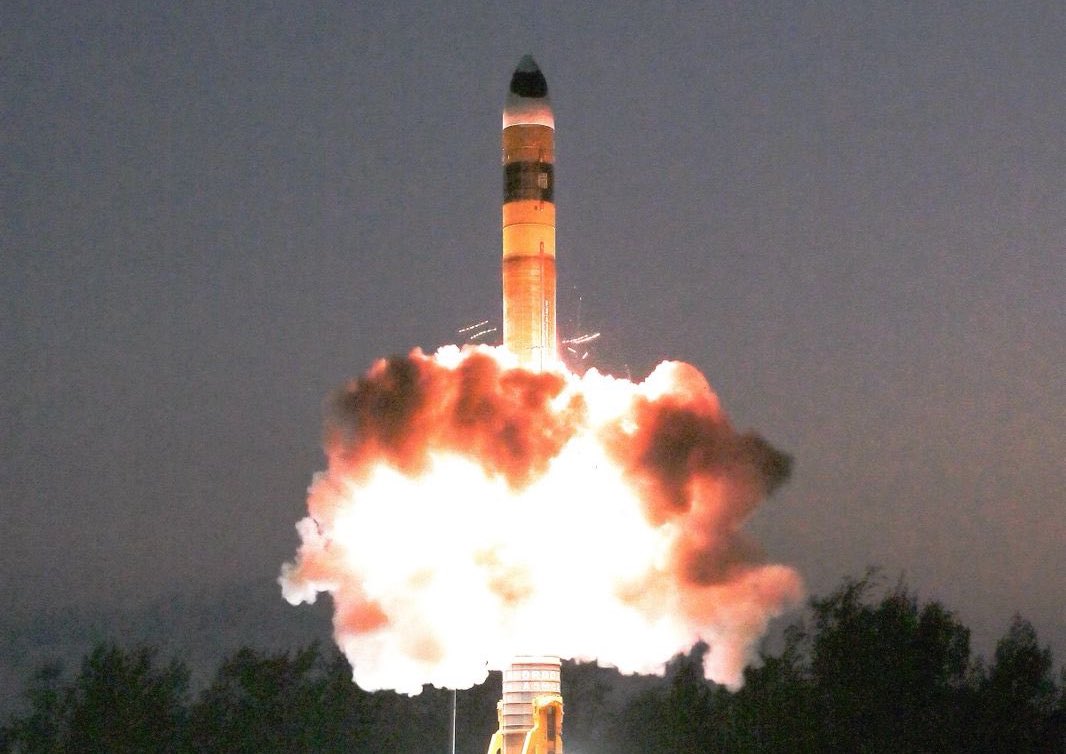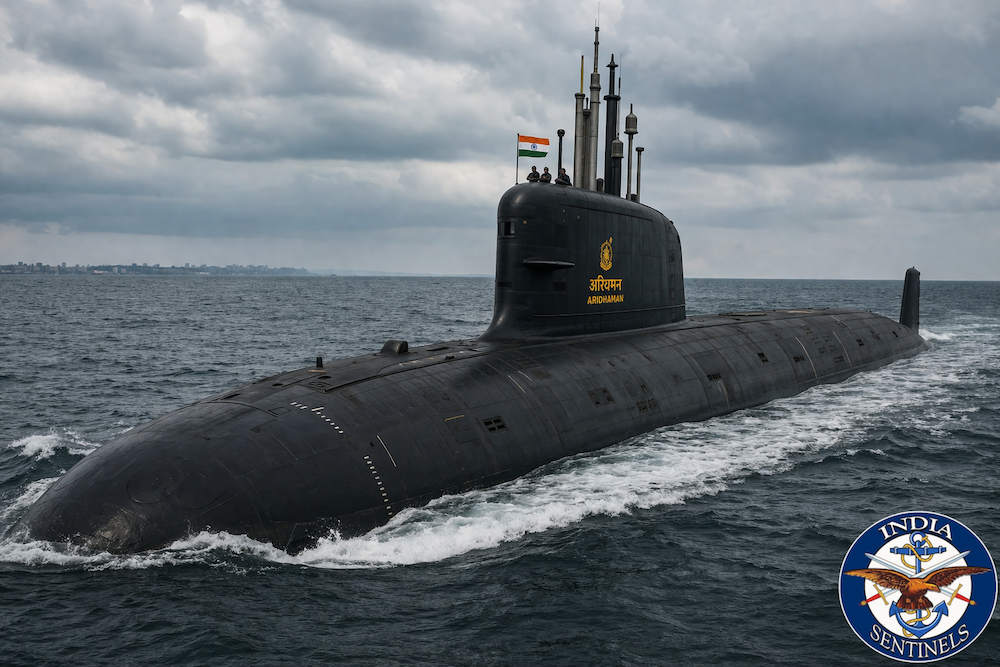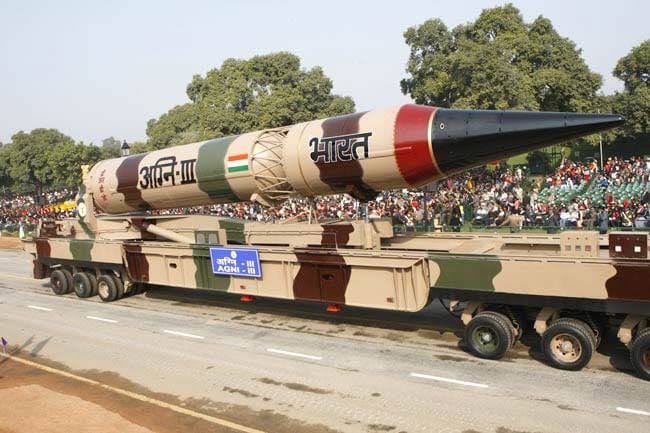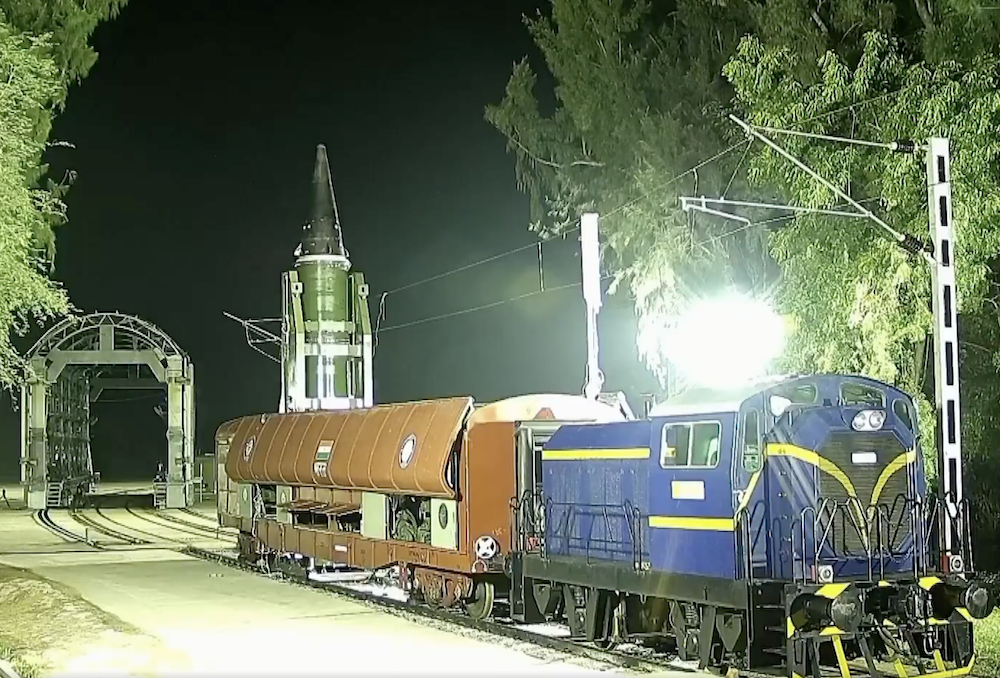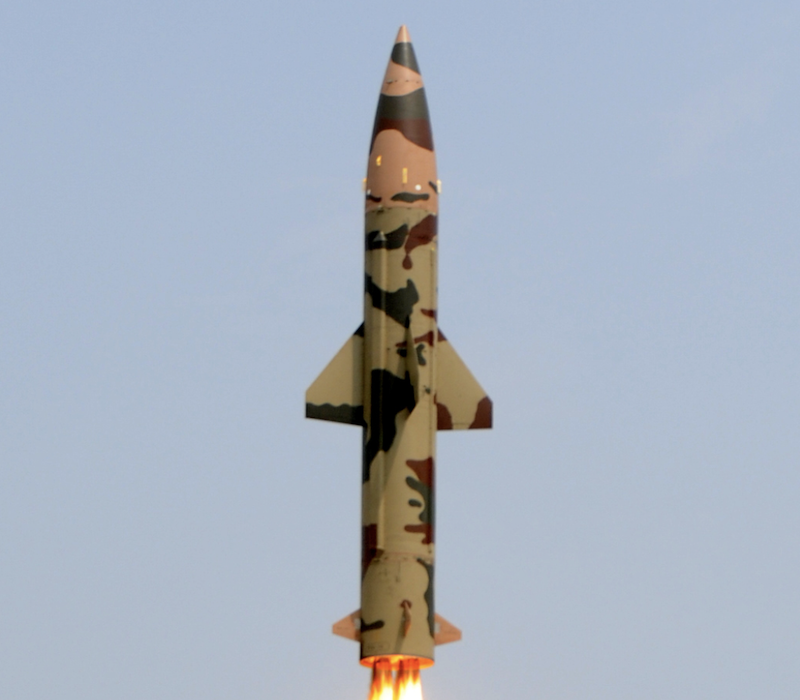
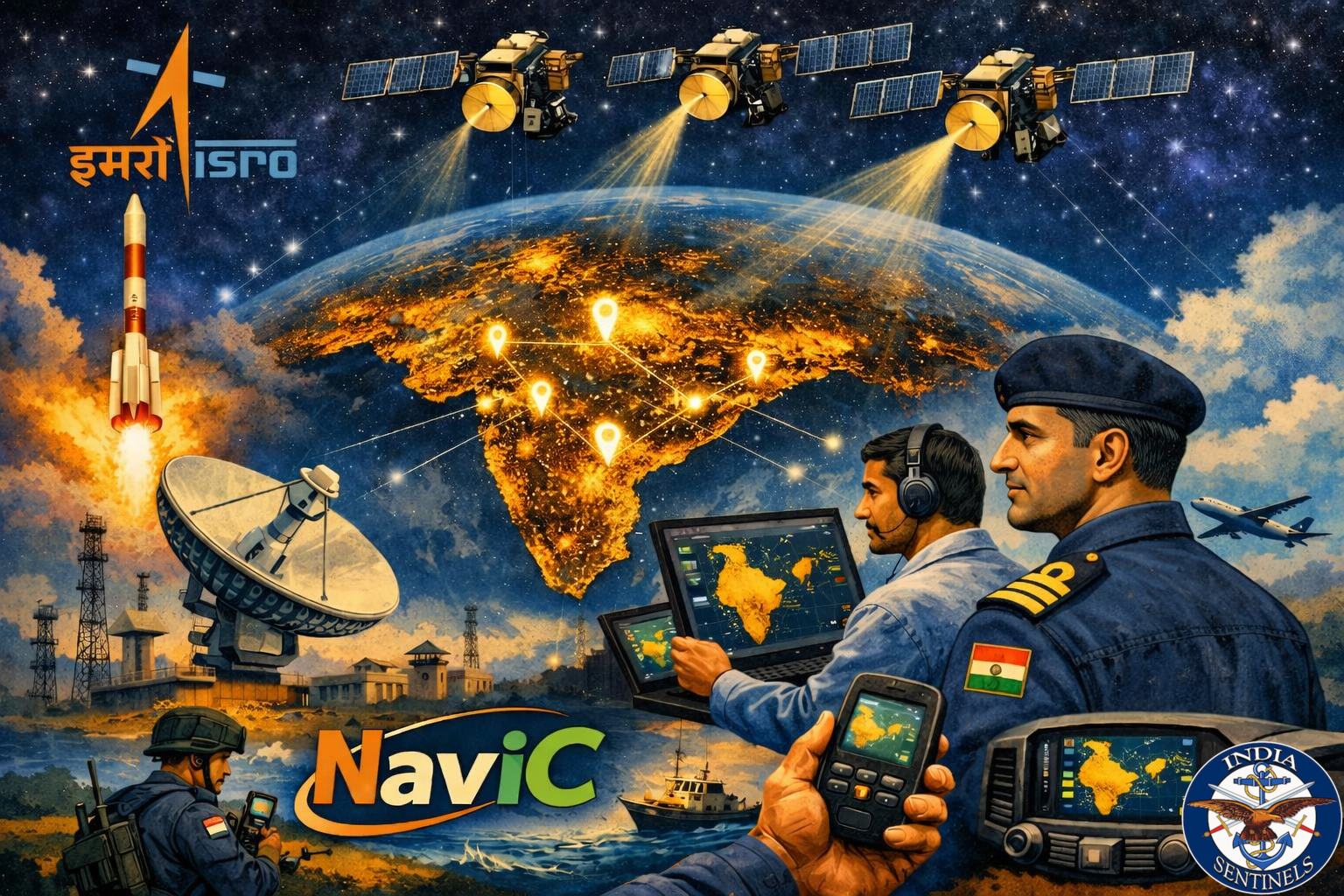
 Illustration for representation. (© India Sentinels 2026–27)
New Delhi: India’s indigenous satellite navigation system, NavIC, is in its deepest operational crisis since inception. It is now left with only three functional satellites – one fewer than the minimum required for reliable three-dimensional positioning – after the last working atomic clock aboard the satellite IRNSS-1F failed on March 13. The breakdown exposes the fragility of a programme that New Delhi has spent over a decade and billions of rupees building as a strategic alternative to the United States’ Global Positioning System (GPS).
What is NavIC and what has gone wrong?
NavIC (Navigation with Indian Constellation) is the operational name for the Indian Regional Navigation Satellite System (IRNSS), designed to provide precise positioning and timing over India and up to about 1,500 kilometres beyond its borders. The original constellation consisted of seven satellites – three in geostationary orbit and four in inclined geosynchronous orbits – to ensure continuous coverage of the Indian landmass, including the strategically sensitive Indian Ocean region.
The system offers two service tiers: a “standard positioning service” open to civilian users, and an encrypted “restricted service” reserved for defence and strategic applications, with advertised accuracy of five to ten metres over India under nominal constellation conditions. From its inception, NavIC was framed explicitly as a hedge against dependence on foreign navigation infrastructure, particularly the GPS, whose signals could be degraded or denied by Washington during a crisis or conflict.
Defence Research and Development Organisation (DRDO)-linked studies have documented NavIC’s potential for improving missile trajectory accuracy, precision strike coordination, and assured navigation for all three armed services in contested environments.
Imported clock problem
The present crisis has long and traceable roots. The timing heart of every first-generation NavIC satellite is a rubidium atomic clock – a component that was imported from the Swiss firm SpectraTime, the same supplier whose clocks caused parallel failures in Europe’s Galileo constellation. By 2016–2017, all three atomic clocks on IRNSS-1A had failed, rendering that satellite effectively useless for navigation even though its other systems continued to function. Clock failures cascaded across the first-generation fleet over subsequent years, affecting IRNSS-1C, 1D, 1E, 1G, and eventually 1F.
The government formally acknowledged the problem in Parliament in 2018, stating that the failure causes had been analysed and that design corrections would be incorporated in future spacecraft. The assurance, while technically accurate, did not arrest the slow attrition. The cumulative effect was a gradual hollowing-out of the constellation, as one satellite after another lost the precision timing capability essential for navigation. Several continued to perform one-way messaging functions, masking the quiet deterioration of the system’s navigational core.
IRNSS-1F’s final failure
On March 13, The Indian Space Research Organisation (Isro) confirmed that the last functioning atomic clock aboard IRNSS-1F had ceased operating, shortly after the satellite reached the end of its ten-year design life. The satellite is being retained for one-way broadcast messaging but can no longer contribute to positioning solutions. That single failure pushed NavIC below the critical threshold of four healthy satellites needed to compute a user’s position in three dimensions – what navigators and engineers call a full position, navigation, and timing (PNT) solution.
Of the 11 NavIC satellites launched since 2013 only three – IRNSS-1B (launched 2014), IRNSS-1I (launched 2018), and NVS-01 (launched May 29, 2023) – are presently transmitting usable navigation signals. A minority of technical analyses count IRNSS-1C as marginally capable, but even those concede the system cannot independently deliver reliable positioning. The remaining satellites are either in clock-failed states, operating in degraded modes, or, in the case of NVS-02, stranded in the wrong orbit altogether.
A partial bright spot, and a troubled orbit
Isro had anticipated the first-generation clock failures and designed its second-generation NVS series with indigenously developed rubidium atomic clocks – a key milestone under the Atmanirbhar Bharat self-reliance initiative – and added an L1-band signal for better compatibility with modern multi-constellation receivers. NVS-01, launched aboard GSLV-F12 on May 29, 2023, successfully reached its operational geosynchronous slot and now forms the backbone of the depleted constellation. It is the first NavIC satellite to fly an Indian-made atomic clock.
The planned follow-on, NVS-02, was launched aboard GSLV-F15 on January 29, 2025, but never made it to its intended circular orbit. Isro’s apex failure-analysis committee, which took over a year to publish its findings, determined in February that the drive signal had failed to reach the pyro valve in the oxidiser line of the orbit-raising engine – effectively preventing ignition – due to a connector disengagement in both the main and redundant electrical paths. The spacecraft, weighing 2,250kg and valued at approximately ₹300 crore, remains stranded in an elliptical transfer orbit and makes no contribution to NavIC services.
Isro has said corrective measures were implemented on the CMS-03 satellite launched on November 2, 2025, aboard LVM-3 M5, where pyro systems performed as required.
Consequences for armed forces
The degraded constellation creates uncomfortable gaps in India’s defence posture. NavIC’s Restricted Service was intended to provide the military with a navigation backbone that foreign powers could neither monitor nor switch off – a capability that matters acutely in a high-intensity conflict along India’s northern or maritime frontiers. With only three operational satellites, the armed forces cannot rely on NavIC alone for continuous, accurate positioning in all terrains, particularly in areas with poor satellite geometry such as deep valleys or urban environments near contested borders.
The armed services are not without options – multi-constellation receivers can blend NavIC, GPS, Russia’s GLONASS, and Europe’s Galileo signals – but this reintroduces the dependency on foreign systems that NavIC was specifically designed to eliminate. DRDO-published research identifies NavIC as offering superior coverage geometry over parts of the Indian Ocean region compared with GPS, and as providing better resistance to jamming for missile guidance and range instrumentation. Each month the constellation remains sub-threshold, that margin of superiority narrows.
Smartphone mandate and timing problem
The operational crisis has arrived at a particularly inopportune moment. The Ministry of Electronics and Information Technology has mandated that all 5G smartphones sold in India must support NavIC – a deadline that was nominally set for January 1, 2025 – with all remaining L1-band handsets expected to follow by December 2025. International manufacturers including Apple have added NavIC capability to recent models in response to this policy pressure. The government has also discussed incentives for companies using NavIC-compatible chipsets developed in India, signalling a long-term policy bet on the system.
The result is a growing contradiction: consumer devices across India are being engineered to lock on to NavIC signals that the space segment is, at present, too depleted to reliably deliver. A smartphone receiving only three NavIC signals can supplement them with GPS or Galileo, but that arrangement undermines the very rationale for the mandate. Unless Isro replenishes the constellation materially faster than its current trajectory suggests, the policy framework will outpace the hardware.
Recovery plan: NVS-03, NVS-04, and NVS-05
In July 2025, Jitendra Singh, the Union minister of state for science and technology, told the Lok Sabha in a written reply that NVS-03 would launch by the end of 2025 and NVS-04 within six months thereafter. NVS-03 has not launched as of this month, which means that the schedule has already slipped.
The government has since committed to launching NVS-03, NVS-04, and NVS-05 by the end of this, though independent observers question whether Isro’s current launch cadence and concurrent programme demands make that timeline achievable – particularly given the agency’s two mission failures in 2025 alone: NVS-02’s stranding and the PSLV-C61 launch vehicle failure that destroyed the EOS-09 Earth observation satellite in January.
Each NVS satellite that successfully reaches orbit with a healthy indigenous clock materially improves the situation. Seven functioning satellites would restore NavIC to design strength; eleven – the full expanded constellation – would provide redundancy against future failures. Isro’s post-NVS-02 review has produced pyro-system design improvements already validated in the CMS-03 mission.
The question is not whether the engineering path exists, but whether the institutional and budgetary momentum is sufficient to execute it on a timeline that matches India’s strategic and commercial expectations for the system.
Wider lesson in self-reliance
The NavIC crisis carries a pointed lesson about the limits of technological ambition without matching investment in critical sub-systems. The first-generation failures trace directly to India’s dependence on an imported component – SpectraTime’s rubidium clocks – that exhibited the same fault mode in Galileo before it appeared in NavIC, yet no decisive corrective action was taken in time to prevent the cascade. The NVS-02 propulsion failure, meanwhile, was traced to a connector fault that defeated both the primary and redundant electrical paths – a quality-assurance failure, not a fundamental design gap.
Both failures are, in that sense, solvable. The indigenous clock programme is real, and NVS-01’s on-orbit performance demonstrates that it works. The corrective actions on pyro systems have been validated. What the crisis demands now is a disciplined, time-bound execution plan with genuine accountability – and an honest alignment between the smartphone mandates, defence integration targets, and the realistic pace at which a replenished constellation can be placed in orbit.
India’s strategic case for an independent navigation system remains as strong as it was when IRNSS was conceived. The space segment just needs to catch up with the ambition.
Follow us on social media for quick updates, new photos, videos, and more.
X: https://x.com/indiasentinels
Facebook: https://facebook.com/indiasentinels
Instagram: https://instagram.com/indiasentinels
YouTube: https://youtube.com/indiasentinels
© India Sentinels 2026-27