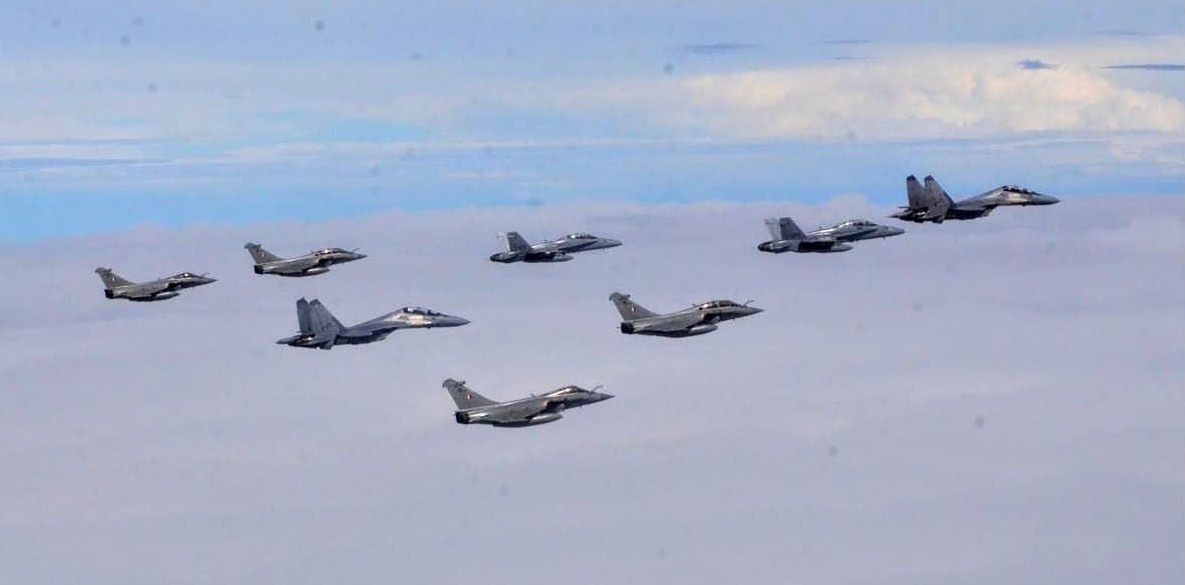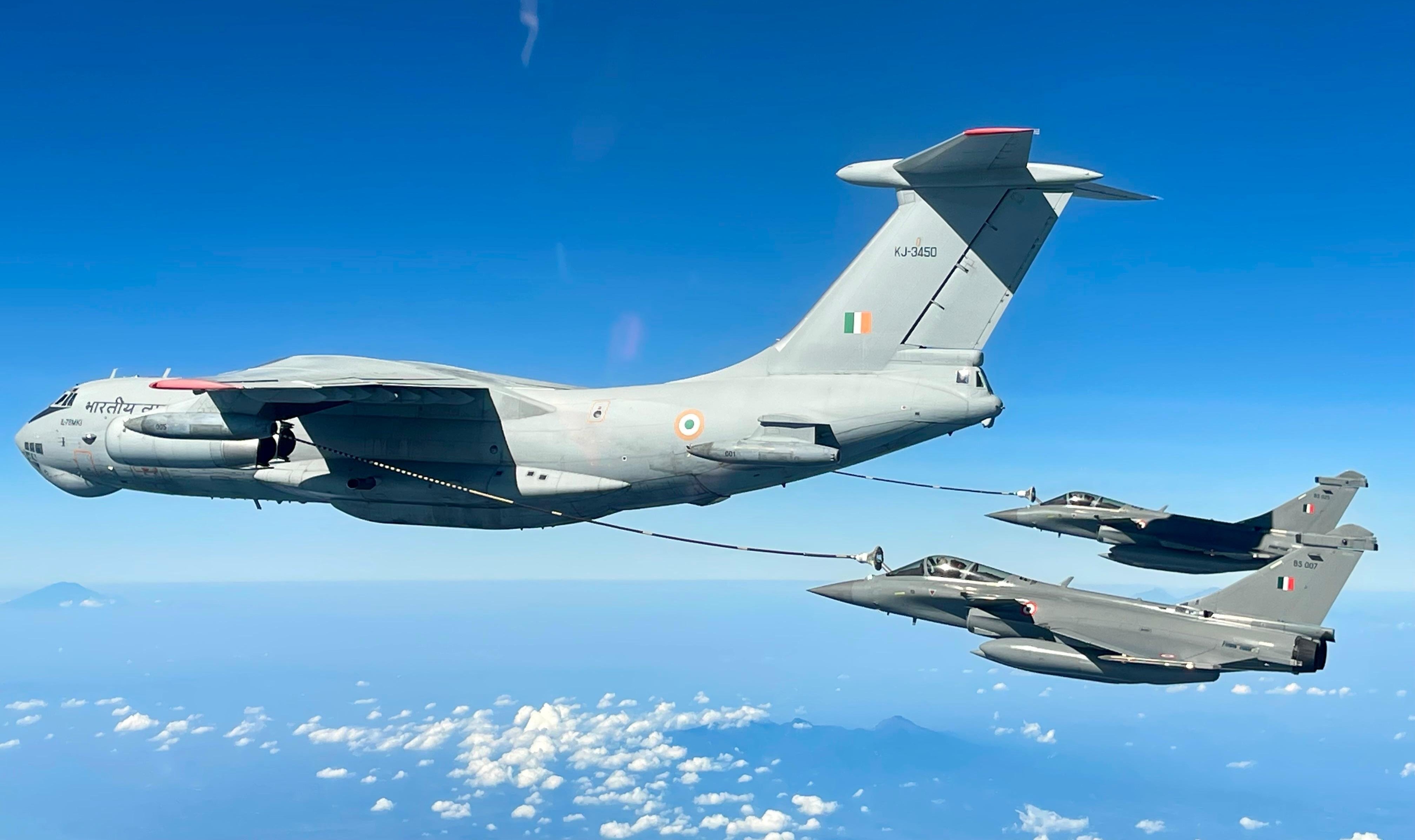
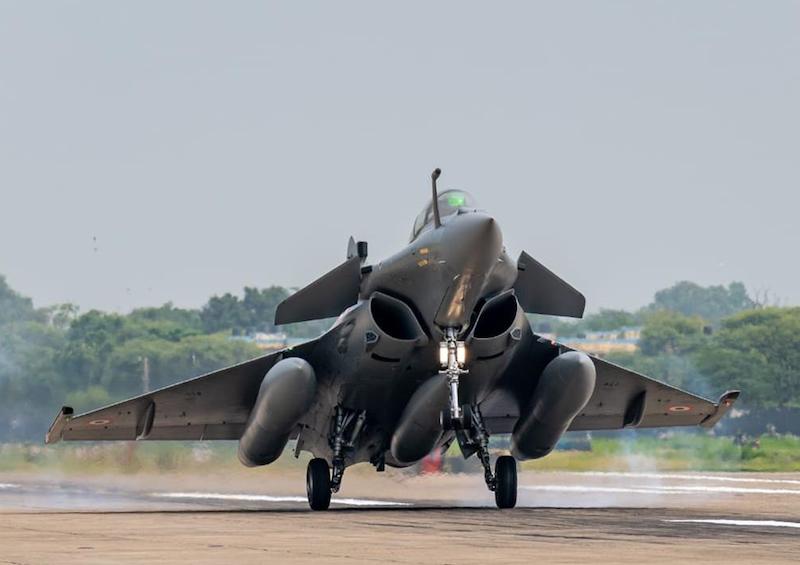
 An Indian Air Force Rafale fighter jet. (File photo)
New Delhi: When France and India finalize what could become the largest arms deal in Indian history – the acquisition of 114 Rafale F4 jets under the MRFA (multi-role fighter aircraft) programme – the most consequential negotiation may not be about price or delivery schedules. It is about software. Specifically, about whether India will ever control the lines of code that decide how its most advanced fighter jet thinks, sees, and fights.
A French business publication, L’Essentiel de l’Éco (The Essentials of the Economy), set off a diplomatic tremor earlier this month when it reported [archived link] that Paris had “firmly ruled out” transferring the source code for the Rafale’s SPECTRA electronic warfare (EW) suite and other core electronic systems to India. The Wire, drawing on that report and its own sources, confirmed [archived link] that this refusal would prevent the Indian Air Force (IAF) from independently integrating certain sensors and weapons, or customizing the aircraft’s software, without French approval.
The controversy has since grown into a broader debate about technological sovereignty, the limits of strategic partnership, and the meaning of Atmanirbhar Bharat when it comes to imported fighter jets.
Read also: IAF pushes for access to Rafale source code for indigenous integration
What is actually at stake?
The phrase “source code” is being used loosely in this debate, and that looseness obscures what India is actually asking for. The Rafale’s digital architecture has several distinct layers. At its core sits the modular data-processing unit (MDPU) and the modular mission computer (MMC), which manage sensor fusion, weapons logic, and navigation – essentially the aircraft’s cognitive centre.
On top of these run the proprietary software of the Thales RBE2 AESA radar and the SPECTRA EW suite, which handle radar waveforms, jamming techniques, threat libraries, and decoy behaviour. Above all of this are interface layers – application programming interfaces (APIs) – that govern how missiles, bombs, pods, and datalinks communicate with the aircraft.
India’s demand, as understood from official statements and defence reporting, covers enough access to all three layers to integrate indigenous weapons – the Astra beyond-visual-range missile (BVRM), the smart anti-airfield weapon (SAAW), the Rudram anti-radiation missile (ARM, and future munitions – without routing every integration request through Dassault Aviation or Thales.
The IAF also wants the ability to optimize mission data and EW behaviour for India-specific threat scenarios, and eventually to plug in Indian-designed sensors, such as the Uttam AESA radar. Without such access, the integration of indigenous weapons onto Rafale remains dependent on French firms, with all the cost, delay, and strategic vulnerability that entails.
This is not a narrow technical dispute. It goes to the heart of whether India’s most capable air-combat platform for the next two decades will be operationally autonomous or perpetually tethered to a foreign supplier.
Read also: France reluctant to share Rafale source code with India, reports say
Why is Paris refusing?
France’s refusal rests on three interlocking arguments, and all three are consistent with how western arms-exporting nations have historically treated their most sensitive defence technologies.
The first is intellectual property. Dassault, Thales, and MBDA have invested decades and billions of euros developing Rafale’s combat systems. These companies regard the SPECTRA logic and radar algorithms as commercially and strategically irreplaceable assets. Notably, Dassault has pointed out that some of the most sensitive code – particularly for the radar – is owned by Thales, which means that Dassault does not have the authority to transfer it regardless of political will in Paris.
The second argument is commercial. The Rafale is typically sold alongside MBDA missiles – MICA, Meteor, Scalp. Indian weapons, like the Astra and Rudram, are increasingly capable and price-competitive. If India gains the ability to independently integrate its own munitions onto Rafale, those weapons become attractive to other Rafale operators – Greece, Egypt, Qatar, the United Arab Emirates – who might then push for similar integration rights, eroding MBDA’s captive export market. Granting India deep software access, in this reading, is a commercial threat to France’s wider Rafale ecosystem.
The third argument is strategic and precedential. France, like the United States, treats mission-critical software for advanced platforms as a national security asset. Wider dissemination raises the risk of reverse engineering or compromise to adversaries. Any concession to India would create a precedent that other Rafale buyers – and potentially future buyers – could cite in demanding similar treatment.
France isn’t alone in this
Critics of the French position often frame it as a betrayal of a strategic partnership. What the comparison with other western fighters reveals, however, is that France is entirely within established norms.
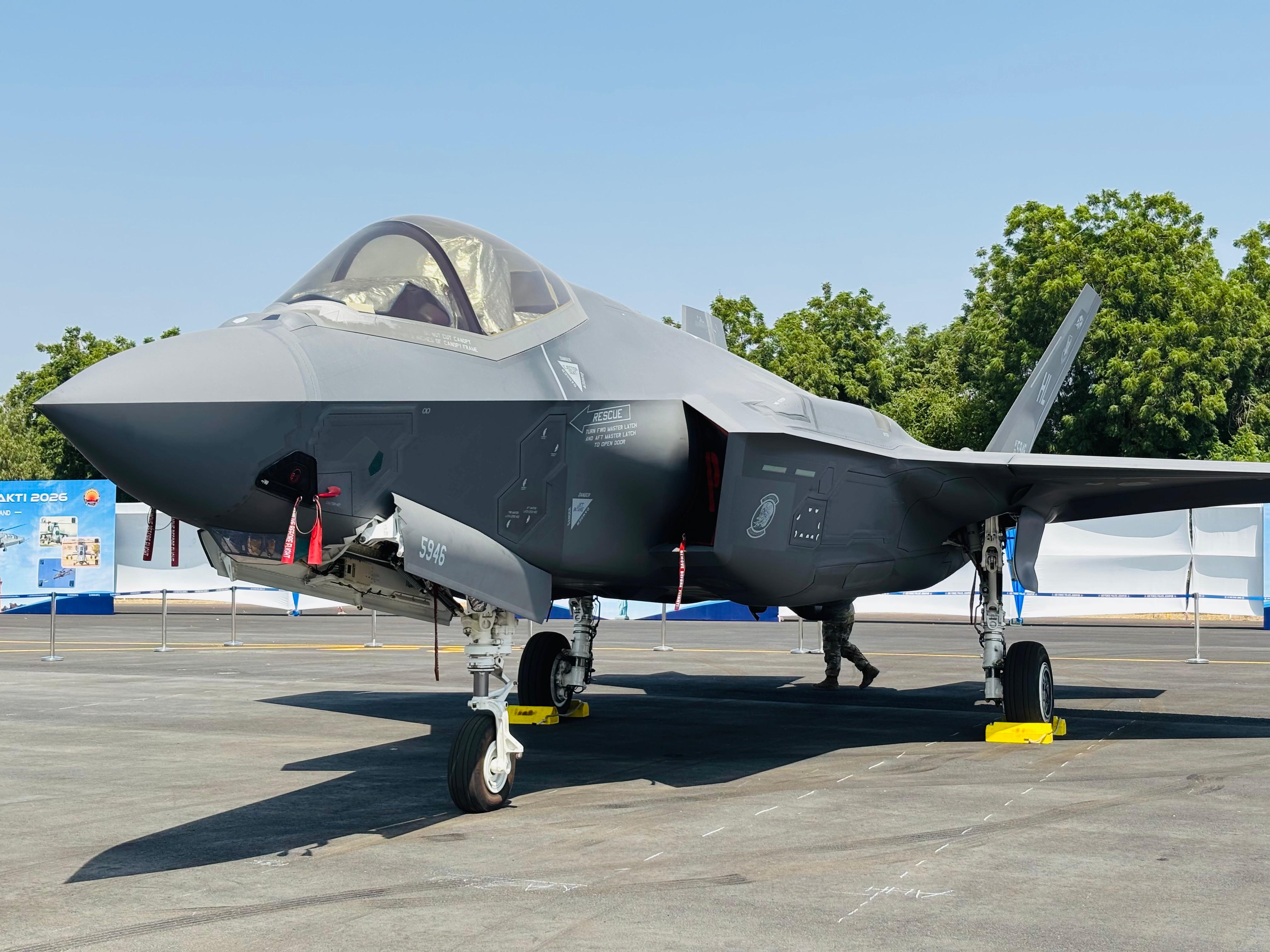
The clearest parallel is the F-35. The US has consistently refused to share the F-35’s underlying source code with any partner nation, including the United Kingdom – a Tier-1 participant that contributed billions to the programme’s development.
Instead, allies receive controlled customization through mission data packages and interface tools – but never the core code governing flight controls, radar, or weapons logic. European frustration over this arrangement has fuelled debates about “digital sovereignty” on the continent that closely mirror the concerns now being raised in India.
Sweden’s Saab has historically been more flexible. Earlier pitches for the Gripen in India’s MMRCA (medium multi-role combat aircraft) and MRFA competitions offered what was described as extensive – sometimes “full” – access to source code and technical documentation. However, even Gripen’s flexibility has limits wherever US-made subsystems are involved, since those fall under American International Traffic in Arms Regulations (ITAR) export controls.
Russia has dangled the promise of “full source-code access” for an export Su-57E variant as a marketing differentiator, but no verified instance exists of Moscow transferring complete mission-system code for any modern platform in a way that grants genuine modification rights. Such offers, analysts suggest, reflect marketing rather than enforceable commitment.
The norm across the western fighter market, then, is clear: no supplier transfers the core combat kernel or EW algorithms. Some level of customization is available via mission data and interface access, but the degree varies. India’s demands are not unreasonable by the standards of a rising power with indigenous defence ambitions. They are, however, beyond what any major western supplier currently offers as standard.
France’s offer
While ruling out full source-code transfer, France and Dassault appear to have placed a substantive compromise on the table, and it is this compromise – rather than an outright refusal – that will likely determine the shape of any MRFA deal.
According to multiple Indian defence publications, the emerging formula involves API-level access to the Rafale’s application layer, allowing Indian engineers to interface with the MDPU and mission computer to integrate indigenous weapons, sensors, and datalinks. Technically, this exploits the Rafale’s ARINC-653-compliant architecture to create partitioned “sandbox” domains – isolated software environments where India can run its own modules without touching safety-critical or classified French code.
India would receive software development kits, documentation, and test support to plug in the Astra Mk-2 and Mk-3, Rudram, smart bombs, and potentially certain pods.
The UAE, the first export customer for the Rafale F4, reportedly negotiated a similar arrangement – integrating its own guided munitions via APIs rather than core code access. Dassault officials have publicly described this as the Rafale’s “open architecture” enabling the integration of any weapon India chooses, while underlining that the radar and some EW elements remain off-limits because they are proprietary to Thales and therefore beyond Dassault’s power to share.
From France’s perspective, this compromise is already more permissive than most F-35 arrangements for non-American customers. From India’s perspective, it stops well short of software sovereignty. Both readings are correct. The compromise is best understood as giving India broad rights to integrate indigenous weapons and certain systems via defined interfaces, while France retains exclusive control over the deepest mission and EW algorithms.
Operational dimension
The controversy gained steam in the aftermath of India’s May 2025 Operation Sindoor against Pakistan. Contested accounts of the operation, including claims of Rafale losses and debates about how the jets performed in a dense, China-enabled Pakistani air-defence environment, brought the software question from specialist forums into mainstream defence discourse.
David Deptula, a retired US Air Force three-star general, quoted in The Wire, argued that the absence of access to the Rafale source code had constrained India during the operation, claiming that the IAF was unable to “rapidly reprogram” the warplane for indigenous munitions or optimise datalink interoperability. Whether or not those specific claims are accurate, Deptula’s broader point – that source code is now “the new sovereign edge in fighter-jet diplomacy” – reflects a growing consensus among air-power specialists.
The operational concern is real, though. In a fast-moving conflict, the ability to rapidly reprogram EW threat libraries, adjust radar modes, or reconfigure datalink parameters could be decisive. Under the current and proposed arrangements, India cannot do any of these things unilaterally for Rafale. Whether that gap proves critical in a future contingency depends on the specific nature of the threat and how India structures its mixed fleet – but it is a genuine vulnerability that military planners must account for.
What the compromise means
If implemented as described above, API-level access would represent a meaningful improvement over India’s current position. The IAF would be able to integrate its own weapons onto Rafale with considerably greater autonomy and speed than today, develop a domestic cadre of engineers familiar with complex avionics interfaces, and reduce long-term dependence on French firms for certain categories of upgrade.
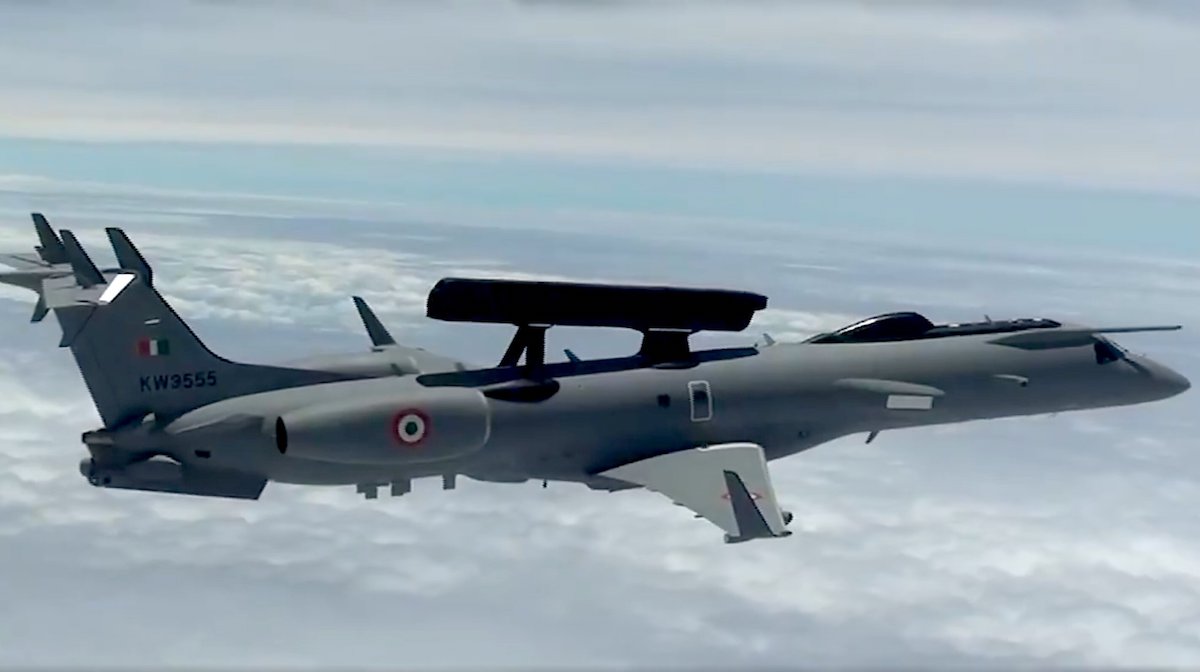
The ability to network Rafales with India’s Netra airborne early-warning aircraft and ground radar systems via Indian-defined datalink protocols would also be enhanced.
The limits, however, are equally real. Deep changes to radar behaviour, SPECTRA threat responses, or flight-control laws will continue to require French cooperation, certification, and payment. The combat kernel – the logic that decides how Rafale “thinks” in a contested environment – will remain inaccessible. Some analysts argue this creates a long-term strategic lock-in, where India assembles sophisticated airframes and integrates weapons but does not control the cognitive layer that determines how the aircraft fights.
This concern is amplified by the scale of the proposed acquisition: 114 fighters would make Rafale the IAF’s pre-eminent strike platform for decades.
There is also an Atmanirbhar Bharat dimension. Critics argue that for a deal of this magnitude – likely between $28 to $40 billion – accepting software dependency on a foreign OEM (original equipment manufacturer) undermines India’s professed commitment to self-reliance. They point to the experience with the Mirage 2000, for which France never shared key source code even after decades of operation, as a cautionary precedent.
Strategic calculation
The debate between those who view the API compromise as adequate and those who regard it as insufficient is, at its core, a debate about what India should prioritize in the near term. Pragmatists within the strategic community argue that absolute software sovereignty over a foreign 4.5-generation fighter is simply not available anywhere in the western market, and insisting on it is tantamount to insisting the deal fail.
They contend that API access, combined with meaningful indigenization targets, co-production of fuselages, and maintenance, repair, and overhaul facilities for the Rafale’s M88 engine, represents a workable balance. They also highlight the broader “Horizon 2047” India-France strategic partnership – spanning defence, space, nuclear, cyber, and artificial intelligence – and caution that pushing Paris to rupture over source code would be strategically self-defeating.
Critics counter that India’s negotiating leverage – as the buyer of what would be France’s largest-ever Rafale export order – is precisely the moment to demand more than standard terms. They argue that the deal should include India-France joint software-integration laboratories, limited inspection rights over specific application-layer code, or co-ownership provisions, even if France will not open SPECTRA’s or the radar’s core algorithms.
They also point to alternatives: Saab’s historically more flexible Gripen offer, the still-contested Russian Su-57E pitch, and the option of accelerating indigenous programmes – Tejas-Mk2 and the AMCA (advanced medium combat aircraft) – rather than locking tens of billions into a platform whose brain India will never fully own.
A middle path, and probably the most likely outcome, is that India accepts a variant of the API-based compromise but extracts hard legal guarantees on the scope and duration of interface access, firm timelines for engineering documentation and training, and quantified indigenization commitments across related domains. The IAF’s reported insistence that Indian weapons must be fitted to all 114 aircraft from delivery – not retrofitted later – suggests New Delhi is driving a harder bargain than it has publicly acknowledged.
Bigger picture
The Rafale source-code dispute is a crystallizing moment for Indian defence policy, not merely a commercial negotiation. It illustrates, with unusual clarity, that software has become the real high ground in modern fighter-jet sovereignty. Owning the airframe and assembling it locally – however valuable – does not translate into operational autonomy if the code governing sensors, weapons, and electronic warfare remains under foreign lock and key.
The lesson for India’s indigenous programmes is equally clear. Full software and systems sovereignty must be a non-negotiable requirement for Tejas-Mk2, AMCA, and India’s next generation of radar and EW systems. The dependence that comes from importing core code – whether from France, Russia, or anyone else – should be treated as the exception it is, not a template to be repeated.
In the immediate term, India faces the familiar trade-off between sovereign aspiration and operational urgency. Its MiG-21 fleet is being retired; its two-front air posture demands capable jets now. Rafale, even with constrained software access, offers capabilities that no indigenous platform can match in the near term.
As things look now, the Narendra Modi government will almost certainly proceed with the deal, accept a meaningful but bounded version of the API compromise, and continue pressing for maximal integration flexibility.
Whether that is judged a pragmatic success or a strategic concession will ultimately be determined not in diplomatic communiqués but in how Rafale-equipped IAF squadrons perform when next called upon – and in whether, by the time those jets reach mid-life, India has built the indigenous fighters whose minds it truly controls.
Follow us on social media for quick updates, new photos, videos, and more.
X: https://x.com/indiasentinels
Facebook: https://facebook.com/indiasentinels
Instagram: https://instagram.com/indiasentinels
YouTube: https://youtube.com/indiasentinels
© India Sentinels 2025-26