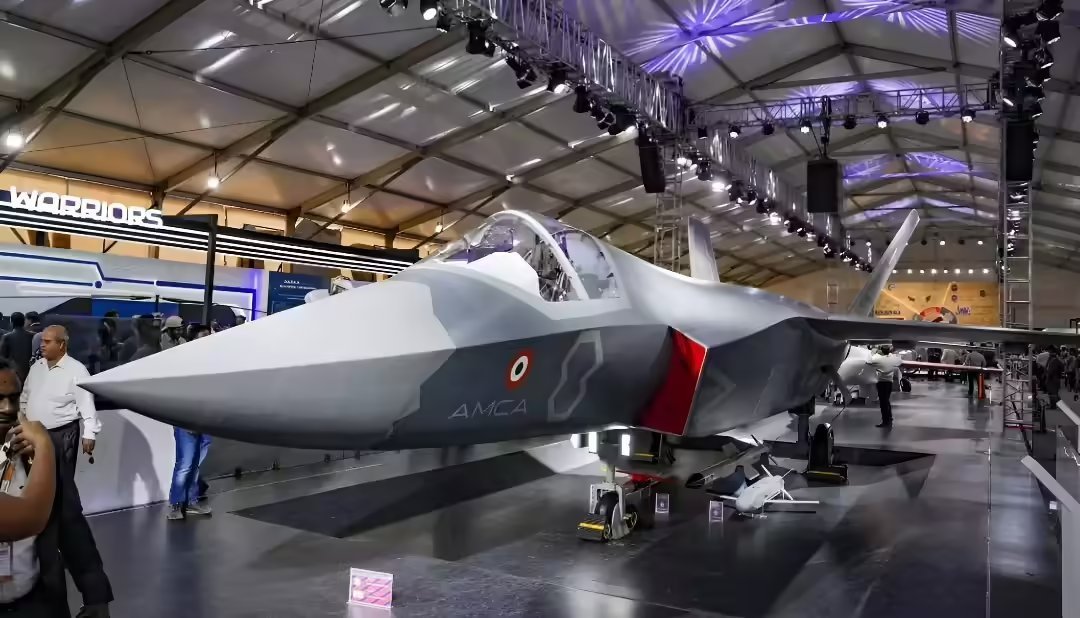
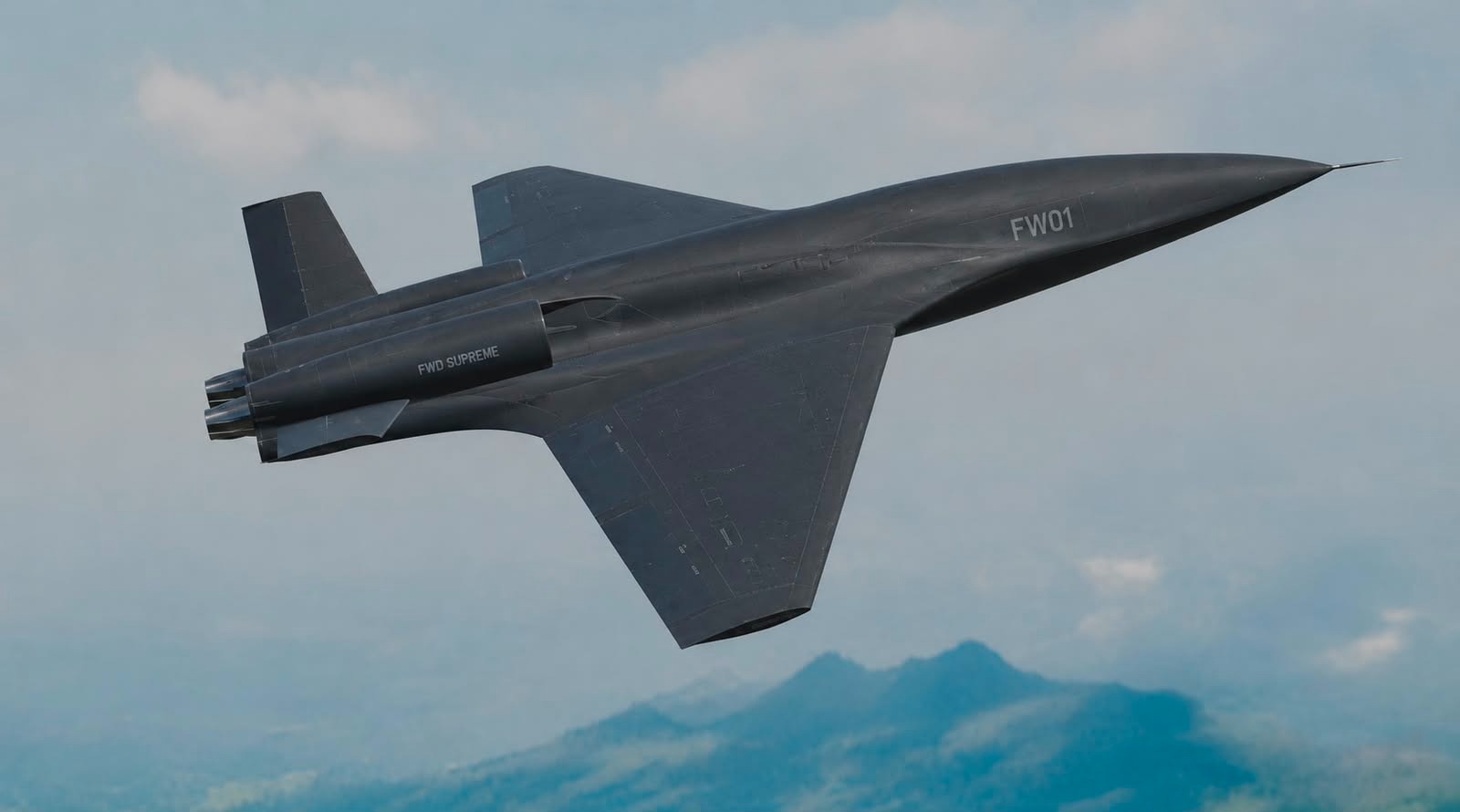
 FWD Supreme Lite concept. (Photo: FWDA)
New Delhi: Flying Wedge Defence & Aerospace (FWDA), a Bengaluru-based defence technology firm, has unveiled AI-piloted fighter jet concept, named FWD Supreme. The company simultaneously announced that the first flight of its lighter technology demonstrator, the FWD Supreme Lite, is targeted for the third quarter of 2026.
The announcement positions India alongside the United States, Turkey and Germany as one of a small group of countries actively pursuing AI-controlled combat aircraft. The comparison, however, requires some qualification: the American and Turkish programmes are considerably more advanced.
Turkey’s Baykar Kizilelma, an unmanned combat jet funded by one of the country’s largest defence companies, completed the world’s first fully autonomous close-formation flight between two armed jet-powered drones in December 2025, and has already fired a beyond-visual-range missile without human input.
The US Air Force’s Collaborative Combat Aircraft programme, backed by billions in Pentagon funding, selected Anduril and General Atomics in 2024 to build more than a hundred production-representative aircraft, with first flights of both types completed by August 2025. FWD Supreme, by contrast, is still at concept stage, and FWDA is a start-up that had raised just $1.32 million in funding as of early 2026.
In November 2023, it became the first Indian private company to obtain DGCA type certification for a domestically developed unmanned aircraft. Its FWD-200B unmanned bomber completed its maiden flight in September 2024. In August 2025, it announced its Kaal Bhairava medium-altitude long-endurance (MALE) combat drone had secured a $25-million export order from an unidentified South Asian nation.
What FWD Supreme is designed to do
Unlike conventional drones that are remotely piloted by human operators on the ground, FWD Supreme is being designed to fly itself, using artificial intelligence to perceive its environment, analyse threats, decide on a course of action and act, with minimal human intervention.
The intended capabilities include sensor fusion, autonomous decision-making, cognitive mission execution and advanced combat functions in contested airspace.
“The idea is to deploy multiple AI-piloted fighter jets operating together as a coordinated swarm force against higher-value enemy manned platforms,” the FWDA chief executive officer, Suhas Tejaskanda, said.
“By leveraging intelligent networking, autonomous decision-making, and cost asymmetry, it will address high-cost combat scenarios where even if four to five aircraft are lost during an engagement, the remaining aircraft can continue overwhelming enemy defences, or force enemy manned fighters to retreat. The objective is to function as a force multiplier by fundamentally altering the economics and dynamics of air combat,” Tejaskanda added.