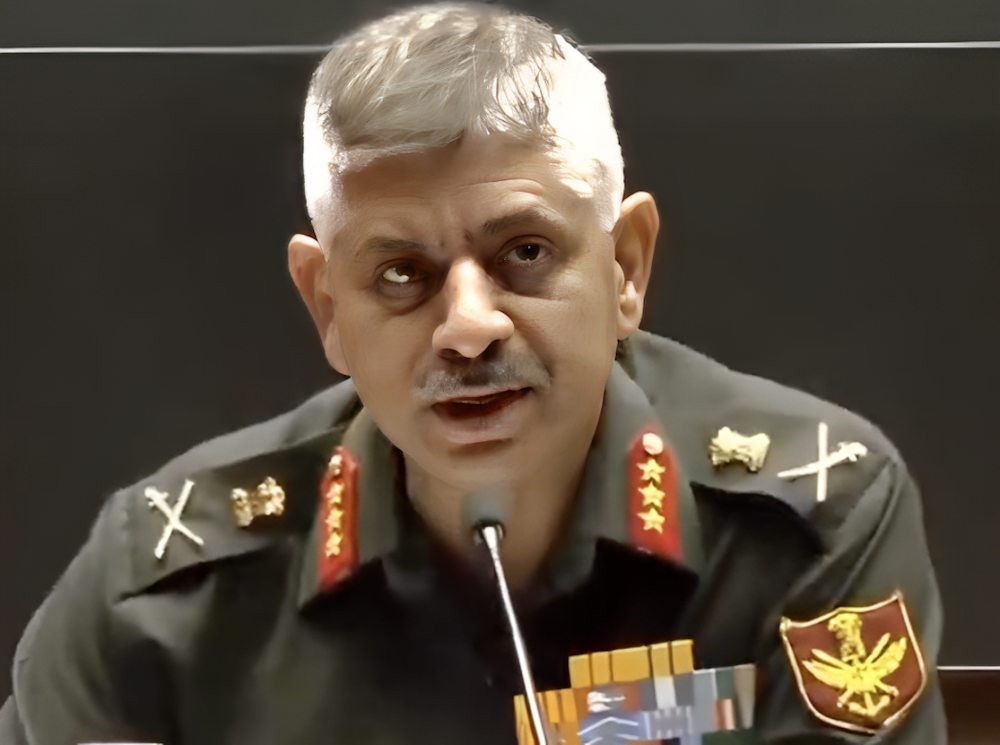
 Lt Gen Zubin A Minwalla.
Jaipur: A year after Operation Sindoor reshaped India’s military thinking, the country’s armed forces are accelerating a comprehensive overhaul of the country’s air-defence framework – one designed to counter everything from drone swarms and loitering munitions to ballistic missiles.
Lieutenant General Zubin A Minwalla, the deputy chief of the Integrated Defence Staff, outlined the contours of the programme at a news conference at the Sapta Shakti Hall, South Western Command HQ, in Jaipur, on Thursday, to mark the operation’s first anniversary. “We are working towards an integrated and layered architecture to ensure seamless protection against multiple threat vectors to include drones, loiter ammunition and missiles,” he said.
The push reflects lessons drawn directly from Operation Sindoor, India’s military campaign launched in May 2025 in response to the Pahalgam terror attack on April 22, 2025, in which 26 tourists were killed by Pakistan-backed militants. Indian forces struck terror facilities linked to Jaish-e-Mohammed and Lashkar-e-Taiba in Bahawalpur and Muridke, using Rafale jets equipped with SCALP cruise missiles and HAMMER precision-guided bombs. As Pakistan retaliated with aerial strikes, India’s air-defence network – including the Integrated Air Command and Control System (IACCS) and the Army’s battlefield air-defence platform Akashteer – detected and neutralised hundreds of drones and missiles of various types launched against civilian and military sites.
From battlefield to blueprint
Lt Gen Minwalla described Operation Sindoor not as an isolated engagement but as a validation of years of structural reform. “The success of Operation Sindoor is firmly rooted in the reforms initiated by the government, including the creation of the post of the chief of defence staff (CDS),” he said.
At the heart of the new architecture is deeper integration of existing systems. The IACCS and Akashteer – which already provide a unified air situation picture – are now being folded into a fully functional joint operations control centre to sharpen joint targeting and decision-making across the three services.
The IACCS, developed by state-owned Bharat Electronics Limited and riding on the Air Force’s secure digital communication network AFNet, is currently in its third phase of expansion. This phase, accelerated after Operation Sindoor, focuses on multi-domain operations, artificial intelligence-driven threat evaluation, enhanced sensor fusion, and greater tri-service connectivity.
The scale of the network’s role during the conflict was considerable. The IACCS links radar stations, missile batteries and airbases across India, while Akashteer integrates sensor data and weapon control across Army units, together creating a real-time, unified air picture that allows the Army, Air Force, and Navy to act in coordination.
Drone and loitering munitions issue
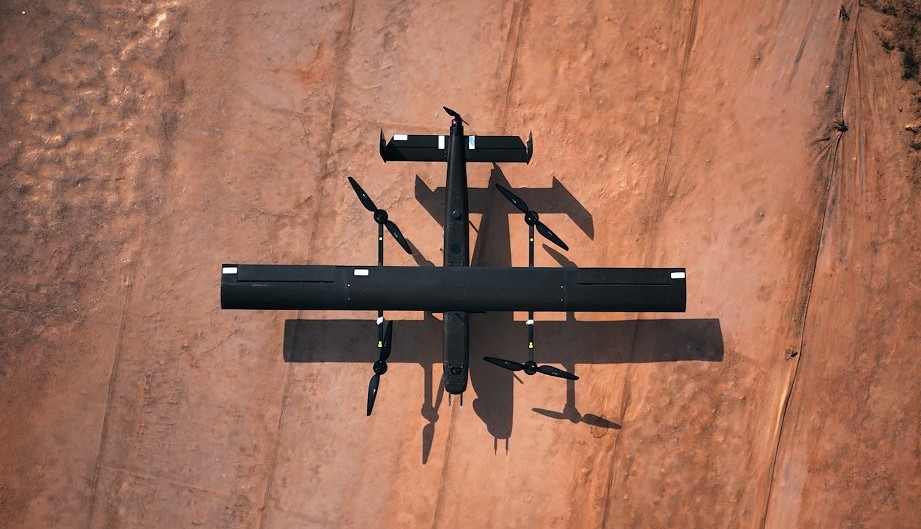
The specific emphasis on loitering munitions – often called kamikaze drones – alongside conventional drones and missiles signals a strategic acknowledgment of how the character of warfare has changed. Loitering munitions hover over a target area before striking with precision, and their widespread use in recent conflicts from Ukraine to the Middle East has demonstrated their outsized impact relative to their cost.
“Emerging technologies have underscored the importance of unmanned and autonomous systems,” Lt Gen Minwalla said, indicating that counterdrone and counterloiter-munitions capabilities will be a central pillar of the layered grid.
India’s existing multi-tiered air-defence structure extends from long-range systems down to close-in weapon systems and man-portable platforms, with overlapping zones designed to tackle specific threats – from long-range missiles to low-flying drones. The new framework seeks to make this architecture more coherent, networked, and jointly operated.
Space and information domains
The programme extends into domains beyond conventional radar and interceptors. Close coordination with the Indian Space Research Organisation (Isro) and the department of space is being used to strengthen real-time intelligence, surveillance and reconnaissance capabilities, feeding targeting data to ground-based and airborne intercept platforms.
On the information side, the government is establishing a defence strategic communication division equipped with AI-enabled tools to counter disinformation in real time. Lt Gen Minwalla cited the civil-military coordination with the ministry of information and broadcasting during Operation Sindoor as the model for this effort. The new division formalizes that arrangement.
Pakistan and conventional missiles
Lt Gen Minwalla offered pointed remarks about India’s awareness of Pakistani military capabilities. “We know what its capabilities are. We know exactly what it has. So whatever structure it creates, we know what it has to bring against us,” he said, adding that India was working to push its own capabilities beyond their current level.
Separately, the defence secretary, Rajesh Kumar Singh, has flagged a broader rethink of India’s approach to conventional missiles, raising the possibility that New Delhi may consider establishing a dedicated conventional missile force – a move that would represent a significant structural shift in the country’s military posture.
Strategic analysts now regard Operation Sindoor as a watershed moment in India’s national security doctrine, marking a shift from strategic restraint to rapid, technology-driven military retaliation against cross-border threats. The air reforms that are now underway suggest that shift is being institutionalized, not merely celebrated.
Follow us on social media for quick updates, new photos, videos, and more.
X: https://x.com/indiasentinels
Facebook: https://facebook.com/indiasentinels
Instagram: https://instagram.com/indiasentinels
YouTube: https://youtube.com/indiasentinels
© India Sentinels 2026-27