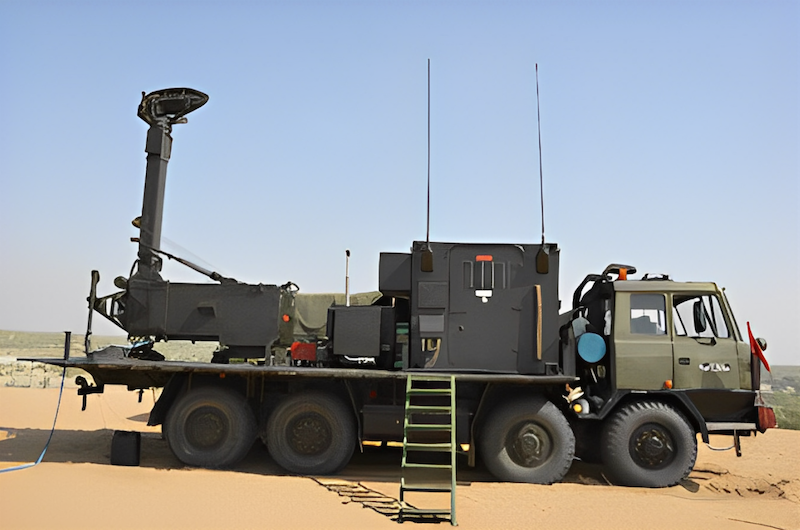
 A unit of the Indian Army’s Akashteer air-defence system. (File photo for representation.)
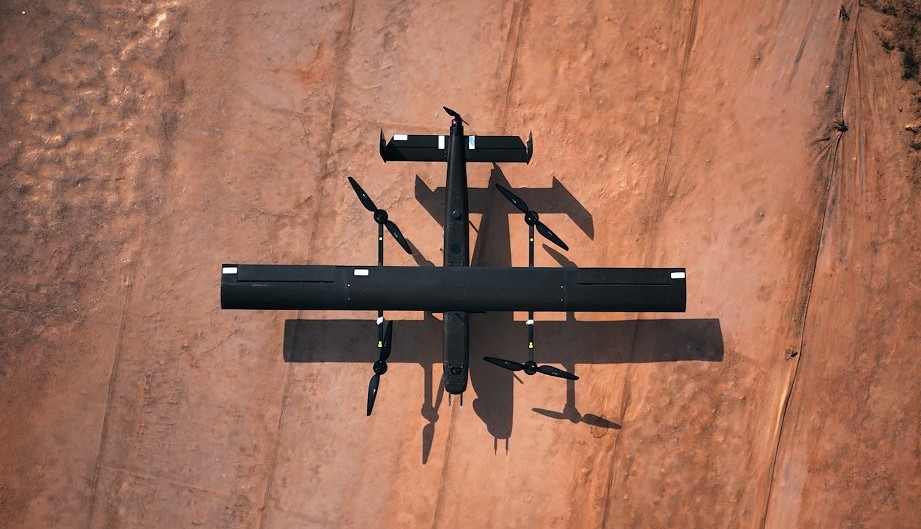
New Delhi: The Indian Army and the Indian Navy have separately issued requests for information on drone systems – one to acquire high-speed aerial targets for anti-missile training at sea, the other to procure autonomous interceptors capable of physically destroying hostile unmanned aircraft. This is seen as a broad institutional acknowledgment that drones now define the cutting edge of modern warfare.
The two procurement initiatives, while distinct in purpose, together reflect the urgency with which the government is moving to address capability gaps that have become impossible to ignore, particularly after the June 21 drone attack on Jammu Air Force Station and Pakistan’s drone attacks during Operation Sindoor in May 2025.
Navy seeks realistic stand-ins for sea-skimming missiles
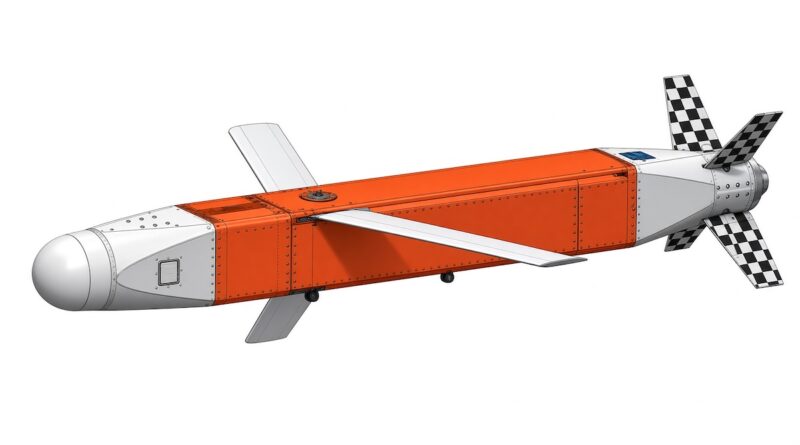
The Indian Navy’s requirement centres on what the Ministry of Defence formally designates EAT (NG) – expendable aerial targets (next generation). These are high-speed drones designed to be destroyed during live-fire exercises, giving warship crews a realistic simulation of the kind of sea-skimming anti-ship missiles that a modern naval adversary might deploy.
The technical specifications leave little room for compromise. The target drone must sustain speeds of at least 300 metres per second at low altitude – approximately Mach 0.87, close to the speed of sound – maintain flight for 60 minutes, and skim as low as five metres above the sea surface. Climb rate must be no less than 20 metres per second, and the drone must be capable of executing 2G sustained turns to replicate the agility of contemporary anti-ship missiles.
Radio control must remain reliable up to 100 kilometres from the ground station, alongside full autonomous flight capability along pre-programmed routes, including mid-course changes in speed and altitude. A single ground control station must manage at least six such drones simultaneously.
The system must carry a low radar cross-section by default, with provision to augment its signature using transponders or corner reflectors when a more detectable profile is required for training purposes. An acoustic miss-distance indicator – able to detect fire from weapons ranging from 20mm cannon to surface-to-air missiles within a 10-metre radius – is mandatory for post-exercise assessment of how close a shot came to its target.
Launch must be feasible from ships or shore via rocket-assisted take-off in conditions up to sea state 3 and winds of 30 knots. After a mission, the drone must remain buoyant long enough to be recovered by boat or helicopter. The expected service life is 15 years.
The operational rationale is clear. The Navy’s surface combatants carry several surface-to-air missile systems, including the Israeli Barak series, that require periodic live-fire evaluation against realistic targets. With INS Vikrant – India’s first domestically built aircraft carrier, commissioned in September 2022 – and INS Vikramaditya both now operational, and with the fleet continuing to grow, keeping crews proficient in anti-missile defence has moved from routine priority to operational necessity.
Vendors have eight weeks from the RFI’s publication on the ministry of defence website to respond. The procurement will follow a single-stage two-bid system with a 12-month delivery deadline after contract award. Suppliers must indicate whether they can meet the “buy Indian-IDDM” category, which requires over 50 per cent indigenous content, or the “buy Indian” threshold of over 60 per cent, both defined under the defence acquisition procedure 2020.
Army moves to plug a gap Jammu exposed
As India Sentinels had reported earlier this month, the Indian Army’s requirement is shaped by harder and more immediate experience. Its RFI for a drone interception system explicitly describes the proliferation of low radar cross-section drones as an “urgent” threat demanding kinetic countermeasures – meaning physical destruction of the target, not merely jamming or spoofing it.
The urgency has a specific origin. In June 2021, two improvised explosive-laden drones struck the Jammu Air Force station in what was the first such attack on an Indian military installation. Persistent drone intrusions along the line of control since then have laid bare a critical gap in low-altitude air defence that conventional missile systems cannot economically address.
The calculation is stark: deploying a missile costing tens of millions of rupees to down a commercially available drone worth a fraction of that is not a viable long-term response, particularly against coordinated swarms.
Each drone interception system under the RFI would consist of a ground radar sensor, a portable control station, and four interceptor drones. The radar must track at least 20 targets simultaneously across 360 degrees, with detection ranges of 4 kilometres for micro-sized platforms and 10 kilometres for slightly larger ones.
The interceptor drones must be fire-and-forget weapons guided by onboard machine vision, operable at altitudes up to 5,000 metres above sea level – a specification with direct relevance to deployments in Ladakh and other high-altitude terrain along the northern frontier. The Army requires both kinetic-impact and high-explosive variants, the latter fitted with a proximity fuze designed to detonate near a target rather than requiring a direct hit.
The system must integrate with Akashteer, the Army’s indigenous automated air-defence control and reporting system, which provides a real-time networked picture of low-altitude airspace and coordinates responses across multiple platforms. Indigenous content must constitute at least 50 per cent of the system.
Wider picture
Both procurement drives sit within India’s self-reliance push in defence, which seeks to reduce dependence on foreign suppliers while building a domestic industrial base capable of meeting complex military requirements. The indigenization conditions attached to both RFIs are consistent with that policy, though the proof will lie in whether Indian industry can meet specifications that are, in several respects, at the frontier of current drone technology.
More broadly, the twin initiatives reflect a global pattern. The widespread and devastatingly effective use of low-cost drones in the Russia-Ukraine conflict and across West Asia has forced militaries everywhere to revisit their air defence assumptions. India, with active territorial disputes on two fronts and a history of cross-border drone infiltration, has more reason than most to move quickly.