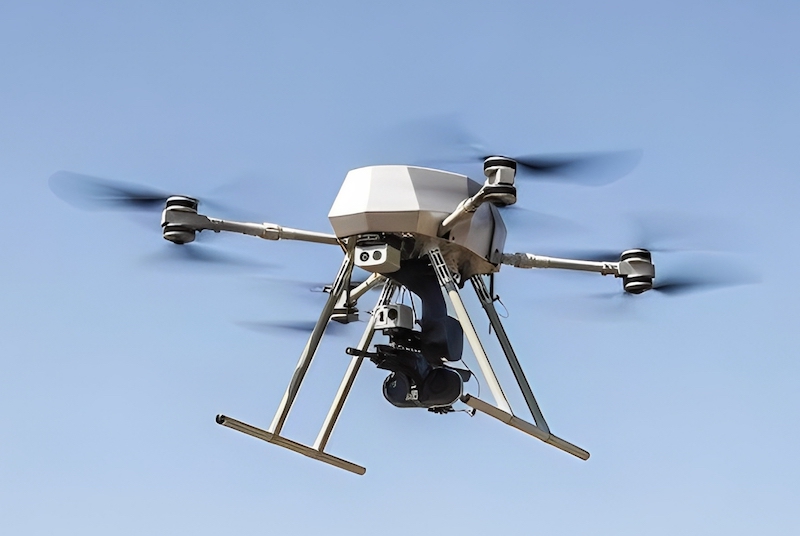
 An Asisguard Songar drone in flight. Pakistan used this model of drones against India during Op Sindoor.
New Delhi: The Ministry of Defence has issued a request for information (RFI) for a dedicated drone-catcher system for the Indian Army, as the country’s military planners move to address a capability gap exposed during Operation Sindoor. In the May 2025 confrontation with Pakistan, cheap and low-signature unmanned aerial systems (UAS) played a markedly disruptive role.
The defence ministry RFI, released on Friday, does not specify the quantity to be procured. It marks the preliminary stage of an acquisition process that will involve technical evaluation and field trials before a formal procurement case is drawn up.
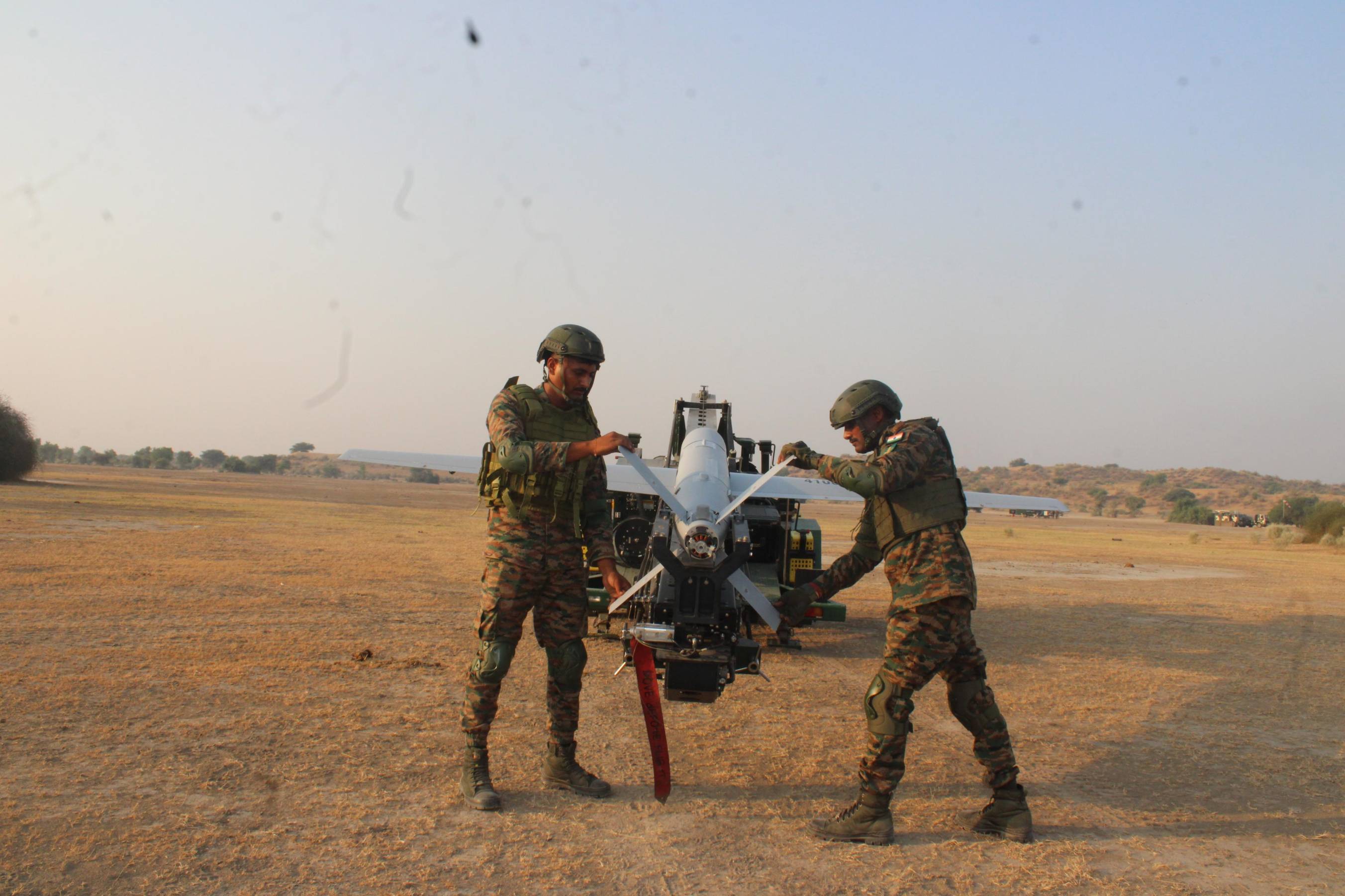
The timing is significant. During Operation Sindoor, Pakistan deployed swarms of low-cost commercial-grade and locally modified drones alongside Turkish-made Asisguard Songar unmanned aerial vehicles (UAVs) across Indian military positions ranging from Jammu & Kashmir to Gujarat, as India Sentinels had reported then. Many of these attacks were composed of unsophisticated drones apparently functioning as flying chaff – probing air-defence positions and cluttering radar returns. The tactic strained India’s interceptor stocks while exposing the limits of conventional air defence against targets with a minimal radar cross-section (RCS).
India has since committed approximately $4.6 billion in emergency military spending, with around $470 million expected to be directed into counter-UAV technologies over the next two years, according to the Drone Federation of India.
The proposed drone catcher system is to be built around three core elements: a drone sensor, a drone catcher, and a ground control station (GCS). Taken together, the system must be capable of detecting, tracking, and neutralizing low-RCS UASs – including those deployed in swarms – using a net-based physical interception mechanism. It must also be operable either independently or alongside existing air-defence weapon systems and other counter-UAS platforms already in service.
The Army has stipulated that the system be deployable across the full range of terrain it operates in – plains, deserts, and high-altitude areas. This last category is particularly relevant given the unresolved line of actual control (LAC) standoff with China, where drone activity has increased steadily over recent years.
On the sensor side, the RFI calls for electronically scanned array technology, or better, with 360-degree coverage and the ability to simultaneously detect and track at least 20 drones. The system must be capable of detecting, tracking, and designating targets with a radar cross section as small as 0.01 square metres at a minimum slant range of 4 kilometres – a demanding specification that targets the class of small commercial and military drones that have proved most troublesome in recent conflicts.
The GCS functions as the command hub, relaying data from the sensor to the catcher over a secure link. It displays telemetry on hostile targets, computes interception solutions via an onboard processor, and transmits actionable data to the catcher. The interface is to be laptop- or tablet-based to allow operational mobility.
The drone catcher itself is required to be fully autonomous in acquiring and neutralizing designated targets. On receiving a targeting solution from the GCS, it must independently intercept and disable the hostile drone using a net-capture mechanism. The system must function as a standalone unit or as part of a wider integrated counter-UAS deployment.
Beyond physical interception, the system is required to carry a jammer subsystem capable of electronic attack against hostile unmanned systems. The specifications include radio frequency denial, selective denial of global navigation satellite system signals (GNSS), GNSS deception, and coverage of both standard and non-standard frequency bands – a combination designed to defeat adversaries who use frequency-hopping or encrypted command links.
The move reflects a broader shift in air-defence thinking. As small drones become cheaper and more accessible, armed forces are seeking layered responses that combine detection, electronic attack, and non-kinetic interception.
India’s urgency on this front reflects a pattern seen in other active conflict zones. The use of low-cost drones by Pakistan during the May conflict bore clear comparisons to Russia’s deployment of Iranian-made Shahed drones in Ukraine to overwhelm western-supplied air-defence systems – draining expensive interceptor missiles and ammunition through sheer volume.
Domestic industry is already moving to fill the gap. Bharat Electronics Limited’s D4 system is a vehicle-mounted counter-drone platform that uses both soft-kill jamming and hard-kill kinetic methods, while the startup Armory has introduced a domestically developed jammer called SURGE, designed to provide real-time signal interception, tracking, and neutralization. Whether these or similar systems will be considered under the new RFI process remains to be seen; the Army’s requirement for net-based physical capture is more specific than either of those platforms currently addresses.
The RFI process will help finalize qualitative requirements and determine the procurement category before shortlisting vendors – a procedural step that, under normal timelines, can take several months before field trials begin.