New Delhi: The defence ministry on Thursday signed two contracts worth about ₹4,106 crore to give the Indian Air Force (IAF) a dedicated communication satellite and to equip the Indian Navy with more Varunastra heavyweight torpedoes.
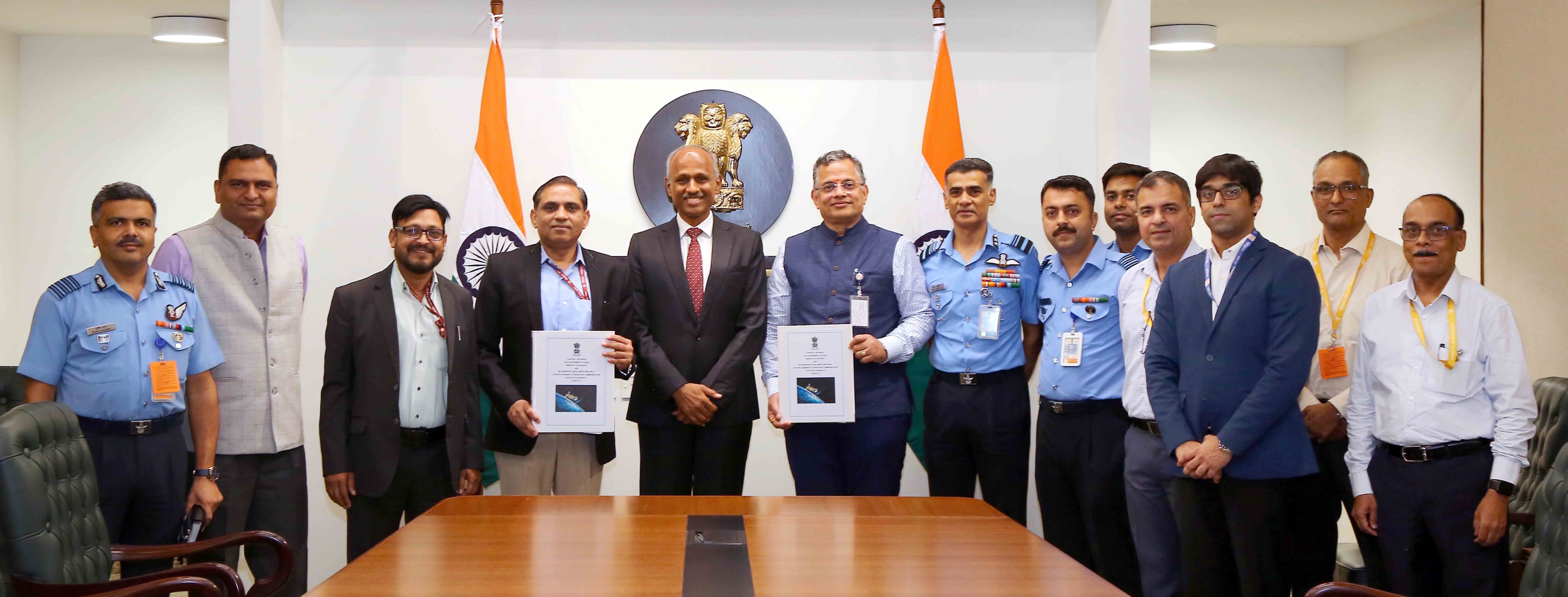
The agreements were signed in New Delhi in the presence of the additional secretary and director general (acquisition), A Anbarasu.
The larger of the two, valued at ₹2,563 crore, is for the GSAT-7C satellite. It was signed with NewSpace India Limited (NSIL), Bengaluru. The ₹1,543-crore contract for Varunastra torpedoes went to Bharat Dynamics Limited (BDL), Hyderabad.
In its statement, the ministry said the satellite, designed, developed and manufactured in India, will improve the secure, resilient and seamless communication of IAF assets and so raise operational effectiveness. It described the torpedo order as a boost to maritime security and a step in indigenizing advanced military technology.
What GSAT-7C will do
GSAT-7C is meant to give the Air Force a secure link beyond line of sight, so aircraft, ground stations and units stay connected even where terrain or the radio horizon would otherwise break contact. It is dedicated to secure software-defined-radio links, which are radios whose functions are set by software and can be updated or encrypted more flexibly than older hardware.
The project is not new. The Defence Acquisition Council first cleared it in November 2021 at ₹2,236 crore, covering the satellite and ground hubs for real-time connectivity. The latest release does not say whether the new contract includes those ground hubs or the launch.
The satellite follows an established line. The Indian Space Research Organisation (Isro) launched GSAT-7A for the Air Force and Army on December 19, 2018, after the Navy’s GSAT-7.
Unlike those, GSAT-7C will serve the IAF alone, which gives it a network it controls instead of one shared across services or leased commercially.
Varunastra: the Navy’s heavyweight
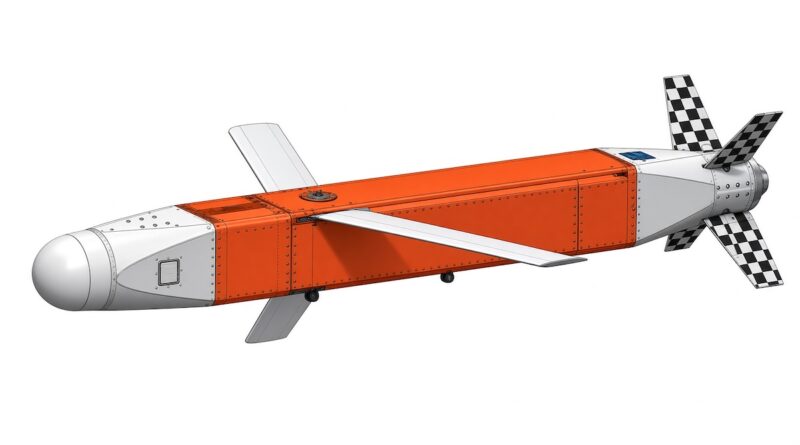
Varunastra is a ship-launched, electrically propelled torpedo built to hunt submarines. It was developed by the Naval Science and Technological Laboratory (NSTL) in Visakhapatnam, a Defence Research and Development Organisation (DRDO) laboratory, and is manufactured by BDL.
The weapon is 533 mm in diameter and nearly 7.8 metres long. BDL lists an operating depth of 8 to 600 metres and a speed of up to 40 knots. Publicly cited figures put its range at about 40 km, with a warhead of roughly 250 kg, though the ministry has not confirmed these.
The torpedo homes in on targets acoustically and uses autonomous guidance and countermeasure-resistance features, and its indigenous content is over 95%.
The Navy first received Varunastra in 2016. It is meant for destroyers, frigates and anti-submarine corvettes that carry heavyweight torpedoes. This is not BDL’s first order: a contract worth ₹1,187.82 crore for the weapon was signed in 2019, with production at BDL’s Visakhapatnam unit.
The Defence Acquisition Council also approved the procurement of additional Varunastra torpedoes in 2025, as part of eight proposals worth over ₹54,000 crore. Thursday's contract converts that clearance into an order.
Why it matters
Both deals fit the government’s push for self-reliance in defence under ‘Aatmanirbhar Bharat’ and ‘Make in India’. For the Air Force, the satellite reduces dependence on shared or commercial links for sensitive traffic.
For the Navy, the order adds to its anti-submarine capability as more submarines operate in the Indian Ocean region.