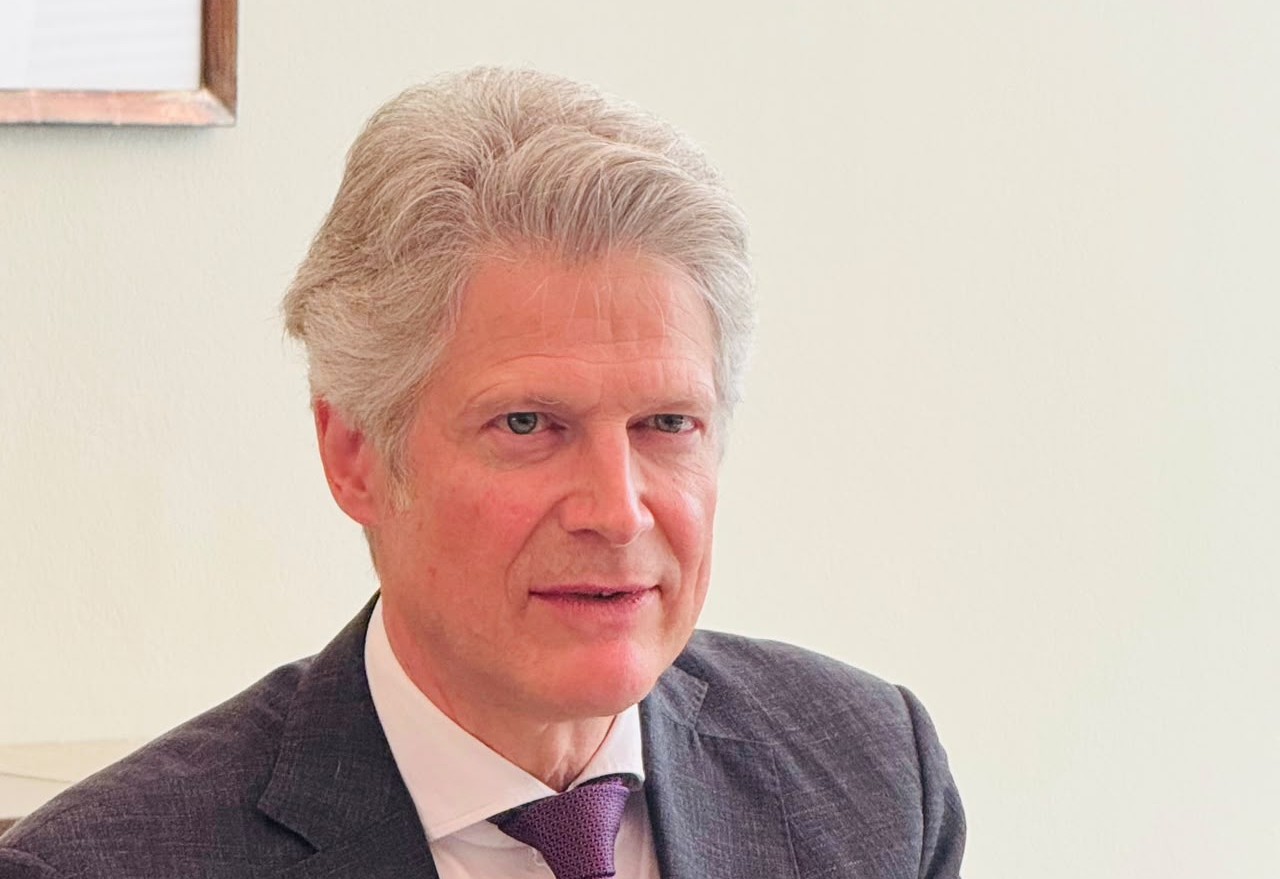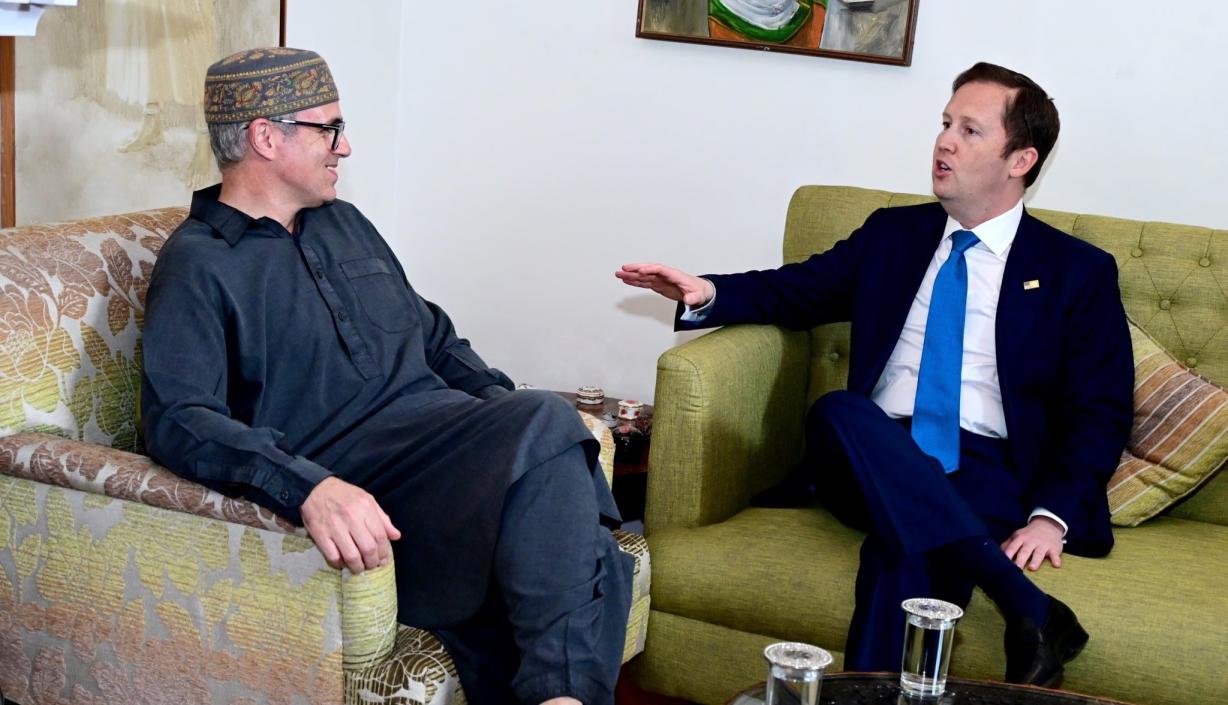
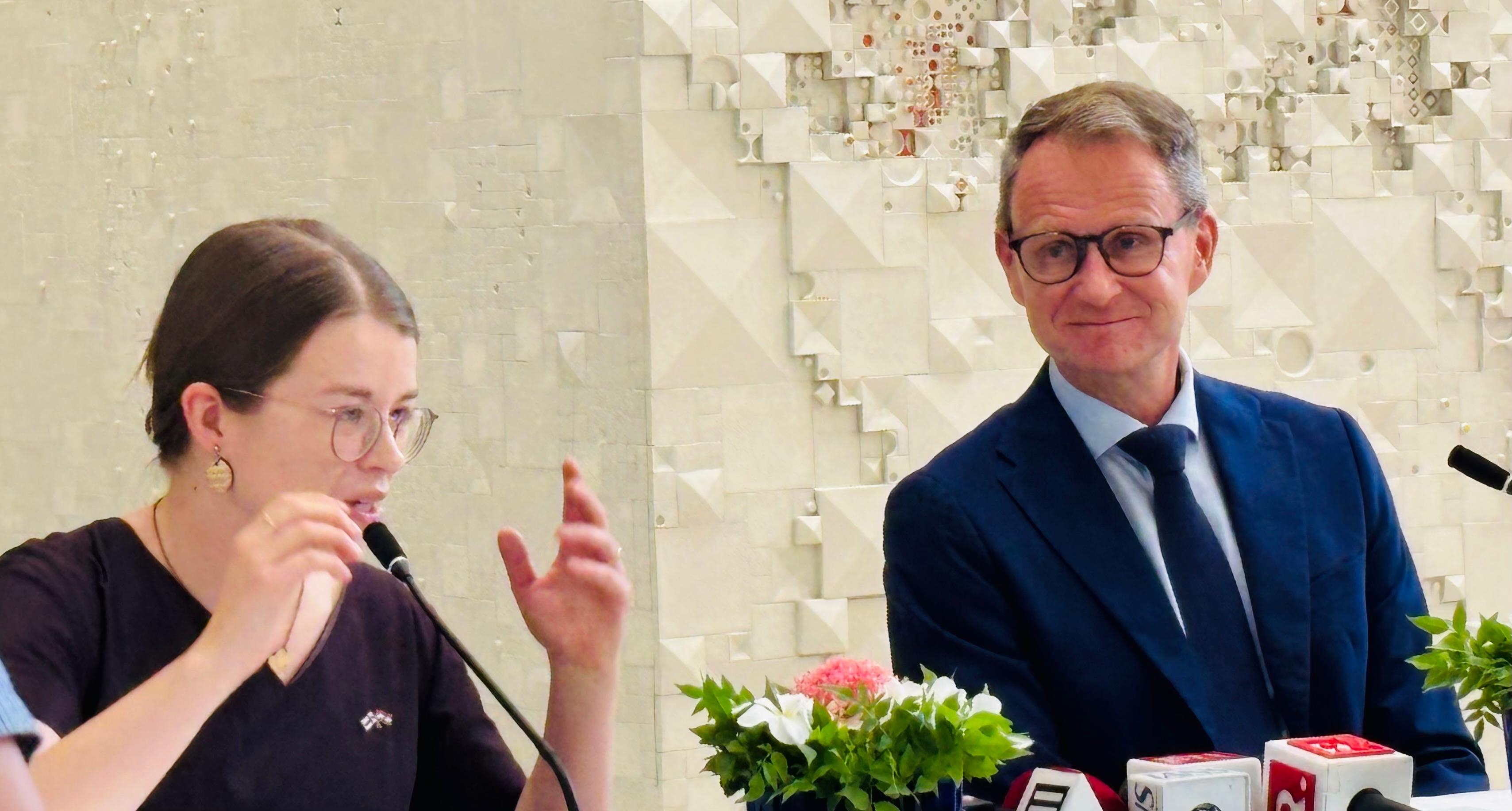
 Finnish ambassador to India Mikko Kivikoski (R)
New Delhi: Finland has highlighted a new satellite communications partnership between two of its leading technology companies as an example of the capabilities it can offer India in defence and security.
Finnish ambassador to India Mikko Kivikoski made the pitch for deeper strategic and commercial ties at his first press conference in Delhi.
He pointed to the work of Nokia and ICEYE, a specialist in radar imaging, on sovereign, dual-use satellite communication systems. Such systems, he said, can support not only defence but also border security, emergency services and disaster response.
Nokia and ICEYE announced on October 1 that they would jointly develop secure, sovereign, broadband low Earth orbit (LEO) satellite communication systems for governments. The systems are meant to give targeted, high-throughput, low-latency connectivity over priority mission areas, and are to be owned and operated by the nations that use them.
The two companies plan to integrate satellites, ground infrastructure and ruggedized user terminals.
Kivikoski did not announce any satellite communication deal with India. He cited the Nokia-ICEYE work as an example of Finnish capability relevant to the security sector, and said Helsinki wanted to do more with New Delhi in defence and security.
ICEYE is already present in India. It announced on August 24 that it had set up ICEYE India, a new entity based in New Delhi, to anchor planned local manufacturing of satellite components and ground-processing hardware.
As per the media reports, the company already supplies satellite imagery to Indian government agencies, including the National Technical Research Organisation and has discussed models in which an Indian customer could own and operate a satellite with full sovereign control.
Defence framework
Kivikoski said India and Finland have worked under a memorandum of understanding on defence cooperation since 2020. He said this was the framework within which the two countries were working at present, and that Finland wanted to build on it.
He also noted that defence and security were added to the agenda of cooperation between India and the European Union at their summit earlier this year. As an EU member state, he said, Finland would use its position to advance work in these areas. A Security and Defence Partnership was signed at that summit.
Trade and the FTA
Kivikoski said the India-EU free trade agreement (FTA) had already drawn interest from companies in both countries. Finnish firms were looking more closely at the Indian market, he said, and Indian businesses were showing more interest in Finland.
India and the EU concluded the FTA negotiations on January 27, 2026, after 18 years of intermittent talks, and the agreement is expected to take effect in early 2027, after ratification.
Kivikoski said the pact would give access to a combined market of roughly two billion people. Talks on an EU–India Investment Protection Agreement are also under way.
Bilateral trade between India and Finland stands at about $3 billion, he said, calling this modest and saying there was a lot of room to grow. Governments, he added, would set the framework, but companies would do the real work.
Technology and people
Kivikoski listed 5G and 6G, quantum technology, data centres, artificial intelligence and cybersecurity as priority areas for technology cooperation.
More than 30,000 Indians live permanently in Finland, he said, including about 23,000 students. Others work in sectors such as IT and engineering. Finland wants to attract more skilled Indian professionals, he added, and the presence of Indian companies in Finland was also strengthening economic links.
Ukraine and the UN
On the war in Ukraine, Kivikoski said Russia’s invasion had changed Finland’s security assessment and was the main reason for its decision to join Nato.
He recalled that a poll taken three days before the invasion found about 70 per cent of Finns opposed to membership. Three days after it began, about 70 per cent were in favour. Support today is above 80 per cent, he said.
He said Finland valued India’s continued dialogue and diplomatic engagement on the war and other conflicts, and described India as an important voice of the Global South. In his view, every party except Russia wants a ceasefire and the start of negotiations.
Finland also backs India’s long-standing bid for permanent membership of the United Nations Security Council, Kivikoski said, and would favour adding permanent members from Asia, Africa and Latin America.
Kivikoski presented his credentials to the president, Droupadi Murmu, at Rashtrapati Bhavan on September 25.