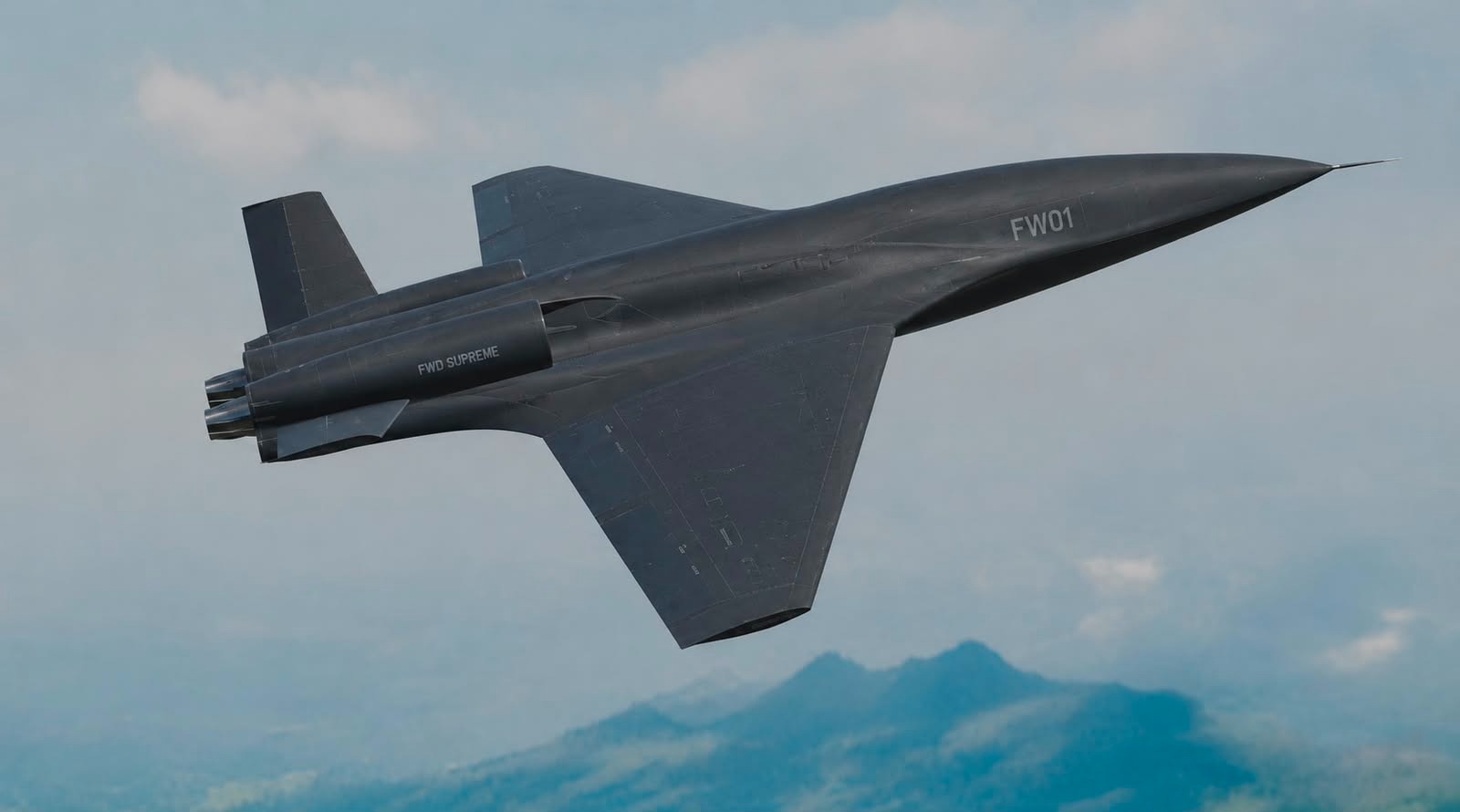
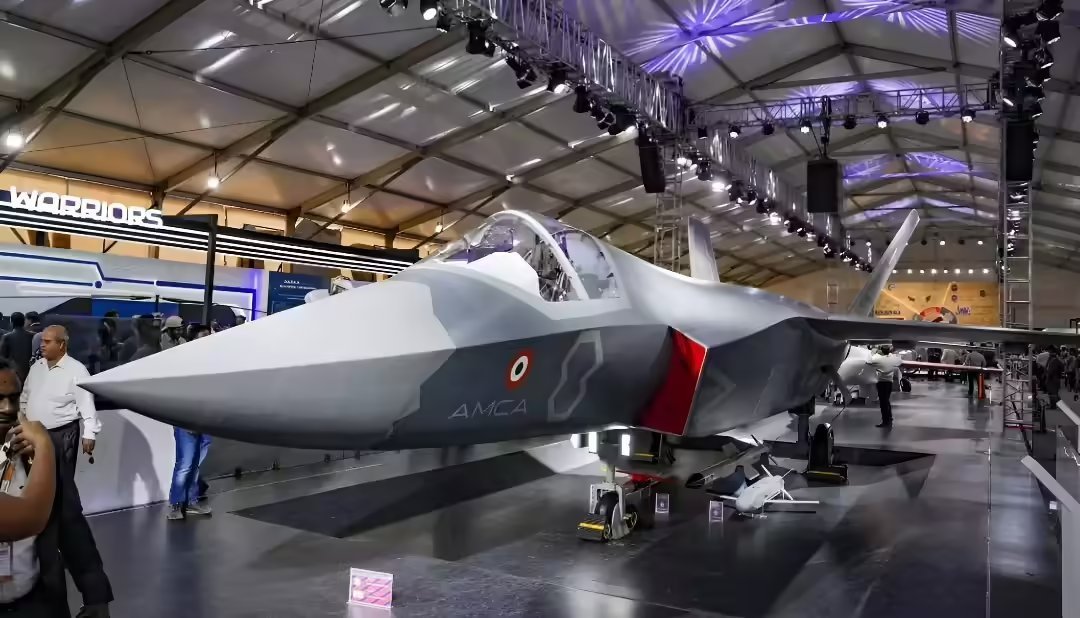
New Delhi: Reliance Industries and Rolls-Royce have announced a strategic intent to jointly pursue the design, development and manufacture of a sovereign combat engine for India’s advanced medium combat aircraft (AMCA), the fifth-generation stealth fighter being built for the Indian Air Force.
Under the proposed tie-up, the two companies said they would explore setting up a dedicated Aerospace Gas Turbine Complex in India – a facility they described as a future centre of excellence for engine and propulsion technology, covering everything from design and testing to manufacturing and long-term support.
The announcement, made simultaneously in London and Mumbai, is framed by both sides as advancing the government’s long-standing goal of building an indigenous engine for its fighter jet programme.
“India’s strategic autonomy requires sovereign capability in critical technologies,” the executive director of Reliance Industries, Anant Ambani, said in a joint statement. He added that combining Rolls-Royce’s propulsion expertise with Reliance’s manufacturing scale was intended to build “an enduring national capability” that could eventually compete globally.
The chief executive officer of Rolls-Royce, Tufan Erginbilgiç, called the move “a major milestone towards building a robust, self-reliant aerospace ecosystem” in India, pointing to the British company’s century of engine-building experience and its existing footprint in the country.
Both companies were careful with their language: this is a “strategic intent” to explore a partnership, not a signed contract or a government-approved programme. What form the collaboration eventually takes – and whether it secures a role in the AMCA engine programme at all – will depend on decisions still to be made in New Delhi.
A crowded field
The announcement lands in the middle of an already active contest over who builds India’s fifth-generation fighter engine, and it is worth setting out where that contest currently stands.
The AMCA is a twin-engine, twin-tranche programme. The first variant, AMCA-Mk1, is expected to fly on two General Electric F414-INS6 engines rated at about 98 kilonewtons of thrust – the same engine family that powers the American F/A-18 Super Hornet – with Hindustan Aeronautics Limited (HAL) already having signed an agreement with GE Aerospace for licensed manufacture in India.
The more capable AMCA-Mk2 is the variant that actually needs a new, more powerful engine: a 120-kilonewton class turbofan that does not yet exist.
Defence Minister Rajnath Singh announced in August 2025 that French firm Safran had been selected as the partner for this engine, following a competitive evaluation that had also considered General Electric and Rolls-Royce. That deal is reportedly worth about $7 billion (₹61,000 crore) and includes a full transfer of technology to India, along with domestic intellectual-property ownership.
As of early August 2026, the Safran–Gas Turbine Research Establishment engine joint venture was reported to be before India’s Cabinet Committee on Security for final clearance, with the same reports noting that Rolls-Royce was still said to be in contention as recently as six weeks earlier.
A separate, parallel track also exists: a joint study between India and the United Kingdom on an engine of the same 120-kilonewton class is reportedly under way, alongside the National Aero Engine Mission, formally launched in February 2026 to coordinate Indian industry, academic institutions and government laboratories on engine self-reliance.
Friday’s Reliance-Rolls-Royce announcement should be read against that backdrop. It does not, on the available evidence, displace the Safran arrangement, and it does not commit either company to a defined engine, budget or timeline. It does, however, put Rolls-Royce – and by extension the option of a British-origin engine – back into the conversation at a moment when the French deal appears close to formal clearance.
Wider industrial context
The AMCA airframe programme itself has moved away from HAL’s traditional lead role. Rajnath Singh approved an execution model for the programme in May 2025 that opened development to private industry on a competitive footing alongside the public sector, and the Aeronautical Development Agency has since shortlisted private consortia – including groupings built around Larsen & Toubro, Tata and Bharat Forge – to bid for the airframe work.