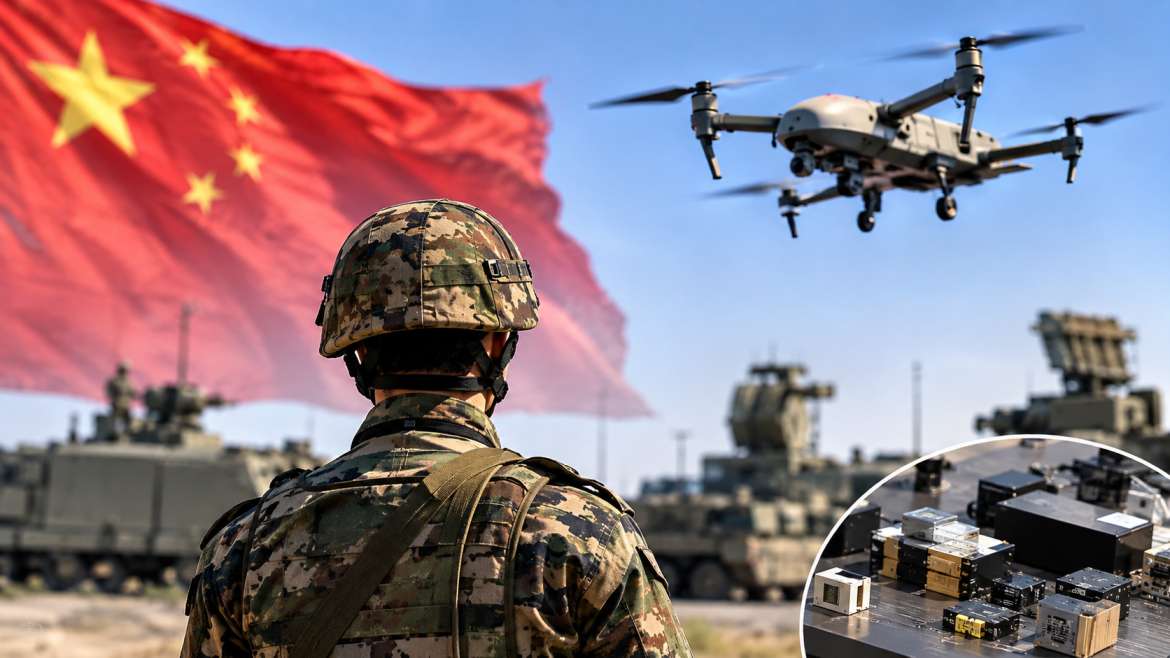
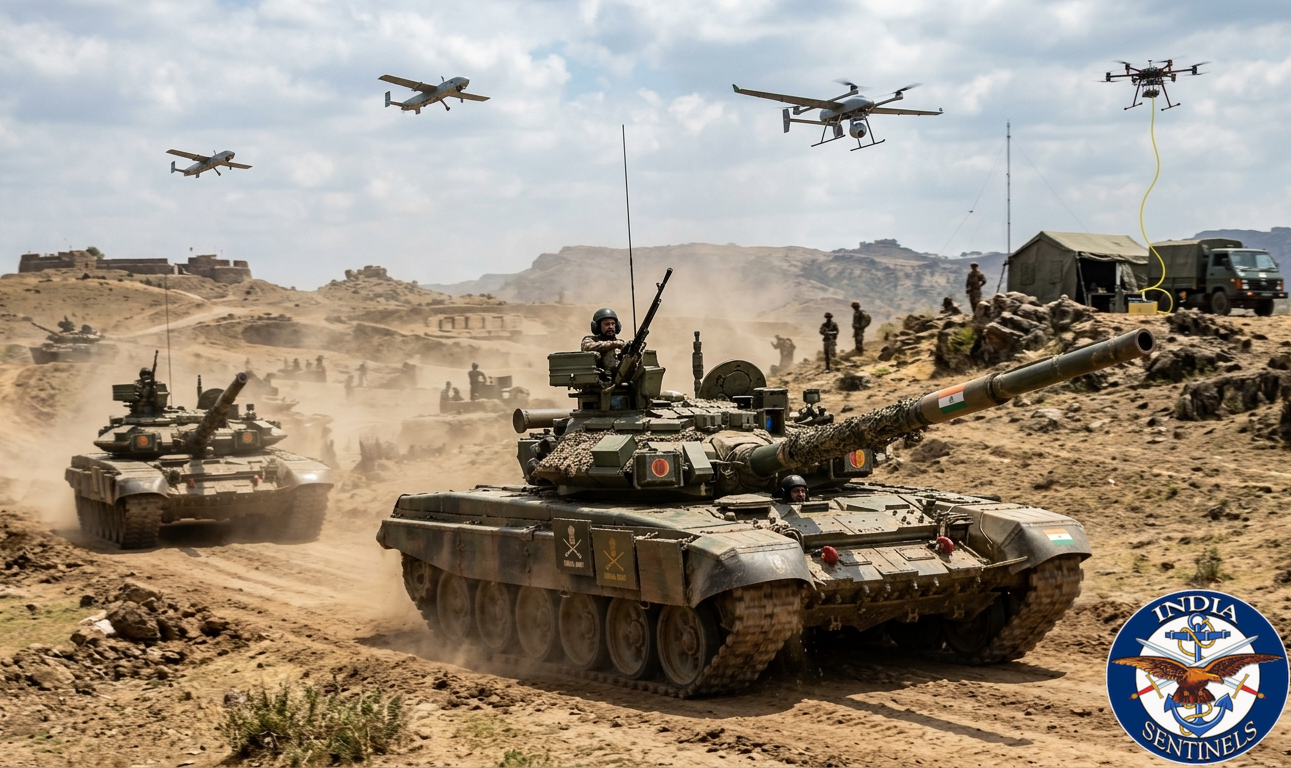
 Illustration for representation. (© India Sentinels 2026–2027)
New Delhi: An industry body representing Indian drone manufacturers has told the defence ministry and the country’s top military officer that 689 government tenders issued over nearly six years specified Chinese-made drones or components. Most of the tenders came from Army units.
The Drone Federation of India (DFI) submitted its findings on Friday, to the defence secretary, Rajesh Kumar Singh, and the chief of defence staff, General NS Subramani. The federation reviewed public procurement records on the Government e-Marketplace (GeM) from March 10, 2021, to November 19, 2026. Of the 689 tenders it identified, 580 – about 84 per cent – originated from Army units.
The federation said the trend is rising. It counted 355 such tenders between January 1 and November 19 this year, against 190 in the whole of 2025. Army units accounted for 328 of this year’s tenders, more than 92 per cent. The DFI said this points to a gap between the military’s stated aim of removing vulnerable foreign technology and buying practices at the unit level.
Brands and components named
The specifications named a long list of Chinese manufacturers, among them DJI, RadioMaster, SpeedyBee, HGLRC, GEPRC, Skydroid, T-Motor, EMAX, RunCam, Caddx, Hobbywing, Holybro, Foxeer, iFlight, FlySky and SIYI. DJI and RadioMaster alone appeared in 450 of the 689 tenders.
The items were not limited to accessories. They included flight controllers, motors, electronic speed controllers, radio receivers, cameras and video transmission equipment. These parts govern how a drone navigates, communicates, relays data and responds to commands.
The federation said components from poorly scrutinized supply chains could create cybersecurity weaknesses and leave the forces dependent on suppliers in a country that is a potential adversary. Chinese-made hardware does not by itself prove the presence of malicious software, unauthorized access or leaked military information.
Officials point to safeguards
Defence officials said GeM is a neutral platform on which buyers state technical requirements rather than name manufacturers. They said competitive bidding, price discovery and Army checks act as safeguards, and that suppliers who misrepresent the origin or make-up of equipment can be blacklisted.
MoD seeks 2,715 logistic drones for Army
Army AD seeks new aerial target systems amid evolving drone threat
AVNL seeks partners to develop drone system for main battle tanks

Gen Dwivedi retires after arming the Army with 50,000 UAVs

India eyes military drones worth $2 billion from domestic firms: Report
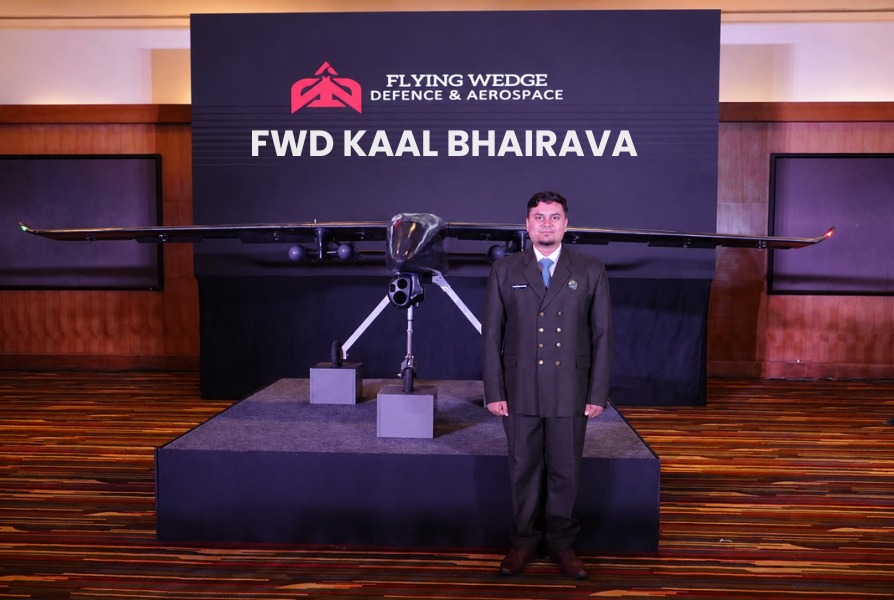
India’s AI combat drone to be built in Europe for the first time
The numbers still raise questions about the Army’s own checks. The Army set up the AASHVAST laboratory at Delhi Cantonment, inaugurated on August 14, to trace the origin of drone components and detect flaws in embedded software, hidden access routes and electronics. The DFI found 104 Army tenders specifying Chinese-origin equipment after the lab opened. It asked whether centralized testing reaches purchases made by individual formations.
A long-running concern
The issue is not new. In 2023, Reuters reported that Indian military officials had told prospective bidders that equipment or subcomponents from countries sharing land borders with India would not be acceptable for security reasons. Officials were worried that Chinese parts could compromise intelligence gathering. The 2020 clash in eastern Ladakh sharpened scrutiny of Chinese electronics in military equipment.
Early in 2025, the Army reportedly cancelled contracts for 400 logistics drones after Chinese components were found in them, with the order valued at about $26.3 million. ThePrint reported that an order for 200 logistics drones was put on hold, and that the Army had been relying on self-certification by drone makers that their products were free of Chinese parts. In March 2026, the defence ministry released a draft framework for testing security vulnerabilities in drones, prepared by the Army Design Bureau.
Dependence on imports
India’s reliance on imported parts leaves little room for quick substitution. A DFI paper estimates that 80-90 per cent of flight controllers used in Indian drones are imported, as are 90-95 per cent of satellite navigation modules and 70–80 per cent of brushless motors.
China has tightened its own export rules. The DFI paper noted that Beijing’s curbs on drone parts from September 1, 2024, and on rare earth magnets from April 4, 2025, showed how quickly supply can be cut.
On October 19, China announced new controls on 13 categories of drone components, including motors, speed controllers and autopilots. These took effect on November 18.
Domestic production has also been held back. Reuters reported in 2023 that barring Chinese parts had raised the cost of making military drones in India, because makers had to source from elsewhere.
What the federation wants
The DFI has asked the government to prohibit Chinese-origin components in military drone procurement, make country-of-origin declarations mandatory and require traceability across the supply chain. It has also called for preference to domestic alternatives, arguing that steady military orders are needed to build a competitive Indian component industry.
The defence minister, Rajnath Singh, has repeatedly said self-reliance must extend beyond finished drones to motors, batteries, software and other core systems. Indian manufacturers say they still face limits on component availability, production scale and technological maturity.
The ministry has not publicly responded to the DFI’s recommendations. Drones now sit at the centre of India’s preparedness along its borders with China and Pakistan. The test for the forces is to keep buying quickly without weakening the security of the systems they field.