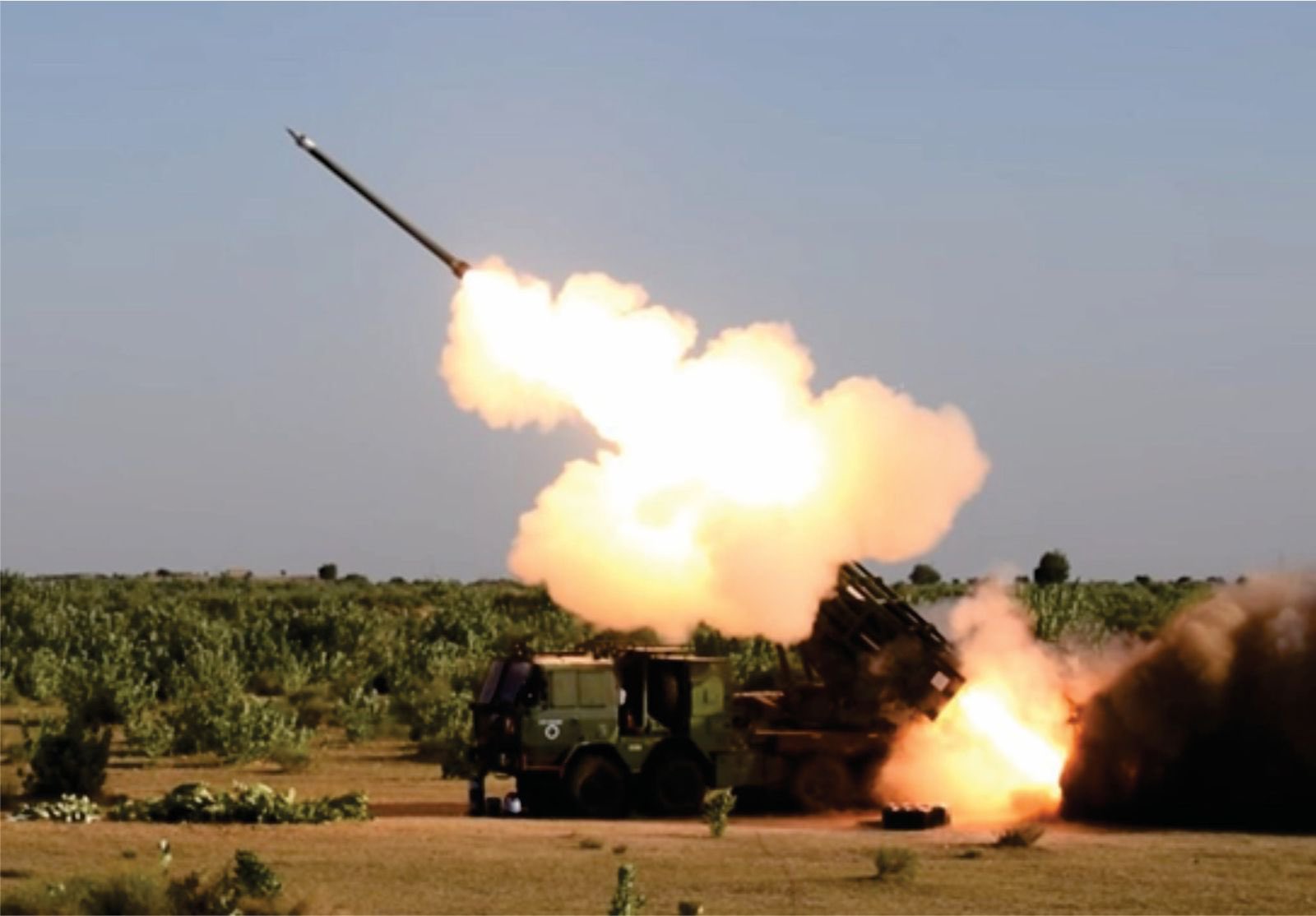
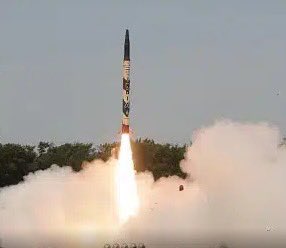
 Agni-1 missile successfully tested off Odisha coast (File photo)
New Delhi: India on Thursday successfully test-fired the Agni-1, a surface-to-surface short-range ballistic missile, from the Integrated Test Range (ITR) at Chandipur off the coast of Odisha.
The test launch, conducted on 22 May 2026, was described by defence officials as a complete success.
The launch was carried out under the aegis of the Strategic Forces Command (SFC), the apex military authority responsible for the management and deployment of the country’s nuclear assets.
According to official sources, the test was part of a routine training exercise designed to maintain a high state of operational readiness.
“The launch validated all operational and technical parameters, affirming India's credible minimum deterrence posture.”
Radar tracking stations and telemetry systems monitored the missile’s flight path in real time.
Scientists and SFC officials present at the launch declared all mission objectives fully achieved, with the missile hitting its designated target in the Bay of Bengal with the stipulated precision.
All about Agni-1 missile system
The Agni-1 is a surface-to-surface, single-stage, solid-fuelled short-range ballistic missile (SRBM) developed by the Defence Research and Development Organisation (DRDO) and produced by Bharat Dynamics Limited (BDL).
It represents the first operational member of India’s celebrated Agni family of strategic missiles, a programme that has since expanded to include intercontinental-range variants.
Development of the Agni-1 began in the mid-1990s as a successor to the liquid-fuelled Agni-I technology demonstrator tested in 1989.
The decision to move to solid propellant was driven by the imperative of rapid deployment: solid-fuelled rockets can be stored in launch-ready condition indefinitely and require no pre-launch fuelling, slashing response time to under fifteen minutes, a critical advantage in any nuclear standoff scenario.
The missile is capable of carrying a nuclear or conventional warhead of up to 1,000 kg over a range of 700 to 900 kilometres, placing a wide swath of the Indian subcontinent within reach.
With a Circular Error Probable (CEP) of less than 25 metres, it is regarded as one of the most accurate ballistic missiles in its class in Asia. It can be deployed from a road-mobile transporter-erector-launcher (TEL), making it highly survivable and difficult for adversaries to target in a first strike.
Inducted into the Indian Army in 2004, the Agni-1 achieved full operational status and was handed over to the Strategic Forces Command, the tri-service organisation established in 2003 to manage the country’s nuclear arsenal.
Regular user-level training launches such as Thursday's test are a standard feature of SFC operations, ensuring that launch crews remain proficient and that the missile's components remain serviceable over time.