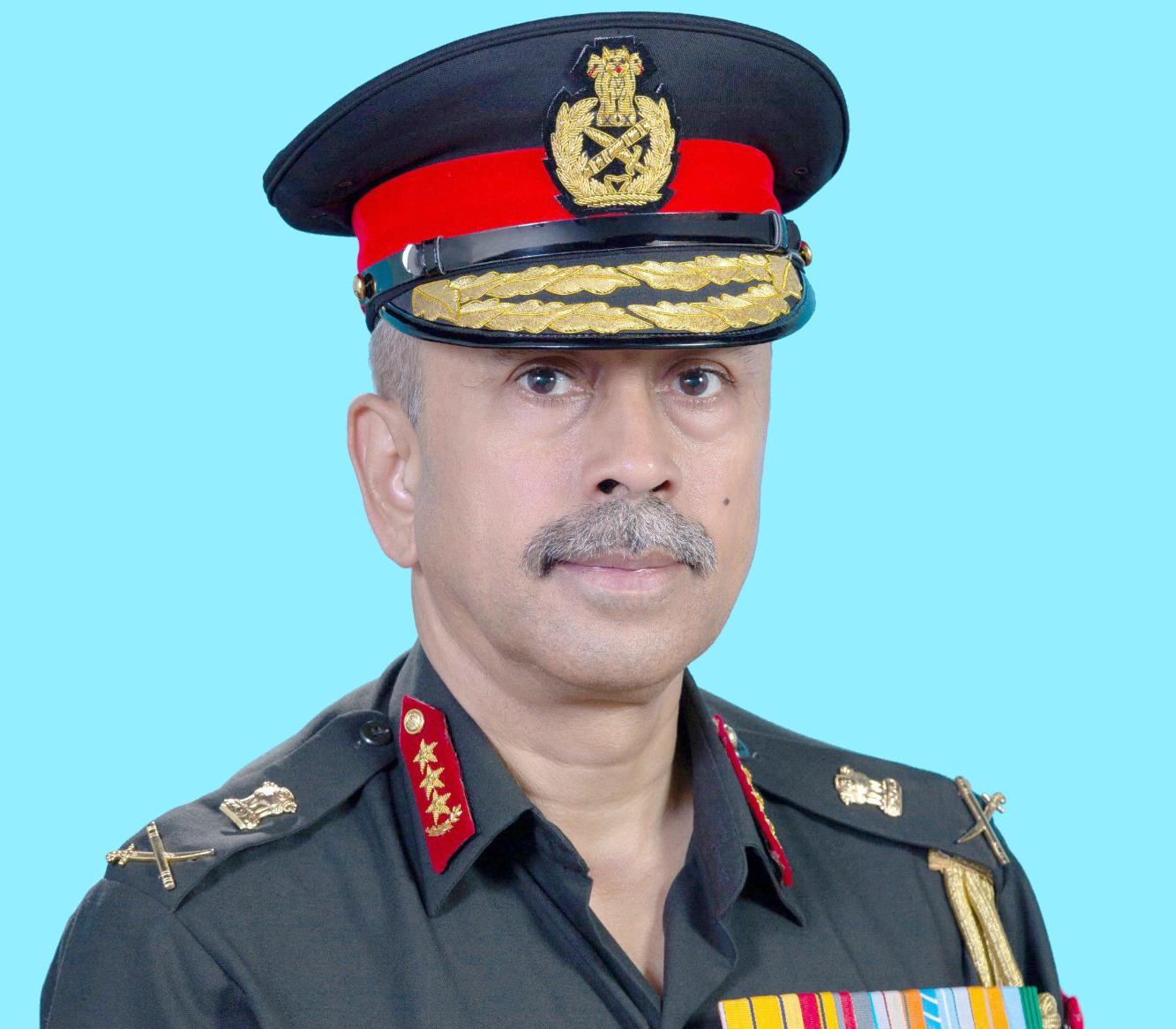
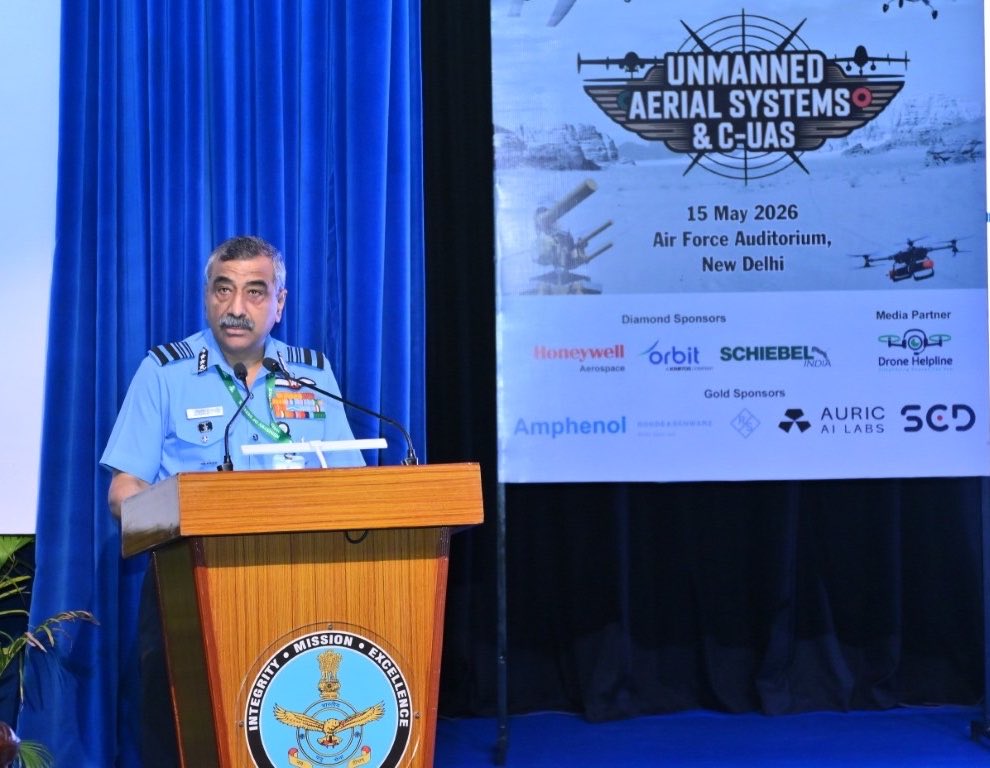
 Air Marshal Ashutosh Dixit, the chief of Integrated Defence Staff (Photo: CAPSS)
New Delhi: Air Marshal Ashutosh Dixit, the chief of Integrated Defence Staff has called for the immediate and urgent acceleration of the country's homegrown stealth strike drone programme, setting 2030 as the deadline for it to attain minimum operational capability. A timetable, he described as essential if India is to keep pace with comparable programmes already advancing in the countries hostile to India.
He made the remarks at a seminar on unmanned aerial systems organised by the Centre for Aerospace Power and Strategic Studies (CAPSS) in New Delhi.
“India has Ghatak. We must accelerate it with urgency, with a clear operational requirement from the Indian Air Force and with a committed joint programme involving the DRDO, Hindustan Aeronautics Limited and qualified private-sector partners,” he said.
The Ghatak programme
The Ghatak – Sanskrit for “lethal” – is a stealthy, flying-wing unmanned combat aerial vehicle being developed by the Defence Research and Development Organisation (DRDO).
Its flying-wing configuration is designed to minimize radar cross-section, and it is built to carry weapons internally, reducing its radar signature further.
Once operational, the aircraft is intended to carry out deep-strike missions: penetrating heavily defended airspace to hit high-value targets without risking the lives of pilots.
Beyond offensive strikes, Ghatak could be assigned to suppress or destroy enemy air defences – radar stations, surface-to-air missile systems as well as strike strategic infrastructure using precision-guided munitions. The aircraft can operate autonomously or alongside manned jets.
In March, the Defence Acquisition Council granted Acceptance of Necessity for the procurement of 60 Ghatak remotely piloted strike aircraft, formally initiating the acquisition process.
Manned-unmanned teaming: the concept
Air Marshal Dixit outlined how Ghatak could transform the Indian Air Force's (IAF) operational tactics. Under future concepts, indigenous Tejas combat aircraft could coordinate in real time with multiple Ghatak drones, with each drone carrying a different mission payload – electronic warfare systems, targeting sensors, or precision munitions.
Pilots would command the drones through helmet-mounted control displays, executing high-risk tasks without putting personnel in harm’s way. “This is how the Indian Air Force will fight going forward,” he said.
This approach – pairing conventional fighter jets with autonomous or semi-autonomous systems – is known in military parlance as manned-unmanned teaming, or MUM-T.
Dixit described launching a formal loyal wingman programme as “a very high-priority target” and said it should ideally achieve initial operational clearance – the minimum capability threshold for operational usefulness – by 2030.
“UAV warfare is not the destination, it is the vanguard of robotic warfare,” he said.
Global drone wingman push brings urgency
Dixit’s urgency is framed by rapid advances elsewhere. The United States Air Force has been developing the Kratos XQ-58 Valkyrie, a low-cost, expendable autonomous wingman designed to operate alongside crewed fighters such as the F-22 and F-35.
Australia has fielded the Boeing MQ-28 Ghost Bat, developed domestically in a first for Australia's aerospace industry, as a collaborative combat aircraft intended to fly alongside the F/A-18 and eventually the F-35. Both programmes are operationally further along than Ghatak.
China, too, has publicly demonstrated loyal wingman concepts, including the Shenyang FR-9 and FH-97, as part of a broader push to field large numbers of affordable, networked drones that can overwhelm adversary air defences through attrition and saturation.
Against this backdrop, the pressure on India to accelerate Ghatak is not merely aspirational – it is strategic.
Other priorities flagged
Beyond the loyal wingman programme, Dixit identified four additional priority areas for the IAF and the broader military-industrial establishment:
Rapidly operationalizing the fleet of American-origin MQ-9B remotely piloted aircraft, procured under a government-to-government deal with the United States.
India has committed to acquiring 31 MQ-9B Sea Guardian and Sky Guardian drones for the three services – a programme that significantly enhances long-range maritime and land surveillance and strike capability.
Urgently building up India's layered air and ballistic missile defence architecture under Mission Sudarshan Chakra, which integrates indigenous and imported systems including the S-400 Triumf, Barak-8 and Akash surface-to-air missiles.
Creating a national ecosystem for both unmanned aerial systems and counter-drone technologies – an area that has gained renewed urgency following the use of inexpensive drones in Ukraine and in border skirmishes closer to home.