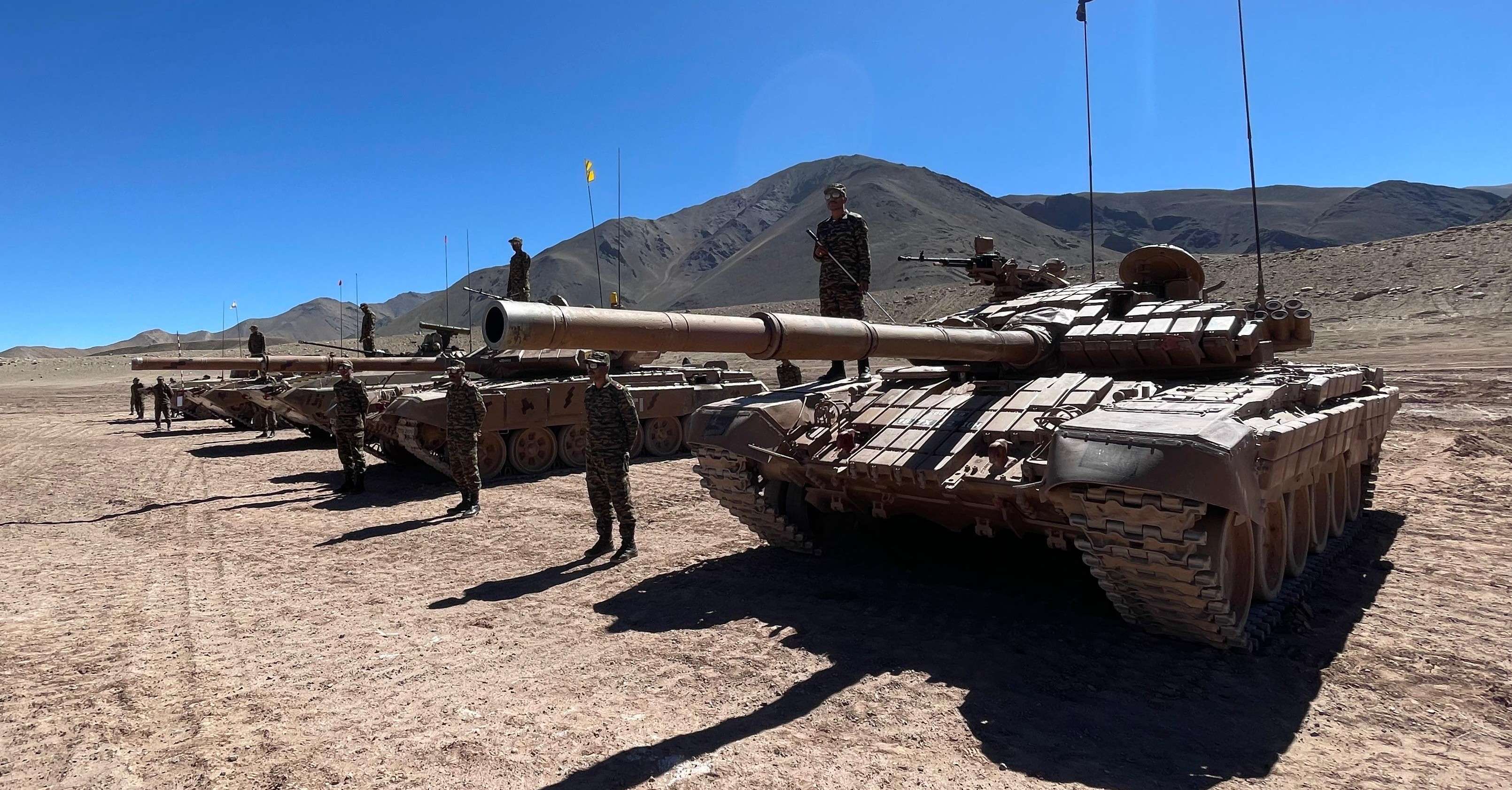
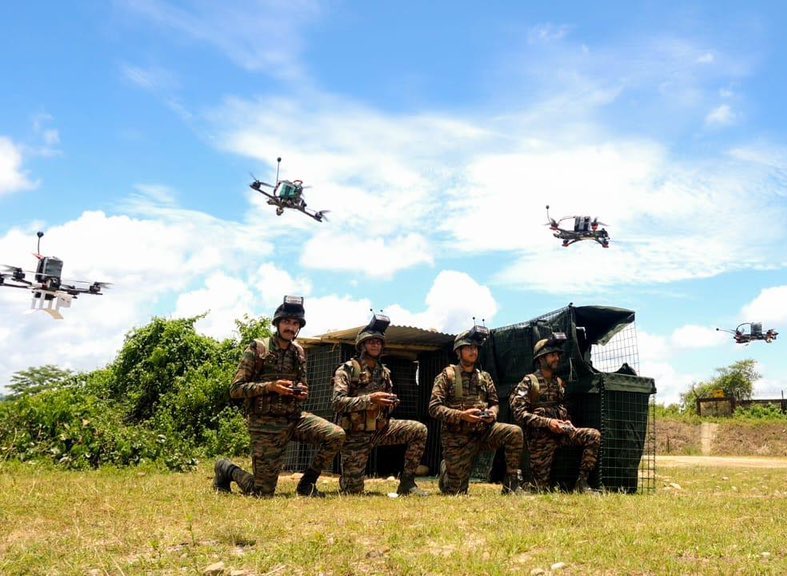
 Indian Army soldiers during a drill with drones. (File photo for representation)
New Delhi: In a major step toward securing its military drone ecosystem, India has finalized a comprehensive framework for testing security vulnerabilities in drones procured by the armed forces. The document, developed over several months of stakeholder consultations, lays down detailed protocols for hardware and software testing of critical drone components.
It also outlines actions required at the ministry of defence (MoD) and service headquarters (SHQs) levels across all stages of the procurement process.
The framework comes against the backdrop of a rapidly evolving battlefield landscape, in which drones have emerged as transformative tools in modern warfare. Recent global conflicts have underlined the acute risks posed by insecure drone systems, which can be exploited by adversaries for data theft, network compromise, control hijacking, and even physical harm.
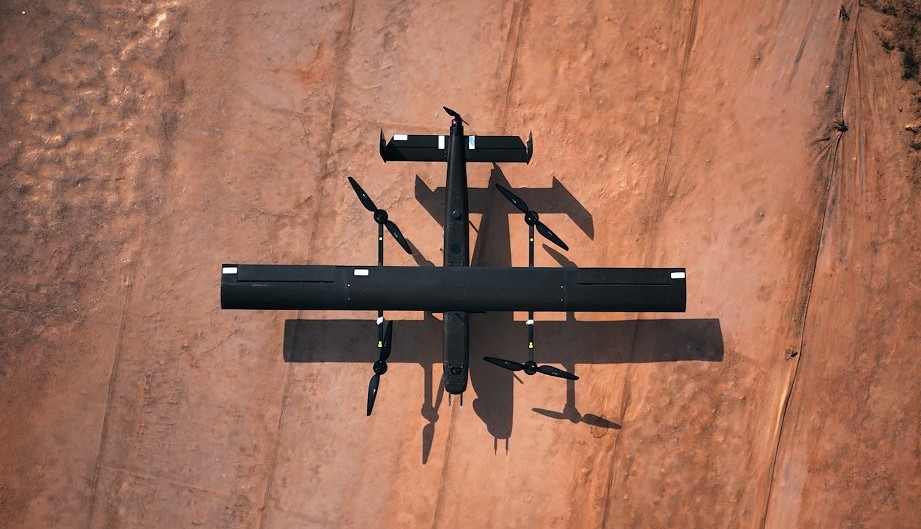
The document defines the scope of its applicability as all nano, micro, and small drones – including quadcopters and hexacopters – falling under the category of low, slow, and small (LSS) drones, as defined by headquarters integrated defence staff.
Avenues of exploitation
The framework identifies seven primary avenues through which adversaries can compromise drone systems. These include interception of communication links between the drone and its ground control station (GCS), GPS jamming and spoofing to disrupt navigation, and outright control hijacking by exploiting firmware vulnerabilities or compromised communication links. Additionally, adversaries may exfiltrate or manipulate data collected during surveillance missions, exploit data transfer pathways created by internet-connected devices, and introduce malicious capabilities through firmware updates controlled by foreign entities.
Critical components identified
Following a thorough assessment of component-level vulnerabilities, the framework identifies eight critical components: the electronic speed controller (ESC), flight controller (FC), flight control firmware, transmission and reception (Tx & Rx) unit, inertial navigation system/GPS, sensors unit, ground data terminal, and ground control station software.
Each of these components carries specific risks. For instance, a compromised ESC can allow adversaries to manipulate motor speeds and cause the aerial vehicle to malfunction. Malware or backdoors in flight controller firmware can allow attackers to extract sensitive data or issue malicious commands. Similarly, vulnerabilities in the Tx & Rx unit can be exploited through weak encryption or insufficient authentication, enabling signal interception or spoofing.
The ideal versus the interim
The framework acknowledges that the ideal solution – complete indigenization of drone components and foolproof supply chain verification – remains a long-term goal. Indigenous design and manufacture of critical components such as microchips, sensors, voltage regulators, demodulators, and communication units are constrained by limited domestic manufacturing capability.
Foolproof supply chain traceability, too, is currently not feasible, compounded by trade malpractices, re-routing, and fake documentation. A chip import monitoring system developed by the Ministry of Electronics and Information Technology (MeITy) that could partially address this had been discontinued since November 2024.
In the interim, the framework prescribes rigorous testing and certification of critical electronic components by government-approved testing agencies, NABL-accredited laboratories, and internationally recognized laboratories located in India. The quality council of India (QCI) has confirmed full capability to undertake all identified hardware and software tests through such accredited labs.
Twenty tests mandated
A total of 20 tests have been mandated under the framework. These cover hardware component level validation – including IC testing, tamper resistance testing, secure boot verification, PCB testing, and micro-controller testing – as well as vulnerability and penetration testing of software, which includes software update tests, cryptographic key and certificate tests, operating system testing, trusted execution environment protection tests, data transit security tests, and anti-rollback tests, among others.
Procurement-stage actions
The framework prescribes specific actions for SHQs at each stage of procurement. At the request for information (RFI) stage, vendors must confirm their willingness to share all certificates required for testing and allow hardware and software assessment including tear-down and destructive testing. At the request for proposal (RFP) stage, vendors must submit details of empanelled suppliers and source manufacturers for all critical components and share security codes for booting units with the user and testing agency. Vendors must also commit to carrying out updates and upgrades every six months.
Firms found to be fabricating, falsifying, or misrepresenting documents related to critical components at any stage of procurement face immediate suspension or debarment for a specified period.
The framework is expected to serve as a datum for higher categories of unmanned aerial systems such as medium-altitude long-endurance (MALE) and high-altitude long-endurance (HALE) remotely piloted aircraft in the future. Any amendments to the document will require approval from the MoD's acquisition wing.
Follow us on social media for quick updates, new photos, videos, and more.
X: https://x.com/indiasentinels
Facebook: https://facebook.com/indiasentinels
Instagram: https://instagram.com/indiasentinels
YouTube: https://youtube.com/indiasentinels
© India Sentinels 2026-27