
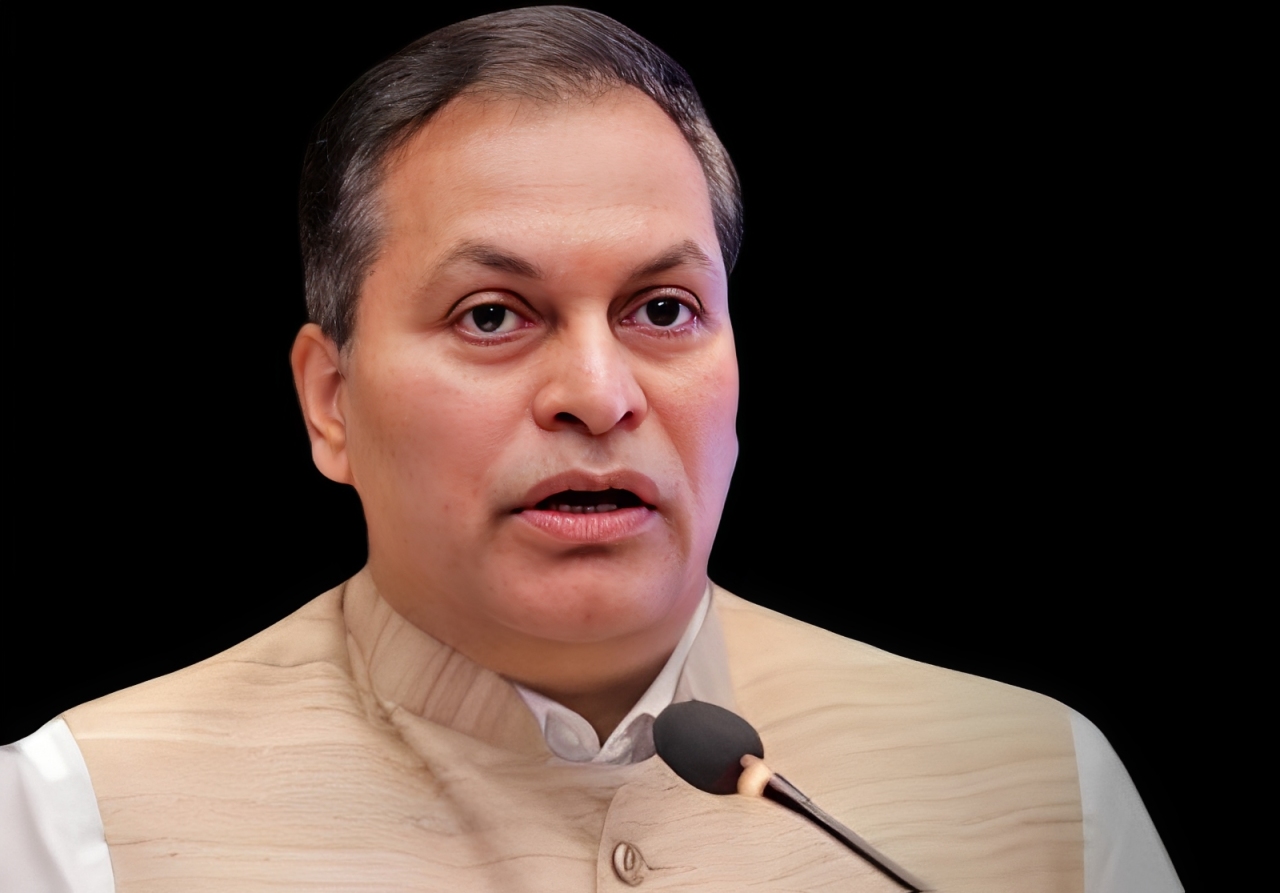
 Anil Kumar Rai.
New Delhi: The five-day India-led AI Impact Summit, held at New Delhi from February 16 to 20, 2026, has brought into sharp focus India’s aspiration to recast the terms of global artificial intelligence governance. Presenting India not as a late entrant scrambling for relevance but as an architect of a new paradigm, the ambassador of India to Ethiopia and permanent representative to the African Union, Anil Kumar Rai, has articulated what may prove to be one of the most consequential AI policy statements to emerge from the developing world in recent years.
Writing with the authority of a diplomat stationed at the nerve centre of South-South engagement, Rai argued that the current moment demands nothing less than a structural reorientation of how AI is conceptualized, governed, and deployed – particularly for the nations of the global south.
A Techade in the Making
The world, Rai observed, has entered what India describes as an “AI Techade” – a decade defined by artificial intelligence as the primary engine of economic and geopolitical power. Yet the distribution of this power remains alarmingly skewed. Control over data, computing infrastructure, and algorithms is, in his telling, becoming as consequential as command over energy reserves or financial systems. Against that backdrop, the concentration of AI capability in a handful of western nations and corporations represents not merely a technological asymmetry but a structural threat to the sovereignty of developing nations.
He said, “India does not see itself as a follower in the AI race, but as a producer, tester, and standard-setter for AI solutions that serve the many, not the few.”
That declaration, attributed by Rai to India’s senior political leadership during recent global engagements, encapsulates the philosophical core of New Delhi’s approach. Rather than seeking to replicate the capital-intensive, scale-maximizing models favoured by Silicon Valley or the state-directed ambitions of Beijing, India has opted for what Rai characterizes as a layered and strategic architecture spanning five interlinked domains: applications, models, chips, infrastructure, and energy.
Frugal by Design, Not by Constraint
Central to India’s proposition is the principle that AI must be frugal – not in the pejorative sense of impoverishment, but in the engineering sense of radical efficiency. Rai was careful to distinguish India’s approach from mere cost-cutting. The ambition, as he described it, is to build task-specific, medium-scale models optimized for population-scale governance, enabling service delivery, and productivity gains in domains such as agriculture, health diagnostics, welfare targeting, and education delivery.
The 10,000-GPU national compute grid and the BharatGen initiative are cited as concrete investments underpinning this vision. The underlying principle, in Rai’s formulation, is one of “diffusion first”: AI must be widely deployed and locally usable rather than confined to elite research laboratories or corporate silos.
He emphasized, “By reducing training costs, optimizing inference efficiency, and emphasizing return on investment, India offers a credible alternative to capital-intensive AI models that are inaccessible to most developing countries.”
The claim is not without empirical grounding. According to global benchmarks referenced by Rai, India ranks among the top three countries in AI talent availability and preparedness. More significantly, it has demonstrated the ability to deploy AI at population scale, with Digital Public Infrastructure (DPI) serving as both proof of concept and institutional scaffold. India functions, in Rai’s characterization, as “a systems integrator, capable of aligning AI with governance structures and developmental priorities.”
Language as a Political Act
Among the pillars of India’s AI ecosystem, Rai reserved particular attention for the Bhashini initiative – launched under the National Language Translation Mission – which addresses the formidable challenge of India’s 22 official languages and hundreds of dialects. Bhashini operates as a public digital good, providing open, interoperable AI services for speech, translation, and voice interfaces.
What distinguishes this initiative, in Rai’s telling, is not its technical sophistication alone but its political ambition. By deploying participatory data creation through crowdsourced language contributions, Bhashini ensures that AI systems reflect local idioms and cultural nuance rather than imported linguistic norms. The political implication Rai drew was explicit and unambiguous. He said, “Language access determines who can participate in the digital economy, access public services, and exercise civic rights. By embedding linguistic inclusion into its AI stack, India advances the idea of digital citizenship as a universal entitlement.”
This framing elevates Bhashini from a government software initiative to a rights-based intervention – a move that will resonate powerfully across the global south, where linguistic exclusion from digital infrastructure remains a profound and largely unaddressed inequality.
African Dimension: More Than Analogy
The strategic convergence between India and Africa occupies a substantial portion of Rai’s argument and reflects his vantage point as ambassador to Addis Ababa. Africa, he observed, presents challenges strikingly similar to those India navigated over the past two decades: demographic dividend, linguistic diversity, and developmental urgency.
With more than 2,000 languages and a rapidly growing youth population, the continent is well positioned to benefit directly from India’s accumulated experience rather than beginning its own digital journey from first principles.
The practical applications Rai envisioned are specific and actionable. Low-resource language training techniques developed for lesser-spoken Indian languages can be adapted for African contexts. India’s DPI-driven AI solutions offer ready-to-deploy templates for health systems, financial inclusion, agricultural extension, and logistics optimization. African countries, Rai argued, need not import proprietary platforms from the west – they can co-develop sovereign AI capabilities that retain control over data while benefiting from shared architectures and open standards.
The economic implications are substantial. Rai pointed to AI’s potential to operationalize the African Continental Free Trade Area by streamlining customs procedures, optimizing supply chains, and reducing logistics inefficiencies. India’s experience in fintech-enabled credit assessment, he noted, illustrates how AI can unlock financing for small and medium enterprises – the backbone of African economies.
Employment: Augmentation, Not Displacement
On the politically sensitive question of AI and employment, Rai offered a counternarrative that departs markedly from the anxious discourse prevalent in advanced economies. Rather than emphasizing labour replacement, India’s model prioritizes what he described as skill upgrading and augmentation.
He said, “AI tools are deployed to enhance worker productivity, support decision-making, and expand service coverage. For Africa, where millions of young people enter the job market annually, this distinction is critical.”
AI-enabled vocational training delivered in local languages, Rai suggested, can accelerate skill acquisition and align workforce capabilities with emerging sectors such as digital services, green manufacturing, and logistics. The aspiration, as he articulated it, is to make AI an enabler of decent employment rather than a source of displacement – a formulation that aligns with the objectives of Agenda 2063 and its Second Ten-Year Implementation Plan (2024–2033).
Towards a New Architecture of Global AI Governance
Rai’s assessment of the AI Impact Summit’s broader significance was measured but pointed. By foregrounding impact, accessibility, and safety, India has, in his view, galvanized a collective conversation among developing countries about data sovereignty, algorithmic bias, and ethical deployment. The strong participation of governments, multilateral institutions, and industry leaders signals growing momentum for what Rai characterized as a more inclusive techno-legal framework.
The summit, he concluded, marks a pivotal moment in the evolution of global AI – not merely a policy conference but an assertion that technological leadership need not be synonymous with exclusion, and that innovation can be aligned with equity, autonomy, and shared prosperity.
He said, “The principles articulated through this partnership – openness, sovereignty, and human-centric design – may well determine whether AI becomes a bridge to collective advancement or a barrier reinforcing old divides.”
Whether India’s sovereign AI vision translates into durable institutional architecture, or remains an eloquent aspiration, will depend on the follow-through of governments across the global south, the willingness of multilateral bodies to accommodate new standard-setters, and the capacity of India’s own AI ecosystem to deliver at scale and speed. Going by Rai’s statement, the ambition is genuine, the analysis rigorous, and the political will – at least at the level of diplomatic articulation – unmistakable.