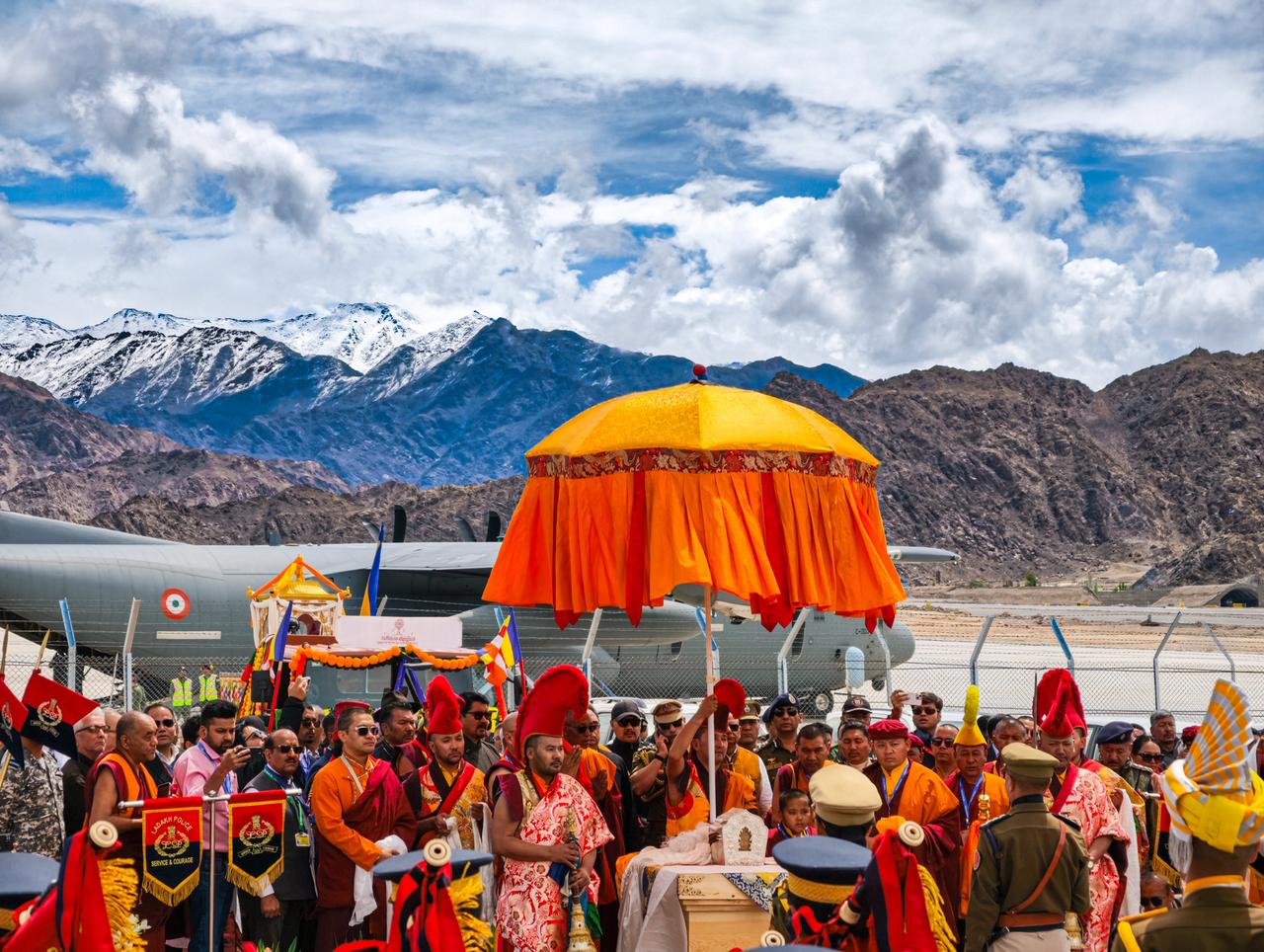
 Holy Relics of Tathagata Buddha (Photo: IBC)
By Dr. Portia B. Conrad
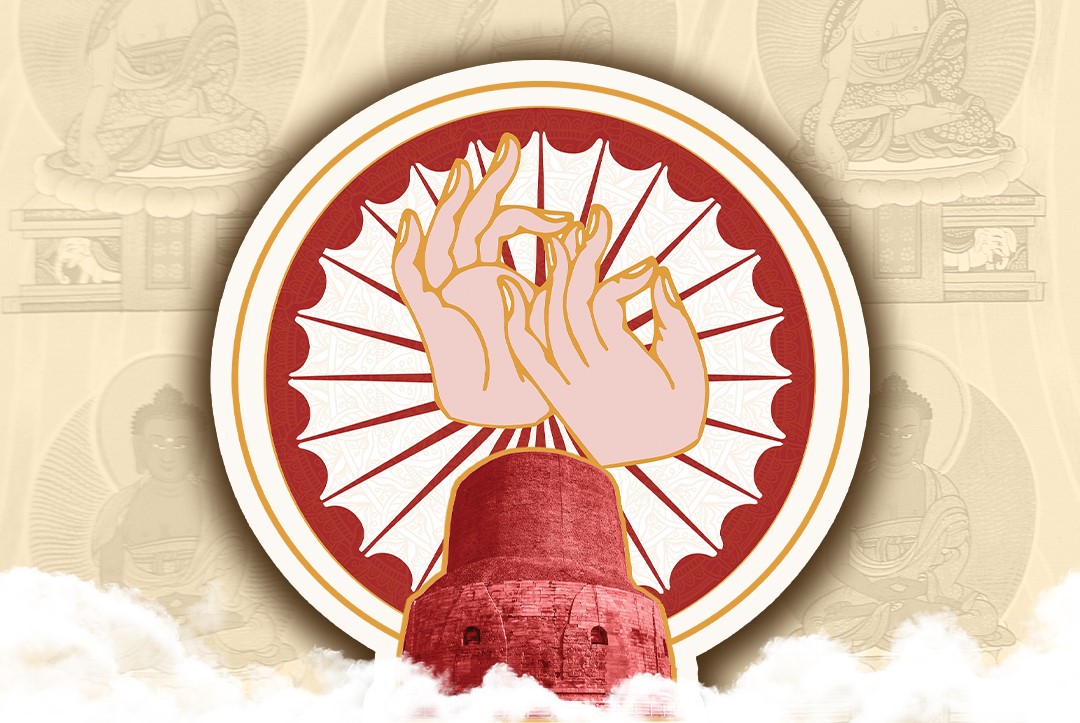
Every year, on the full moon of Vaishakha, Buddhists across the world stop. Lamps are lit. Monasteries fill with chanting. This year the day carries something extra - the exposition of Holy Relics in Ladakh, timed to the 2569th birth anniversary of Lord Buddha.
For a country that holds the ground where the Buddha was born, taught, and died, that is not a small thing.
Vaishakha Purnima is unusual in the Buddhist calendar because it marks not one event but three - the birth of Prince Siddhartha in Lumbini, his Enlightenment at Bodh Gaya, and his passing at Kushinagar - all said to have fallen on the same full-moon night.
That compression of three extraordinary moments into a single day gives the occasion a weight that most religious commemorations simply do not carry.
Pilgrims travel great distances for it. Communities that have observed this day for generations make it the most significant point in their annual calendar.
What the Buddha taught was not complicated at its core. Be mindful. Act ethically. Find the middle ground between indulgence and self-denial. These ideas have survived 2,500 years not because they were carved in stone but because they kept making sense across changing times and places. That they still find takers today - among people dealing with burnout, political noise, and ecological anxiety - says something about the durability of the original insight.
Buddhists do not venerate relics as curiosities. The relics - physical remains or objects associated with the Buddha - are treated as a continuing presence, not a distant memory.
When communities gather to pay their respects, it feels less like a visit to a museum and more like a gathering around something still alive.
Across history, relic expositions have drawn people across caste, region, and sect. That drawing power has not faded. If anything, in a fragmented world, the pull of a shared sacred object feels more necessary than ever.
Ladakh was not chosen arbitrarily. This is a place where Buddhism did not arrive and then gradually fade. It stayed. Walk through any village in the Indus Valley and you will find prayer flags, mani walls, gompas perched on cliff faces. The monasteries here - Hemis, Thiksey, Diskit - are not tourist attractions that happen to have monks in residence.
They run schools, mediate community disputes, and mark the full arc of life from birth to death. Bringing the relics here means they land in a community that knows exactly what to do with them and why it matters.
India has spent decades building out its Buddhist heritage - conserving sites at Bodh Gaya, Sarnath, Kushinagar, and Nalanda, and investing in pilgrimage infrastructure.
The Ladakh exposition fits that broader effort but takes it a step further. Rather than waiting for pilgrims to travel to heritage sites, it brings heritage to a living Buddhist community. That is a meaningful shift in thinking.
Getting an event like this to actually work in Ladakh is logistically demanding. High altitude, seasonal road conditions, scattered settlements, limited infrastructure - none of it is straightforward.
The Union Territory administration has had to coordinate with monasteries, plan crowd access, and ensure that the solemnity of the occasion is not lost in operational details. That the exposition is happening at all, and happening well, is partly a product of that quiet, unglamorous groundwork.
There is a geopolitical backdrop worth naming plainly. Ladakh shares borders with both Pakistan and China. It sits where South Asia, Central Asia, and the Tibetan plateau converge - the same mountain corridors that once carried Buddhist monks, merchants, and ideas from India outward into the wider Asian world.
Hosting a significant Buddhist event in this region is not only a religious act. It signals something about cultural continuity and India's enduring connection to Himalayan Buddhist communities across borders. Cultural ties of this kind often outlast formal diplomatic agreements. India understands this well, and acts accordingly.
The 2569th anniversary will pass, as anniversaries do. But what the exposition leaves behind - in the people who attended, the younger generation who watched, the monks who participated - is harder to measure and longer-lasting. Heritage does not preserve itself. It needs occasions that give it life in the present tense.
For Ladakh, for India, and for the wider Buddhist world, this was one of those occasions.
Dr. Portia B. Conrad heads the International Relations Division at the International Buddhist Confederation, New Delhi.
Disclaimer: The views expressed in the article are the author’s own and don’t necessarily reflect the views of India Sentinels.
Follow us on social media for quick updates, new photos, videos, and more.
X: https://x.com/indiasentinels
Facebook: https://facebook.com/indiasentinels
Instagram: https://instagram.com/indiasentinels
YouTube: https://youtube.com/indiasentinels
© India Sentinels 2026-27