 Neeraj Thakur
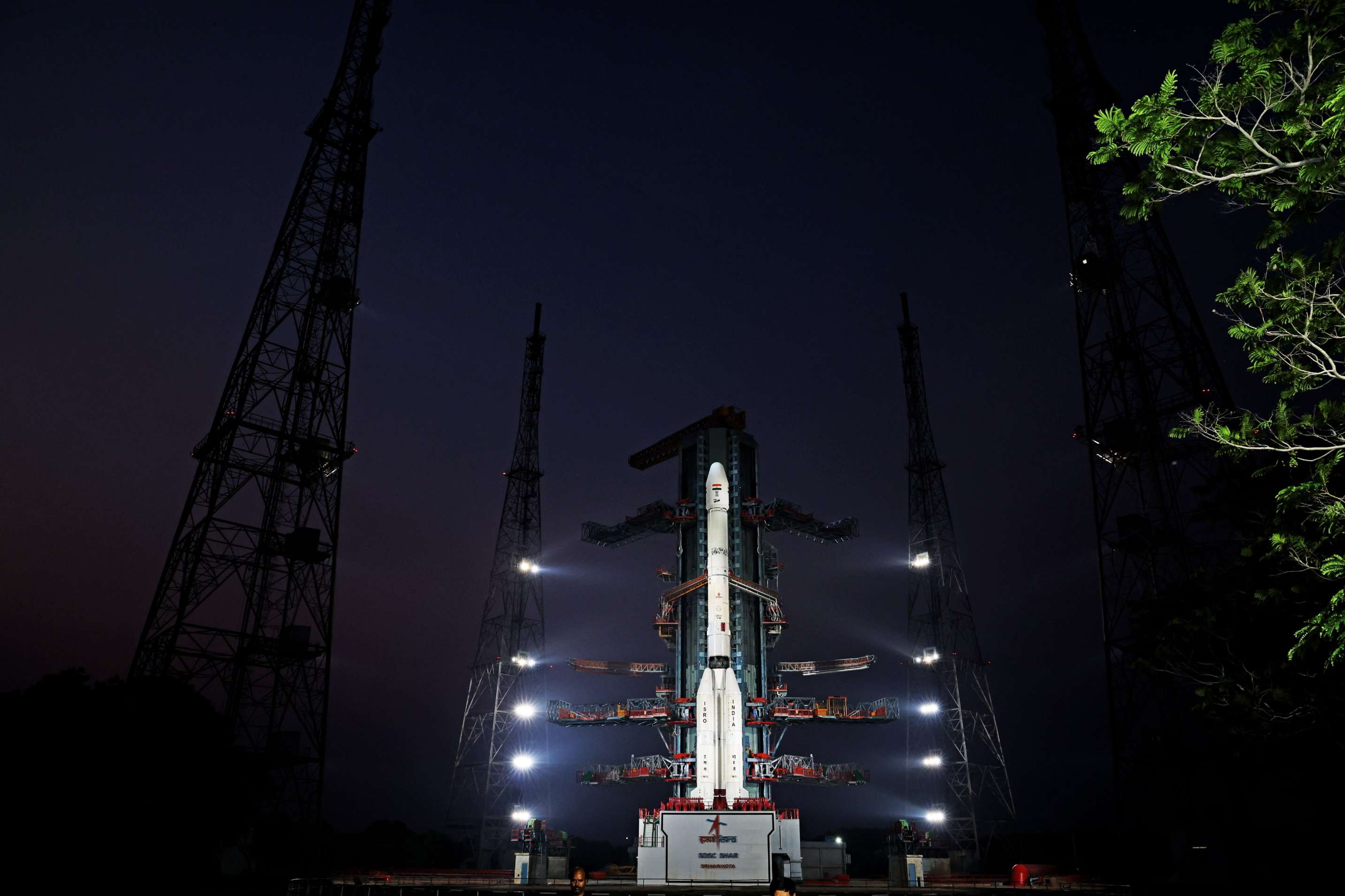 GSLV-F18/NVS-03 Mission before lift-off. (Photo: Isro)
New Delhi: The Indian Space Research Organisation (Isro) on Friday night launched the navigation satellite NVS-03 aboard a Geosynchronous Satellite Launch Vehicle (GSLV). It gives a fresh boost to NavIC, India’s regional satellite navigation system. The rocket injected the spacecraft into its intended orbit.
The 50-metre-tall GSLV-F18 lifted off at 11.51pm on October 30, from the second launch pad at the Satish Dhawan Space Centre, after a 24-hour countdown. About 18 minutes into the flight, following the performance of all three stages including the cryogenic upper stage, the satellite separated from the rocket and entered a geosynchronous transfer orbit (GTO).
“The GSLV-F18 vehicle has successfully injected the NVS-03 satellite into its designated injection orbit,” Isro said in a statement. The Isro chairman, V Narayanan, addressed scientists from the Mission Control Centre and thanked the teams involved in the mission.
Orbit and flight details
The targeted GTO has a perigee (the closest point to Earth) of 170 km and an apogee (the farthest point) of 37,023 km. NVS-03 weighs 2,232 kg. It will now use its onboard propulsion through a series of manoeuvres to reach its final geosynchronous slot at 32.5 degrees East.
GSLV-F18 was the 20th flight of the GSLV programme. The three-stage vehicle uses solid, liquid and cryogenic propulsion. Isro's mission brochure had specified an orbital inclination of 20.75 degrees and a launch azimuth of 106 degrees.
Why NVS-03 matters
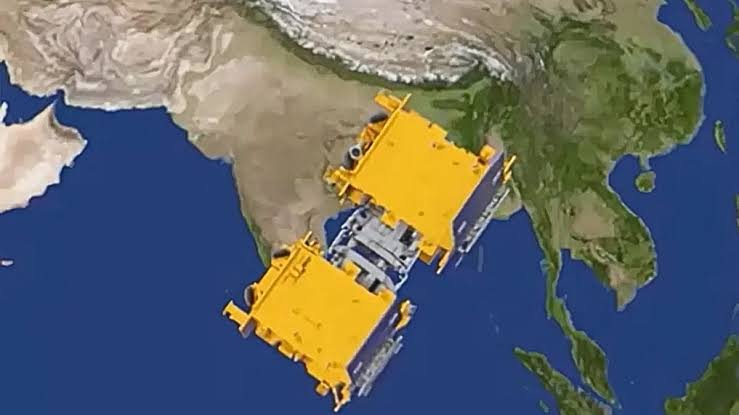
NVS-03 is the third satellite of the second-generation NVS series, which is meant to ensure continuity of services for the Indian Regional Navigation Satellite System (IRNSS), operationally known as NavIC. Five satellites, NVS-01 to NVS-05, are planned under the series. They are intended to replace or complement the older IRNSS satellites, which were launched between 2013 and 2015 and are now ageing.
NavIC was designed as India’s independent answer to the United States’ Global Positioning System (GPS), Russia’s GLONASS and China’s BeiDou. Its coverage extends over India and up to 1,500 km beyond its borders. It offers a standard service for civilian users and a restricted, encrypted service for the armed forces and other authorized agencies. Applications include road and maritime navigation, aviation, precision agriculture and military operations.
NVS-03 carries both indigenous and imported atomic clocks, the instruments on which accurate positioning depends. Isro first flew a home-built atomic clock on NVS-01, which was launched aboard GSLV-F12 on May 29, 2023.
Recovering from a setback
The mission carried particular weight because of the loss of NVS-02. That satellite was launched on GSLV-F15 on January 29, 2025, in Isro’s 100th launch from Sriharikota, and was placed in its transfer orbit. A technical fault later prevented it from reaching its intended orbit, which left NavIC short of the working satellites it needs and its services degraded.
Officials have also linked the launch to strategic needs. Reports said a functioning NavIC constellation would support border surveillance and give the armed forces a navigation source that does not depend on foreign systems.
The success follows the GSLV-F17 launch of the EOS-05 earth observation satellite on September 3.