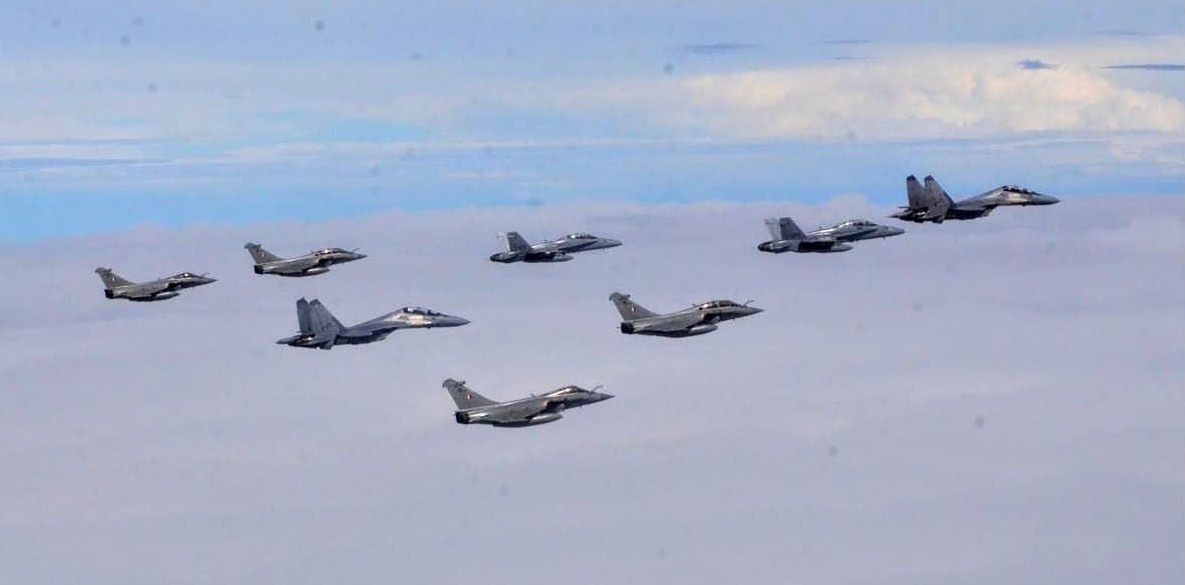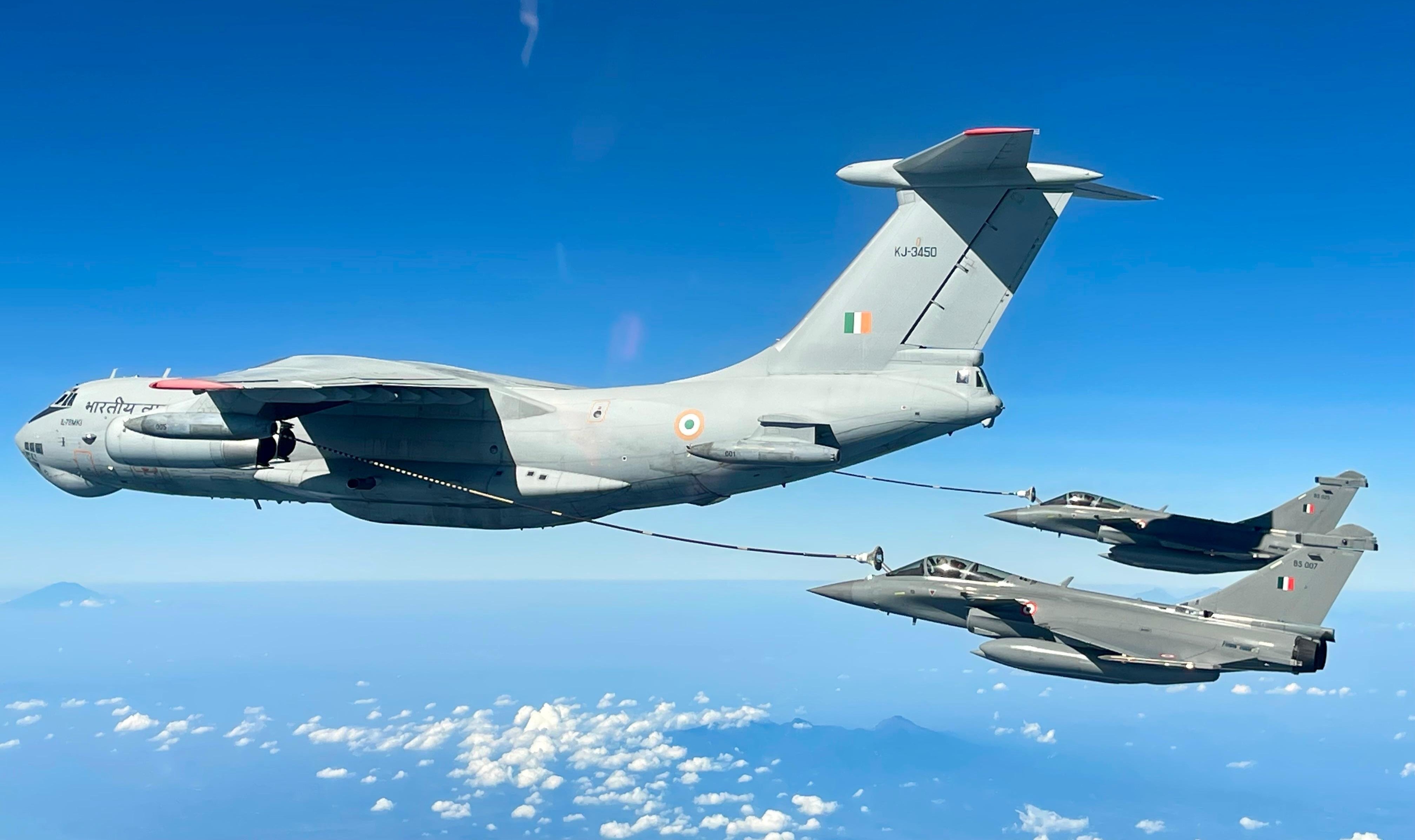
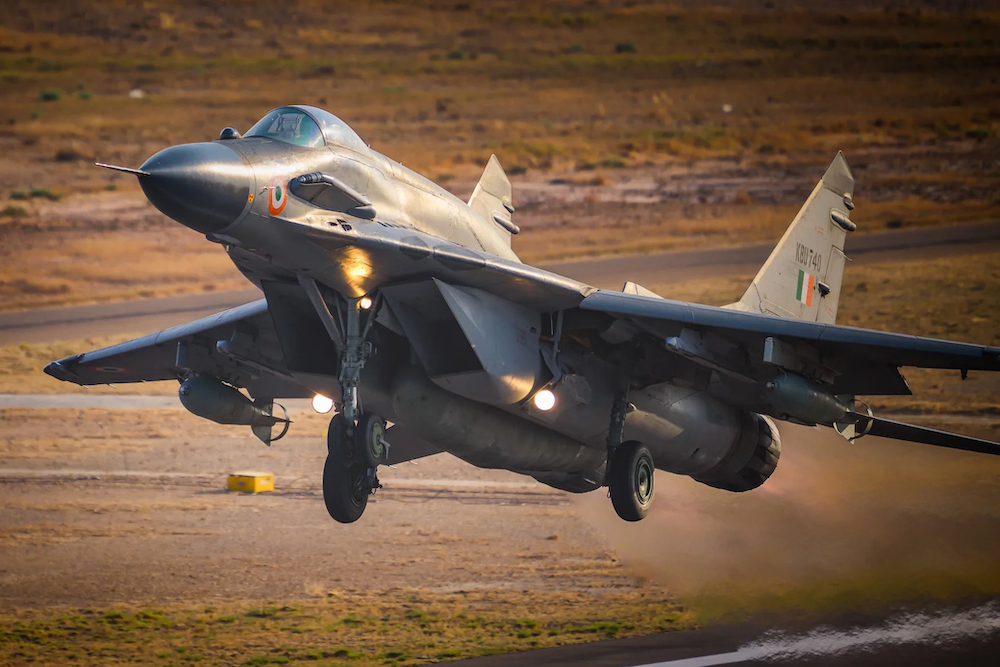
 An Indian Air Force MiG-29.
New Delhi: The Indian Air Force is set to integrate the British-developed advanced short range air-to-air missile (ASRAAM) onto its fleet of Russian-origin MiG-29UPG fighters. This move is aimed to sharpen the service’s close-combat capabilities against threats posed by Chinese and Pakistani aircraft armed with comparable weaponry.
The Ministry of Defence floated a request for proposal on March 25 for the integration and certification of ASRAAM on the MiG-29UPG, covering associated multiple launch rocket systems, tools, testers, launchers and crew training.
The Air Force operates a fleet of roughly 55 MiG-29s, including eight two-seat trainer variants. The missile has already been integrated on the indigenous LCA Tejas and the British-origin Jaguar fighters operated by the service.
The MiG-29 was inducted into the Air Force between 1986 and 1991 as a dedicated air superiority fighter, primarily to counter Pakistan’s then-newly acquired F-16s. The UPG variant emerged from a $900 million upgrade deal signed in 2009, which fitted the fleet with advanced avionics, the Zhuk-ME radar and an extended service life.
The IAF plans to begin retiring the MiG-29UPG fleet around 2033, with the phase-out potentially concluding by 2036–37, by which point the Tejas-Mk2 is expected to have entered service in sufficient numbers to take over the air defence and multirole roles currently handled by the type.
Replacing a Cold War relic
ASRAAM would replace the R-73, a Soviet-era infrared-guided missile developed in the 1980s with an engagement range of 10 to 15 kilometres. By contrast, ASRAAM – manufactured by the European defence group MBDA – carries a range of over 25 kilometres, travels at speeds exceeding Mach 3, and sustains a 50G manoeuvrability rating through a combination of body-lift technology and tail-control fins. Its fire-and-forget design requires no further pilot input after launch, freeing the pilot to take evasive action or engage other targets.
The missile measures 2.9 metres in length and 166 millimetres in diameter, weighs 88 kilograms, and is fitted with a high-explosive blast-fragmentation warhead equipped with both impact and laser proximity fuses. It first entered service with the Royal Air Force in 1998 and has since been adopted by several air forces.
In August 2021, MBDA and Bharat Dynamics Limited (BDL) signed a licensing agreement to establish a final assembly, integration and test facility within BDL’s manufacturing complex in Hyderabad, which will also provide maintenance, repair and overhaul services. The arrangement is part of India’s broader push to build domestic defence production capacity.
Regional missile contest
The urgency of the ASRAAM integration becomes clearer in the context of what India’s adversaries have already fielded. China’s PL-10 – a fourth-generation short-range infrared-guided missile – entered operational service in 2015 after roughly a decade of development and is now carried by advanced platforms including the J-10C, J-16 and the stealth J-20 fighter. Its reported range is between 20 and 30 kilometres depending on launch conditions, and it travels at a peak speed of Mach 4, making it marginally faster than the ASRAAM at the top end.
However, the ASRAAM’s larger rocket motor – 166 millimetres against the PL-10’s approximately 160 millimetres – is assessed to deliver superior sustained velocity and range through an engagement.
Pakistan has integrated the PL-10’s export variant, the PL-10E, onto its JF-17 Block III fighters since 2021 as part of a wider Chinese arms package. The JF-17 Block III, developed jointly by Pakistan and China, represents a meaningful upgrade over earlier variants and has drawn attention from several potential export customers.
With both neighbours having moved beyond legacy short-range missiles to fourth generation within-visual-range weapons, India’s decision to extend ASRAAM across its MiG-29 fleet – following its adoption on the Tejas and Jaguar – reflects a systematic effort to ensure parity, or better, across the full breadth of its frontline combat aircraft.
Follow us on social media for quick updates, new photos, videos, and more.
X: https://x.com/indiasentinels
Facebook: https://facebook.com/indiasentinels
Instagram: https://instagram.com/indiasentinels
YouTube: https://youtube.com/indiasentinels
© India Sentinels 2026-27