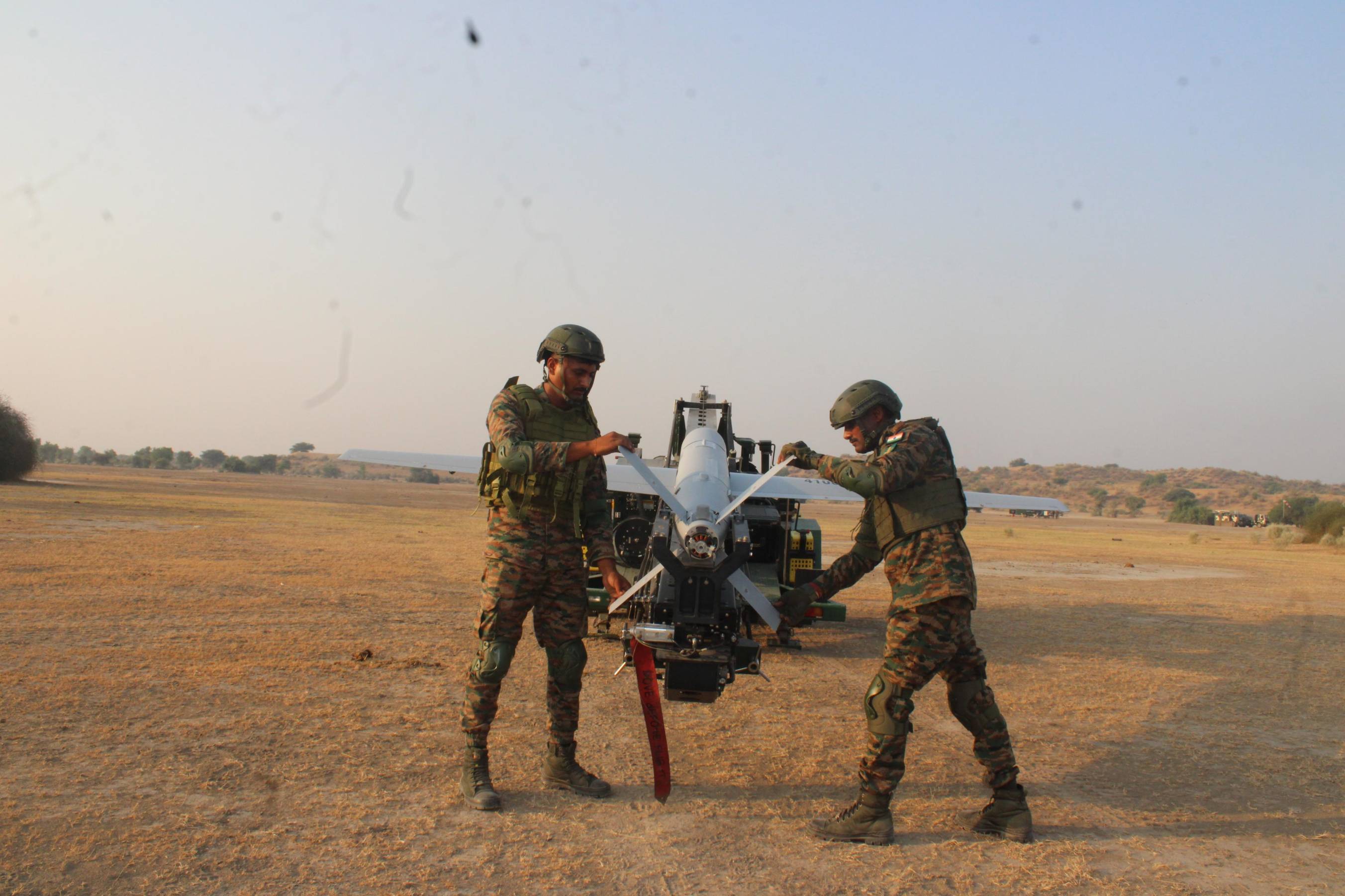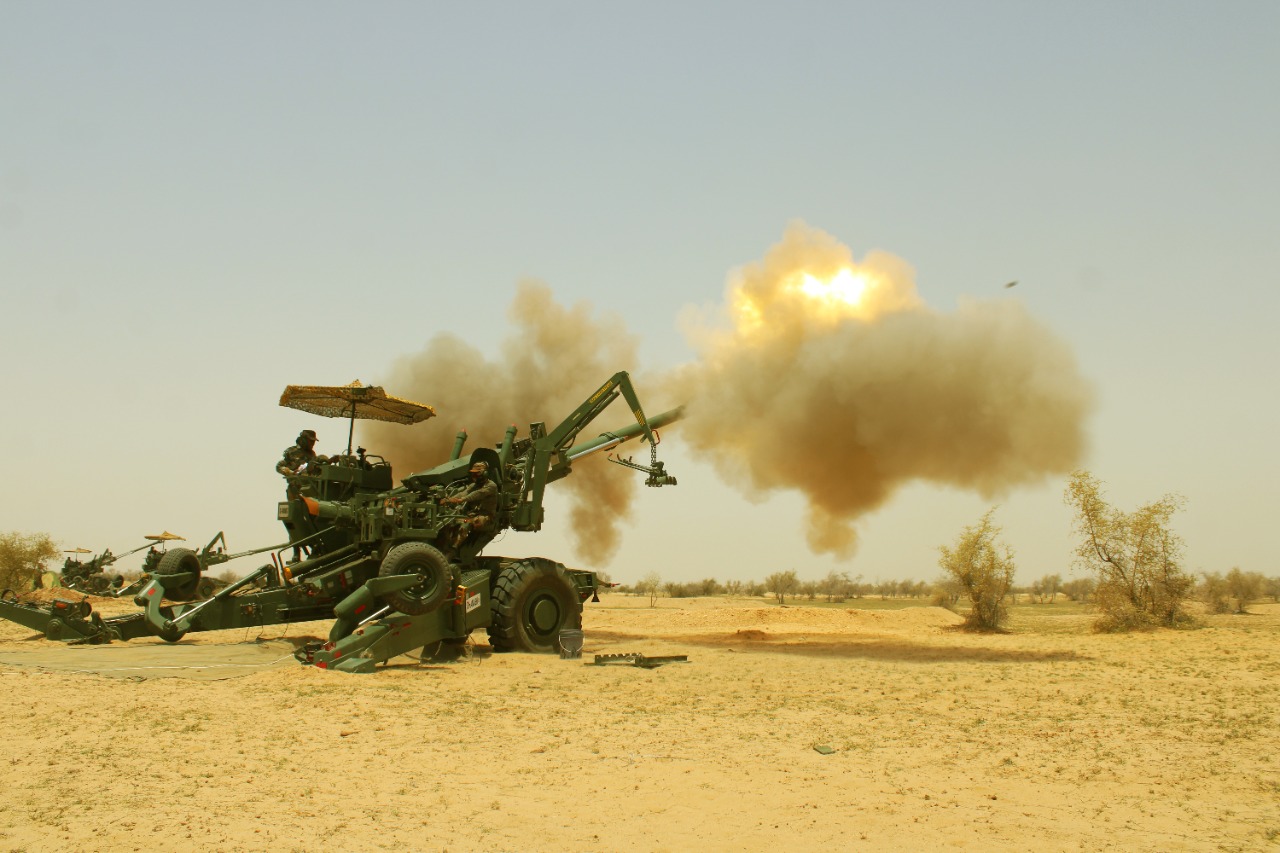
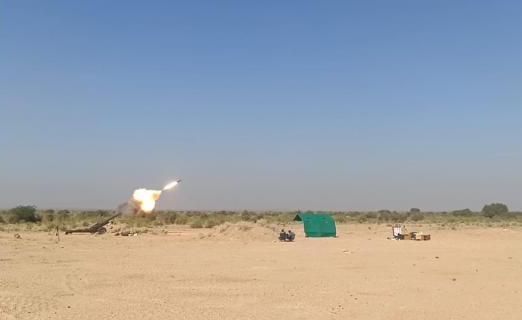
 Testing of a ramjet-assisted artillery shell (Photo: IIT-Madras)
New Delhi: In a major leap in artillery design and breakthrough in defence technology, the Indian Institute of Technology, Madras has developed a ramjet-assisted artillery shells that dramatically enhance the range of existing gun systems by nearly 50 per cent, without sacrificing lethality.
The IIT-Madras innovation offers extended reach while retaining compatibility with current platforms.
At the heart of this advancement is the integration of a compact ramjet engine into standard 155mm artillery ammunition. By replacing the conventional base-bleed unit, the ramjet provides sustained propulsion after the shell exits the gun barrel, allowing it to travel much farther than traditional projectiles.
Trials have demonstrated substantial range gains across multiple Indian Army platforms. The advanced towed artillery gun system (ATAGS) saw its range increase from 40km to 70km. The Vajra K-9 gun’s reach expanded from 36km to 62km, while the Dhanush artillery gun achieved an extended range of 55km, up from 30km.
These improvements significantly enhance battlefield flexibility and standoff capability.
Launched in 2020 in collaboration with the Army, the project has undergone rigorous gun and field trials. These tests successfully validated critical performance parameters, including clean gun exit, stable flight dynamics, and reliable ramjet ignition – key challenges in integrating propulsion into high-velocity artillery shells.
“Beyond its technical achievements, the project aligns strongly with India’s “Atmanirbhar Bharat” initiative. Rather than relying on entirely new weapon systems, the innovation demonstrates how upgrading existing platforms can deliver cost-effective, survivable, and future-ready firepower tailored for modern combat environments.”
The project was led by Prof PA Ramakrishna of IIT-Madras, with key contributions from Lt Gen PR Shankar (retd), Prof HSN Murthy, Prof G Rajesh, Prof M Ramakrishna, Prof Murugaiyan, Lt Gen Hari Mohan Iyer (retd), Prof Lazar C, and Dr Yogesh Kumar Velari.