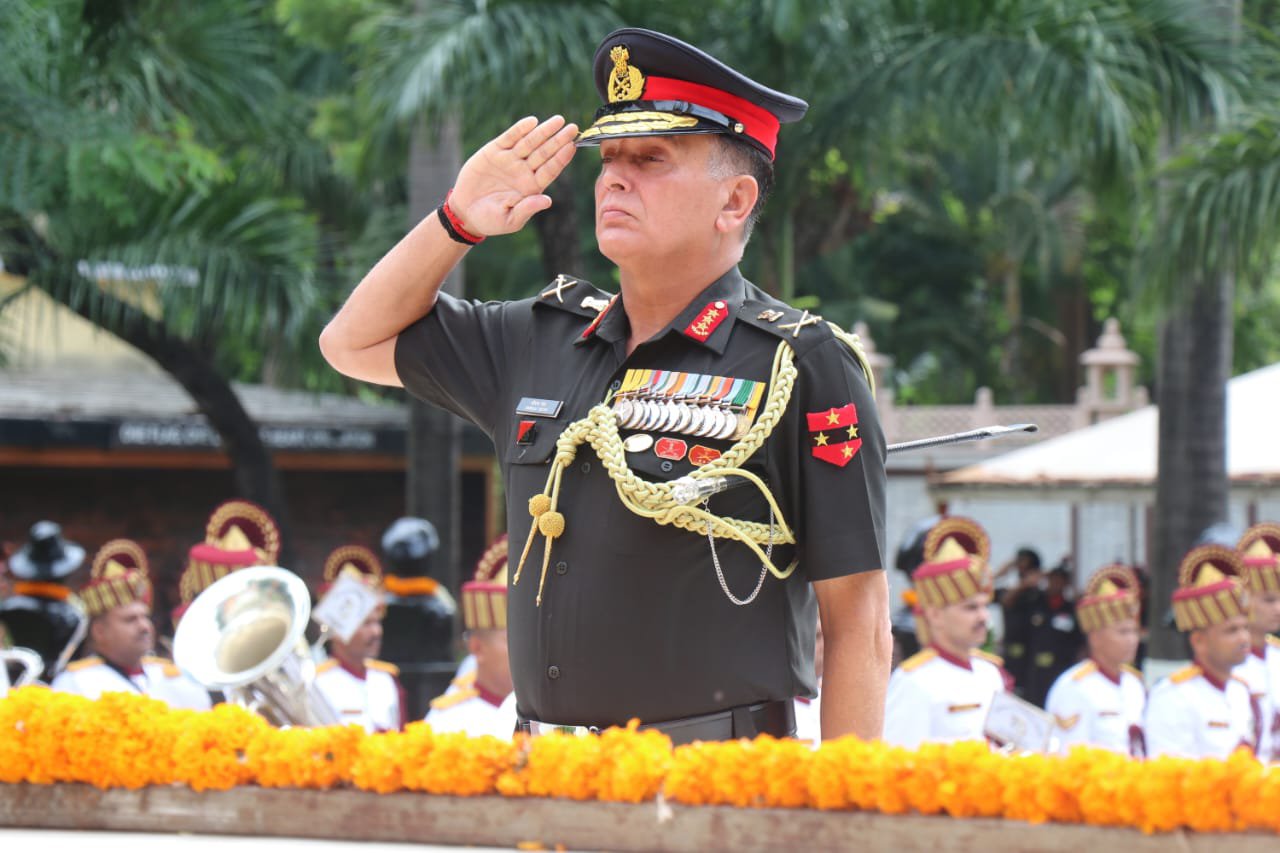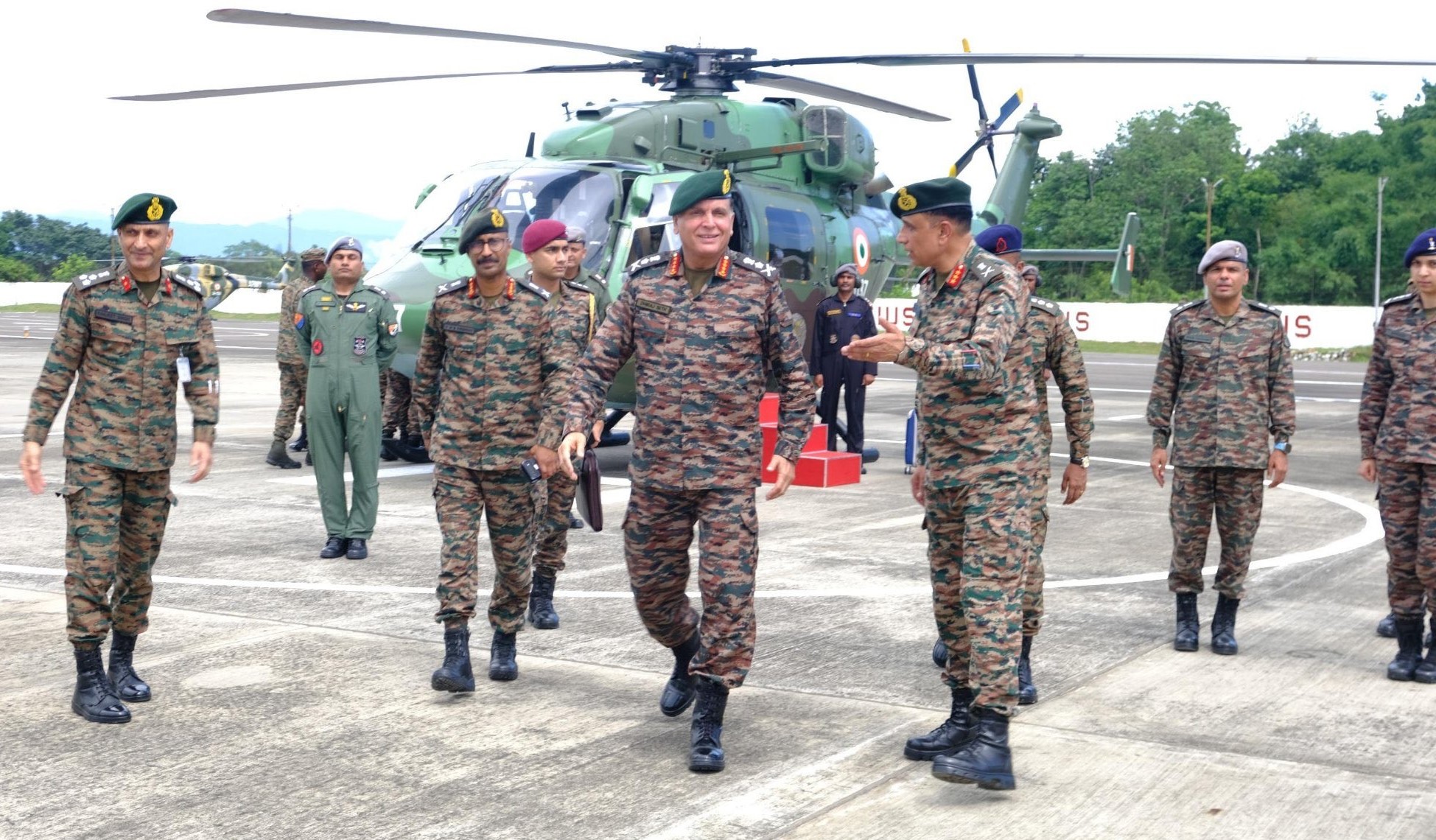
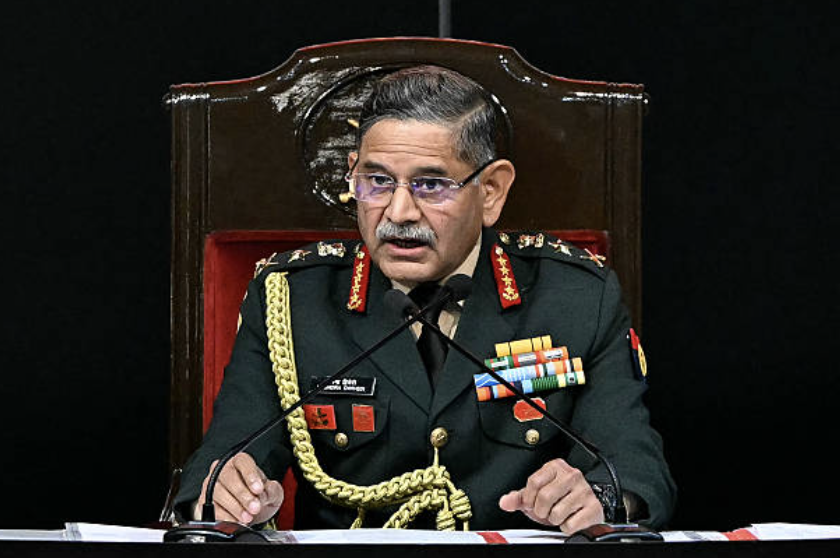
 Gen Upendra Dwivedi during his annual news conference before Army Day 2026.
New Delhi: India has firmly rejected China’s assertions of sovereignty over the Shaksgam Valley in Jammu & Kashmir. The Indian Army chief, General Upendra Dwivedi, told journalists ahead of the Army Day 2026 parade in Delhi on Tuesday that India does not recognize any activities in the disputed region.
While responding to questions about China’s ongoing infrastructure development in the area, Gen Dwivedi described the 1963 boundary agreement between Pakistan and China that ceded the territory as “illegal and invalid”. He said, “We do not accept any activity there.”
His statement came hours after the Chinese foreign ministry spokesperson, Mao Ning, asserted Beijing’s claim to the territory. “The territory you mentioned belongs to China. It is fully justified for China to conduct infrastructure construction on its own territory,” Mao said at a regular media briefing in Beijing.
The exchange marks the latest flare-up in a long-standing dispute over the strategically vital territory, which India maintains is an integral part of its sovereign territory but has been under Chinese control since 1963.
Historical background
The Shaksgam Valley, a 5,180-square-kilometre tract of land north of the Karakoram Range, was ceded to China by Pakistan through a boundary agreement signed in March 1963. Pakistan transferred control of the territory – which it had occupied following the first India-Pakistan war in 1947-48 – to China as part of a deal to delineate their mutual border.
India has never recognized this agreement, maintaining that Pakistan had no legal authority to cede territory that rightfully belongs to India as part of the former princely state of Jammu & Kashmir. New Delhi has consistently described the accord as “illegal” since it involved the transfer of Indian territory without India’s consent.
The foreign ministry spokesperson, Randhir Jaiswal, reiterated this position last week, stating that “the entire Union territories of Jammu & Kashmir and Ladakh are an integral and inalienable part of India.”
Strategic significance
The Shaksgam Valley holds considerable strategic importance despite being largely uninhabited and economically undeveloped. Situated between China’s Xinjiang region and Gilgit-Baltistan – a part of Pakistan-occupied Kashmir (POK) – the valley provides China with vital oversight of routes connecting Xinjiang with the Karakoram region.
The territory also serves as a buffer zone where the strategic interests of China, India and Pakistan intersect. Its proximity to Aksai Chin, the Karakoram Pass and the China-Pakistan border makes the valley a crucial piece in the geopolitical jigsaw of the region.
Security analysts note that China has been steadily expanding civilian, military and dual-use infrastructure in border areas, including the Shaksgam Valley, as part of its broader strategy to consolidate control over disputed territories.
CPEC concerns
Gen Dwivedi also addressed India’s opposition to the China-Pakistan Economic Corridor (CPEC), a flagship project under China’s Belt and Road Initiative that passes through Pakistan-occupied Kashmir.
“As far as the China-Pakistan Economic Corridor is concerned, we do not accept it and consider it an illegal action being carried out by the two nations,” the general said.
India has repeatedly objected to CPEC on the grounds that it traverses territory India claims as its own, viewing the project as a violation of its sovereignty and territorial integrity.
The renewed assertions from both India and China over the Shaksgam Valley underscore the continuing complexities of territorial disputes in the region, where competing claims remain unresolved more than six decades after the 1963 agreement.
With border infrastructure development accelerating on multiple fronts, the dispute appears set to remain a point of friction in India-China relations for the foreseeable future.