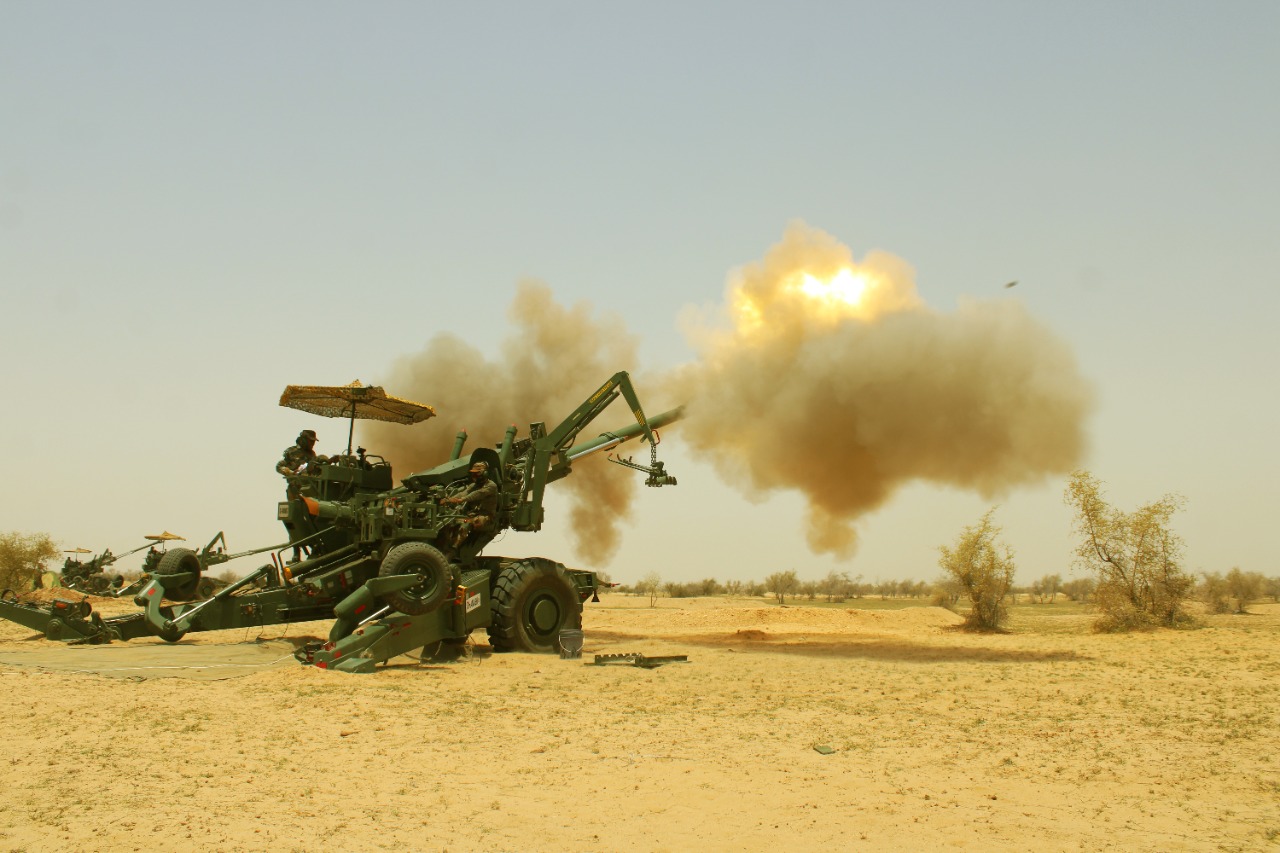
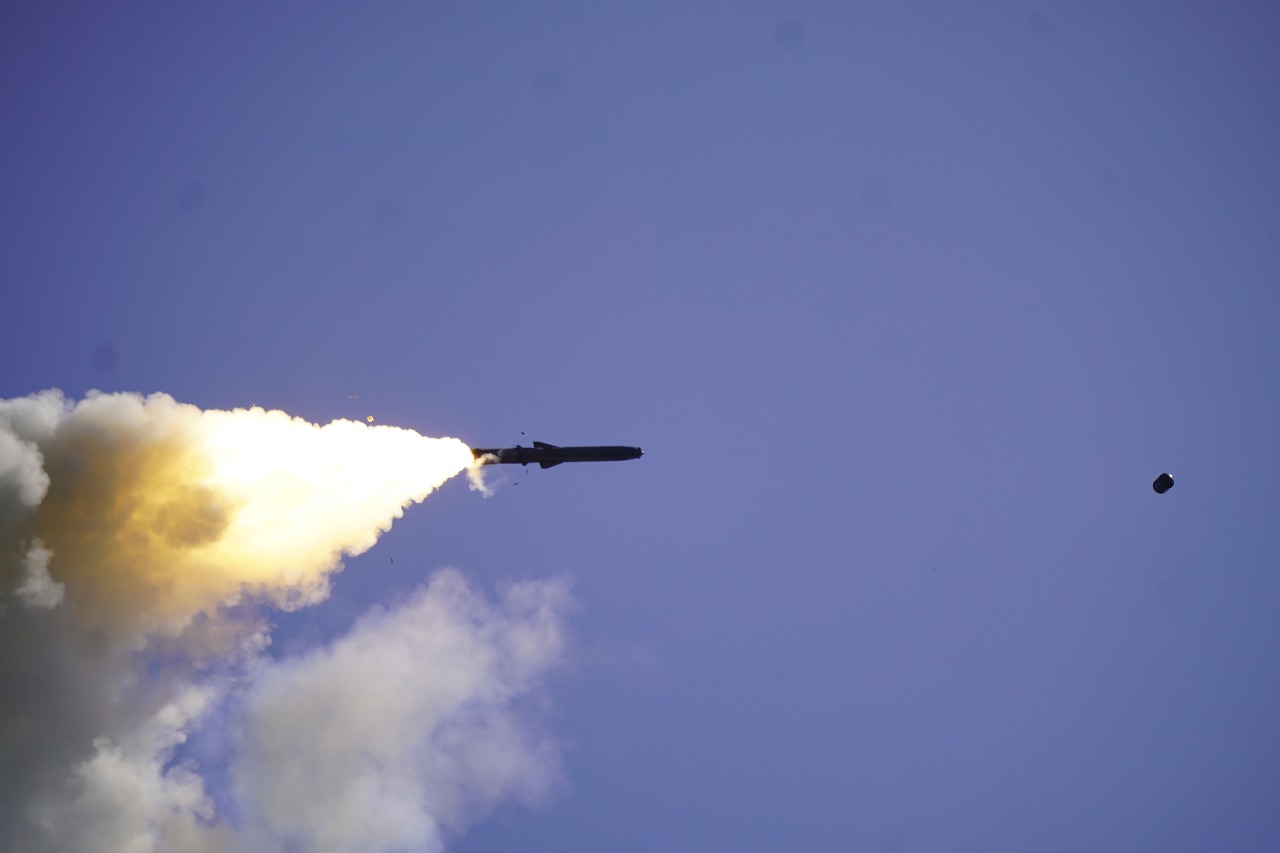
 The extended-range BrahMos during is test-flight in combat mode. (Photo: Indian Army)
New Delhi: The Indian Army conducted a combat launch of the BrahMos supersonic cruise missile over the Bay of Bengal, the Ministry of Defence said in a release on Monday. It said the firing of the missile demonstrated the weapon system’s precision-strike capability at extended ranges under simulated battle conditions.
The firing, executed by a BrahMos unit from Southern Command working alongside the triservices Andaman and Nicobar Command, met all operational objectives, according to the statement. The missile struck its designated target while maintaining stable supersonic flight throughout its trajectory, validating the performance of guidance, navigation and control systems fitted to the long-range variant.
The test marks a significant operational validation for India’s most advanced cruise missile platform. BrahMos uses a two-stage propulsion system – a solid-propellant booster for initial acceleration followed by a liquid-fuelled ramjet that sustains speeds of Mach 2.8 to Mach 3, making it the world’s fastest operational cruise missile.
Extended reach and strategic implications
The variant tested belongs to the extended-range family of BrahMos missiles. India joined the Missile Technology Control Regime in 2016, after which longer-range variants of the weapon were developed with Russia. The standard BrahMos has a range of approximately 450 kilometres, while an 800-kilometre variant is currently under trials with development expected to be completed by 2027.
The missile’s supersonic speed compresses reaction times for adversary air defence systems, significantly complicating interception efforts. BrahMos can attack surface targets by flying as low as five metres in altitude while reaching maximum heights of 15,000 metres, allowing it to adopt varied flight profiles including sea-skimming approaches that reduce radar detection.
Joint development and indigenous content
BrahMos represents a joint venture between India’s Defence Research and Development Organisation and Russia’s NPO Mashinostroyenia, established in 1998. The missile derives its name from India’s Brahmaputra and Russia’s Moskva rivers. While originally a collaborative programme, India has progressively increased indigenous content in recent years.
The weapon system has been deployed across all three services – Army, Navy and Air Force – with land-based mobile launchers, ship-mounted systems and air-launched variants integrated on Sukhoi-30MKI fighter aircraft. The submarine-launched variant was successfully tested in 2013.
Export prospects
India is finalizing defence export deals worth approximately USD 450 million to supply BrahMos missiles to friendly nations, according to defence sources. The Philippines has already received the first batch of the system.
International interest in BrahMos intensified following its use during recent military operations. The missile’s combat-proven record has enhanced its appeal to potential buyers, particularly in Southeast Asia and the Middle East. Individual BrahMos missiles are estimated to cost between $2.5 million and $3 million.
Expanding capabilities
The country’s armed forces continue to expand BrahMos deployment. In March 2025, the Defence Acquisition Council cleared procurement of additional regiments equipped with BrahMos-ER missiles worth around ₹20,000 crore. In August 2025, the council approved procurement of 110 air-launched BrahMos missiles for the Indian Air Force at a cost of ₹10,800 crore.
Future variants under development include BrahMos-NG (Next Generation), a lighter, more compact version designed for deployment on a wider range of platforms including the indigenous Tejas LCA. A hypersonic BrahMos II variant capable of speeds exceeding Mach 7 is also in advanced development stages.
Strategic positioning
The latest test reinforces India’s precision-strike capabilities in the eastern maritime theatre. The involvement of the Andaman and Nicobar Command – India’s only integrated triservices command – underscores the importance of the Bay of Bengal and Andaman Sea to India’s strategic calculus in the Indo-Pacific region.
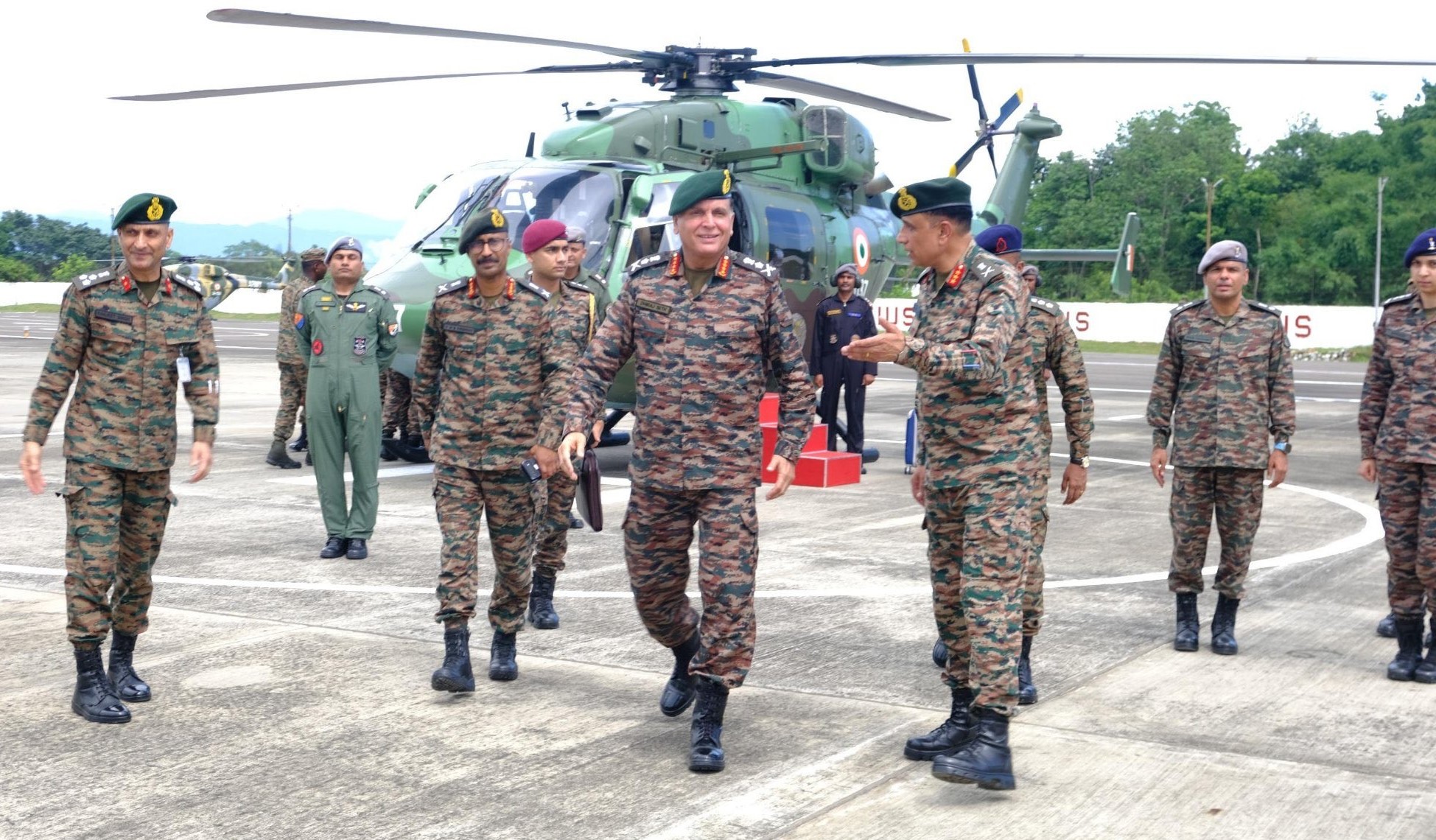
Lieutenant General Dhiraj Seth, general officer commanding in chief of Southern Command, described the launch as a major milestone in enhancing the Army’s long-range precision strike capability. The Ministry of Defence statement emphasized the test demonstrated steady progress in India’s strategic and technological competencies under the Atmanirbhar Bharat initiative for defence self-reliance.
The successful validation of extended-range BrahMos capabilities provides the armed forces with options for engaging high-value targets – including command centres, logistics hubs and naval assets – at considerable standoff distances across multiple operational scenarios.