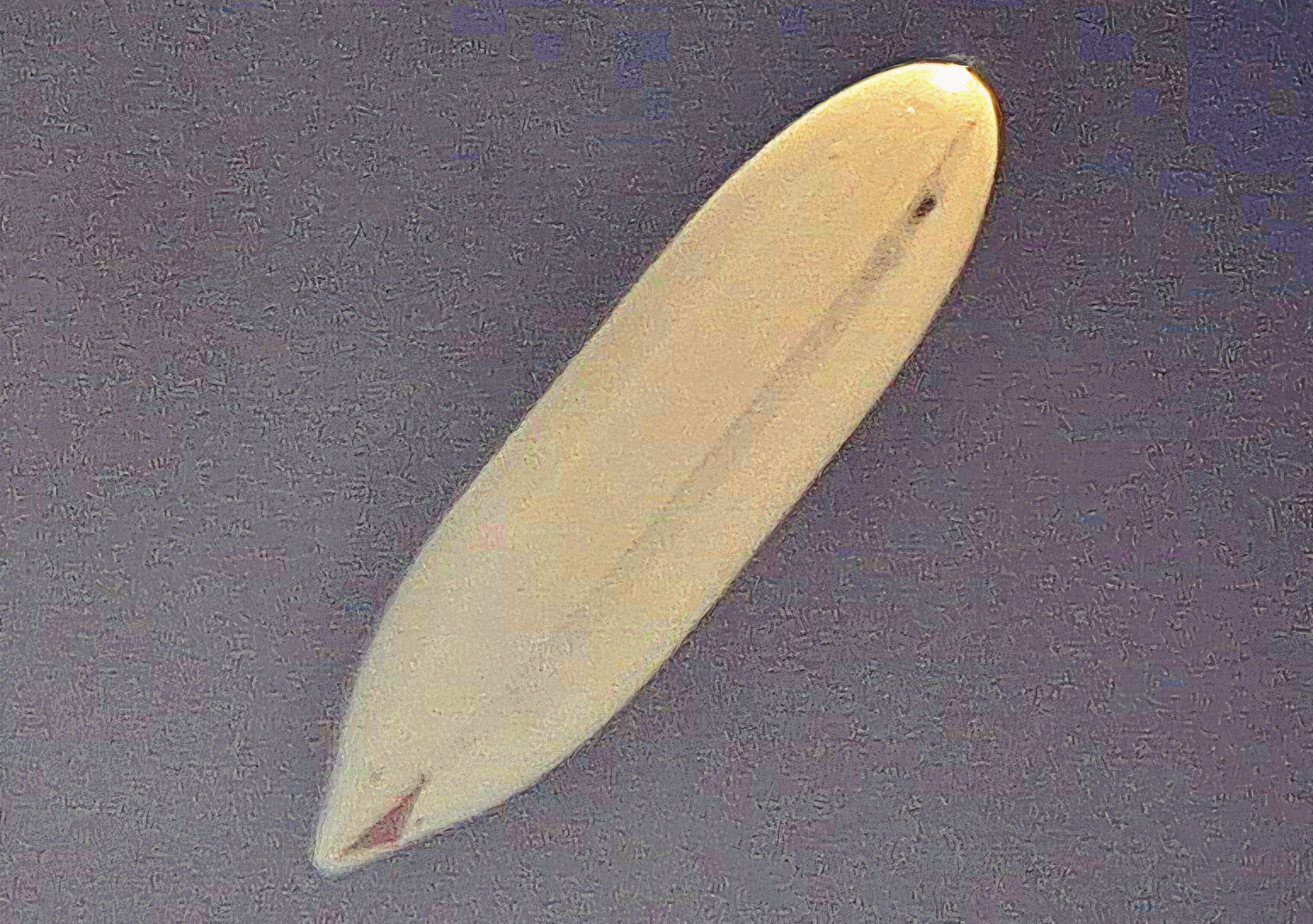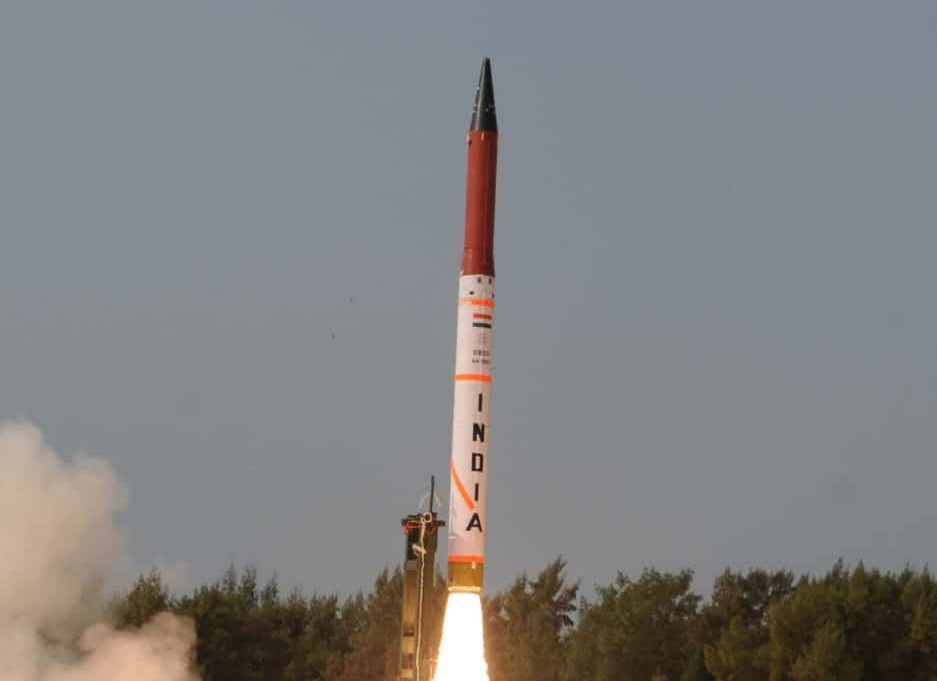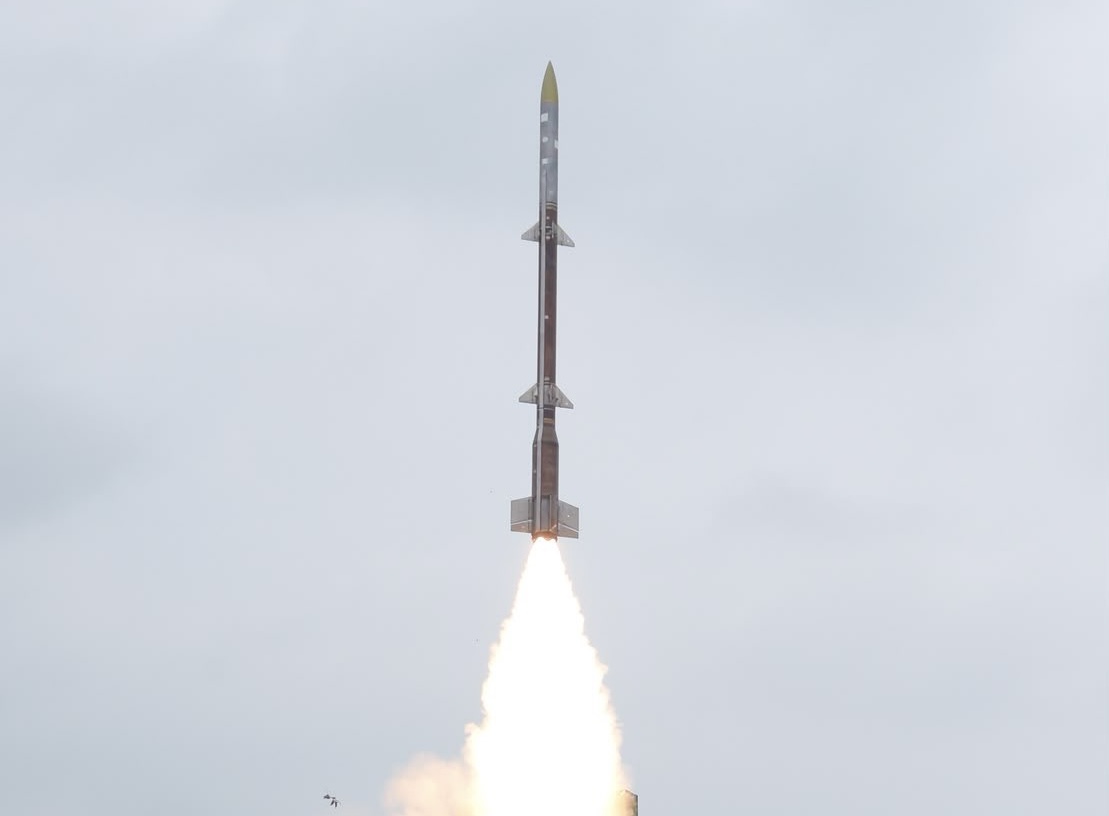
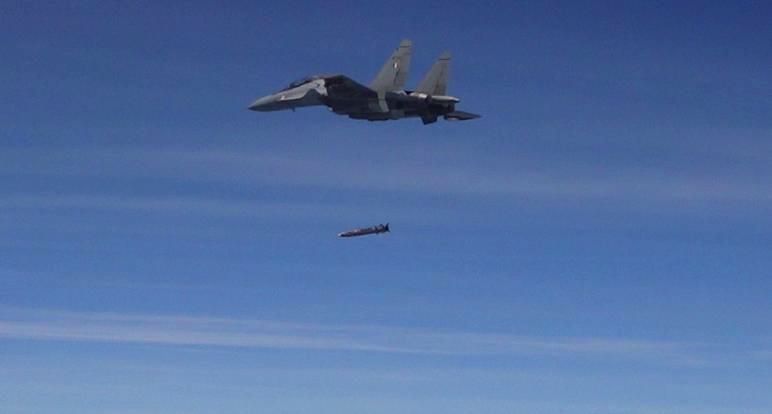
 This MoD photo shows the test-firing of Rudram-2 missile from a Sukhoi-30MKI fighter.
New Delhi: The Defence Research & Development Organisation (DRDO) and the Indian Air Force (IAF) successfully conducted fresh test-flight of the Rudram-2 air-to-surface missile on Tuesday, the Ministry of Defence said in a media release. Fired from a Sukhoi-30MKI fighter jet off the Odisha coast, the tests were carried out under extreme release conditions, with all critical subsystems of the missile validated across its full flight trajectory, the ministry said.
The weapon accurately engaged a predefined target, as confirmed by flight data captured by range instruments deployed by the Integrated Test Range (ITR), Chandipur.
The defence minister, Rajnath Singh, congratulated DRDO, the IAF, and industry partners on the successful tests, describing the achievement as a reflection of the increasing maturity of India’s indigenous defence technologies. The secretary of the department of defence research and development and chairman of DRDO, Samir V Kamat, also congratulated all teams associated with the programme.
Rudram-2 has been developed by the Research Centre Imarat (RCI), Hyderabad, which served as the nodal DRDO laboratory for the programme. The successful tests mark a significant stride toward India’s goal of self-reliance in advanced weapon systems.
Rudram-2 origin and development
Rudram-2 is an indigenously developed air-launched, solid-propelled, supersonic anti-radiation missile, designed and built under the aegis of DRDO, with RCI in Hyderabad serving as the lead laboratory. It is part of the broader RudraM series, which India has been developing as a family of new-generation anti-radiation missiles (NGARMs) primarily meant for suppression of enemy air defences (SEAD).
The series was conceived to give the Air Force a potent, long-range capability to neutralize enemy radar networks, communication systems, and command-and-control centres, thereby enabling Indian strike aircraft to conduct bombing missions without interference from hostile air defences.
RudraM family
Rudram-2 sits in the middle tier of a three-missile family. Rudram-1, the first in the series, has a range of approximately 150 kilometres and features INS-GPS navigation and a passive homing head for terminal attack; it was first tested in October 2020.
Rudram-2 is the upgraded, longer-range variant with a strike range of 300–350 kilometres, featuring solid propulsion and advanced guidance. it was first successfully tested in May 2024, with fresh tests conducted this month.
Rudram-3, a further-extended-range variant of approximately 550 kilometres, is currently under development.
Technical specifications
Rudram-2 is a solid-propelled supersonic missile capable of reaching speeds of up to Mach 5.5, or approximately 6,791 kilometres per hour. It can carry a warhead payload of up to 200 kilograms and weighs approximately 800 kilograms in total. The missile can be launched from altitudes ranging between three and 15 kilometres, giving the launch platform considerable tactical flexibility.
Its effective operational range extends from approximately 50 kilometres to 350 kilometres, making it a formidable stand-off weapon capable of striking deeply entrenched enemy assets without putting the launch aircraft at risk. The missile uses an internal guidance system that enables autonomous homing onto the target after launch, operating on a lock-on-before-launch principle.
Mission role and targets
The missile’s primary mission is SEAD – suppression of enemy air defence. In this role, Rudram-2 is designed to destroy ground-based radars (both surveillance and tracking types), radio-frequency emitting assets, communication stations, command-and-control nodes, aircraft hangars, hardened bunkers, and airstrips.
By taking out these assets at long stand-off ranges, the missile clears the way for Air Force strike aircraft to operate with far greater freedom and reduced threat exposure.
Rudram-2 is currently integrated with the Sukhoi-30MKI as its primary launch platform, from which all flight-tests have been conducted to date. DRDO has also been planning to expand its integration to include the Mirage 2000 fighter, which would broaden operational flexibility.
Performance data from each test is captured and validated by range tracking instruments – including electro-optical systems, radar, and telemetry stations – deployed by the ITR at Chandipur, Odisha, including on-board ship platforms. Tuesday’s tests, conducted under extreme release conditions, validated all critical subsystems across the missile’s full flight trajectory, underscoring the growing maturity of India’s indigenous defence industrial base and its ambitions of self-reliance in advanced weaponry.
Follow us on social media for quick updates, new photos, videos, and more.
X: https://x.com/indiasentinels
Facebook: https://facebook.com/indiasentinels
Instagram: https://instagram.com/indiasentinels
YouTube: https://youtube.com/indiasentinels
© India Sentinels 2026-27