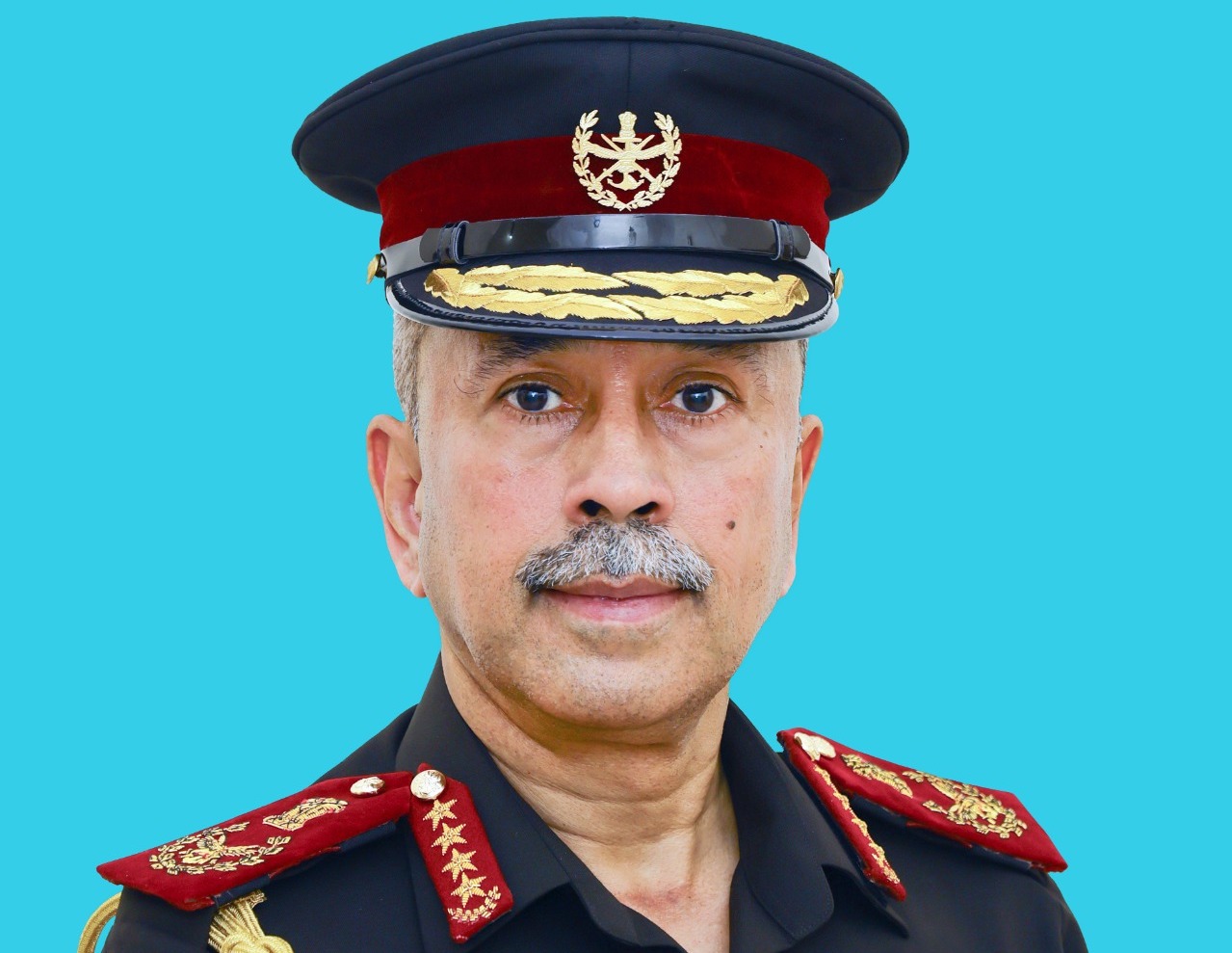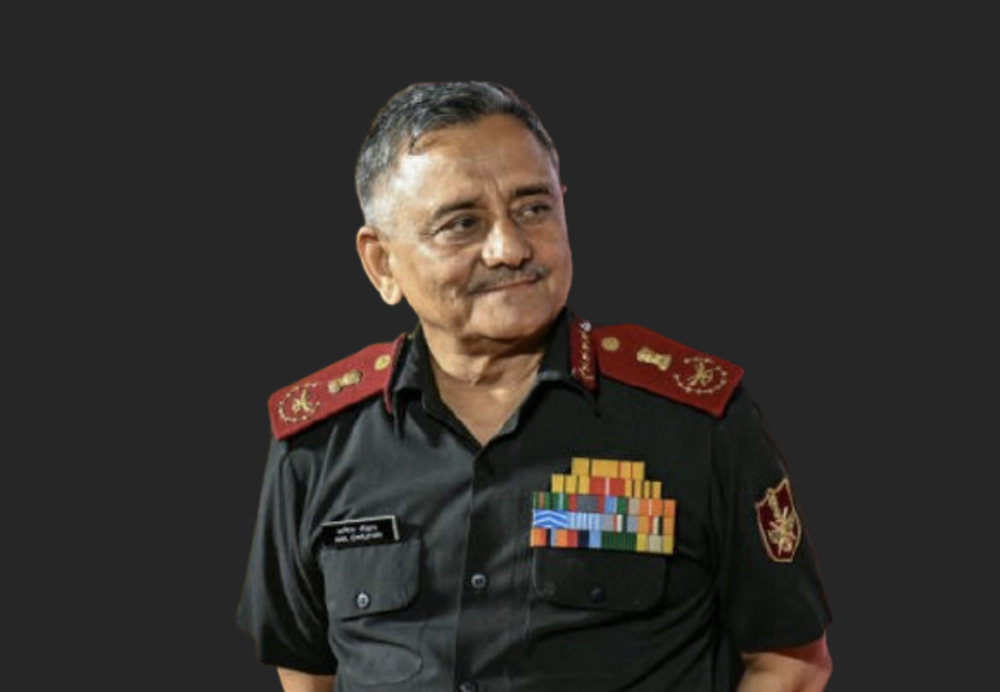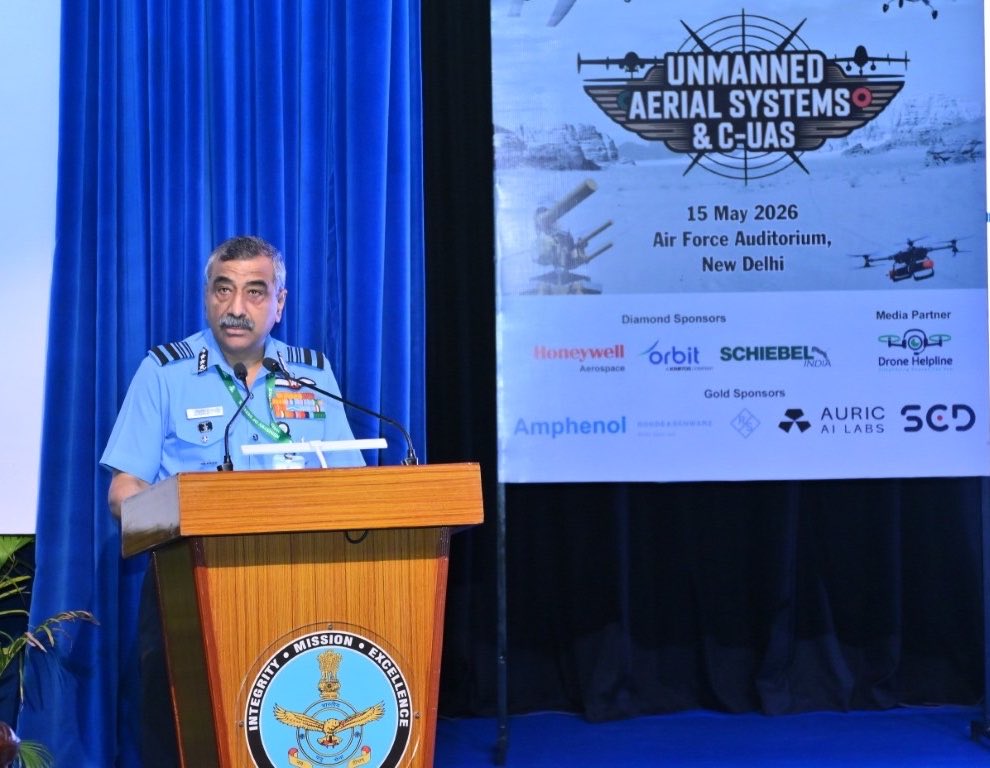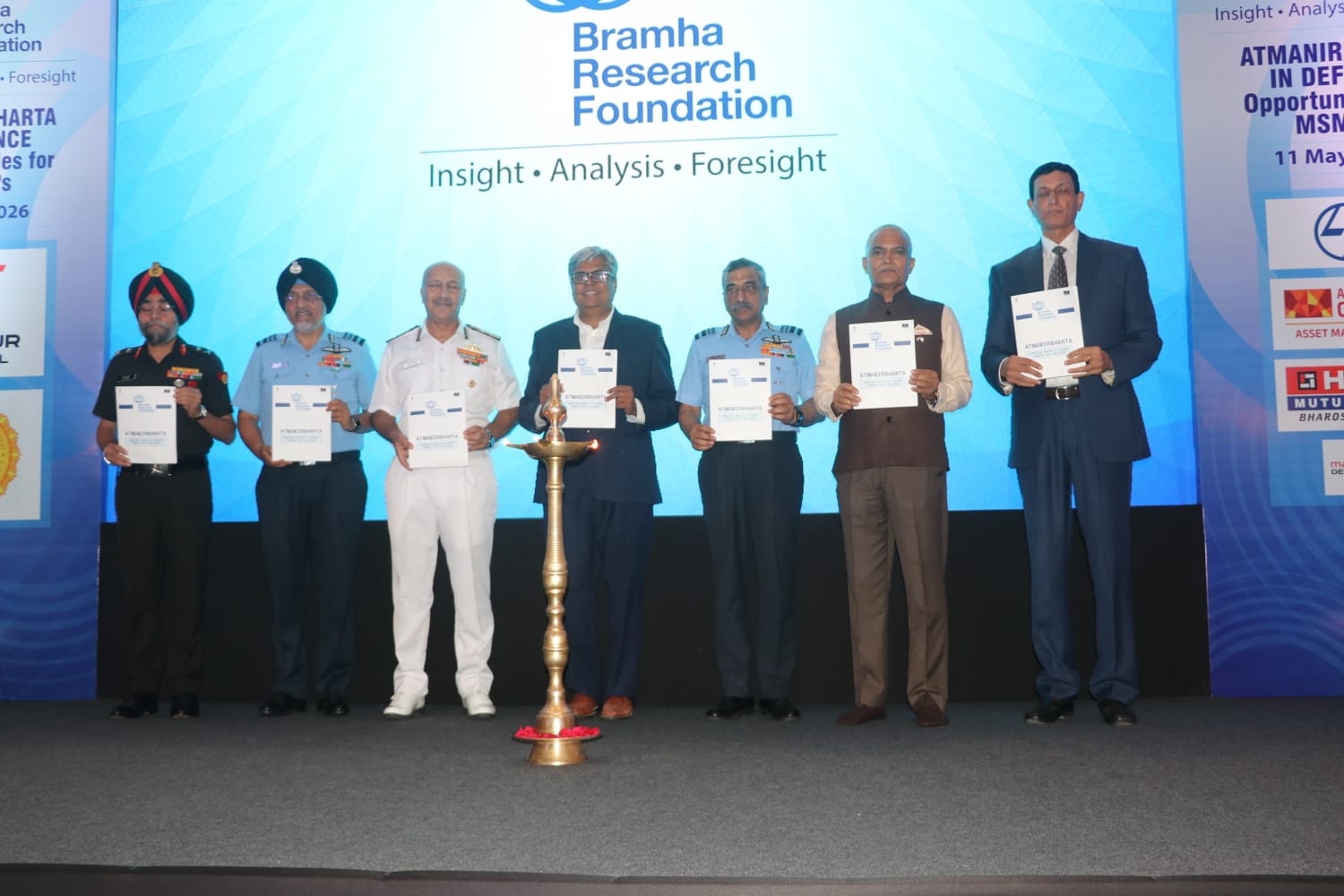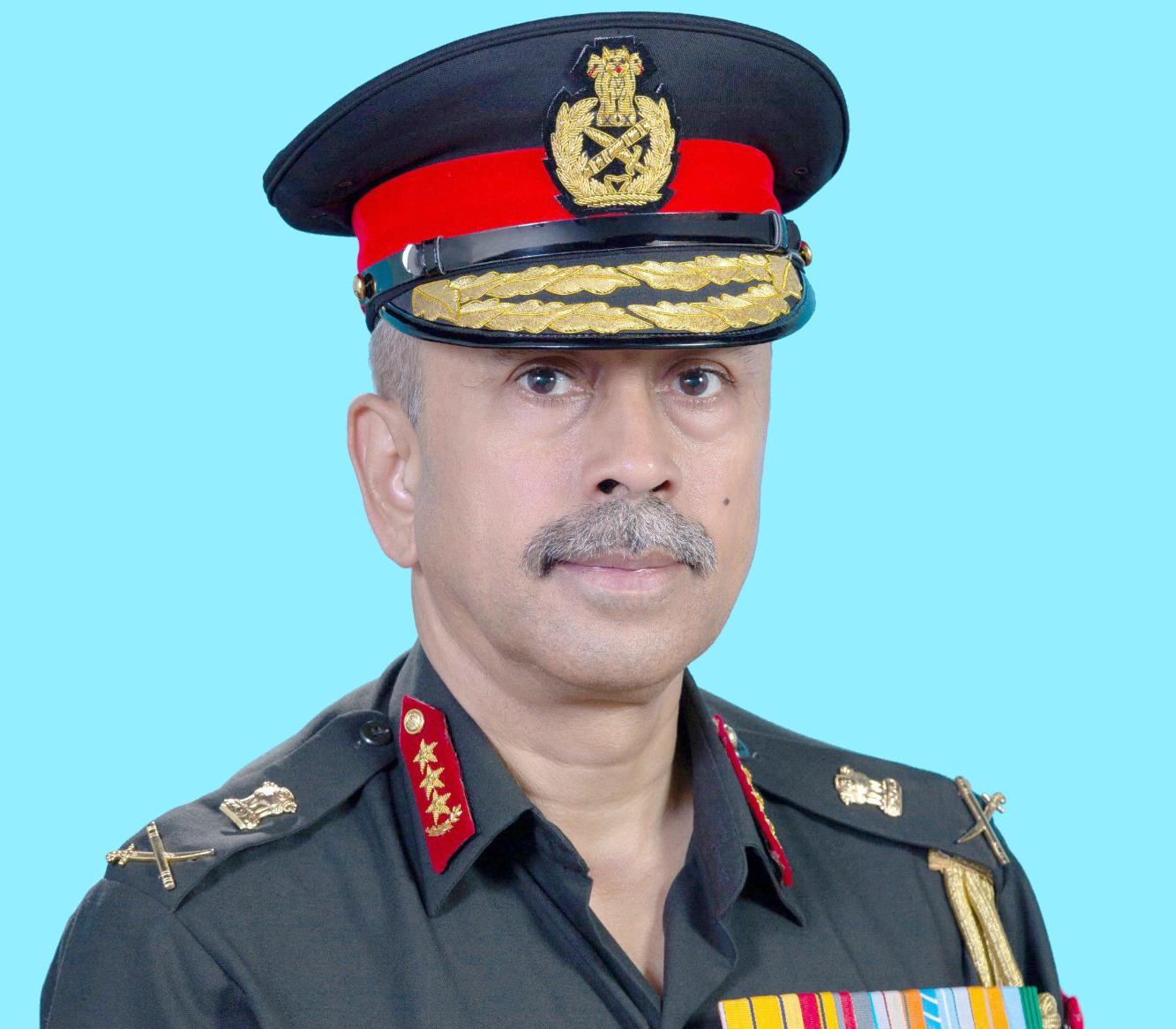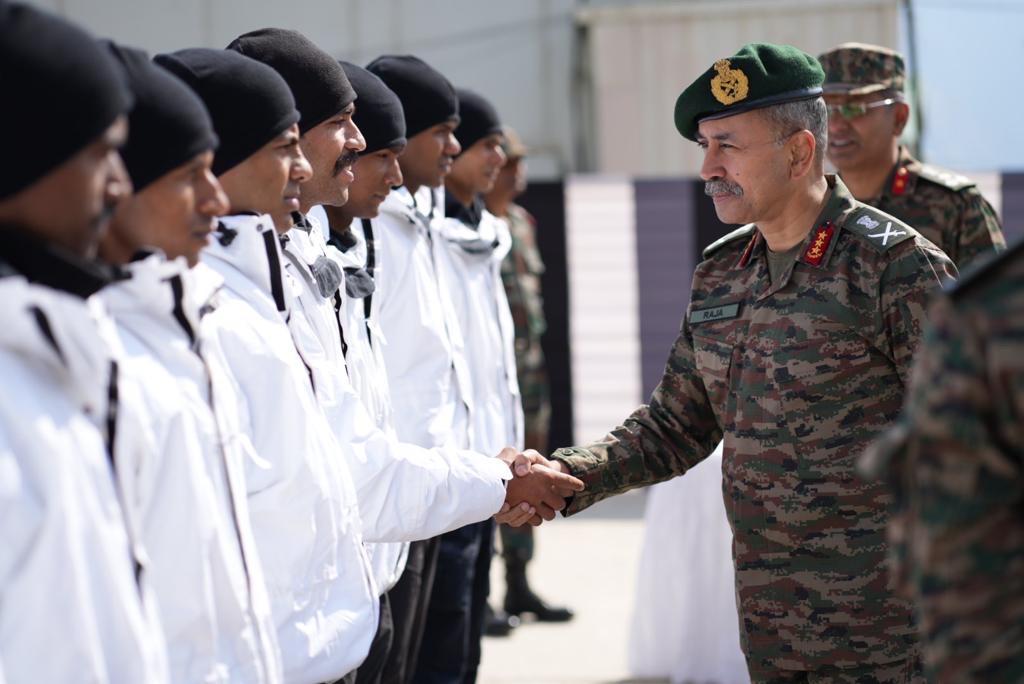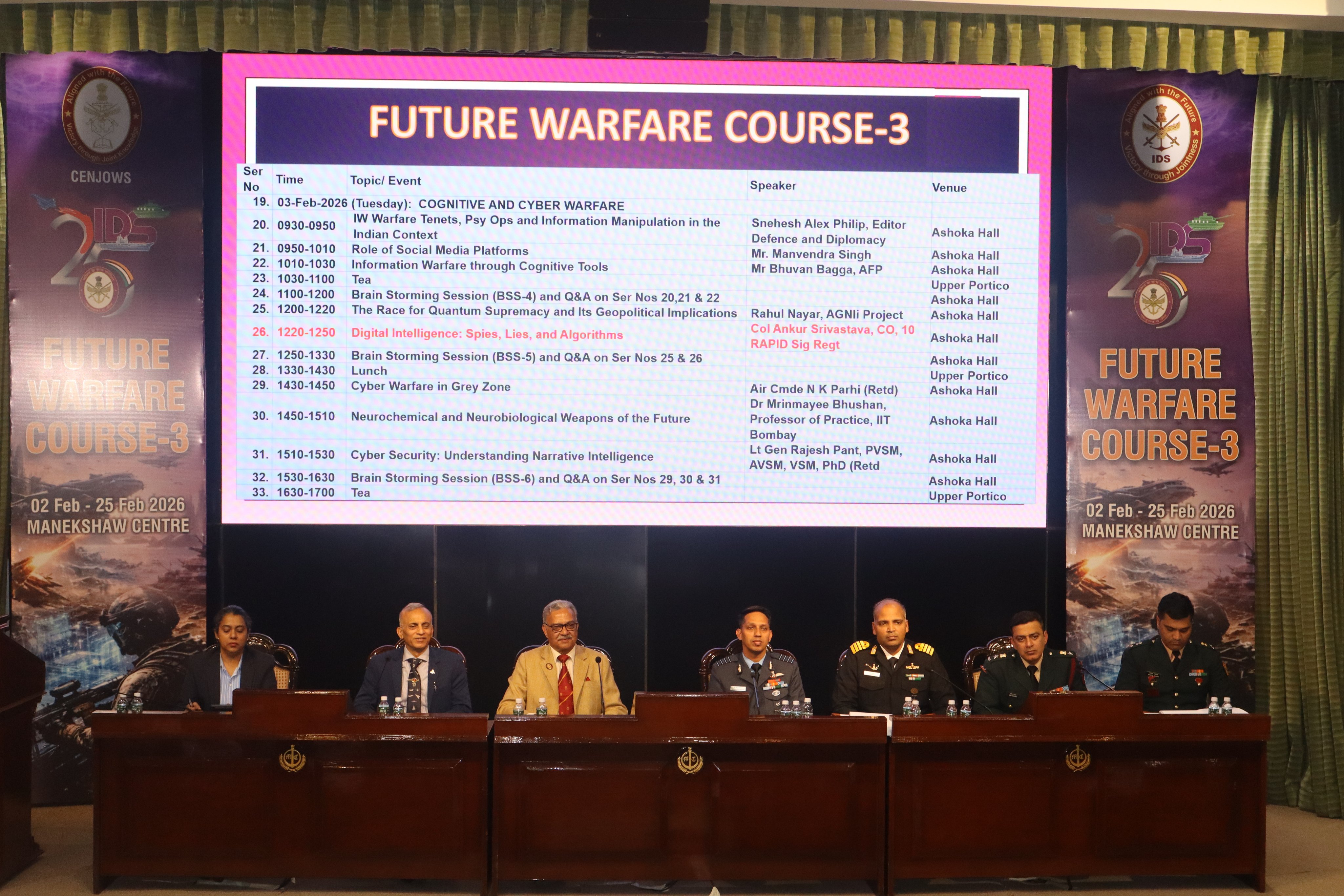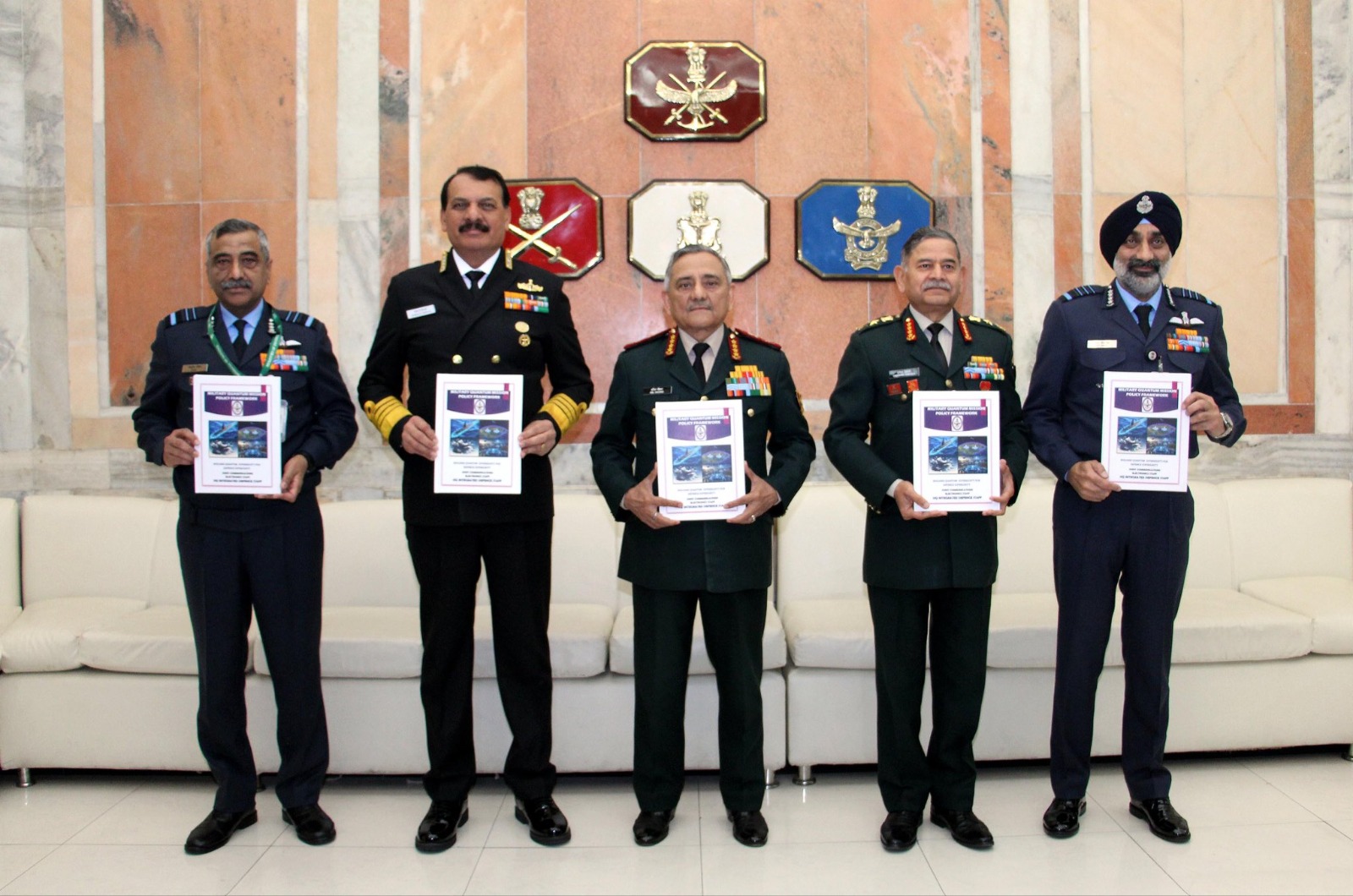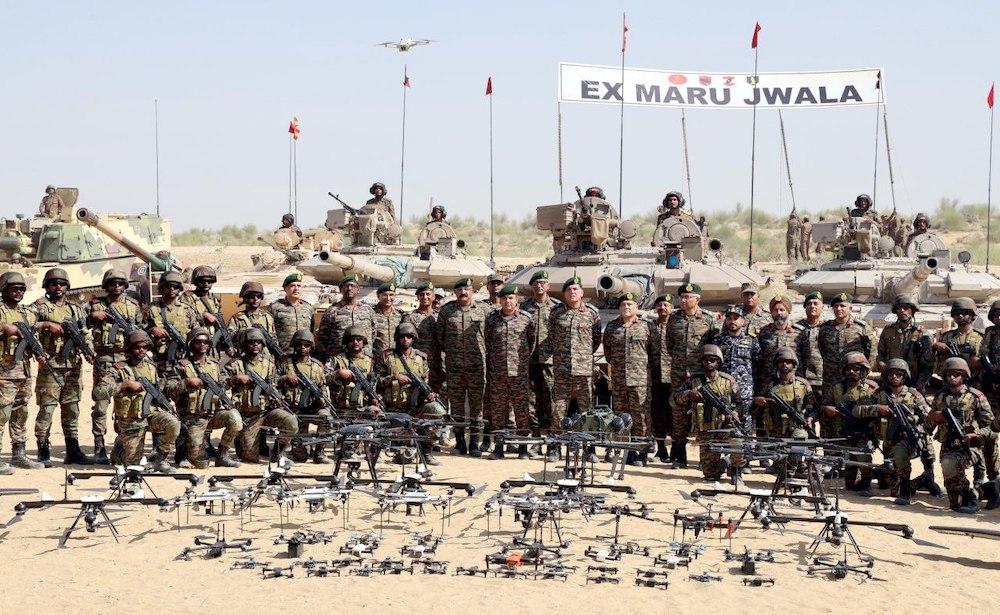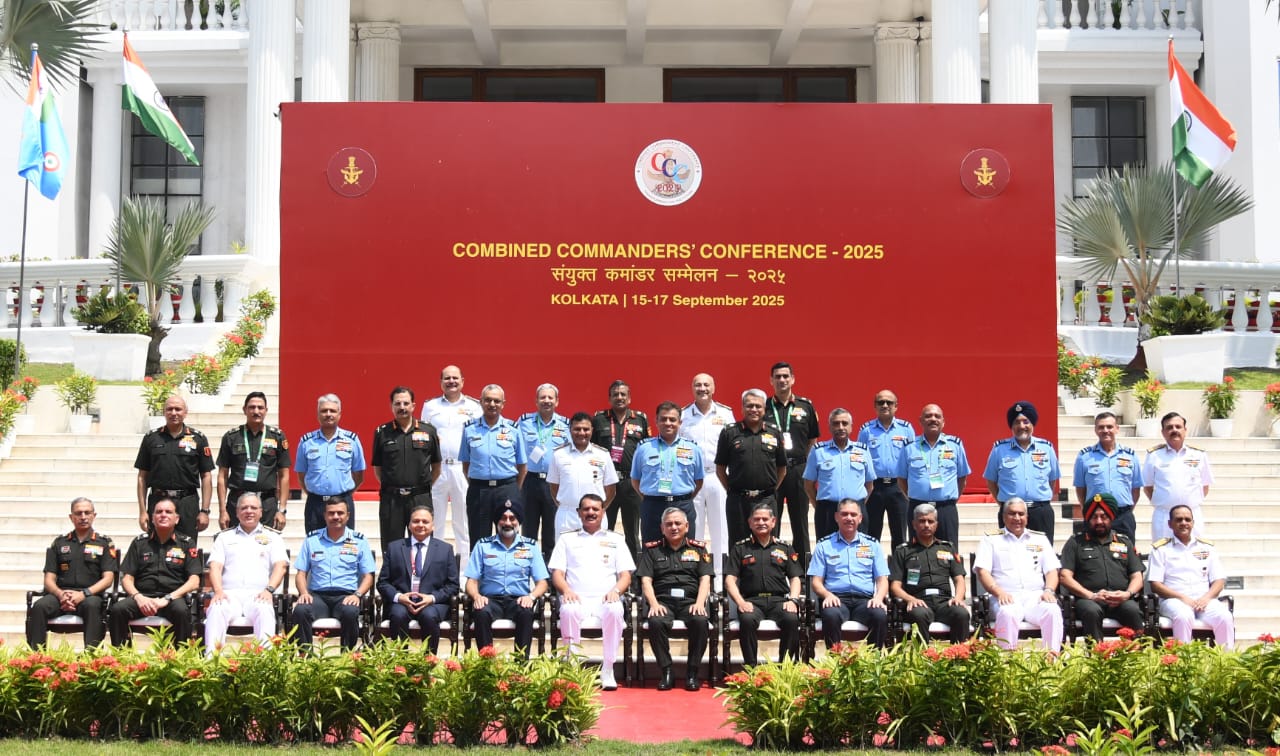
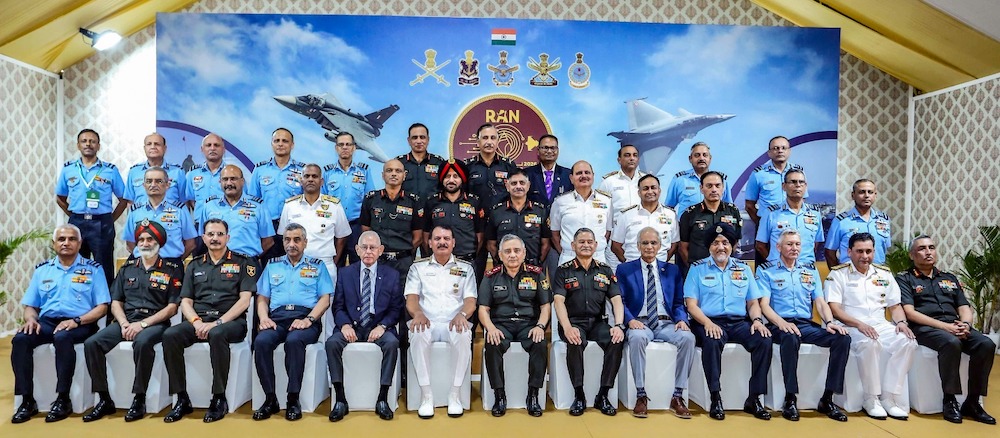
 The top brass of Indian military during Ran Samwad – 2026. (Photo: Headquarters Integrated Defence Staff)
Bengaluru/New Delhi: The chief of defence staff, General Anil Chauhan, announced on the sidelines of India’s second triservice strategic seminar – Ran Samwad 2026 – that all the three armed services have reached consensus on the proposed integrated theatre commands, and that a formal proposal will be placed before the defence minister and the Cabinet Committee on Security (CCS) within a week. The announcement marked the clearest signal yet that the country’s most ambitious military reform since Independence is finally moving from deliberation to decision.
Held on April 9 and 10 at the Air Force Training Command in Bengaluru, the seminar brought together the chiefs of the Indian Army, Indian Navy, and the Indian Air Force, senior officers, defence ministry officials, academics, think-tank analysts, industry representatives, and foreign defence attachés. The theme – “Multi-Domain Operations (MDO): An Imperative for Addressing Conventional and Irregular Threats” – reflected a military leadership increasingly aware that the battlefield of the future spans land, sea, air, space, cyber, and the cognitive domain simultaneously.
Theatre command plan: ‘From our side, it is done’
Gen Chauhan told reporters that the inter-service exercise – internally codenamed Operation Tiranga – had concluded its consultative phase. “From our side, it is done. Now we have to move it to the defence minister and then to the Cabinet Committee on Security,” he said, adding that the report would be submitted in “a week or so”.
The emerging structure envisages three integrated theatre commands: a western theatre command focused on the Pakistan front, likely headed by an Air Force officer; a northern theatre command oriented towards China along the Himalayas and the line of actual control (LAC), under an Army commander; and a maritime theatre command for the Indian Ocean region, led by a Navy officer.
Each theatre command is proposed to have a deputy drawn from another service to institutionalize jointness and prevent any single service from dominating planning. The proposal also includes a four-star vice chief of defence staff post to assist the CDS and service chiefs on operational matters.
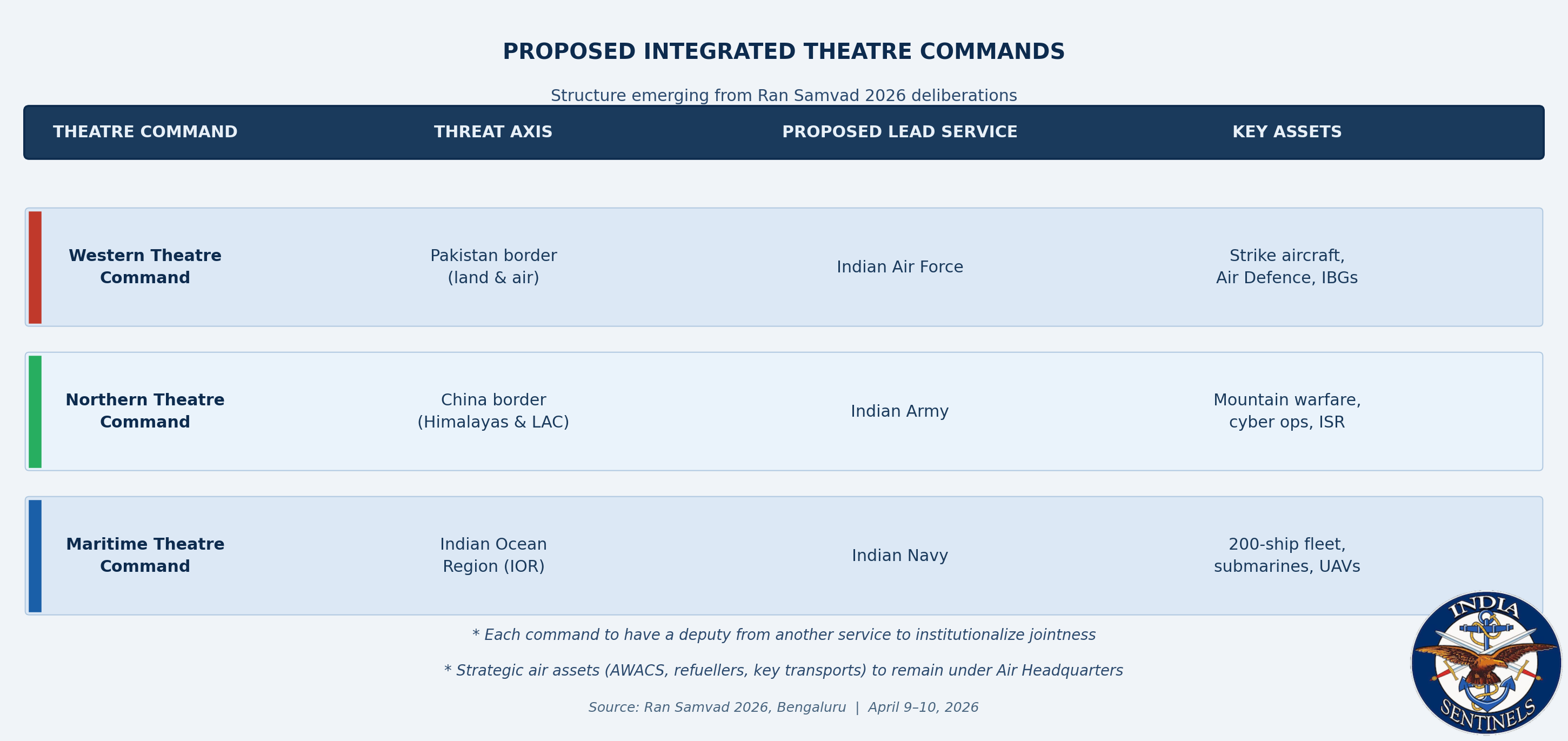 Proposed integrated theatre commands as discussed at Ran Samwad – 2026
A key concession to longstanding Air Force reservations – over which the reform had stalled for several years – is that strategic air assets, such as airborne warning and control systems (Awacs), aerial refuellers, and critical transport platforms, will remain under Air Headquarters even after theaterization. Gen Chauhan acknowledged at the seminar that what the service chiefs had agreed to – a dilution of traditional single-service authority – was itself a substantial shift, regardless of how flags and headquarters were eventually distributed.
That the Modi government has taken over a decade to push theaterization to this point – despite it having been a stated priority since 2020 and the Kargil Review Committee having flagged the need for integrated commands as far back as 1999 – reflects a persistent pattern of deferred structural reform in India’s defence establishment. Whether the CCS will act swiftly, or whether inter-ministerial friction and bureaucratic caution will again delay approval, remains to be seen.
From domain jointness to domain fusion
The chief of the Army staff, General Upendra Dwivedi, offered the seminar’s most striking formulation of the military challenge ahead, describing the present era as a “dispersed, undeclared world war” in which the battlefield has become “a layered, complex adaptive system”. He argued that India must move beyond ‘domain jointness’ – services operating alongside each other – to full “domain fusion”, where the weight of effort shifts dynamically across domains in real time and no single service is the permanent lead.
Gen Dwivedi placed last year’s Operation Sindoor against Pakistan at the centre of his argument. He described it as “India’s most powerful tool of progression towards domain jointness” and a “defining case study” in integrated operations, pointing to how ground intelligence networks fused with cyber- and electronic-warfare inputs enabled joint Army-Air Force targeting, while the Navy’s repositioning shaped Pakistan’s strategic calculations. “No single domain decided the operation,” he said – a formulation explicitly designed to reinforce the logic for both MDO doctrine and theatre commands.
Gen Dwivedi also described a series of structural changes within the Indian Army following Operation Sindoor: the operationalization of integrated battle groups (IBGs), the raising of Divyastra drone batteries, command cyberoperations wings, and new information warfare and psychological defence formations. He argued that future commanders must “command technology rather than merely operate it”, and that human judgement must remain central even as decision cycles compress dramatically.
In a notable aside, Gen Dwivedi revealed that the timing of strike operations during Sindoor had been deliberately calibrated to avoid hitting targets during prayer hours – a detail he offered as an illustration of moral restraint within hard military action. The disclosure was pointed: it situates India’s conduct within the register of measured, ethically conscious force, a useful framing as New Delhi continues to manage the diplomatic fallout and seeks to hold the international narrative.
Navy: A 200-ship, multi-domain fleet
The chief of the naval staff, Admiral Dinesh Kumar Tripathi, described the modern maritime battlespace as “an interconnected grid” extending from the “seabed to space”, arguing that the traditional segmentation of surface, sub-surface, and air layers has given way to a dense, data-saturated, and deeply networked environment.
He reaffirmed that the Indian Navy is “firmly on course” towards being a 200-plus ship force by 2035, with each new induction designed for modularity and interoperability in a multi-domain force. The Navy’s unmanned roadmap – outlined in its “Vision for Unmanned Systems 2022–30” – will supplement manned platforms with autonomous systems aimed at extending reach and persistence in contested seas.
Adm Tripathi urged caution about drawing sweeping conclusions from ongoing conflicts in the Gulf – where drone swarms, missile exchanges, and information operations have featured prominently – warning that India must resist mirror-imaging and adapt principles to its own strategic context.
Air Force: Centrality and caution
The Indian Air Force’s perspective ran as a strong undercurrent through both days, not least because several key speakers – including the chief of integrated defence staff to the chairman, Air Marshal Ashutosh Dixit, and the air officer commanding in chief of training command, Air Marshal S Shrinivas – are senior IAF officers. Dixit’s central argument was that MDO is “not a future idea but a present necessity”, pointing to adversaries already exploiting expanded battlespaces across cyber, space, and cognitive domains.
The IAF vice-chief, Air Marshal Nagesh Kapoor, described Ran Samwad as “an extremely timely and appropriate initiative” and expressed confidence it would yield “some very key deliverables” for the services. IAF officers stressed that genuine MDO demands not just interoperable platforms but a culture of shared situational awareness, rapid cross-domain targeting, and mission command – so that dispersed units can act in concert without waiting for clearance through multiple hierarchical layers.
The chief of air staff, Air Chief Marshal Amar Preet Singh, has previously cautioned against importing theatre command models from the United States or China, arguing that India’s own experience – particularly the Air Force’s primacy in Operation Sindoor – must inform any structural reorganization. The concession on strategic air assets in the revised proposal is, in part, a response to those concerns.
What Ran Samwad does and does not resolve
Ran Samwad – 2026 produced a clearer military consensus on MDO doctrine and a near-final theaterization proposal than any previous forum. What it did not resolve – and cannot, by its nature – is whether the political system will move quickly enough, and whether the institutional frameworks, budgetary allocations, and indigenous production capacities required for genuine multi-domain warfighting will materialize in time.
India’s defence capital expenditure has hovered around 1.5 per cent of GDP in recent years – well below the 2 to 2.5 per cent that analysts consider the minimum for sustaining the kind of modernisation the service chiefs described at Bengaluru. Delays in the Tejas-Mk1A fighter delivery programme, persistent shortfalls in drone and electronic warfare capabilities, and the slow pace of defence public sector unit reform all sit awkwardly alongside the ambition on display at the seminar.
What stands out from Ran Samwad – 2026 is the convergence among the services on the need for joint, multi-domain thinking – and a striking realism that structures, doctrines, and networks alone will not substitute for judgement, restraint, and a whole-of-nation effort when the next crisis comes. Whether the political and bureaucratic establishment can match the military’s urgency is a question that the CCS will begin to answer within days.
Follow us on social media for quick updates, new photos, videos, and more.
X: https://x.com/indiasentinels
Facebook: https://facebook.com/indiasentinels
Instagram: https://instagram.com/indiasentinels
YouTube: https://youtube.com/indiasentinels
© India Sentinels 2026-27