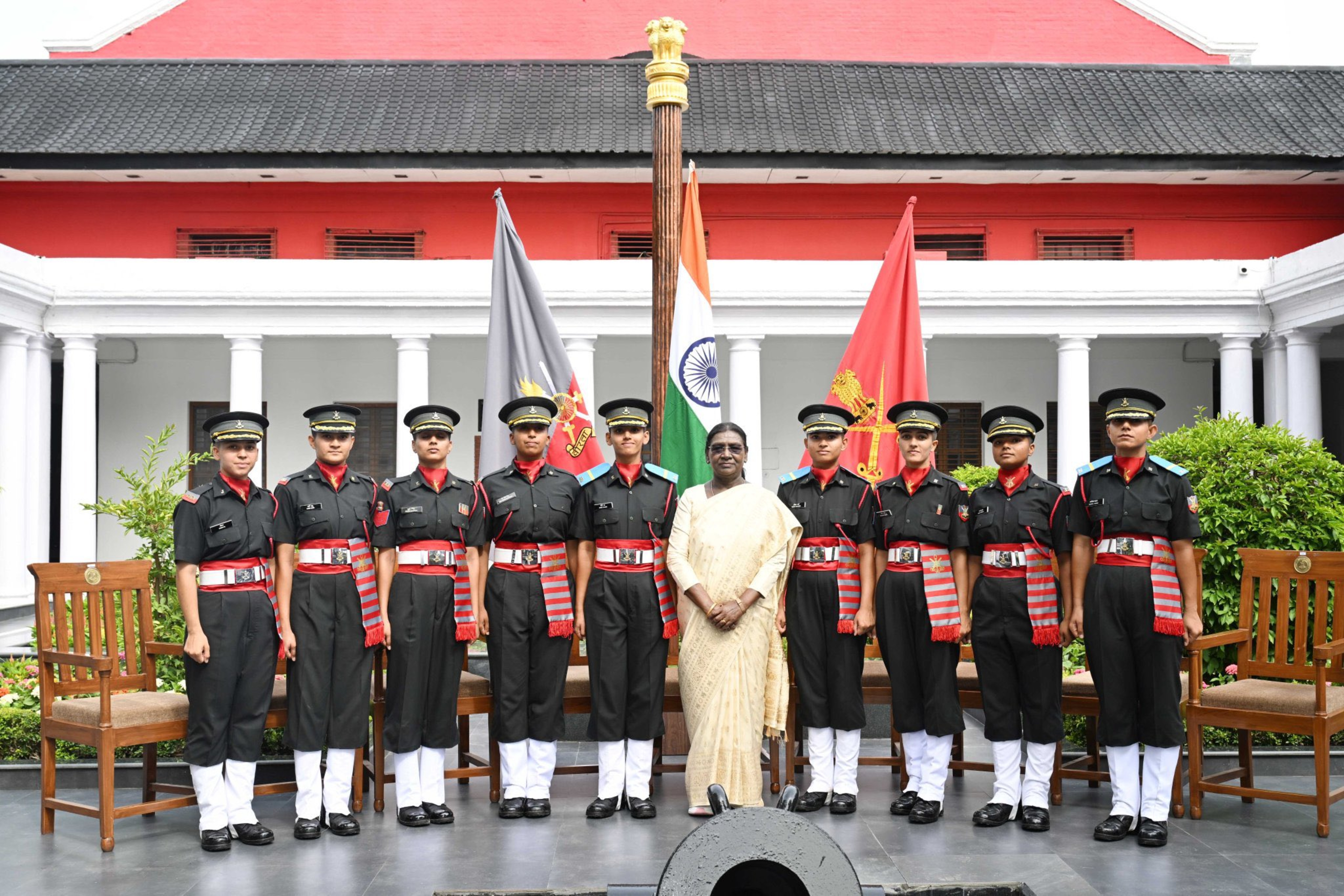
 President Droupadi Murmu with first batch of women officers trained at NDA (Photo: MoD)
Dehradun/Dundigal/New Delhi: India commissioned its first batch of women officers trained at the National Defence Academy into the Indian Army and the Indian Air Force on Saturday. This closes the chapter that began with a Supreme Court order in 2021 and ends – or rather begins – with nine new lieutenants and five new flying officers taking their oaths at two academies separated by nearly 1,500 kilometres.
A total of 515 cadets passed out at Dehradun, among them nine women and 34 officer cadets from 16 friendly foreign nations.
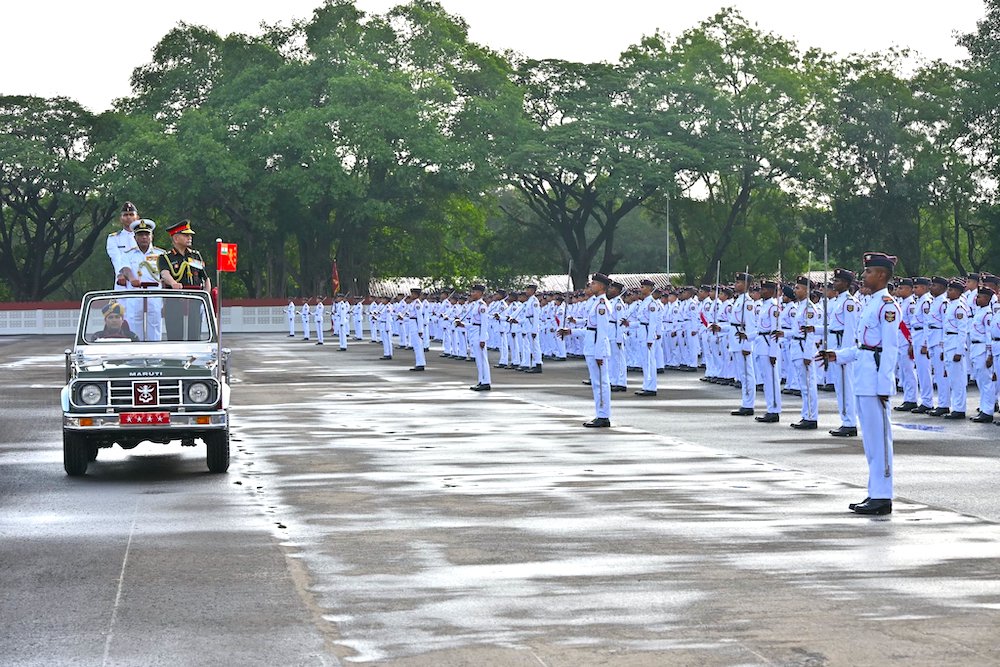
The moment arrived at the Indian Military Academy in Dehradun, where women officer cadets stood on the parade square for the first time in the institution’s 94-year history, and simultaneously at the Air Force Academy in Dundigal, near Hyderabad, where their counterparts completed their own commissioning ceremony.
Both events took place on the same morning, which underscore the scale of the change that has come to India’s most prestigious military training pathways.
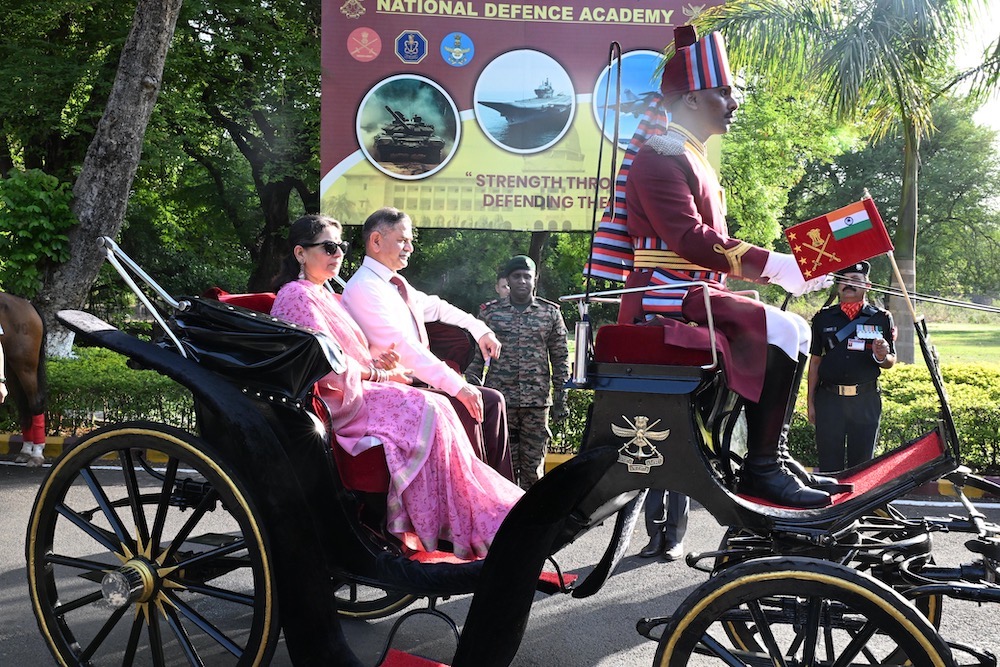
The president, Droupadi Murmu, supreme commander of the armed forces, reviewed the 158th passing out parade at the IMA. Murmu called the occasion a watershed moment in the history of the Indian armed forces.
The president described the IMA as a shining symbol of honour, courage and selfless service, and said the commissioning of women officers demonstrated that they were equally capable of completing rigorous military training and serving alongside men in the defence of the nation.
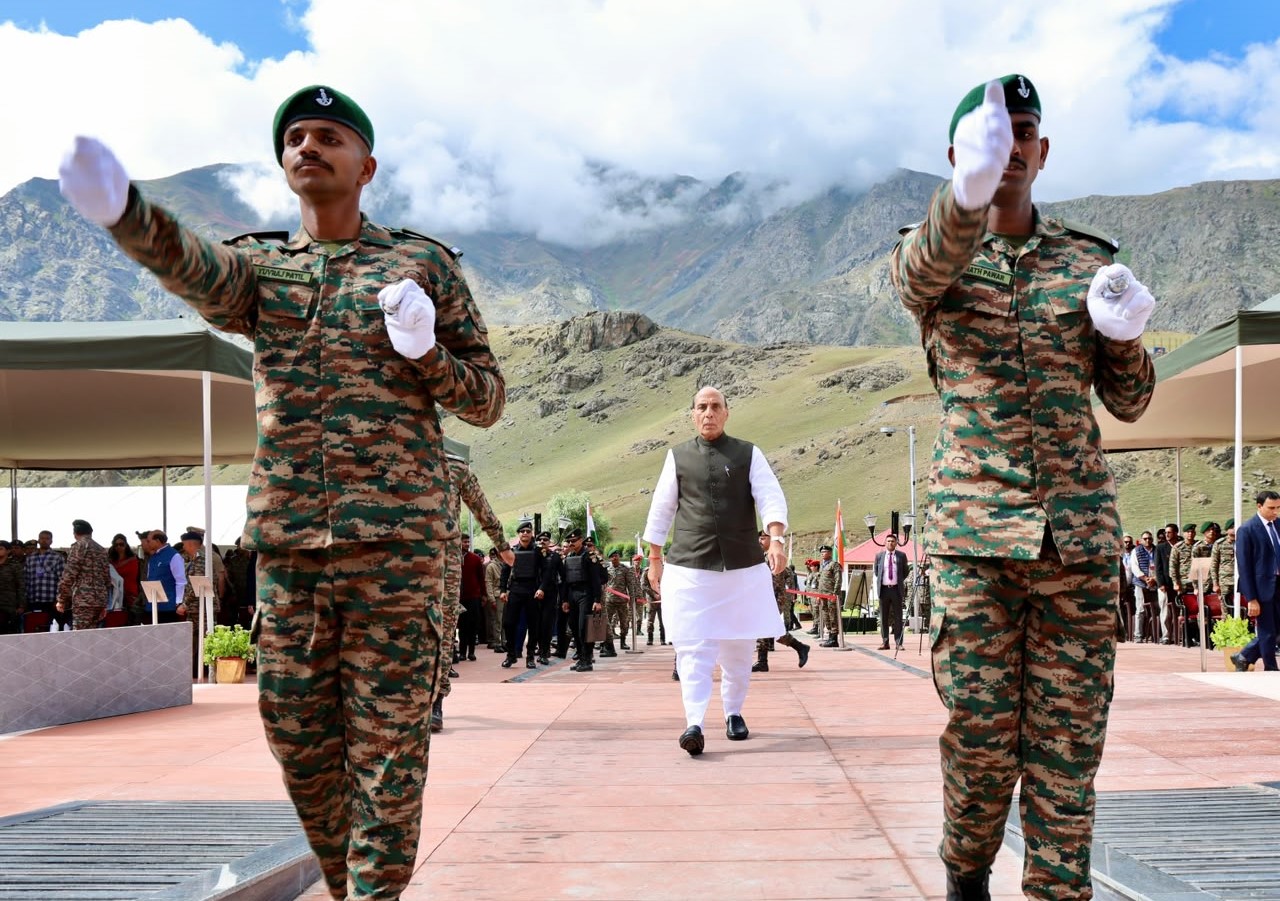
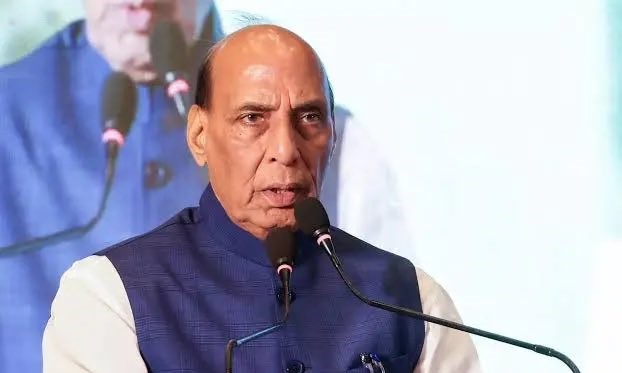
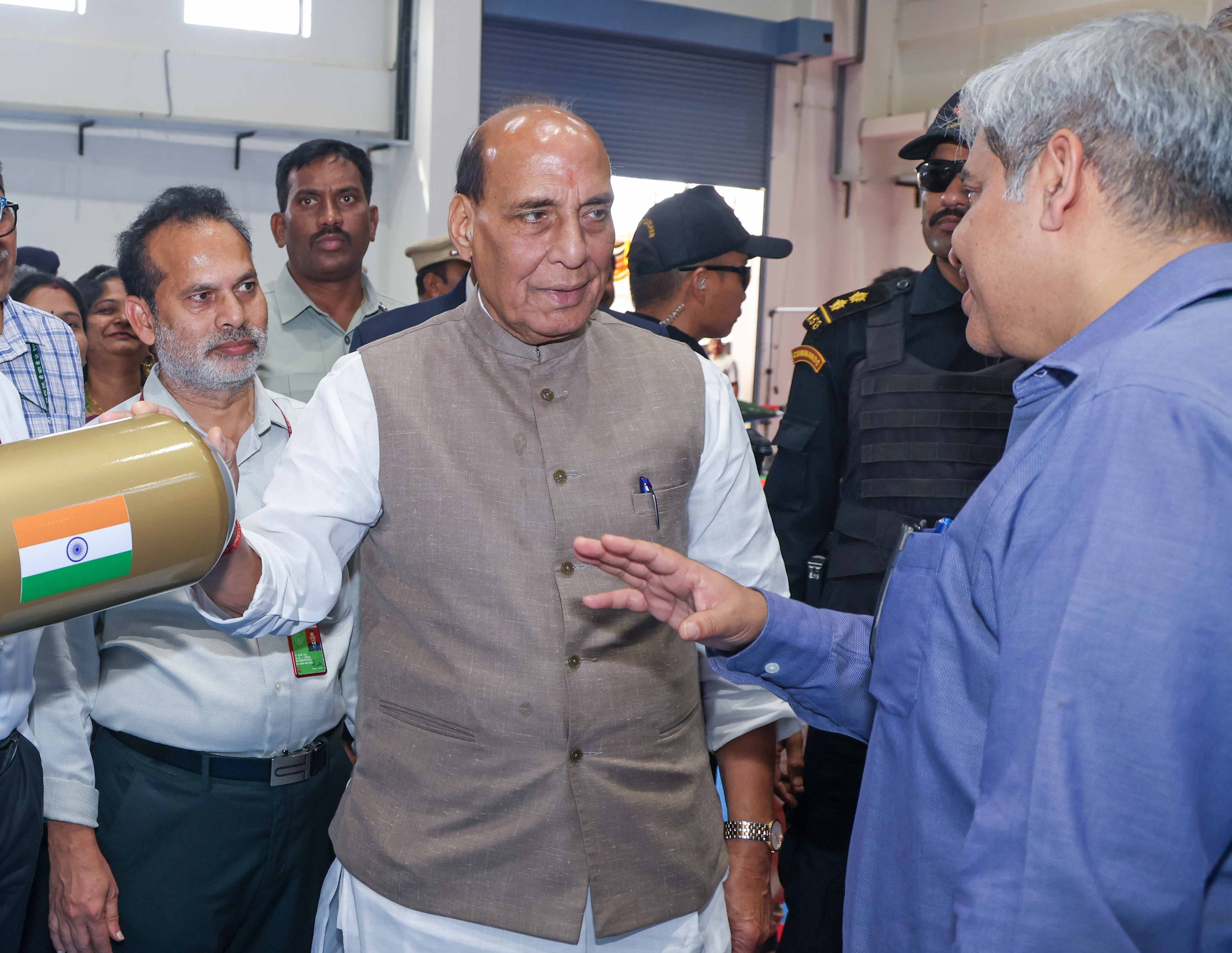
Meanwhile, the defence minister, Rajnath Singh, attended the parallel graduation ceremony at Dundigal to felicitate the cadets commissioned into the Indian Air Force.
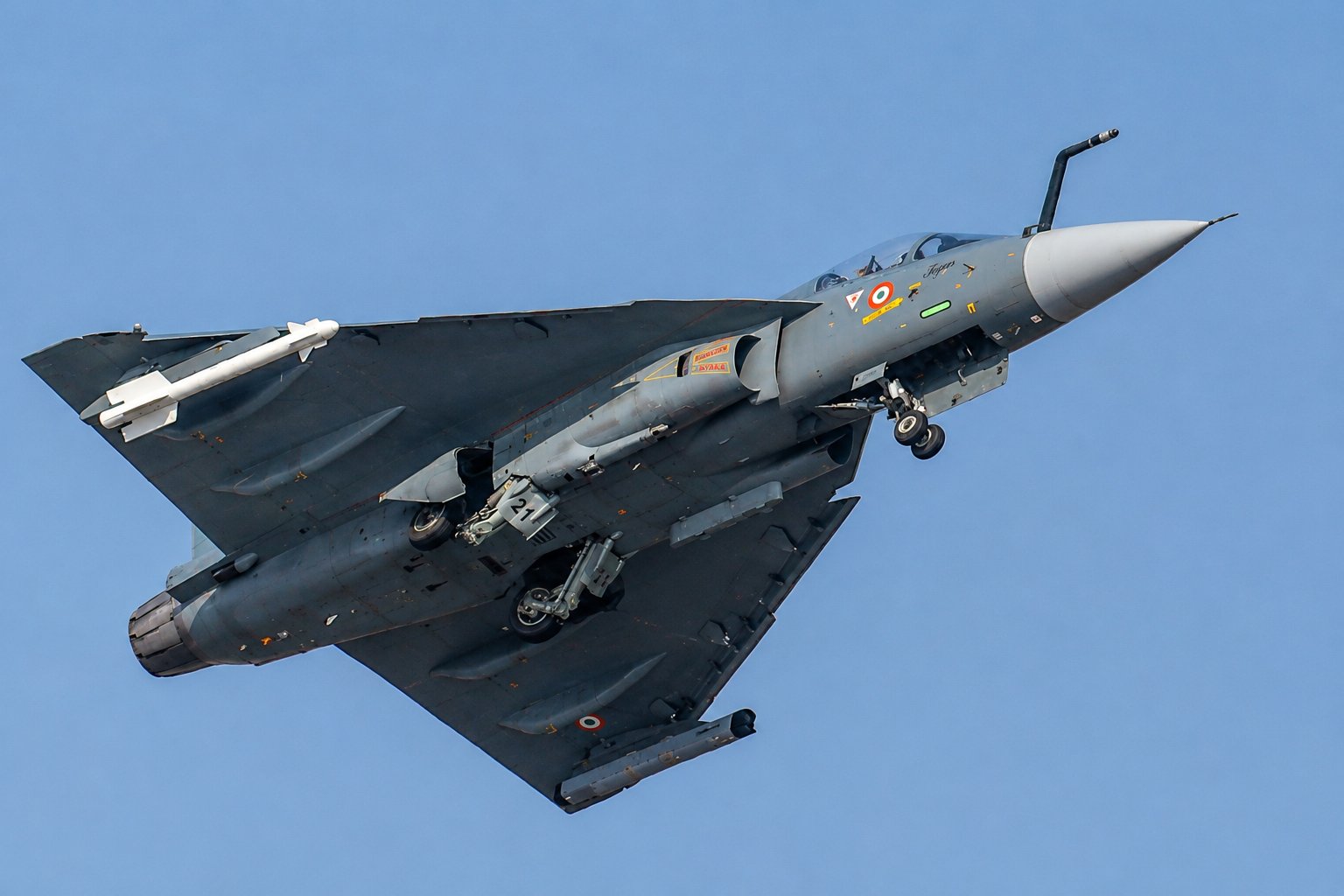
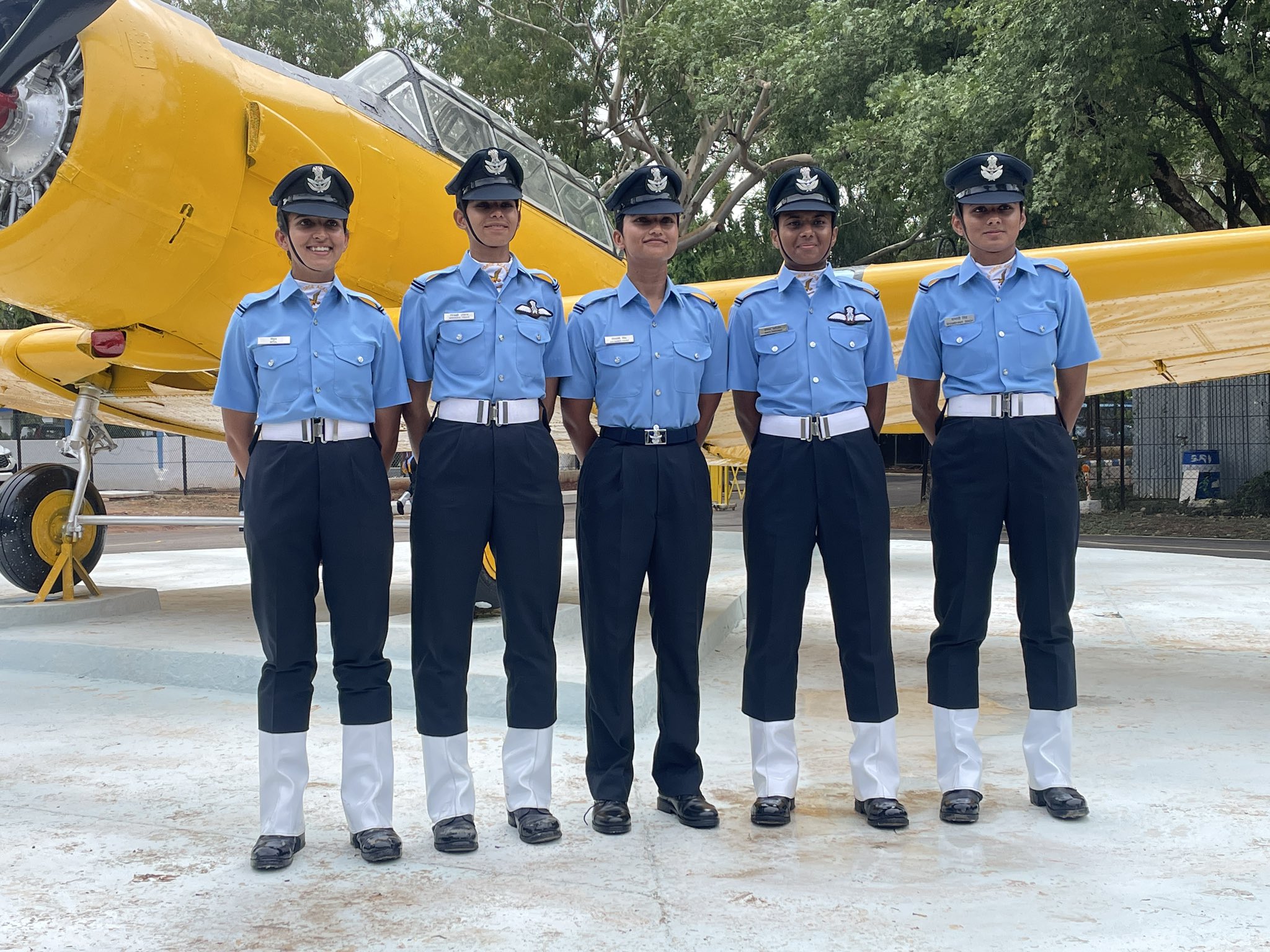
At Dundigal, 231 cadets were commissioned into the IAF, including the five women from the NDA’s pioneer course.
Journey that began in court
The path to Saturday’s commissioning stretches back to August 2021, when the Supreme Court directed the government to open the NDA to women candidates, ending a policy that had restricted entry to male cadets since the academy’s founding in 1954.
The court rejected the government’s initial argument that women could not be accommodated within the NDA’s existing infrastructure and training framework, and ruled that exclusion on the basis of gender was unconstitutional.
The first women cadets joined the NDA’s 148th Course in August 2022. Of the original intake, 17 completed the 3-year joint-services training programme and graduated from the NDA at Khadakwasla, Pune, in June 2025. After graduating from NDA in 2025, these women cadets joined Dehradun-based Indian Military Academy (IMA) last year for a year.
The Air Force women cadets were the part of 217th Course at the Air Force Academy, Dundigal.
The 148th Course cohort was divided by service stream: 10 were allocated to the Army, six to the IAF and one to the Indian Navy. The Navy cadet will complete pre-commission training at the Indian Naval Academy in Ezhimala, Kerala, and is expected to be commissioned separately.
The 10 Army stream women cadets proceeded to the IMA last year for their pre-commission training. One did not complete the course; the remaining nine graduated on Saturday.
Read also: Indian Military Academy’s 107 Regular Course commemorates silver jubilee in Dehradun
Their training at the IMA followed the same programme as their male counterparts – the same physical demands, the same academic load, the same field exercises – without any gender-specific modifications to standards or assessment criteria.
What the NDA trains cadets for?
The NDA at Khadakwasla is the world’s first triservice academy, where cadets from the Army, Navy and Air Force train together before proceeding to their respective service academies for advanced pre-commission training.
The three-year programme combines academic instruction, physical training, military drill and leadership development. Cadets who complete the NDA course are awarded a degree from Jawaharlal Nehru University (JNU) before joining the IMA, the Indian Naval Academy or the Air Force Academy for their final year of service-specific training.
Until the Supreme Court’s 2021 direction, women officers entered the armed forces through separate service-specific entry schemes — the short service commission and, after a series of legal battles, the permanent commission.
The NDA route is regarded as the most comprehensive and prestigious military training pathway in India. It is an opening to women who represent a structural, rather than merely procedural, change in how the country trains its officers.
What it means
The commissioning of NDA-trained women officers is the latest in a series of expansions of women’s roles in the Indian armed forces.
In 2020, the Supreme Court directed that women short-service commission (SSC) officers in the Army be granted permanent commission on the same terms as men, overturning a policy that had limited women to fixed-term service without the prospect of a full military career.
Women officers serve across multiple arms and services in the Army, including the Army Service Corps, Army Ordnance Corps, Corps of Engineers, Corps of Signals, Army Educational Corps and the Judge Advocate General’s branch.
In the IAF, women have served as pilots since 2016, when the service inducted its first batch of women fighter pilots on an experimental basis. That programme has since been regularised. Women navigators and transport pilots have served in the IAF for longer.
The Navy has expanded the deployment of women officers to ships, including frontline vessels, in recent years.
The commissioning of officers from the NDA’s 148th Course adds a new category to this expanding record: for the first time, women officers in the Army and IAF will carry the NDA number – the internal designation that marks an officer as an academy graduate and that has long carried particular weight in the culture and hierarchy of the Indian military.
14 officers – 9 lieutenants, 5 flying officers
For the nine women commissioned as lieutenants into the Army at Dehradun, and the five flying officers commissioned into the Air Force at Dundigal, Saturday was the formal end of a training journey that began when they took the NDA entrance examination – the same Union Public Service Commission-administered written test and Services Selection Board assessment taken by male candidates.
Their swords were drawn, their oaths taken, and ranks fixed in ceremonies – at Dehradun and Dundigal.
Follow us on social media for quick updates, new photos, videos, and more.
X: https://x.com/indiasentinels
Facebook: https://facebook.com/indiasentinels
Instagram: https://instagram.com/indiasentinels
YouTube: https://youtube.com/indiasentinels
© India Sentinels 2026-27