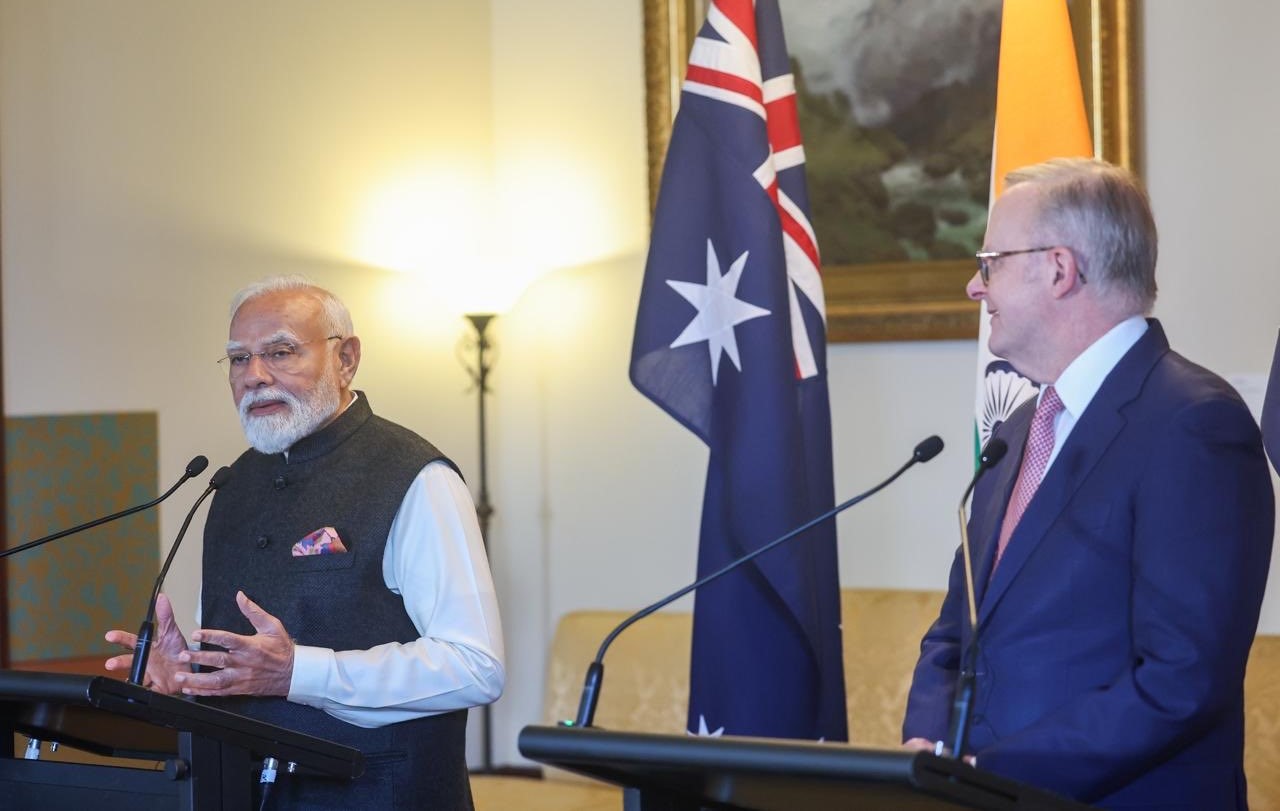
 Prime Minister Narendra Modi and Australian PM Anthony Albanese jointly address mediapersons at Melbourne (Photo: PMO)
New Delhi/Melbourne: India and Australia have signed a commercial agreement to enable regular uranium exports to India, ending years of delay since the two countries first agreed, in 2014, to trade the fuel for peaceful purposes. The deal was signed on Thursday in Melbourne, where the prime minister, Narendra Modi, met his Australian counterpart, Anthony Albanese, for the third annual India-Australia summit.
The deal builds on the 2014 civil nuclear cooperation agreement between the two countries, under which Australia had, until now, sent only a single shipment of uranium to India, in 2017. Legal hurdles and political sensitivities over the fuel’s end use had stalled further shipments in the years since.
Read also: Explained – Modi’s Indo-Pacific diplomatic push
Under the new arrangement, uranium exports to India will be governed by safeguards set out by the International Atomic Energy Agency, and will be reserved, according to a joint statement issued by the two governments, for exclusively peaceful purposes such as power generation.
Australia holds close to a third of the world’s known uranium reserves, and the fresh supply is expected to support India’s target of expanding its nuclear power capacity to 100 gigawatts by 2047.
The agreement follows an earlier deal this year between an Indian entity and Canada’s Cameco Corporation for 22 million pounds of uranium ore concentrate, and comes soon after India passed the SHANTI Act, legislation intended to overhaul the domestic nuclear sector and open it up to greater private and foreign participation.
“We have signed an important agreement today on nuclear energy,” Modi said at a joint press conference after the summit, adding that the pact would give “fresh momentum” to India’s clean energy goals.
Albanese, crediting Modi’s sustained engagement with Australia for the breakthrough, said the trust built between the two countries over the past decade had made the agreement possible.
Read also: Ex Pitch Black 2026 – IAF Rafale jets to train with global air forces in Australia
Beyond the nuclear pact, the two leaders used the summit to widen what they described as a Comprehensive Strategic Partnership. They agreed to fast-track negotiations on a Comprehensive Economic Cooperation Agreement, building on the interim Economic Cooperation and Trade Agreement signed in 2022, and to speed up talks on a bilateral investment treaty.
Bilateral trade between the two countries stood at $24.1 billion in 2024-25, with Indian exports to Australia more than doubling, from $4 billion in 2020-21 to $8.5 billion in 2024-25.
The two sides also launched the Australia-India Partnership on Cyber, Critical Technologies and Supply Chains, and agreed to work towards a Critical Minerals Corridor aimed at building supply chains for materials vital to clean energy and defence technology.
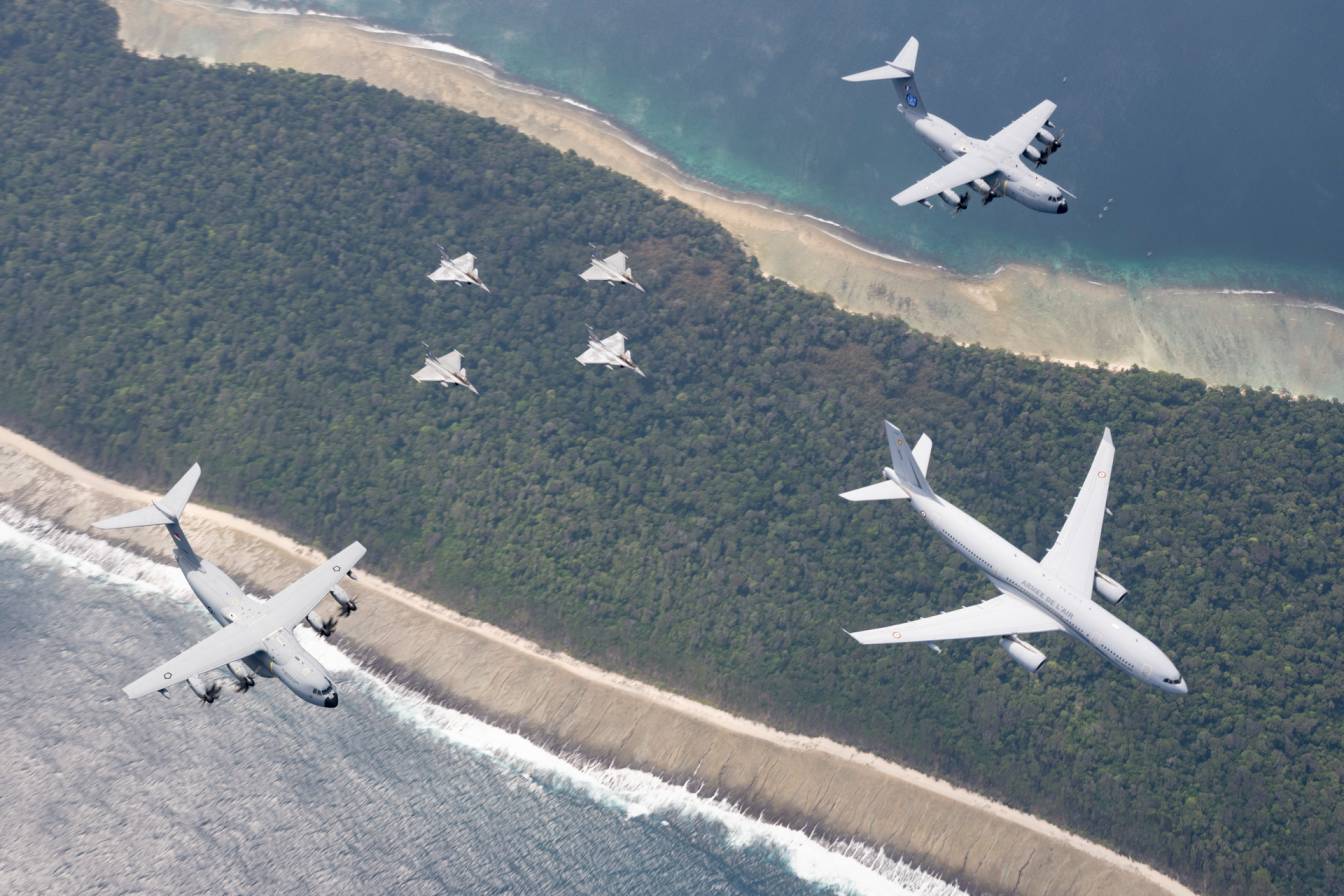
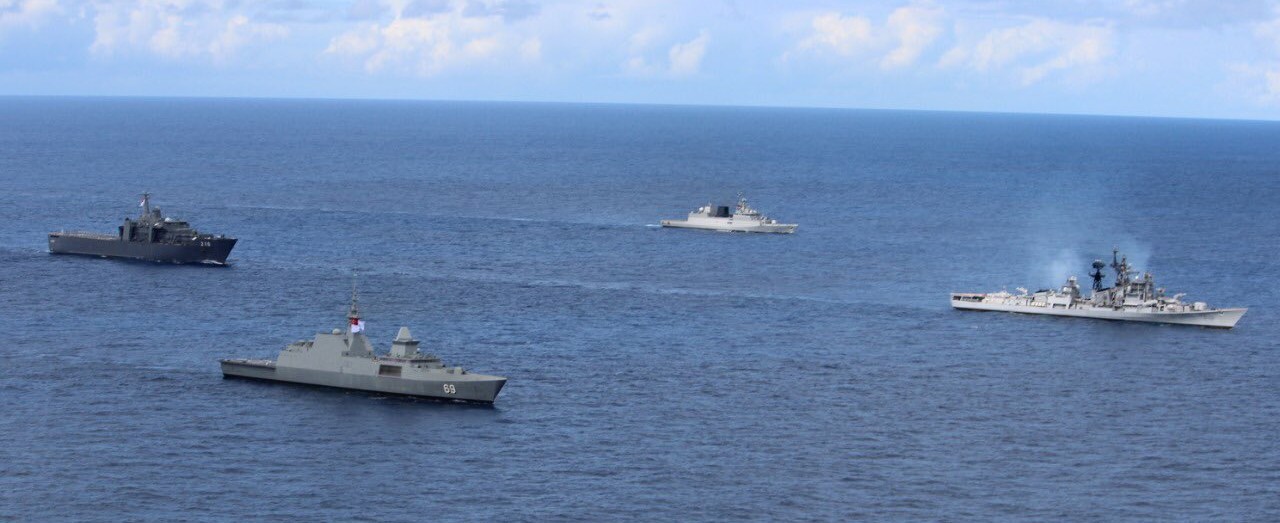
A joint declaration on defence and security cooperation and a maritime security collaboration roadmap were adopted as well, covering maritime domain awareness, shipbuilding and ship repair, and reflecting shared concerns over stability in the Indo-Pacific.
Read also: India-Australia defence partnership gains momentum with focus on Indo-Pacific security
Australia is separately supporting India’s Gaganyaan human spaceflight programme. The two governments said they would set up a temporary space-tracking terminal on the Cocos (Keeling) Islands to help track the mission, part of what both sides described as expanding cooperation in space and technology.
Modi also announced that a rooftop solar training academy would be set up in Gujarat, with Australian support, to train young people and women under India’s PM Surya Ghar Yojana scheme.
The Melbourne visit is the second leg of a three-nation tour that began in Indonesia and will end in New Zealand.