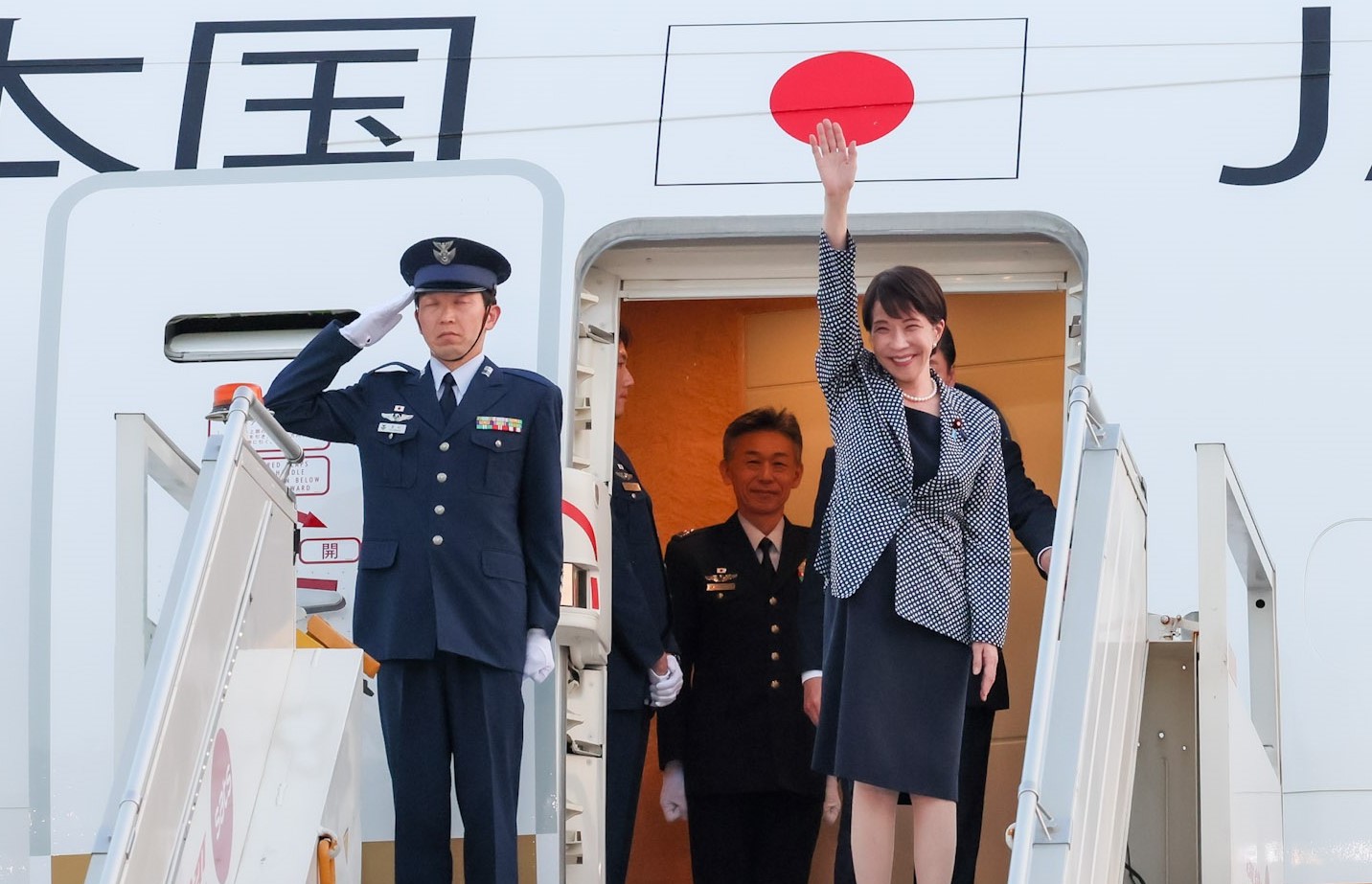
 Sanae Takaichi (R) waving to her lands welcome party in Delhi’s Palam airport. (Photo: X/@takaichi_sanae)
New Delhi: Japan’s prime minister, Sanae Takaichi, arrived in New Delhi on Wednesday evening for a three-day visit for the 16th India-Japan Annual Summit. It’s her first trip to India since taking office in October 2025. The visit, made at the invitation of the prime minister, Narendra Modi, continues a leaders-level dialogue running nearly two decades and lasts through Friday, July 3.
Takaichi was received by the minister of state, Jitendra Singh, with the Ministry of External affairs spokesman, Randhir Jaiswal, calling her arrival a further step in the India-Japan Special Strategic and Global Partnership. A ceremonial welcome at Rashtrapati Bhavan is scheduled Thursday morning, followed by summit talks and the signing of bilateral agreements.
Takaichi will also address the India-Japan Business Forum before over 150 Japanese industry representatives. She is accompanied by a roughly 50-strong business delegation, including Suzuki Motor's president, Toshihiro Suzuki, and senior figures from Itochu and Toyota Tsusho.
India had originally proposed hosting the summit in Guwahati, reviving a plan dropped in December 2019 amid CAA protests. However, this was shelved again this year due to Japan’s ongoing parliament (Diet) session and a compressed travel window, confining the visit to Delhi.
Trade, tech, and a push away from dollar
The MEA says the visit aims to widen investment and innovation ties, with emphasis on resilient semiconductor and critical-mineral supply chains; maritime security and defence-technology cooperation are also expected to feature.
A joint declaration on artificial intelligence may emerge, along with a large green ammonia project in Odisha, biogas cooperation, and regional resilience work under the POWERR Asia framework. Expected documents include a joint statement, an energy resilience agreement, and MoUs on AI, pharmaceuticals, batteries, and critical minerals.
Talks are also progressing on an industrial value chain linking the Bay of Bengal with northeastern part of the country, tying in with Japanese-backed projects like Matarbari port (Bangladesh) and the Dhubri-Phulbari bridge (Assam).
The most closely watched item – first reported by Nikkei Asia [archived link] – is a proposed local-currency settlement mechanism letting Indian and Japanese banks settle cross-border transactions directly in rupees and yen, bypassing the US dollar. If included in the joint statement, it would be the first such arrangement formally recorded at leaders’ level between the two countries.
Officials are targeting a cooperation memorandum between Japan’s finance ministry and the RBI within the current financial year, under which non-resident Japanese entities could open accounts with Indian banks. This would build on an existing $75 billion bilateral currency swap running through 2026.
The trade backdrop is substantial: bilateral trade hit $27.5 billion in FY 2025-26, while Japanese investment into India totalled $3.2 billion between April-December 2025. About 1,400 Japanese firms operate in India, nearly half in manufacturing. This builds on Tokyo’s August 2025 pledge to double its ten-year India investment target from ¥5 trillion to ¥10 trillion under the Japan-India Joint Vision for the Next Decade.
Defence ties advance slowly
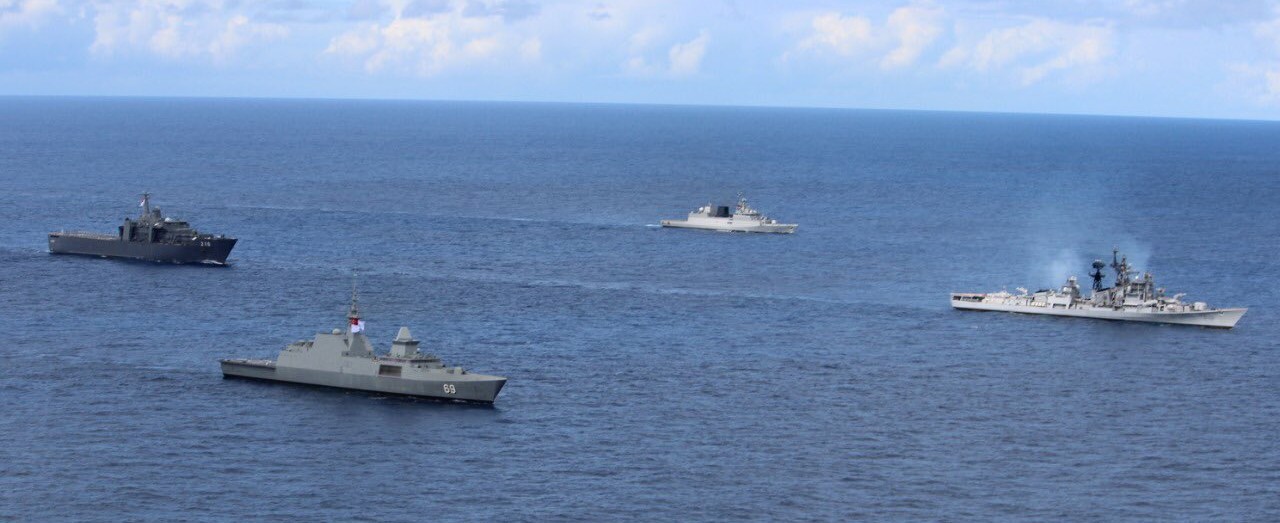
Security cooperation rests on the Joint Declaration on Security Cooperation signed by Modi and Takaichi’s predecessor, Shigeru Ishiba, in Tokyo on August 29, 2025, committing both sides to oppose coercive attempts to alter the status quo, support freedom of navigation, deepen Quad engagement, and expand DRDO-ATLA research cooperation and critical-mineral work.
Tangible outcomes remain limited: in November 2025 the countries signed their first joint defence production project, for the Unicorn naval communications system (also known as NORA-50).
Larger proposals – six Soryu-class submarines sought since 2015, and a 2018 plan for Mahindra Defence to build ShinMaywa’s US-2 amphibious aircraft under licence – remain stalled, with no sign of revival this week.
China’s shadow over visit
The visit unfolds amid strained Tokyo-Beijing relations. Takaichi’s remarks last year suggesting Japan could respond militarily to a Chinese attack on Taiwan drew strong reaction from Beijing.
China added 20 more Japanese firms to a raw-materials blacklist on June 29 after a joint Chinese-Russian formation of roughly 15 bombers and fighters flew patrols over the Sea of Japan, the East China Sea and the western Pacific on June 27–28. The event had prompted Japan and South Korea to scramble jets.
Japan is also facing Chinese restrictions similar to those India encountered last April. In response, India has committed ₹7,280 crore to build 6,000 million tonnes per annum of rare-earth magnet manufacturing capacity, cooperating with Japan via the Mineral Security Partnership and
Before departing Tokyo, Takaichi outlined three priorities – deepening the strategic partnership, strengthening economic security, and expanding business ties – explicitly linking Japan’s Free and Open Indo-Pacific vision to Modi’s MAHASAGAR initiative, and called India an indispensable partner in a region free from external coercion: “a strong India is good for Japan, and a strong Japan is good for India.”
Follow us on social media for quick updates, new photos, videos, and more.
X: https://x.com/indiasentinels
Facebook: https://facebook.com/indiasentinels
Instagram: https://instagram.com/indiasentinels
YouTube: https://youtube.com/indiasentinels
© India Sentinels 2026-27