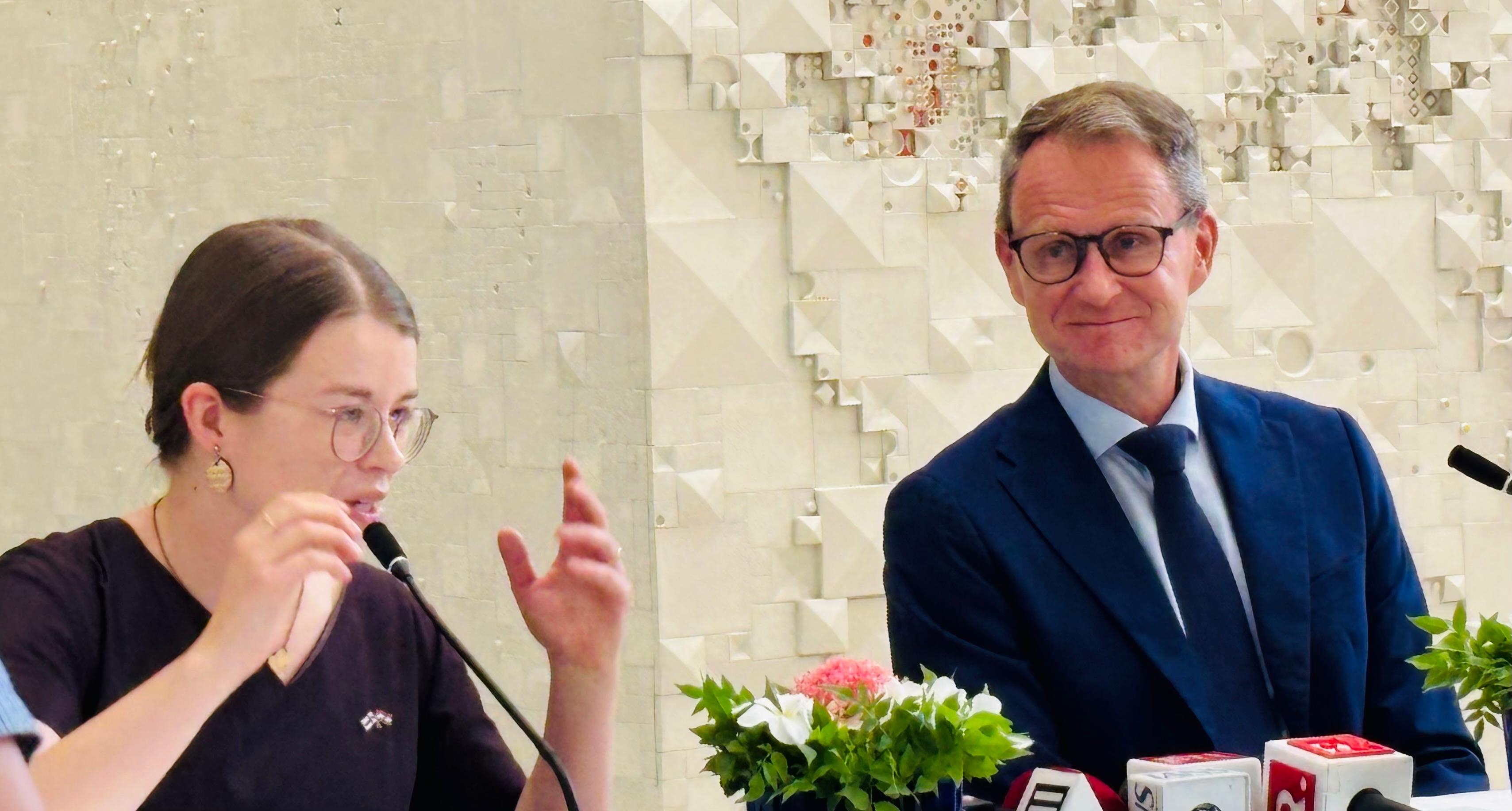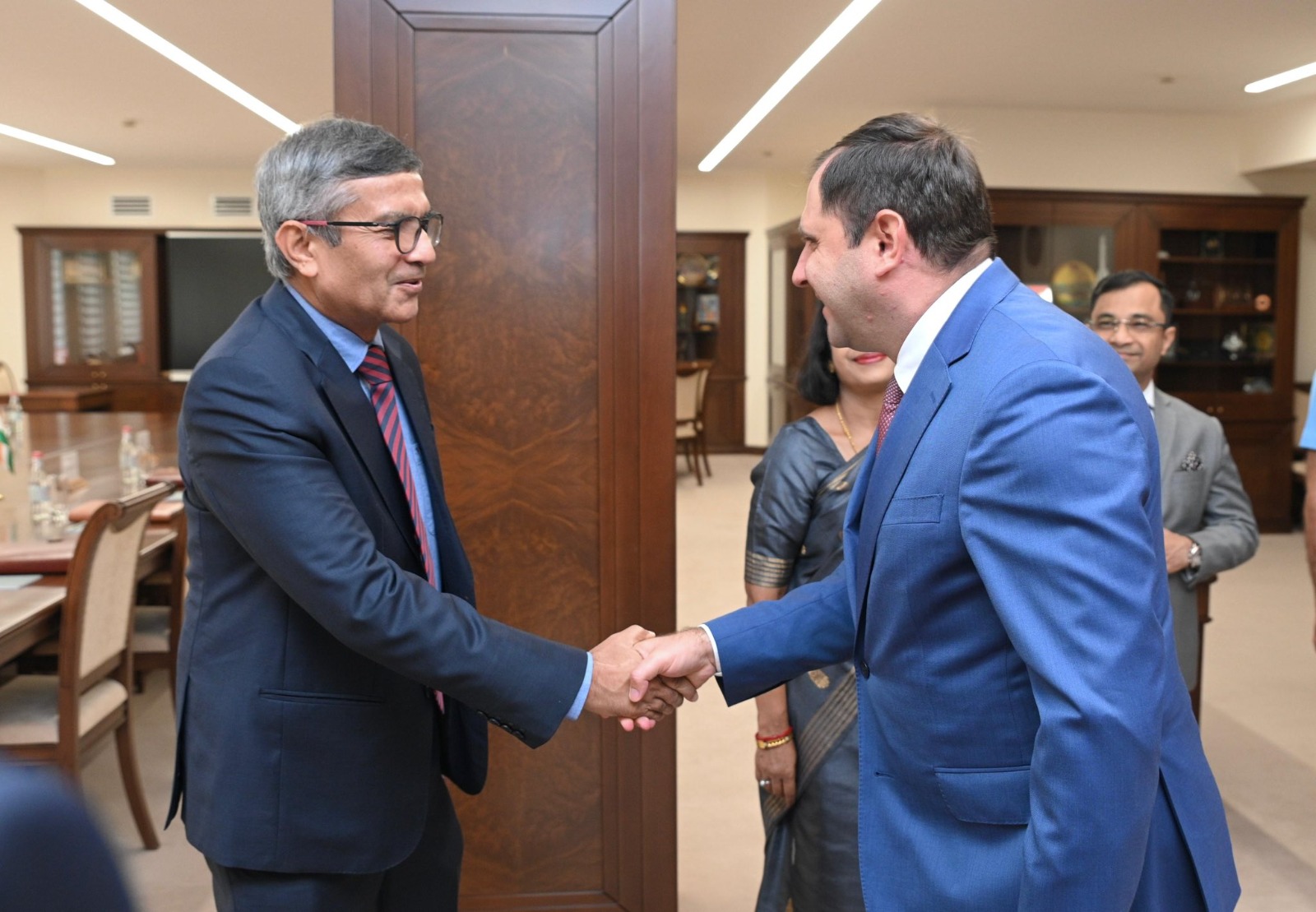
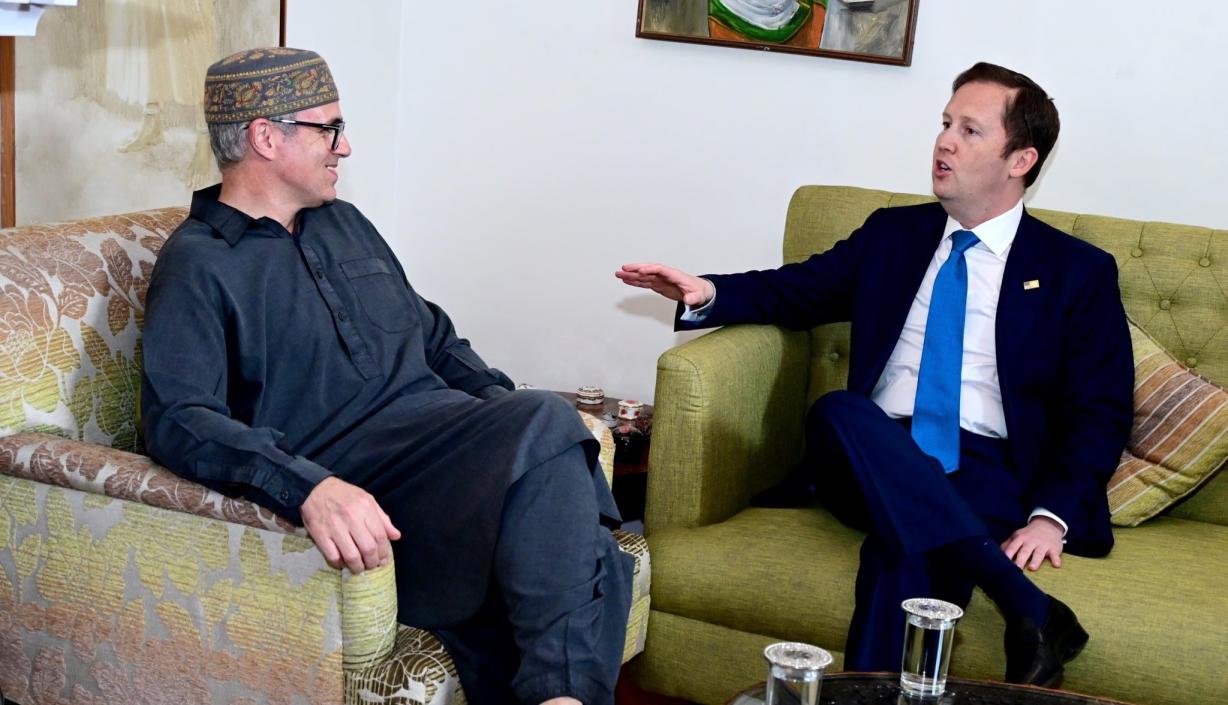
 US envoy to India Sergio Gor (R) and J&K CM Omar Abdullah (Photo: X/OmarAbdullah)
— By Huma
Srinagar/New Delhi: The diplomatic controversy over US Ambassador Sergio Gor’s remarks on Jammu and Kashmir has already moved beyond the original statement. Pakistan has lodged a formal protest, India has welcomed the comments, and Washington has indicated that it may reconsider its travel advisory for the region.
But the more important question now is not simply what Gor said in Srinagar. It is what the United States does next.
Gor’s visit was significant in itself. The serving US ambassador travelled to Jammu and Kashmir, met Chief Minister Omar Abdullah and spoke about the region’s security, tourism and economic potential. He then described Jammu and Kashmir as “an important part of India”, prompting an immediate reaction from Islamabad.
“This is an important part of India. I am here, visiting for the first time. It is an incredibly beautiful place,” Gor said after his meeting with Abdullah. The sentence was brief, but its diplomatic implications were not.
Why the wording matters
For years, Washington has approached Kashmir with carefully calibrated language, mindful of its relationships with both India and Pakistan. Gor’s formulation does not necessarily amount to a formal rewriting of US policy, but it is politically significant because of where it was delivered and who delivered it.
Gor is not only the US ambassador to India. He also serves as President Donald Trump’s special envoy for South and Central Asian affairs. His words therefore carry a broader regional significance.
At the same time, the exact wording deserves attention. Gor called J&K an “important part of India”, rather than using the stronger phrase “integral part of India”. That distinction gives Washington some diplomatic flexibility.
Therefore, the remark should not automatically be interpreted as proof that every aspect of America’s longstanding approach to Kashmir has changed overnight. A more measured reading is that Washington appears increasingly comfortable acknowledging India’s present political and administrative position in Jammu and Kashmir in direct public language.
Pakistan’s reaction is revealing
Pakistan’s response demonstrates why the remark matters. Islamabad summoned US Charge d’Affaires Natalie Baker and lodged a strong protest. Pakistan rejected Gor’s description of Jammu and Kashmir as part of India and called the remarks “irresponsible”.
Islamabad maintains that Jammu and Kashmir remains an internationally disputed territory and argues that its final status should be determined in accordance with relevant UN resolutions and what it describes as the aspirations of the Kashmiri people.
The reaction was predictable, but its intensity is important. Pakistan clearly does not regard Gor’s statement as a casual comment by a visiting diplomat.
For Islamabad, the concern is that such language narrows the diplomatic space for its Kashmir narrative. It also creates an uncomfortable moment for US-Pakistan relations at a time when Washington continues to value Pakistan’s regional relevance.
The travel advisory could be the bigger story
Ironically, Gor’s comments about security may ultimately prove more consequential for Kashmir than his political statement.
The United States maintains a highly restrictive travel advisory for Jammu and Kashmir. During his visit, Gor said Washington regularly reviews such warnings and suggested that the advisory could be reconsidered.
“I cannot make any big announcements here today, but it is something that we are going to look at,” he said.
No immediate downgrade was announced. That distinction matters. Yet the statement clearly suggests that Washington is examining whether the current warning accurately reflects conditions on the ground. Gor praised the Centre and the Jammu and Kashmir administration for steps taken to make the region safer. He also said that many Americans could enjoy visiting Kashmir.
If the United States eventually lowers its advisory, the impact could go well beyond diplomacy. It could strengthen Kashmir’s international tourism campaign, encourage foreign visitors and contribute to efforts to attract investment and business. In that sense, the travel warning may become the real test of whether Gor’s visit represented a meaningful shift or simply a diplomatic gesture.
A new opportunity for Srinagar
For Omar Abdullah, the meeting also created an opportunity to shift the conversation towards development. The chief minister said discussions covered tourism, horticulture and the new economy. He expressed hope that engagement between Jammu and Kashmir and the United States would “widen and deepen” in the years ahead.
That is significant because greater American engagement does not have to revolve exclusively around the India-Pakistan dispute. For Srinagar, the potential benefits are practical: tourism, investment, technology, education and business partnerships. Gor’s positive comments about Kashmir’s security and beauty help strengthen that narrative.
What Washington does next will matter more
The immediate diplomatic controversy will eventually fade. Pakistan has protested, India has welcomed the remarks and Washington is unlikely to turn the episode into an open confrontation with Islamabad. The real story will emerge over the coming months.
Will the US actually lower its J&K travel advisory? Will American officials continue using language that recognises India’s position? Will Washington expand direct engagement with Jammu and Kashmir? Or will the administration return to more traditional formulations to prevent further friction with Pakistan?
Those questions matter more than the original headline. If the travel advisory is eventually eased and similar statements follow, Gor’s Srinagar remarks could be remembered as an early indication of a broader adjustment in Washington’s approach.
If nothing changes, the episode may instead be remembered as an unusually direct statement by an ambassador that created diplomatic discomfort without producing a fundamental policy shift.
For India, Gor’s remarks are a welcome diplomatic signal. For Pakistan, they are a warning that its international messaging on Kashmir faces a tougher environment. But the ultimate significance of Gor’s visit will not be decided by one sentence.
It will be decided by the policy that follows. The key question after Sergio Gor’s Srinagar visit is therefore no longer what he said about Kashmir. It is what Washington does after saying it.
(She is a senior journalist, who looks after the defence and strategic affairs developments. She is known for her reporting and writing on India’s defence sector, military modernization, aerospace, national security , diplomacy and strategic affairs.)
Follow us on social media for quick updates, new photos, videos, and more.
X: https://x.com/indiasentinels
Facebook: https://facebook.com/indiasentinels
Instagram: https://instagram.com/indiasentinels
YouTube: https://youtube.com/indiasentinels
© India Sentinels 2026-27