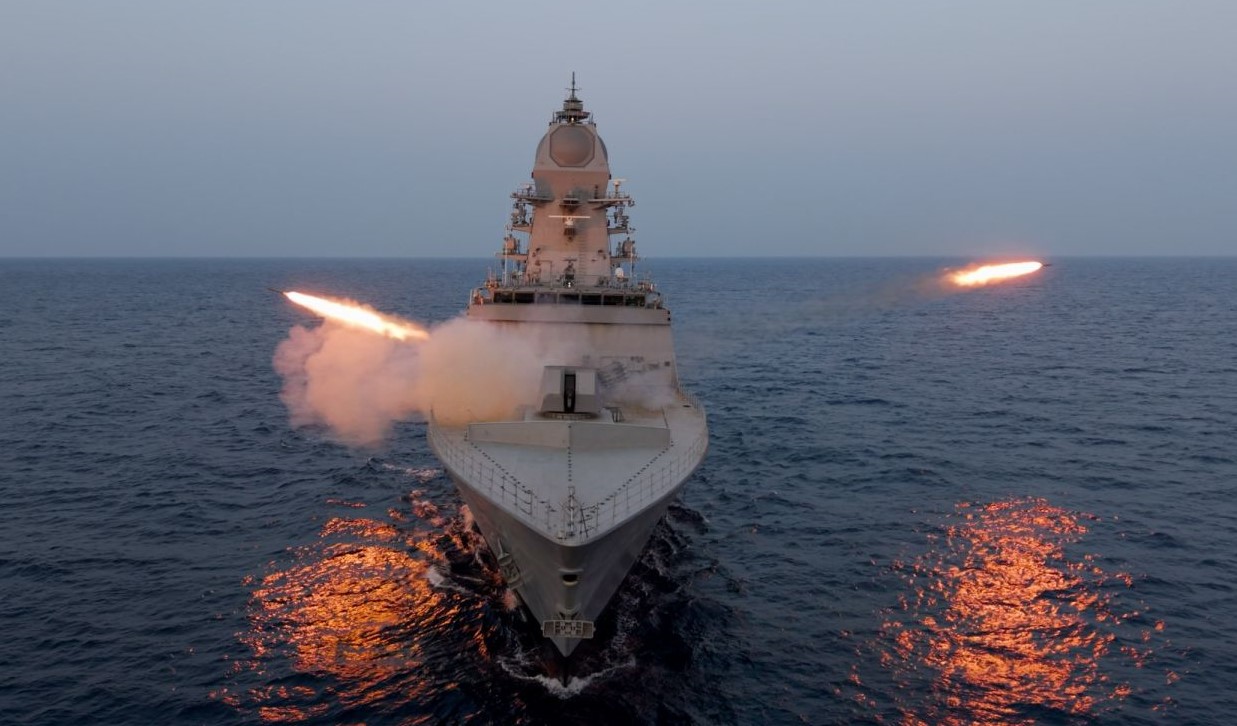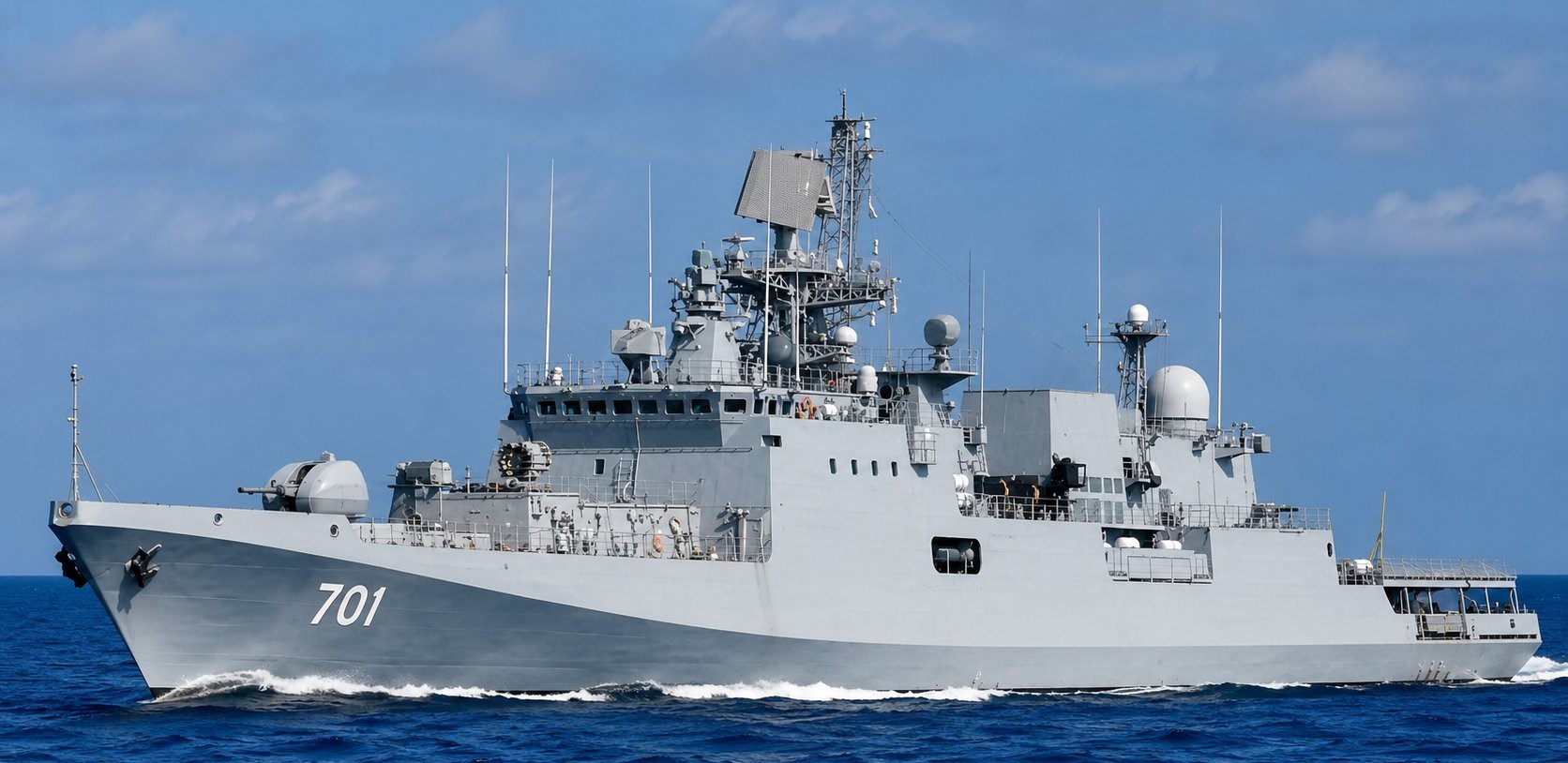
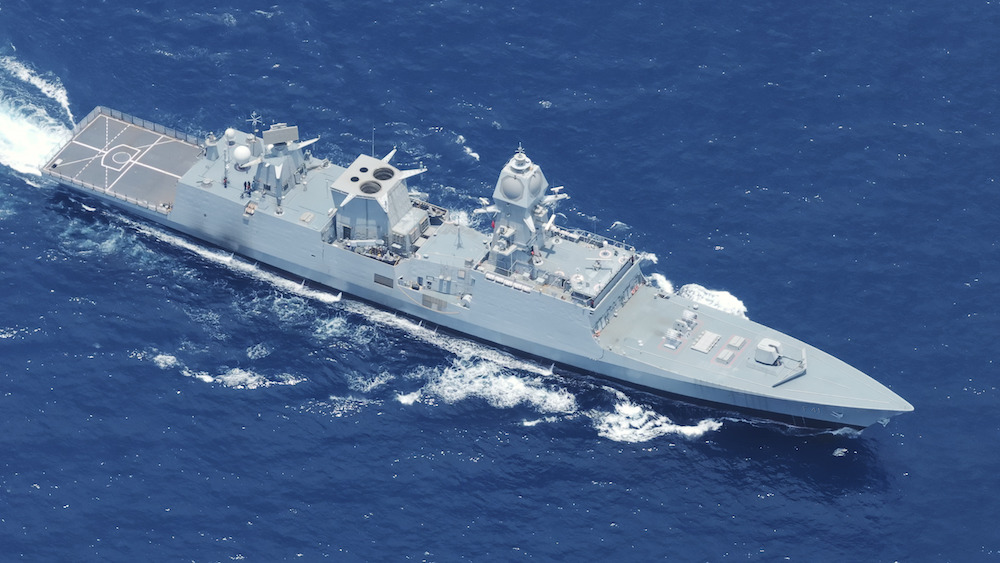
 Taragiri during its sea trials. (Photo: Indian Navy)
New Delhi: The Indian Navy is set to commission its latest stealth frigate, F41, on April 3 in a ceremony to be presided over by the defence minister, Rajnath Singh. The frigate will be christened INS Taragiri after its commissioning. The warship, the fourth in the Navy’s Project-17A series, represents a significant addition to India’s surface combat fleet and the most tangible marker yet of the country’s push toward naval self-reliance.
Built by Mazagon Dock Shipbuilders Limited (MDL) at its Mumbai yard, Taragiri displaces 6,670 tonnes and incorporates a sharply reduced radar cross-section – a design feature that gives the frigate a lower detectability profile compared with its predecessors. The ship’s indigenous content exceeds 75 per cent, drawing on a supply chain that spans more than 200 micro, small, and medium enterprises across India.
Project-17A, which the Navy launched as a follow-on to the Shivalik-class (Project-17) frigates, was designed from the outset to be more stealthy, more automated, and more capable than the ships it succeeds. The earlier Shivalik class, commissioned between 2010 and 2012, itself marked a departure from purely imported platforms. With Project-17A, the Navy has pushed the indigenous design envelope further, with the Directorate of Naval Design responsible for the ship’s overall architecture.
Taragiri is propelled by a combined diesel or gas (CODOG) arrangement, which allows the ship to cruise economically on its diesel engines while switching to gas turbines for high-speed sprints – a configuration widely used in modern frigates for balancing endurance with performance.
Its weapons fit includes supersonic surface-to-surface missiles, medium-range surface-to-air missiles, and an anti-submarine warfare suite. These are integrated through a combat management system that coordinates sensors, weapons, and communications, enabling the crew to respond to multiple simultaneous threats. The ship is also equipped to operate maritime helicopters, extending its reach for both anti-submarine and surface search roles.
Three earlier Project-17A ships – INS Nilgiri, INS Himgiri, and INS Udaygiri – have already been launched or commissioned, with Taragiri following as the programme gathers pace. Three more hulls are under construction at Garden Reach Shipbuilders and Engineers (GRSE) in Kolkata, with the full class of seven ships expected to form a core element of the Navy’s blue-water surface force through the coming decades.
The commissioning comes at a time of heightened attention to the Indian Ocean region, where India has been expanding its naval presence amid growing Chinese activity and increased demand for maritime security cooperation from smaller regional states. The Navy has in recent years stepped up patrols, conducted anti-piracy operations in the Gulf of Aden, and deployed ships for humanitarian missions, including disaster relief in the Maldives and Sri Lanka.
India’s defence ministry has set an overall target of achieving 70 per cent indigenous content in defence procurement. In shipbuilding, the country has made measurable progress: MDL and GRSE have in recent years also delivered submarines, destroyers, and offshore patrol vessels, reducing dependence on foreign yards that once handled the bulk of the Navy’s major acquisitions.
Taragiri is named after a mountain peak in the Himalayas, continuing the Navy’s practice of naming Project-17A ships after Indian mountain ranges.