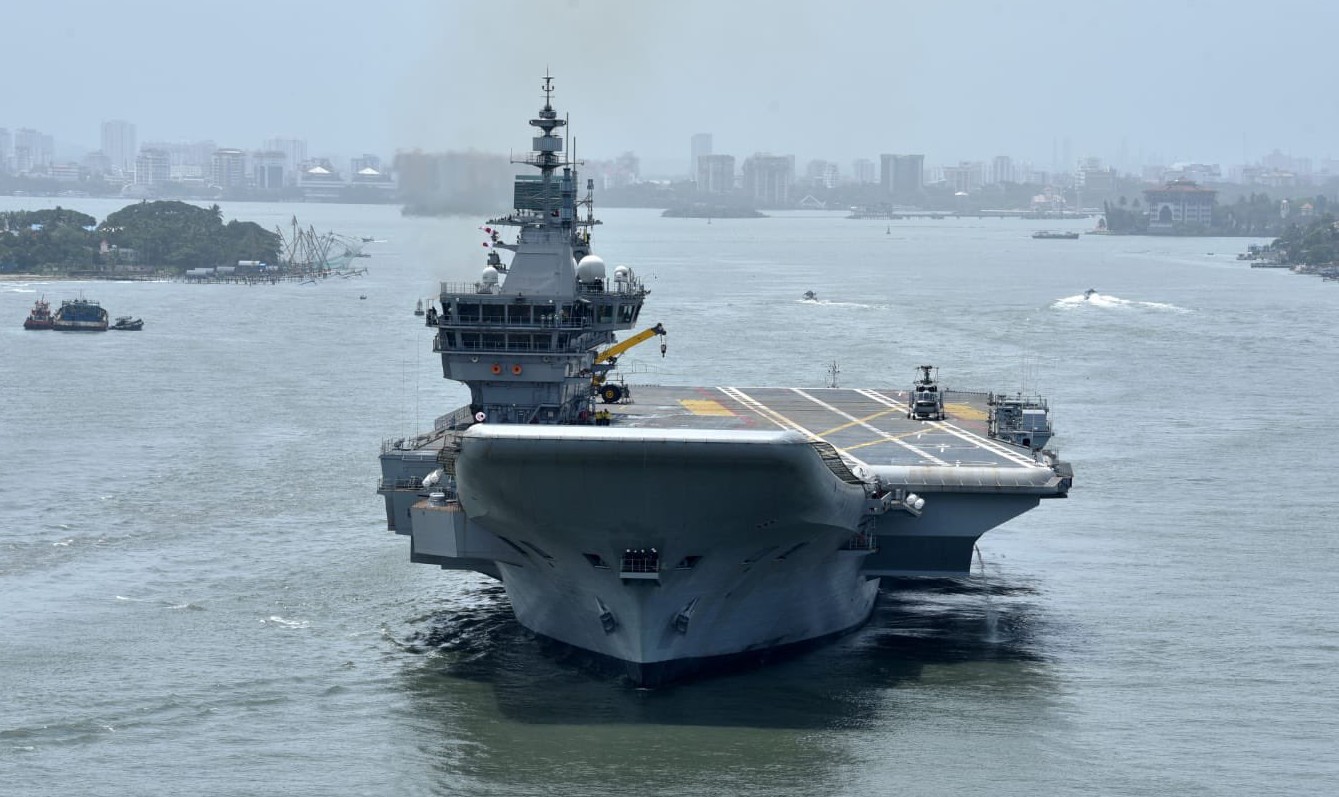
 INS Vikrant (File photo)
South of the Nicobar Islands, a Chinese survey ship spends weeks mapping the seabed. Officially, it studies marine geology. In practice, it collects bathymetry, salinity layers and acoustic profiles, the exact data a submarine captain needs to hide. An Indian P-8I tracks it. Then it tracks the next one. And the next. That routine tells India everything. The Indian Ocean is no longer India’s uncontested backyard.
The PLA Navy has Arrived, and it has Stayed
Chinese warships first entered these waters in 2008 on anti-piracy duty. Escort task forces have rotated ever since. Consequently, presence became routine, and routine became normal. Indian assessments have long placed several Chinese naval and research vessels in the region at any given moment.
The grey fleet matters just as much. A CSIS investigation found that most of China’s 64 surveyed research vessels showed indicators of military-linked activity, with more than a dozen working Indian Ocean waters. The Observer Research Foundation calls this a persistent peacetime intelligence architecture. It normalizes Chinese presence without firing a shot.
Ports Today, Bases Tomorrow
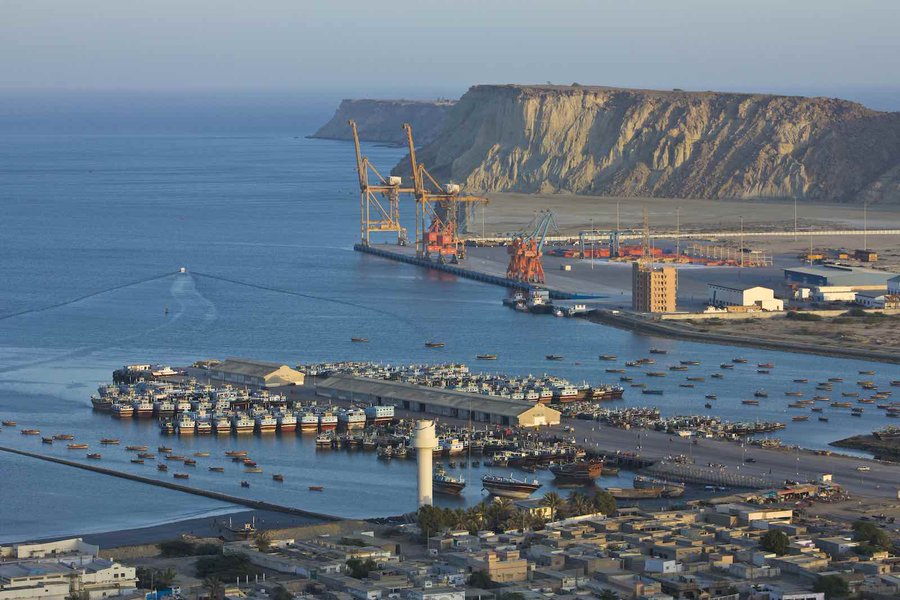
Presence needs fuel, spares and berths. Beijing has quietly built all three. China opened its Djibouti support base in 2017 at a cost of roughly $590 million. The Pentagon’s December 2025 report further assesses that China is developing a joint logistics and training centre at Cambodia’s Ream naval base. Meanwhile, Gwadar, Hambantota and Kyaukpyu sit astride India’s sea lanes as dual-use nodes.
None of these is a fortress. That is not the point. Logistics converts a deployment into a deployment cycle. Therefore, endurance, not hull count alone, is what India must now measure.
Carriers Change the Arithmetic
On 5 November 2025, China commissioned Fujian, its first catapult-equipped carrier, at Sanya. Electromagnetic catapults let it launch heavier jets with more fuel and more weapons. It also flies fixed-wing airborne early warning aircraft. That single capability extends a fleet’s radar horizon by hundreds of kilometres.
A fourth hull is already growing at Dalian. CSIS satellite imagery from May 2026 shows a carrier hull roughly 286 metres long, with strong indications of nuclear propulsion. The Pentagon expects China to field nine carriers by 2035.
Carriers rarely travel alone, though. China is also fielding large amphibious assault ships and a growing replenishment force, including an oiler bigger than anything the US Navy operates. Together, these ships move troops, helicopters and fuel across oceans. In short, Beijing is assembling an expeditionary toolkit, not merely a bigger coastal fleet.
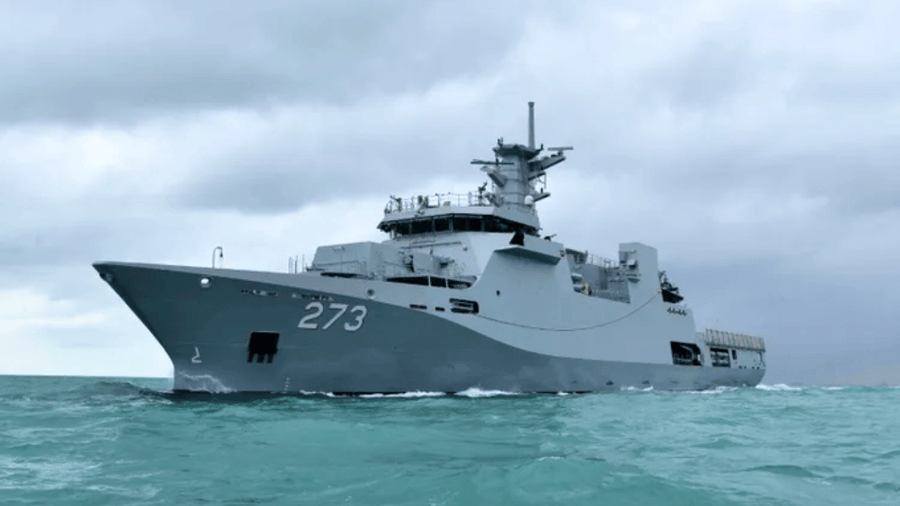
India, by contrast, operates two carriers. INS Vikramaditya is ageing. INS Vikrant carries a modest air wing. IAC-2 remains pending before the Cabinet Committee on Security even now.
Here lies the hard geography. India carries a two-ocean responsibility. Land-based fighters cannot cover the Arabian Sea and the Bay of Bengal at once. Beyond the Andamans, they cannot loiter at all. A carrier is simply the only airfield that moves.
Competition is Structural, Not a Phase
Some argue that Chinese attention will drift back to Taiwan. That reading misjudges the driver. China imports most of its crude through these waters. Accordingly, it will protect that route regardless of who governs in Beijing.
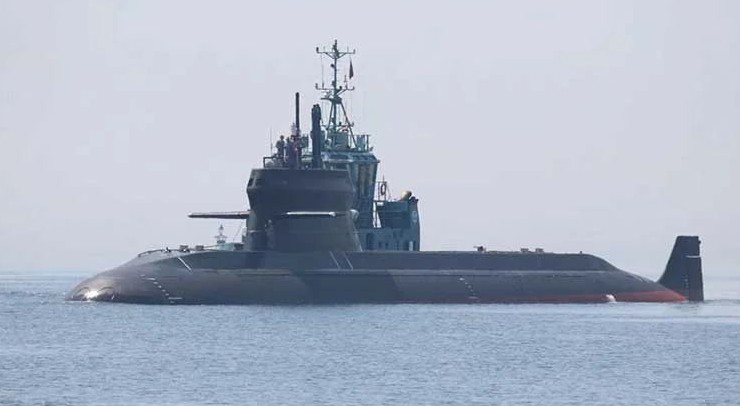
Pakistan complicates the picture further. It commissioned the first of eight Chinese-built Hangor-class submarines in April 2026. India therefore faces a genuine two-front maritime problem, not a hypothetical one.
Sea Denial is Cheap, Sea Control is Not
Submarines and shore-based missiles can deny an adversary the sea. They cannot hold it. Only surface forces escort convoys, sustain blockades, evacuate citizens or reassure smaller neighbours. India’s MAHASAGAR outreach depends entirely on hulls that can stay on station.
India is building fast. The Navy inducts roughly one warship every six weeks, with 19 vessels due in 2026 alone. Around 50 more are under construction. The declared goal is 175 to 200 warships by 2035.
Yet the gap widens anyway. China holds a far larger battle force and a submarine fleet several times India's size. Speed alone will not close that distance. Scale must accompany it; carriers, destroyers, frigates, replenishment tankers and anti-submarine corvettes, bought together as a package rather than argued over one line item at a time.
The Decision India Cannot Postpone
The real debate is not carriers versus submarines. Both serve different missions, and India needs both. The real question is simpler. Does India want a navy that can only threaten the sea, or one that can hold it? A warship ordered today sails in the late 2030s.
India’s 2040 balance of power is being decided in this year’s files. In February 2026, 65 foreign navies sailed into Visakhapatnam for India’s fleet review. They came because India looked capable. Capability, however, is not a photograph. It is a fleet. And fleets must be funded before they are needed.