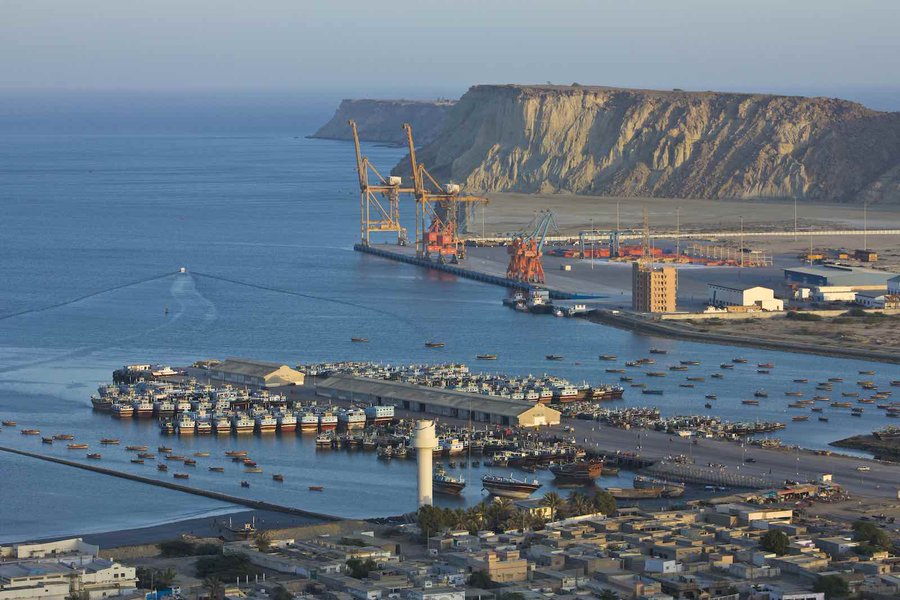
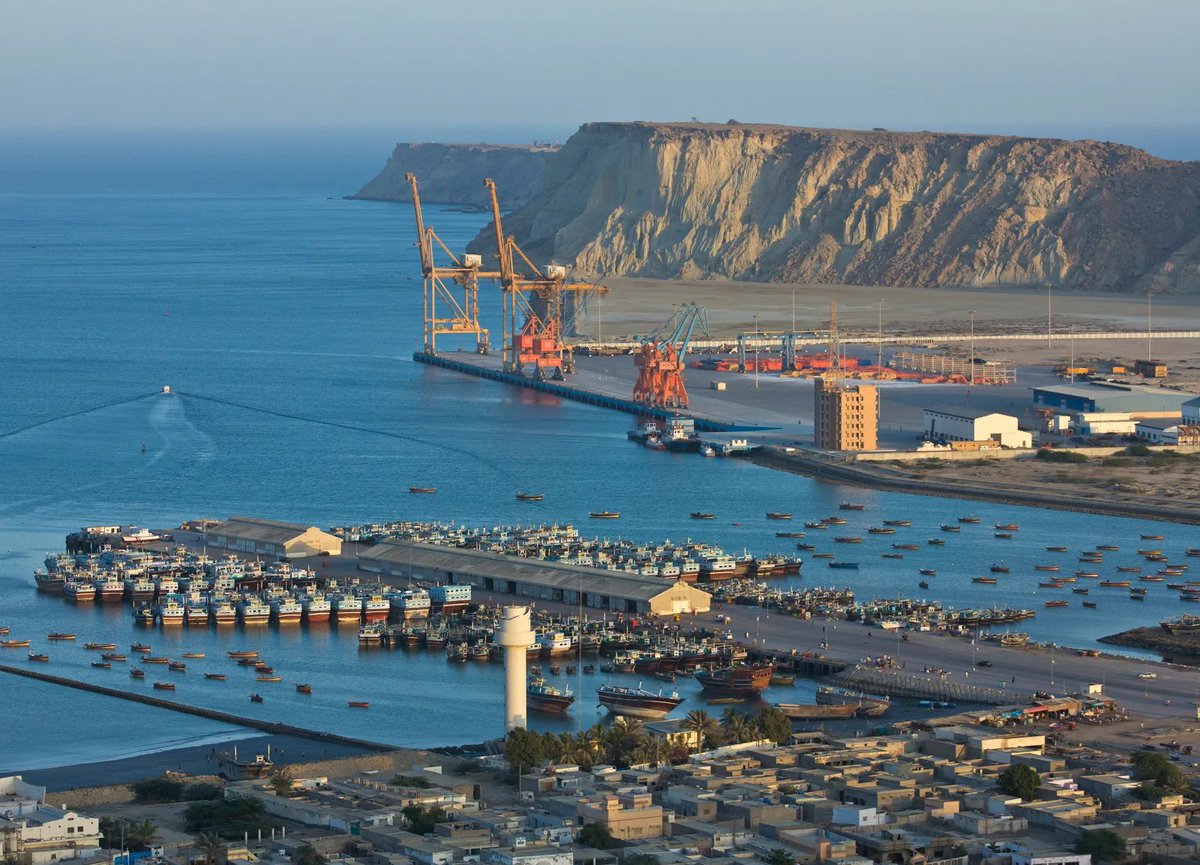
 Gwadar Port (Photo: X)
New Delhi: As Pakistan points to Gwadar's recent surge in container traffic, a more complicated picture is taking shape behind the scenes. Hangeng Trade Company, a Chinese meat-processing firm operating in Gwadar's North Free Zone, has shut its factory and sacked all employees, citing an "unworkable business environment" and non-market barriers that left its export shipments repeatedly stuck.
It is not a port stakeholder – the port is operated by China Overseas Port Holding Company but the sight of a Chinese commercial firm walking out at the precise moment Pakistan is trying to attract more investment into the zone is not a comfortable backdrop for the celebrations in Islamabad.
On 28 February 2026, the United States and Israel launched large-scale strikes on Iran, resulting in the assassination of Supreme Leader Ali Khamenei. Among Iran's counter-actions was the closing of the Strait of Hormuz, through which roughly 20 percent of the world's oil and a significant share of global LNG transits. Washington subsequently imposed a naval blockade on Iranian ports.
This is not a "naval standoff" -- it is an active war with a declared blockade, and it is the direct cause of the conditions that have made Gwadar suddenly relevant. More than 3,000 Iran-bound containers were stuck at Karachi Port and Port Qasim when Pakistan formally activated the new transit corridor on 25 April, designating six overland routes connecting its ports to Iranian border crossings. The Transit of Goods Order 2026 was promulgated under a bilateral framework dating to 2008 — not a new policy, but a dormant instrument activated by emergency conditions.
Washington has noted the corridor's activation with concern. From the American perspective, a road link that allows goods to reach Iranian buyers without transiting waters where US naval assets are operating is not regional connectivity – it is a mechanism to blunt the blockade's economic effect.
China's quiet integration of Gwadar into its supply chain architecture, Russia's diplomatic cover, and Pakistan's corridor collectively represent what Washington views as an emerging overland escape route that the US Navy cannot interdict. Pakistan insists the corridor is about legitimate bilateral trade under pre-existing frameworks. The functional effect, from Washington's perspective, is the same regardless of stated intent.
But Pakistan's geopolitical position here is considerably more nuanced than a simple sanctions-circumvention story.
Pakistan has simultaneously served as the lead mediator in US-Iran peace talks – brokering the initial ceasefire and hosting the Islamabad Talks on 11–12 April 2026, led by Prime Minister Shehbaz Sharif, Field Marshal Asim Munir and Deputy PM Ishaq Dar on the Pakistani side, and Vice President JD Vance with Steve Witkoff and Jared Kushner on the American side.
Pakistan passed a US proposal to Iran on 25 March, and the ceasefire itself was mediated through Islamabad. Washington needs Pakistan at the negotiating table. That leverage is real, and it gives Islamabad some insulation from the kind of blunt American financial pressure that a less diplomatically useful Pakistan might face.
That insulation is not unlimited. Pakistan is currently supported by a 37-month IMF Extended Fund Facility approved in September 2024, with total disbursements reaching approximately $3.3 billion by late 2025.
The IMF programme is doing three things simultaneously: helping Pakistan manage its budget to prevent debt from spiralling, pushing structural reforms to improve competitiveness, and supporting climate resilience investments.
The United States, as the IMF's largest shareholder, retains significant informal influence over the programme's continuity. Pakistan depends on that goodwill at a moment of genuine fiscal vulnerability. Accumulating American hostility has costs that Islamabad's current leaders have assessed and apparently decided to absorb, at least for now.
The geopolitical arithmetic shifts, however, if the Hormuz crisis persists or deepens. The US blockade is strangling Iran's main economic corridors and threatening an oil storage crisis, which means Tehran has strong incentives to keep the overland corridor open and to pressure Pakistan to maintain it.
A Pakistan that becomes structurally embedded as a bypass route for Iranian and Chinese trade would be making a long-term strategic choice with long-term consequences – aligning Islamabad more firmly with Beijing and Tehran against Washington's stated regional interests.
Pakistan has historically worked hard to preserve relationships with multiple major powers simultaneously. The corridor, if it becomes a permanent feature rather than a crisis expedient, risks forcing a choice that Islamabad would prefer to defer indefinitely.
China's interest in the corridor is transparent. For Beijing, the routes connecting Gwadar, Karachi and Port Qasim to Iranian border crossings via CPEC infrastructure provide a supply chain safety valve that does not depend on American tolerance of Gulf transit.
The BLA's April 2026 maritime attack near Jiwani – the group's first documented sea operation – is an obstacle to this vision. But it is an obstacle that China has the resources to pressure Pakistan to address.
The fabricated insurance figures circulating in some commentary (a leap from 0.12% to nearly 5% of vessel value) have no evidentiary basis; documented regional war-risk rates rose from approximately 0.2% to around 1% after the conflict's outbreak. What is certain is that any credible maritime threat in Gwadar's own coastal waters adds a distinct and measurable risk premium on top of the port's already challenging commercial fundamentals.
Those fundamentals – an operational channel depth of 12.5 metres that bars standard container vessels requiring 13 to 14 metres of draft, chronic siltation, and inadequate hinterland rail connectivity – would need to be addressed for Gwadar to sustain its April 2026 traffic levels even without geopolitical complications. And even in the boom scenario, COPHC collects ninety-one cents of every dollar a transshipment container generates at the port, leaving Pakistan with nine.
Pakistan is walking a tightrope that its current leaders did not choose to mount. The geopolitical costs are accumulating quietly. When the Hormuz crisis eases, and the revenue advantage shrinks, Islamabad may find that it has paid a lasting price for a temporary windfall – unless its mediating role between Washington and Tehran can be converted into durable diplomatic capital. That conversion is the one scenario in which Gwadar's moment becomes something more than a crisis dividend.