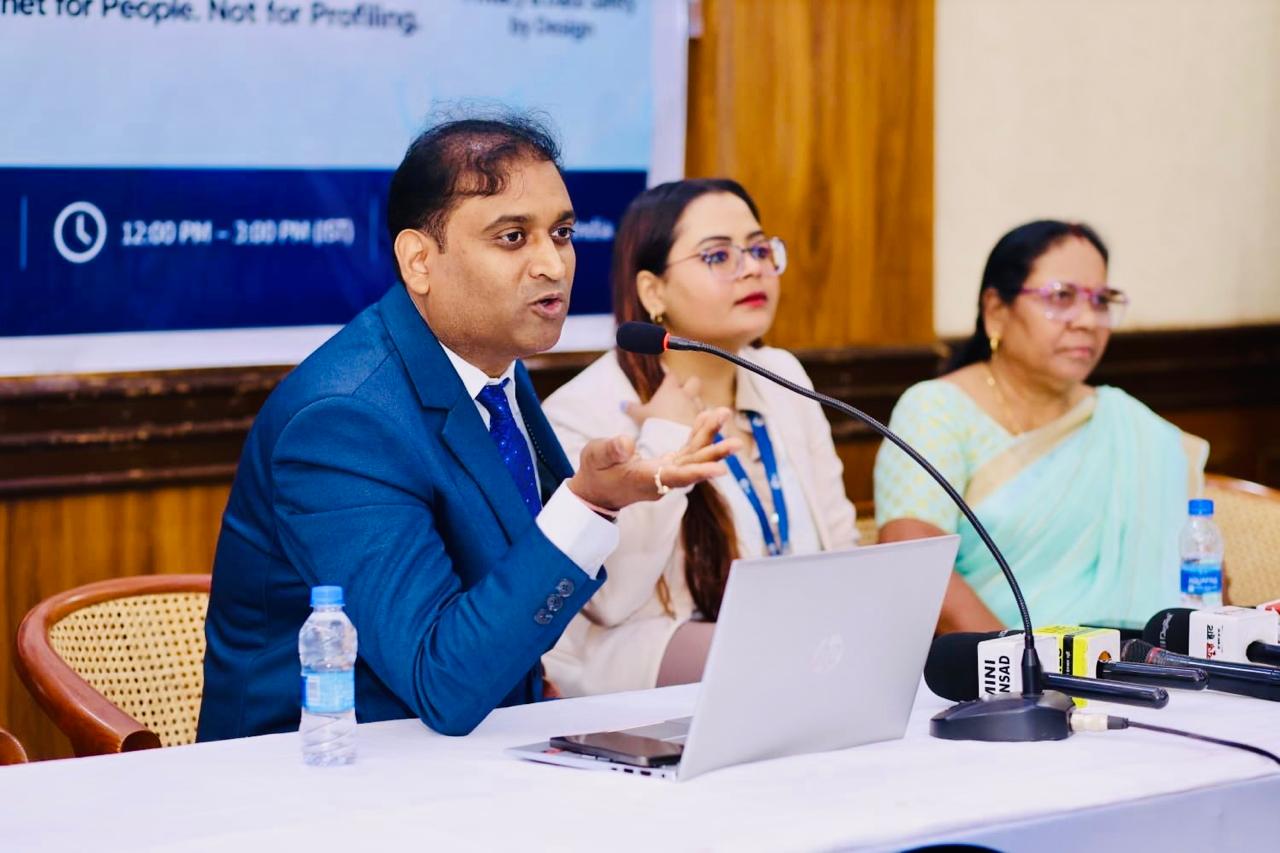
 ZKTOR CEO Sunil Kumar Singh (Photo: Special arrangement)
ZKTOR, a social media platform that its chief executive, Sunil Kumar Singh, said was developed entirely by Indians, has identified India and South Asia as its key growth market. In an interview with India Sentinels, Singh said the platform is built on “Privacy and Data Safety by Design”. This includes user-directed feeds without behavioural tracking or profiling, a “No URL Media Architecture” that limits link-based extraction of photographs and videos, and country-based data storage with local accountability.
ZKTOR uses a shared application layer with separate server clusters in India, Nepal, Bangladesh and Sri Lanka, where users' personal data is stored under multilayer encryption, he said. He added that this gives a technical foundation for compliance with laws such as India's Digital Personal Data Protection (DPDP) Act and the European Union's General Data Protection Regulation (GDPR) where relevant. According to Singh, the platform's 10-month beta reached over one million users, and General Grievance and Women and Children Wings are already in place in all four countries.
Edited excerpts from an interview with India Sentinels:
Ques: ZKTOR has identified India and South Asia as a key growth market. What makes this region strategically important for your global expansion?
Ans: India is our technology and innovation base, where ZKTOR was developed entirely by Indians. South Asia’s shared needs and linguistic and cultural diversity guide public testing and regional expansion towards a global market. Privacy should not require technical expertise: our model combines Privacy and Data Safety by Design, user-directed feeds without behavioural tracking or profiling, No URL Media Architecture limiting link-based media extraction, and country-based data storage with local accountability. Our goal is profiling-free social media for the AI era, enabling people to connect, showcase work and earn with dignity, expanding their opportunities rather than the platform’s power over their private lives.
Ques: What is your India strategy over the next 3-5 years? Are you looking at local manufacturing, R&D, or primarily expanding your market presence?
Ans: Our India strategy connects AI-era research and engineering with social media, local livelihoods and enterprise, with Privacy and Data Safety by Design at its core. Focusing on smaller tier 2–5 cities, Softa has begun developing district-level hyperlocal infrastructure integrating social networks, advertising, research and MSMEs, alongside collaboration with micro and small businesses and arrangements for local operations and accountability. Mass testing across South Asia examined network operations and governance, with encouraging early findings; our ten-month beta also reached over one million users. Building on this foundation, we aim within five years to establish ground teams in over 200 Indian districts, create more than 5,000 employment opportunities, connect hundreds of thousands of MSMEs and strengthen local civil-society participation. District presence should mean local people helping build, run and earn from the network, not simply becoming users: an internet for people, not for profiling.
Ques: South Asia is a diverse region with very different regulatory and economic environments. How do you plan to tailor your approach across countries such as India, Bangladesh, Nepal, and Sri Lanka?
Ans: Our model combines one platform with country-specific data systems and local accountability. Data sovereignty drove public testing across India, Nepal, Bangladesh and Sri Lanka. Built on Privacy and Data Safety by Design, ZKTOR pairs a shared application layer with country-specific server clusters, storing users’ personal data in their respective countries under multilayer encryption while enabling cross-border interaction without pooling national datasets. Built-in safeguards reduce reliance on users’ technical expertise and provide a technical foundation for compliance with applicable laws, including DPDP and GDPR where relevant. Our own country teams will manage local operations; General Grievance and Women and Children Wings are already established in all four countries. The shared hyperlocal framework will be adapted to local languages, economic conditions and community needs to support employment, MSMEs and civil-society participation.
Ques: Which sectors do you see driving the biggest opportunities - government, defence, critical infrastructure, enterprise, or consumer markets?
Ans: Our largest opportunity is the hyperlocal digital economy, connecting people, businesses including MSMEs, local governments, educational institutions and civil society. Through hyperlocal advertising, social media and business services, we aim to help businesses reach customers, creators find markets and communities access work. Privacy and Data Safety by Design underpins this approach, preserving people's control over their data. Our intended contribution to Viksit Bharat is inclusive digitalisation built around safety, digital freedom, privacy and dignity, with local people helping build, run and earn from the network, not merely use it.
Ques: How important will partnerships with Indian companies and system integrators be to your expansion, and are you already in discussions with local players?
Ans: Partnerships are central to turning technology into local capability and livelihoods. We seek collaboration with Indian technology companies and system integrators to adapt, deploy and support digital services for businesses in smaller cities. MSMEs, advertising agencies and local providers can contribute market knowledge, language support and on-ground delivery. Work on local business collaboration and network operations has begun; specific partnerships will be announced once scope and terms are agreed. Privacy and Data Safety by Design will limit partners' access to what their services require, not users' unrelated private activity. We want local people to help deploy, run and earn from the network.
Ques: India is increasingly pushing for technological self-reliance under initiatives such as Make in India. How does ZKTOR plan to align with these policy priorities?
Ans: Our intended contribution to Make in India is research and security-engineering capacity, not merely an Indian-made app. Links, algorithms and advertising helped drive two decades of digitalisation; we target profiling, unauthorised media extraction and excessive data access, not links or algorithms themselves. AI-enabled photo and video misuse threatens women's dignity, freedom and equal participation; geopolitical uncertainty sharpens concerns over data sovereignty and accountability. ZKTOR combines Privacy and Data Safety by Design, user-directed feeds without behavioural tracking or profiling, No URL Media Architecture limiting link-based extraction, and country-based storage with local accountability. Technology cannot prevent every misuse; local-language human grievance review and Women and Children Wings complement these controls. Self-reliance means designing, testing and continually improving technology for local needs and emerging risks while learning through global collaboration. We want Indian-developed technology chosen worldwide for usefulness and reliability, enabling participation without surrendering control over private lives.
Ques: Your industry is evolving rapidly with AI and digital technologies. What innovations will ZKTOR bring to the Indian and South Asian market that differentiate it from competitors?
Ans: ZKTOR’s app is the entry point, not the whole system. We are developing hyperlocal infrastructure connecting social media, private communication, search, AI assistance, advertising and MSMEs without turning conversations, searches and purchases into advertising profiles. Privacy and Data Safety by Design combines a shared application layer with country-specific data clusters, purpose-specific permissions and local accountability. No URL Media Architecture limits link-based extraction of protected photographs and videos. SNDESH supports private communication, KHOZU search with inspectable sources, and HOLA AI task-specific assistance; VDL flags risks while complaints remain subject to human review and appeal. User-chosen districts and languages guide discovery; subject, language and locality guide advertising, connecting creators, MSMEs and local service providers without behavioural profiling. Frugal engineering and software reuse are designed to keep costs low. Development without government grants or venture capital reflects our commitment to self-reliance and independent control over design and data use.
Ques: What milestones should we expect from ZKTOR in the region over the next 12-24 months, and what would success in India look like for you?
Ans: Our expansion will be phased, guided by testing, operational readiness and local participation. The goals of ground teams in over 200 Indian districts, more than 5,000 employment opportunities and connections with hundreds of thousands of MSMEs are five-year ambitions, not 12-24-month commitments. Progress means stronger local operations, greater use of hyperlocal services and more business participation. Success in India means a financially sustainable network that supports local earnings, handles grievances effectively and remains useful beyond initial registration. We will judge growth by what it enables people to do, while preserving privacy, data safety and their control over personal information.