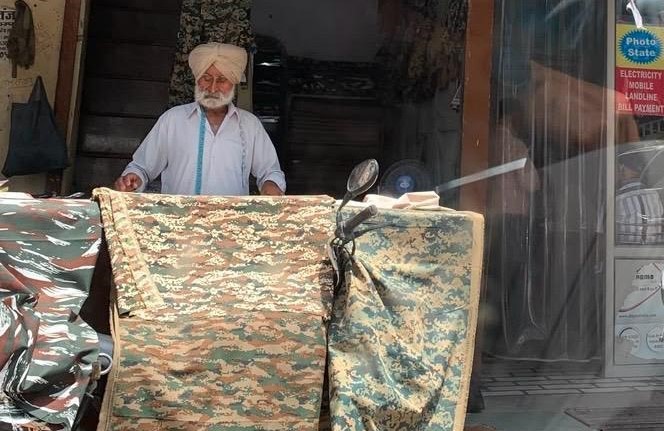
Sriganganagar/New Delhi: A joint operation by Indian Army intelligence and Rajasthan Police has broken up a network allegedly supplying counterfeit combat uniform cloth to vendors across Sriganganagar district, with nearly 1,000 metres of unauthorized Army-pattern material seized from shops in the region.
The trail began in Bareilly, Uttar Pradesh, in June 2026, when a separate seizure of counterfeit combat cloth there was traced back to a manufacturing source operating out of Sriganganagar. Army intelligence personnel, working on this lead, quietly investigated the city and identified a local firm as a key link in a supply chain allegedly feeding counterfeit Army-pattern cloth to shops in Sriganganagar town, as well as to markets in Lalgarh Jattan, Suratgarh and other nearby towns.
An interim investigation report was handed to Rajasthan Police in mid-July, setting up a coordinated operation on July 30, in which security personnel and police searched multiple shops across the district. The raids recovered approximately 1,000 metres of unauthorized, new-pattern counterfeit combat cloth, officials said.
The Sriganganagar case is the latest in a string of similar rackets uncovered across the country in recent years, underscoring a persistent problem for the armed forces.
Military intelligence and police in Maharashtra, for instance, dismantled a Delhi-linked gang manufacturing and selling fake digital-pattern combat uniforms in the open market, while a separate case in Odisha involved the seizure of counterfeit combat cloth traced to unauthorized production.
The Army holds intellectual property rights over the design and camouflage pattern of its combat uniform, a protection secured specifically to prevent unauthorized vendors from manufacturing and selling the pattern outside official channels.
Under the rules governing its sale, the uniform cloth is meant to be available only through Unit Run Canteens, meant exclusively for serving personnel and their dependents.
Any reproduction or sale of the pattern outside this system amounts to an infringement of the Army's intellectual property rights, in addition to the security concerns it raises.
Officials describe the wider trade in counterfeit combat cloth as more than a commercial nuisance. Unauthorized possession, sale or use of military-pattern material is a punishable offence, and security agencies view it as a genuine risk, since such cloth can be used to impersonate armed forces personnel.
The Sriganganagar operation reflects a broader pattern of cooperation between military intelligence units and state police forces in tracking such networks, which often span several states and involve informal manufacturing units supplying multiple retail points. Investigators are expected to examine whether the Sriganganagar firm supplied vendors beyond the district, following the same trail that first surfaced in Bareilly.
Rajasthan Police have not yet disclosed details of arrests or specific charges arising from the July 30 raids.