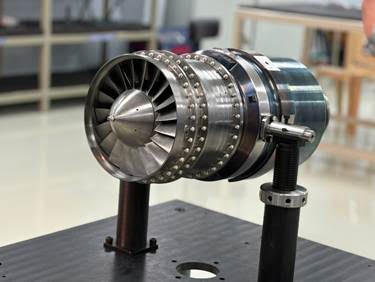
New Delhi: India has taken a significant step towards self-reliance in aero-engine technology with the delivery of the country’s first fully indigenous expendable turbojet engine, built in the 350 kg thrust class and designed by the Gas Turbine Research Establishment (GTRE), a Bengaluru-based laboratory of the Defence Research and Development Organisation (DRDO).
The engine was handed over to GTRE on July 22 by Azad Engineering, the Hyderabad-based precision manufacturing firm that GTRE had appointed as its sole industry partner for the project.
The handover was carried out by the chief executive officer of Azad Engineering, Rakesh Chopdar, who presented the engine to the distinguished scientist and director general (aeronautical systems), Dr K Rajalakshmi Menon, and the outstanding scientist and director of GTRE, Dr SV Ramanamurty.
The defence secretary, secretary of the department of defence R&D and chairman of DRDO, Rajesh Kumar Singh, congratulated both organizations, describing the collaboration between GTRE and its industry partner as instrumental in turning years of design work into what he called a historic achievement.
According to the defence ministry, the delivery represents the culmination of extended work in precision engineering and advanced manufacturing, and reflects a growing depth of capability within India's industrial base to produce systems that – until recently – only a small number of countries could realize.
Jet propulsion remains among the more demanding branches of mechanical engineering, requiring tight tolerances, specialized alloys and rigorous quality control at every stage of production, and the ministry noted that the successful delivery of a system of this complexity, built to a domestic design, is itself a marker of how far the sector has progressed.
Azad Engineering had secured the long-term contract from GTRE in May 2024, under which it was designated as the production agency responsible for the complete manufacturing, assembly, integration and delivery of the engine. The company had originally targeted early 2026 for its first fully integrated units, and Tuesday's delivery brings that timeline to fruition, albeit with a modest slip of a few months.
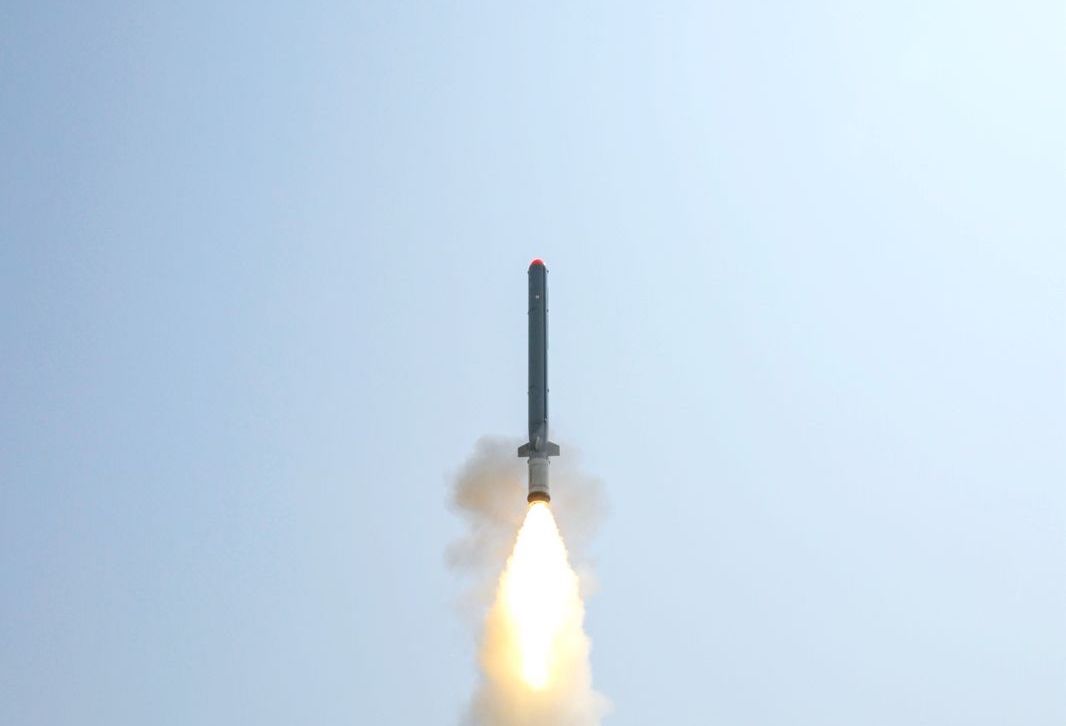
The 350 kg thrust engine is understood to have been developed primarily to power India's medium-range anti-ship missile (NASM-MR), a weapon system being developed to extend the reach of the country's naval strike capability.
Beyond the missile programme, the same engine architecture is also expected to find use in unmanned aerial vehicles and armed drones, platforms for which compact, expendable turbojets of this thrust class are increasingly in demand across the world's defence industries.
The project also carries wider significance for GTRE, an establishment whose flagship effort – the Kaveri engine, intended originally to power the Tejas Mk1 – has for decades struggled to reach the thrust levels required for a fighter aircraft.
The 350 kg engine, by contrast, is a smaller and less demanding class of propulsion system, and its successful, on-schedule delivery gives GTRE a tangible, near-term win even as its more ambitious fighter-engine and naval gas turbine programmes continue their longer development paths.
For Azad Engineering, the delivery also marks a shift in profile, from a specialist supplier of high-precision turbine and aero-engine components to a manufacturer capable of delivering a complete, integrated propulsion system. The engine will now proceed to a series of development trials before it can be cleared for induction into service.