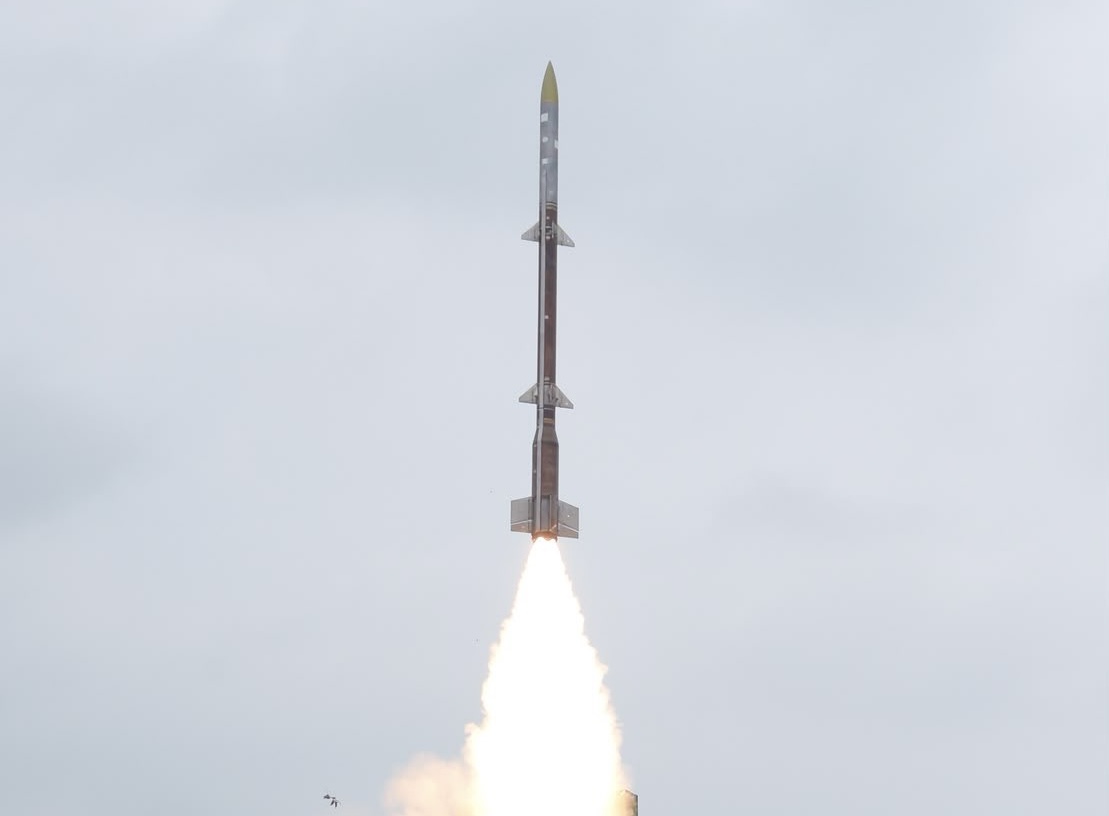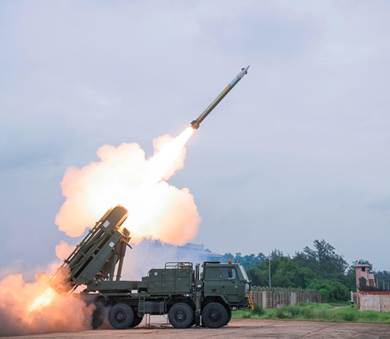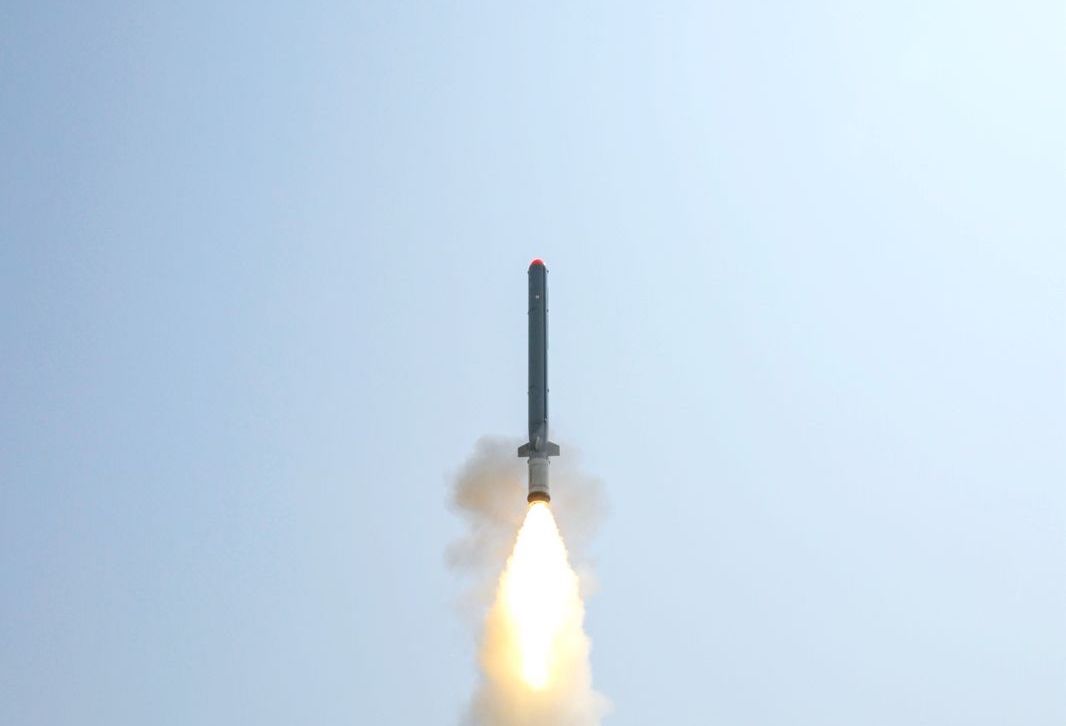
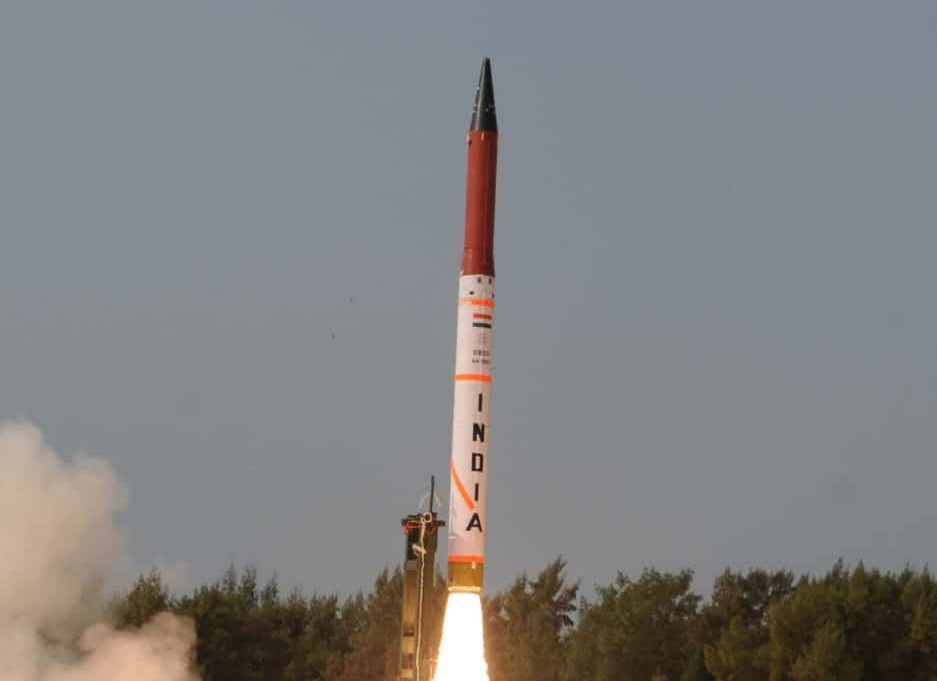
 Agni-4 (File photo)
New Delhi: India on Thursday test-fired the nuclear-capable Agni-4 medium-range ballistic missile from the Integrated Test Range (ITR) at Chandipur on the Odisha coast, the defence ministry said, closing out days of speculation over a mysterious airspace alert that had covered a large stretch of the Bay of Bengal and the wider Indian Ocean.
According to a statement from the Ministry of Defence, the launch validated all operational and technical parameters and was overseen by the Strategic Forces Command (SFC), the tri-service formation that forms part of India’s Nuclear Command Authority (NCA) and controls the country's land- and sea-based nuclear-capable missile arsenal.
Read also: Agni-Prime: India enters elite club with historic rail-based ballistic-missile test
The trial comes days after India’s civil aviation authorities issued a Notice to Airmen (NOTAM) restricting a corridor of more than 2,500 kilometres over the Indian Ocean for August 6 and 7, later extended to nearly 3,760 kilometres.
The scale of the exclusion zone had fuelled speculation among defence commentators that the trial could involve a longer-range system, such as the developmental Agni-6 intercontinental ballistic missile or the submarine-launched K-4, particularly since some reports linked the notification to Dr APJ Abdul Kalam Island, the launch site normally used for India’s longer-range weapons.
Thursday’s confirmation that the missile was fired from Chandipur, and that it was the shorter-range Agni-4, settled at least the immediate question of which system was being tested, even as the broader NOTAM window remains open for another day.
The Agni-4 is a two-stage, solid-fuelled, surface-to-surface ballistic missile capable of hitting targets at a distance of up to 4,000 kilometres. About 20 metres long and weighing close to 17,000 kilograms at launch, it is fired from a road-mobile launcher and can carry a payload of up to 1,000 kilograms, including a nuclear warhead.
Its guidance package combines a ring-laser gyroscope-based inertial navigation system with a redundant micro-inertial system and digital flight controls, giving it a claimed accuracy of under 100 metres circular error probable (CEP) – a notably tight margin for a missile of its range.
Developed by the Defence Research and Development Organisation (DRDO) and manufactured by Bharat Dynamics Limited, the Agni-4 was originally developed under the designation Agni-II Prime before being renamed.
It was first flight-tested in November 2011 from Wheeler Island, since renamed Dr APJ Abdul Kalam Island, and reached its full range of 4,000 kilometres in a test the following year. After a further round of trials through the middle of the last decade, the system was formally inducted into the Strategic Forces Command, with subsequent user trials, including one on September 6, 2024, also conducted from Chandipur, aimed at sustaining crew proficiency and confirming continued reliability rather than testing new capability.
Thursday’s launch is the latest in a steady run of missile trials the Strategic Forces Command has carried out through 2026 to keep India’s nuclear-capable arsenal combat-ready.
Read also: Defence ministry confirms ‘mystery missile’ test as ‘advanced Agni with MIRV’
These have included the short-range Agni-1 from Chandipur in May, the intermediate-range Agni-3 in February, an advanced Agni-5 variant fitted with multiple independently targetable re-entry vehicle (MIRV) technology from Abdul Kalam Island in May, and a further trial of the medium-range Agni-Prime earlier in the year.
Taken together, the trials span nearly the full spread of the Agni family, from the roughly 700-kilometre-range Agni-1 through to the Agni-5, whose reach exceeds 5,000 kilometres.
Follow us on social media for quick updates, new photos, videos, and more.
X: https://x.com/indiasentinels
Facebook: https://facebook.com/indiasentinels
Instagram: https://instagram.com/indiasentinels
YouTube: https://youtube.com/indiasentinels
© India Sentinels 2026-27