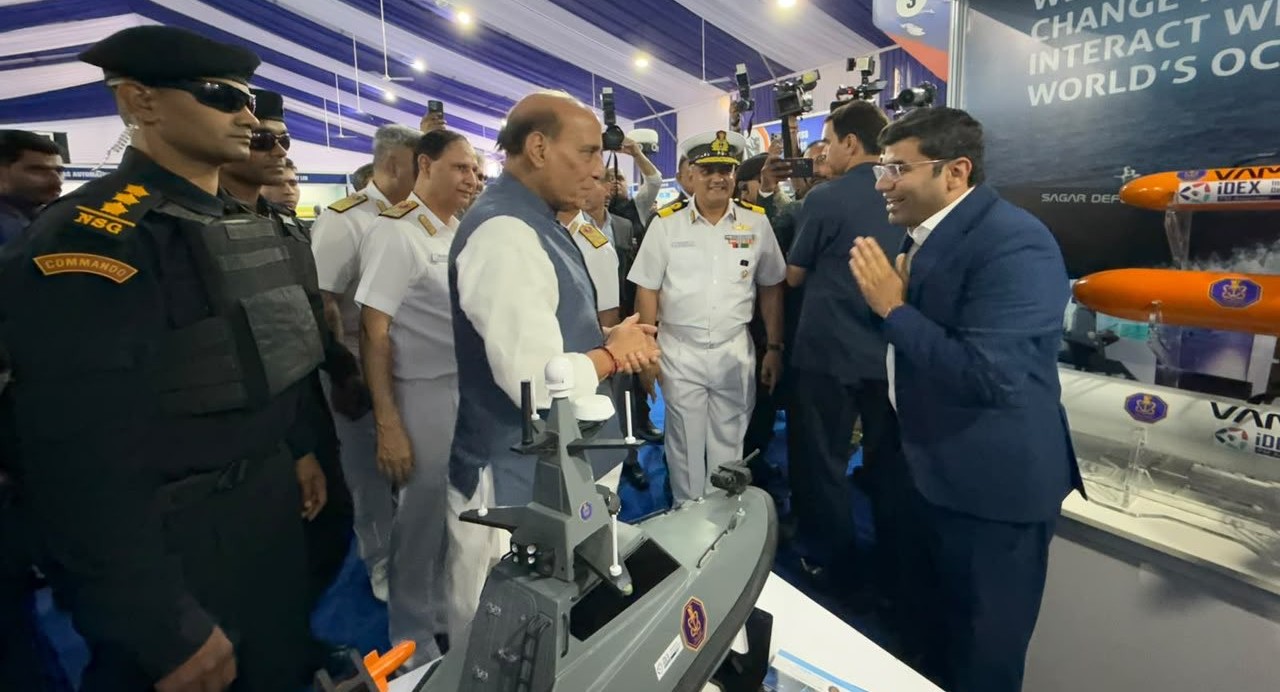
 Rajnath Singh.
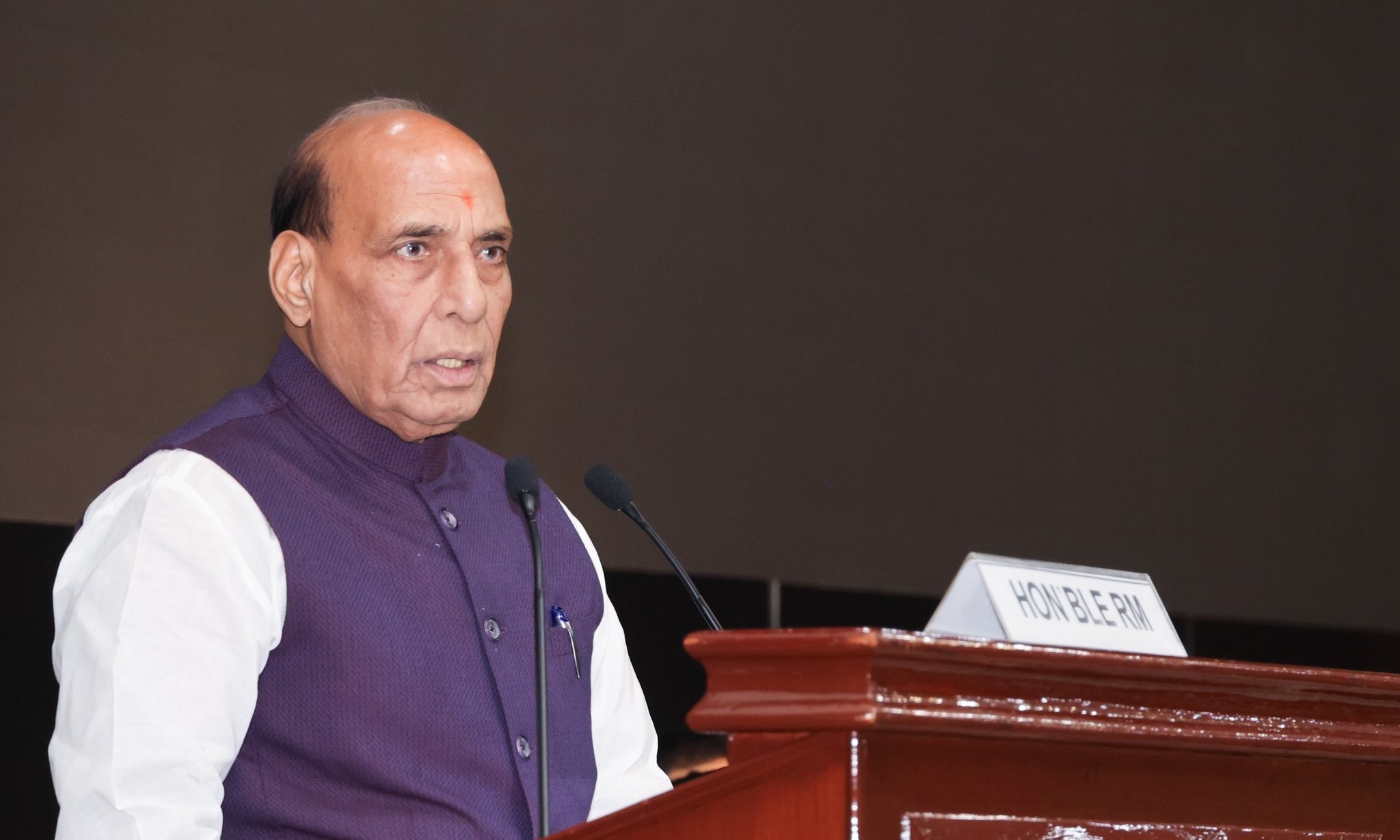
New Delhi: The defence minister, Rajnath Singh, on Monday called for a new phase of self-reliance in defence, built on advanced military technologies, stronger research and development (R&D) and resilient domestic supply chains to cut India's dependence on imports.
Speaking at Swavlamban 2026, the fifth edition of the Indian Navy’s Naval Innovation and Indigenization Seminar, Singh said the next stage of Aatmanirbharta must produce technologies that are cost-effective, operationally superior and globally competitive.
Supply chains and rare earths
He described supply-chain management as a strategic imperative tied directly to national security. He asked for a time-bound roadmap listing critical technologies, industries, resources and indigenization targets.
Singh pointed to India’s reliance on certain raw materials, including rare earth elements, and on technologies not available at home. Some external dependence may continue until viable alternatives emerge, he said, but critical areas must be prioritized for indigenous development.
He also asked for advance assessments of buffer stocks and domestic production capacity, so that India prepares for disruptions to supply routes instead of reacting after a crisis.
Greater role for private sector
Noting the risks built into R&D, Singh urged a change in attitudes towards failure and called for funding mechanisms that can back high-risk, high-reward projects.
Greater private sector participation and investment in low-cost technologies, he said, could speed up innovation through smaller experiments while the country pursues ambitious goals. He also sought closer industry–academia collaboration and more opportunities for young people to build research careers.
He cited the Innovations for Defence Excellence (iDEX) initiative, which has enabled start-ups and micro, small and medium enterprises (MSMEs) to develop technologies that India earlier imported.
More than 4,000 proposals have been received against 229 challenges issued by the Navy, he said, with indigenous solutions emerging in naval systems, sensors and communications.
The next phase, Singh said, must address the quality, efficiency and affordability of domestically produced equipment, not just its quantity. With demand for naval ships rising amid a changing security environment in the Indian Ocean Region, he asked for ways to lower construction costs while expanding domestic production.
He also proposed a dual-technology roadmap to identify technologies that serve both civilian and military needs. He wanted indigenization priorities widened beyond existing lists to cover technologies usable across the Army, Navy, Air Force and Indian Coast Guard.
Navy contracts worth over ₹1,900 crore
The Chief of the Naval Staff, Admiral Krishna Swaminathan, said Navy-specific iDEX challenges had risen from 20 in 2022 to 229, about 35% of all iDEX challenges in the defence sector. He said 41 Acceptance of Necessity cases, involving projects worth more than ₹3,500 crore, had been granted, and 25 contracts valued at over ₹1,900 crore had been signed.
Swaminathan named ideation, prototyping, testing, contracting and induction, and life-cycle support as the key stages in turning innovation into operational capability.
Emerging areas discussed at the seminar included artificial intelligence in warfare, autonomous systems, robotics, quantum technologies, persistent surveillance, advanced communications and counter-drone capabilities.
The Navy organized the seminar with the Defence Innovation Organisation and the Society of Indian Defence Manufacturers. Swavlamban 2026 is being held at the Manekshaw Centre in New Delhi on October 26-27 under the theme ‘Strength and Power through Innovation and Indigenization’.