 Australian prime minister Anthony Albanese (L) and Indian PM Narendra Modi (Photo: MEA)
New Delhi: India and Australia have agreed to deepen and broaden their defence and security relationship, signing a fresh joint declaration in Melbourne that both sides described as a marked step-up in ambition, set against a backdrop of shifting power equations in the Indo-Pacific and continuing unease over Beijing’s assertiveness in the region.
The prime minister, Narendra Modi, and his Australian counterpart, Anthony Albanese, signed the Australia-India Joint Declaration on Defence and Security Cooperation (2026) on the sidelines of the third Australia-India Annual Summit, held in Melbourne from July 8 to 10, 2026.
The summit marked what both sides described as a new phase in the India-Australia Comprehensive Strategic Partnership, which was first inked in 2009.
The declaration commits both governments to what it calls an “advanced, integrated and top-tier” defence and security partnership, with cooperation to be intensified across maritime security, defence industry collaboration, information-sharing, counter-terrorism and reciprocal deployment of military aircraft. It reaffirmed the countries’ comprehensive strategic partnership and set out a roadmap for closer strategic coordination amid what officials on both sides termed an increasingly uncertain geopolitical environment.
Read also: India and Australia sign long-delayed uranium supply deal
Perhaps the most consequential institutional outcome to emerge from Melbourne is the establishment of an annual defence ministers' dialogue, which will sit alongside efforts to tighten coordination between the two countries’ armed forces.
A statement from the Ministry of External Affairs said the two sides had agreed to establish an annual defence ministers’ dialogue while strengthening coordination between their armed forces.
Officials familiar with the discussions said the new dialogue is intended to institutionalize a relationship that has, until now, largely progressed through periodic summits rather than a standing ministerial framework.
Both governments have been careful, in public remarks at least, not to name China directly. Instead, the declaration repeatedly invokes the phrase “open, peaceful, stable and prosperous Indo-Pacific” – language that has, over the past decade, become something of a diplomatic shorthand among Quad partners for pushing back against Beijing’s territorial claims and its efforts to restrict freedom of navigation in contested waters.
Read also: Explained: Modi’s Indo-Pacific diplomatic push
The document leans on the 1982 United Nations Convention on the Law of the Sea as its legal anchor, a treaty under which an international tribunal has previously ruled against China's expansive claims in the South China Sea.
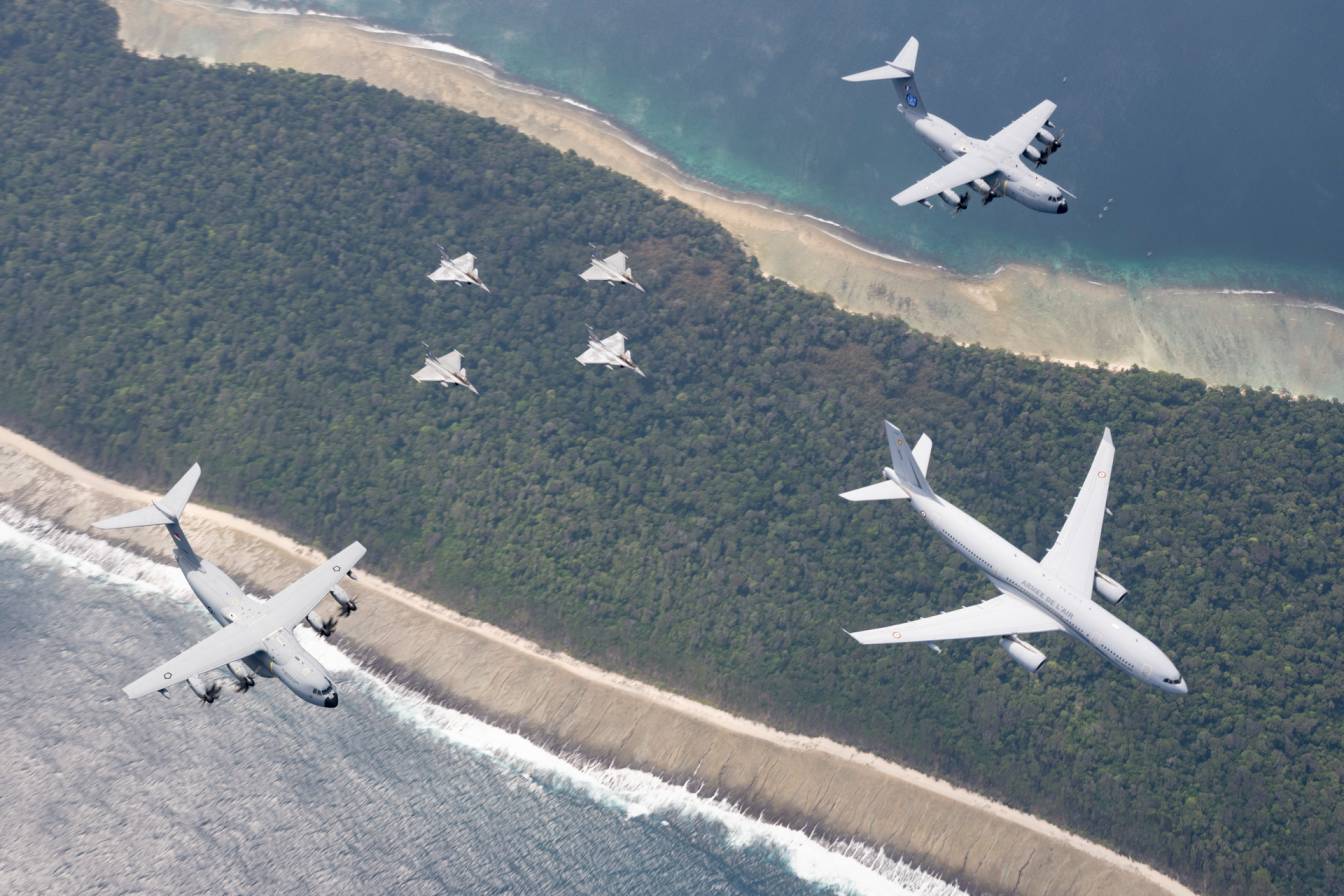
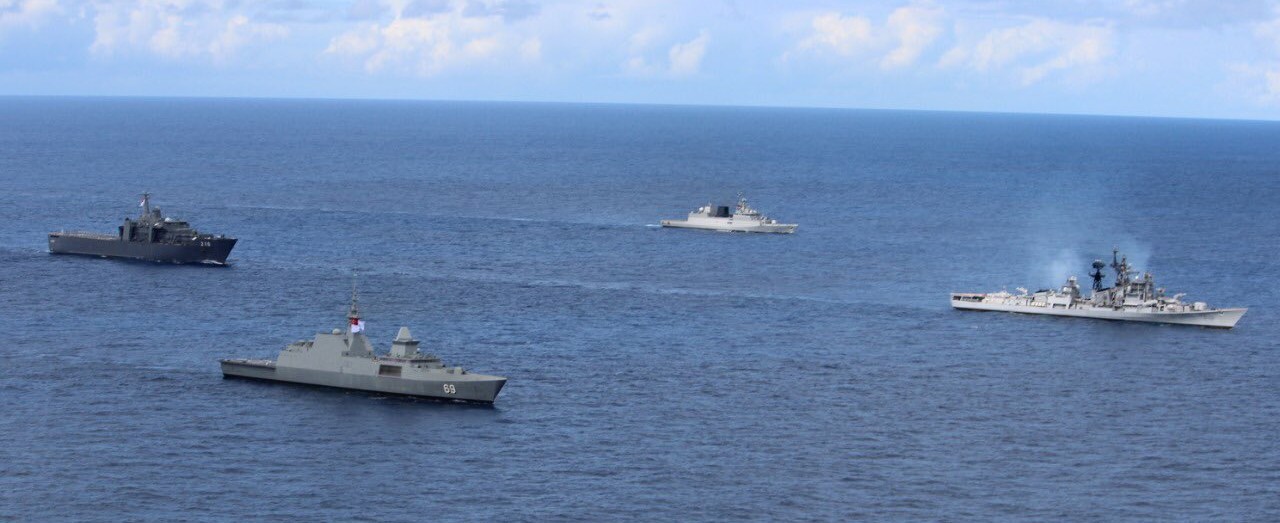
On the substance of defence cooperation, the two countries have committed to a wide menu of activity: raising the complexity of joint military exercises, speeding up interoperability and intelligence-sharing between their forces, expanding the reciprocal use of air bases, and deepening personnel-to-personnel exchanges through training, education and liaison postings.
New Delhi and Canberra also intend to explore joint recruitment initiatives aimed at building a skilled defence workforce, alongside closer engagement between their defence industrial bases to strengthen supply-chain resilience and encourage collaboration in advanced defence science and technology.
Read also: India-Australia defence partnership gains momentum with focus on Indo-Pacific security
Counter-terrorism features prominently as well. The two sides have agreed to widen the sharing of intelligence on terrorist networks, financiers and individuals operating in the region, while working jointly to counter online radicalization, secure crowded public spaces and critical infrastructure, and improve maritime domain security against extremist activity.