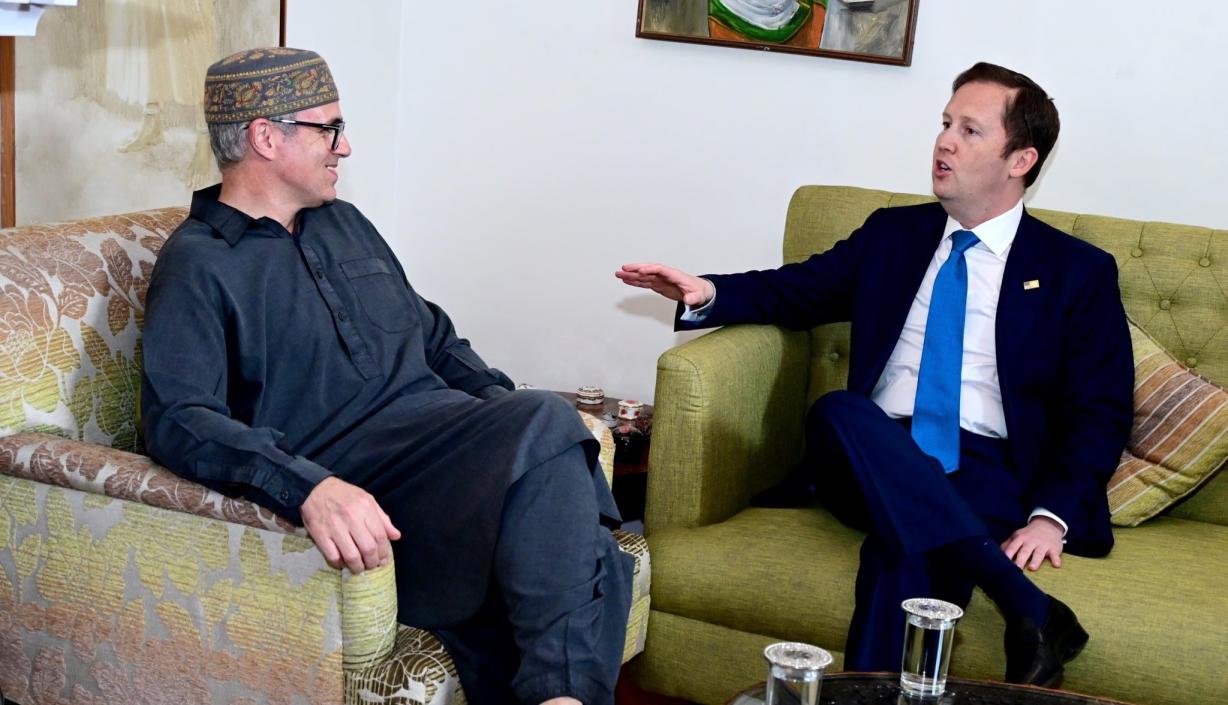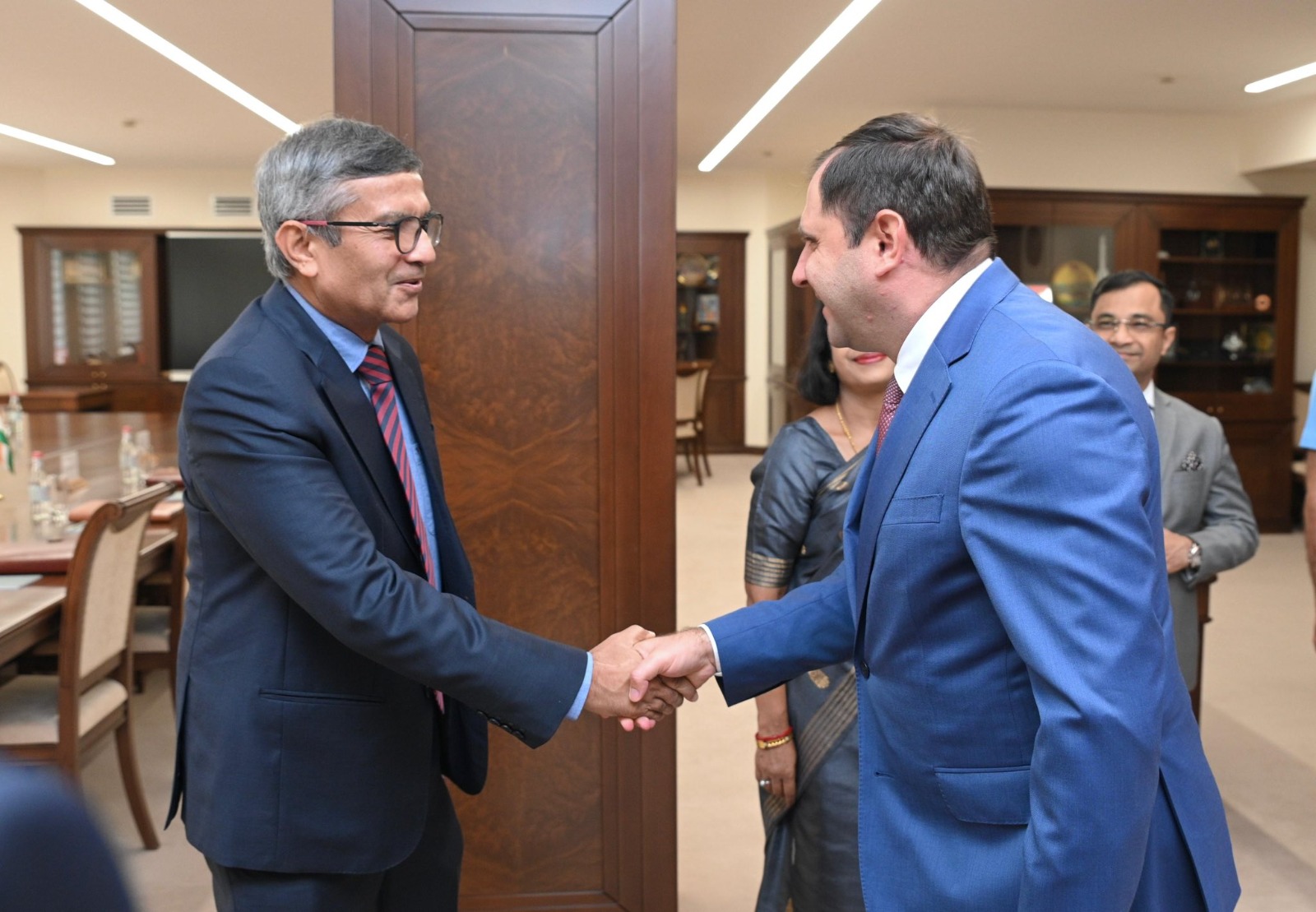
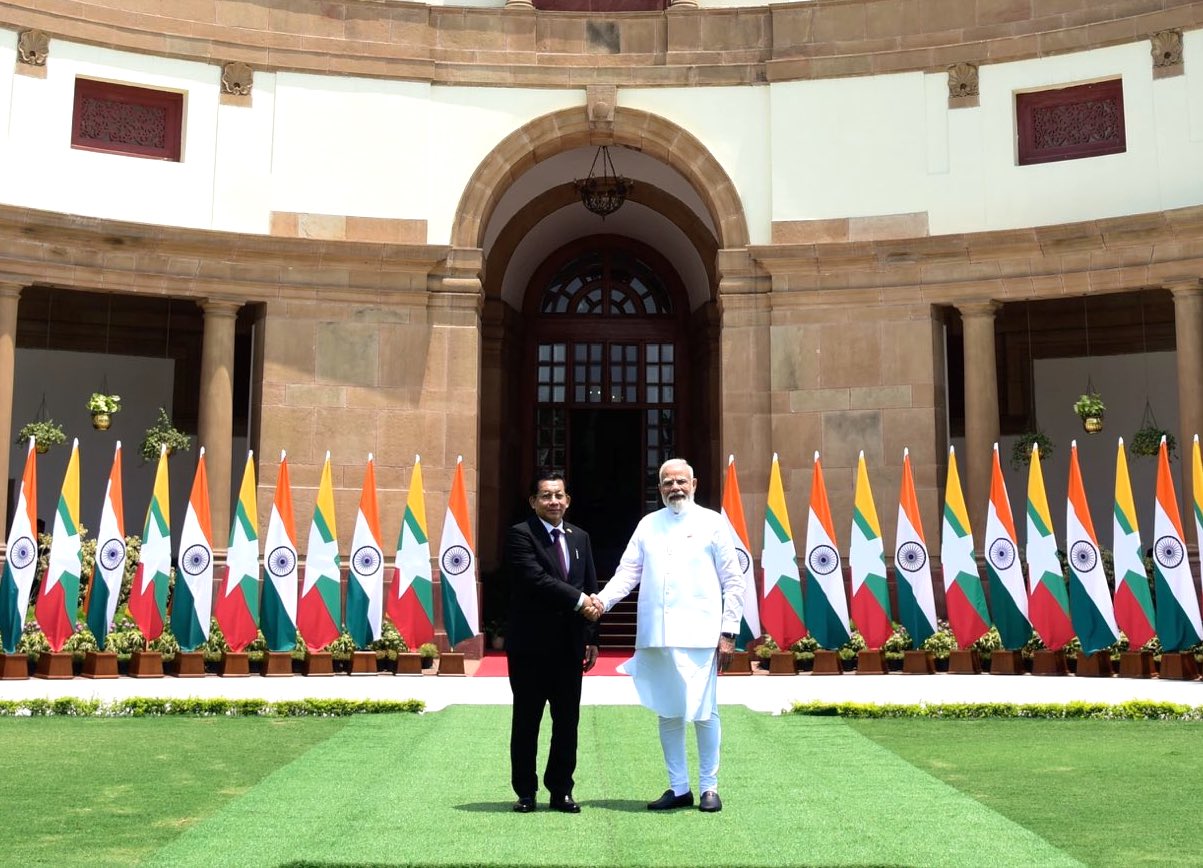
 U Min Aung Hlaing (L) with Narendra Modi at Hyderabad House, New Delhi, on June 1, 2026. (Photo: MEA)
New Delhi: Myanmar’s president, U Min Aung Hlaing, assured the prime minister, Narendra Modi, on Monday that Naypyidaw would not permit Indian insurgent groups to use its territory as a base, as the two countries concluded wide-ranging summit talks at Hyderabad House in New Delhi that covered border security, civil conflict, the detention of democracy leader Aung San Suu Kyi, and an expanding bilateral agenda stretching from trade to space cooperation.
The summit – the first between the two leaders since Hlaing assumed the presidency after Myanmar’s parliamentary elections earlier this year – produced a joint statement affirming that “Myanmar’s territory would not be permitted to be used against India’s security interests.” Modi, in turn, reaffirmed India’s support for Myanmar’s sovereignty and territorial integrity and pledged to deepen security cooperation.
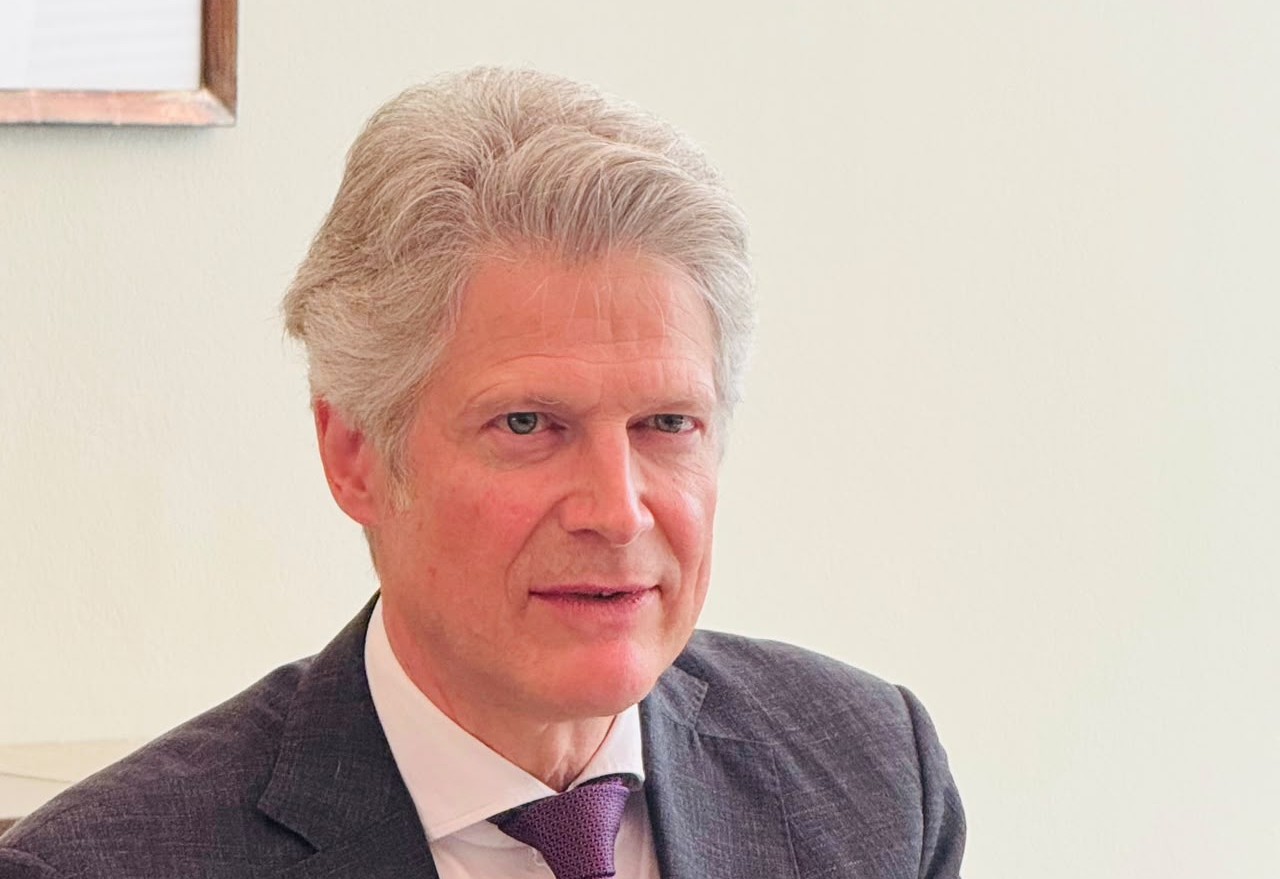
The foreign secretary, Vikram Misri, who briefed reporters after the talks, said the insurgent presence along the shared border was raised directly by Modi. “The president once again reiterated his assurance that Myanmar was sensitive to these concerns and would do everything necessary to ensure there was action against these groups and that they did not become a cause of threat against the security of India,” Misri said.
The assurance is of considerable importance to New Delhi given the 1,643-kilometre porous border that Myanmar shares with several of India’s northeastern states, including militancy-affected Nagaland and Manipur. Separatist outfits with a history of cross-border movement have long posed a security challenge for Indian authorities, making Naypyidaw’s commitment a recurring fixture of bilateral diplomacy.
Hlaing’s choice of India as his first foreign destination as president carried its own symbolism. Analysts had widely expected him to travel first to China, Myanmar’s biggest external backer. That he came to New Delhi instead was read in diplomatic circles as a signal of Naypyidaw’s intent to diversify its relationships and hedge against over-dependence on Beijing.
Suu Kyi’s detention
Modi’s decision to raise Aung San Suu Kyi’s imprisonment was among the most politically pointed moments of the visit. The prime minister framed the issue within a broader appeal for Myanmar to chart a path back to representative governance. Misri described it as Modi “making a point on the need for Myanmar to find its way back towards democracy, the need for an enduring peace in the country, the need for inclusion, the need to have all stakeholders at the table.”
Suu Kyi has been detained since the military seized power in February 2021, sweeping aside the elected government she led. Western nations responded to the coup by seeking to isolate Myanmar’s military rulers, a policy that triggered a crackdown on dissent and an ongoing civil war. India has taken a conspicuously different approach: sustaining engagement with Naypyidaw while pressing its concerns through dialogue.
Misri defended that policy plainly. “History has shown that disengagement doesn’t give us any results that are better than engagement, and it certainly doesn’t produce democratic change,” he said, adding that pulling back only created a vacuum that other powers with no interest in democracy would move to fill. The implicit reference to China – which has retained deep influence in Myanmar through Belt and Road Initiative infrastructure projects – required no elaboration.
Civil conflict
On Myanmar’s internal security situation, Misri acknowledged that the country’s military government was battling a range of ethnic armed organizations and resistance forces that emerged from the post-coup upheaval. He said Naypyidaw was working to bring these groups to a common platform as part of a broader national dialogue on future governance.
“This is essentially an effort to see how the current structure of governance in Myanmar might need to change so that something can be crafted around which there is broad national consensus,” he said. Misri also noted that instability in Myanmar carried consequences far beyond India’s immediate border concerns, affecting connectivity to Southeast Asia and the cohesion of Asean – of which Myanmar is the only member sharing a land border with India.
Among the more pressing humanitarian concerns raised was the issue of cybercrime and human trafficking. Thousands of Indian nationals have been lured to scam compounds operating in the region, and India and Myanmar have jointly facilitated the return of more than 2,400 such individuals over the past 18 months. Around 150 Indian nationals are still believed to be held in these facilities, and both sides committed to working on their repatriation.
Connectivity projects and trade
The leaders also discussed two of the most strategically important – and most persistently delayed – connectivity projects in the bilateral relationship: the Kaladan Multi-Modal Transit Transport Project and the Kalewa-Yagyi segment of the India-Myanmar-Thailand Trilateral Highway. Both have been in development for years and remain incomplete, primarily because of the deteriorating security situation inside Myanmar.
“These projects have been underway for several years, and they have been delayed in most cases, and certainly, right now, the obstacle that faces both of these projects is the security situation in Myanmar,” Misri acknowledged. The Kaladan project is vital to India’s Act East policy, aiming to connect the landlocked northeastern states to the sea via Myanmar’s Sittwe port. The trilateral highway, once operational, is expected to open overland trade routes linking India to Southeast Asia through Myanmar and Thailand.
Bilateral trade currently stands at just over $2 billion – India’s exports account for slightly above $600 million and Myanmar’s exports to India slightly above $1.5 billion. The two sides agreed to work toward increasing this figure, including through a rupee-kyat trade settlement mechanism. Modi also expressed India’s readiness to share its experience in federal governance and economic development as part of a broader effort to support political stabilization in Myanmar.
Critical minerals and rare earths: a strategic priority
One of the most consequential areas of agreement concerned critical minerals and rare earth elements – materials that have taken on outsized strategic significance in an era of great-power competition over technology and defence supply chains.
“Issues related to critical minerals and rare earths did come up during the discussion today. This has been a subject of bilateral discussion for some time. Today as well, there was an understanding that the two governments will continue to stay in touch on these issues and take forward cooperation in these areas,” Misri said.
Myanmar is among the world’s top producers of heavy rare earths – elements that are essential inputs for defence systems, electric vehicles, and advanced electronics. India has been working to reduce its reliance on China, which dominates global rare earth processing, and has been actively seeking to diversify its supply chains. Myanmar, given its geology and its proximity to India, represents a strategically critical partner in that effort.
On the defence front, Misri clarified that India’s cooperation with Myanmar remains centred on training, capacity building, and institution-building rather than hardware transfers – a carefully calibrated posture given the international scrutiny that Myanmar’s military government has faced since the 2021 coup. A significant component of this training involves preparation for UN peacekeeping missions, an area in which India, as one of the world’s largest troop contributors, has considerable expertise to offer.
Hlaing was accompanied by a high-level delegation that included ministers for foreign affairs, finance, agriculture, and industry, alongside a business contingent from sectors spanning agriculture, pharmaceuticals, energy, banking, construction, and logistics.
During the visit, he also met the president, Droupadi Murmu, the foreign minister, Subrahmanyam Jaishankar, and the national security advisor, Ajit Doval. Hlaing extended an invitation to Modi to visit Naypyidaw, though no date was announced. He is scheduled to travel to Mumbai for business meetings before his four-day visit concludes.
Follow us on social media for quick updates, new photos, videos, and more.
X: https://x.com/indiasentinels
Facebook: https://facebook.com/indiasentinels
Instagram: https://instagram.com/indiasentinels
YouTube: https://youtube.com/indiasentinels
© India Sentinels 2026-27