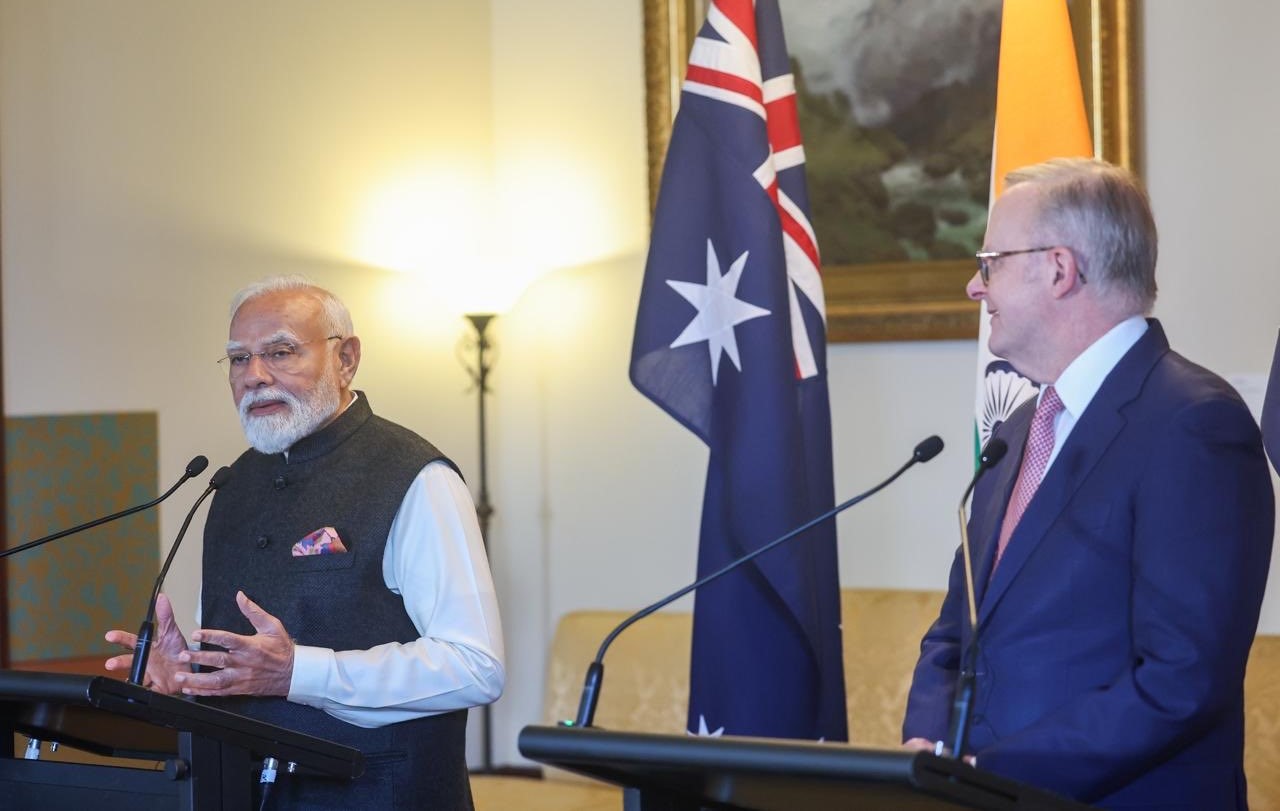
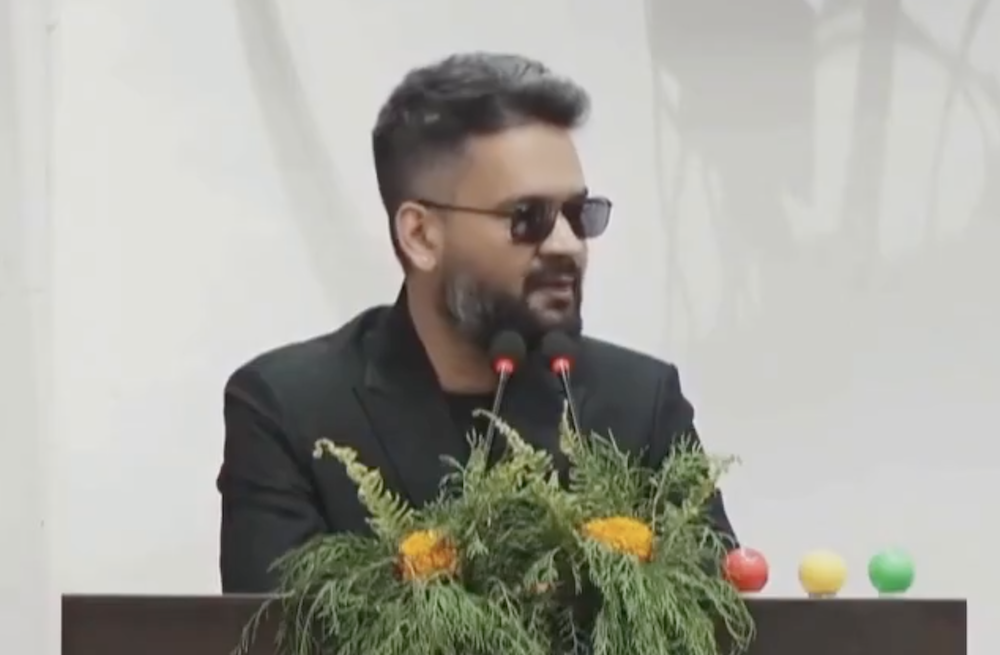
 Balendra Shah addressing the Nepalese parliament.
New Delhi: The Nepalese prime minister, Balendra Shah, has said his government will seek to resolve the country’s long-standing border dispute with India through “table talks” and diplomatic engagement, while indicating that the United Kingdom could also have a role in the process because of its colonial-era involvement in drawing Himalayan frontiers.
Addressing Nepal’s Parliament for the first time since taking office after the March elections, Shah, on Sunday, told his country’s lawmakers that all outstanding boundary issues with India, including the contentious Lipulekh–Limpiyadhura–Kalapani sector, would be addressed through dialogue and diplomacy rather than unilateral steps or escalation.
Shah said Kathmandu had already sent a diplomatic note to New Delhi on the issue and received a response, and that both sides had agreed to examine historical and technical records with the help of historians and surveyors from the two countries.
UK’s colonial-era role invoked
In his remarks, Shah argued that the United Kingdom should share an interest in the settlement because present-day boundary disputes stem from arrangements made while the British ruled the Indian subcontinent and concluded treaties with the then kingdom of Nepal.
He said that since “the problem was passed on to generations” when British India ended, Nepal had also raised the matter with London and expected that British archival material and historical maps could help both sides reach a mutually acceptable understanding.
Dispute over Lipulekh-Kalapani sector
The core of the recent dispute centres on the tri-junction area near Lipulekh, Kalapani and Limpiyadhura, where Nepal’s official position is that the Mahakali river, also known as the Kali, originates at Limpiyadhura and thus places the area within its territory.
In 2020, Nepal’s then government issued a revised political map depicting the Lipulekh–Kalapani–Limpiyadhura region as part of Nepal, a move India rejected as an artificial enlargement of territorial claims and inconsistent with past understandings that boundary differences would be handled through diplomatic mechanisms.
India has maintained that the areas in question are part of its territory and has repeatedly said that any outstanding boundary questions should be addressed through existing bilateral mechanisms and quiet diplomacy rather than public assertions or unilateral cartographic changes.
New Delhi has also underlined that the Lipulekh Pass has been used as a route for the Kailash–Manasarovar Yatra since 1954 and that this practice predates the current phase of the dispute, while insisting that Nepal’s expanded map is neither justified nor borne out by historical facts and evidence.
Nepal domestic debate
Shah’s comments that encroachment has occurred “on both sides” of the India–Nepal border have stirred debate at home, with opposition parties in Kathmandu asking him either to substantiate the claim or withdraw it, reflecting how boundary politics have become a sensitive domestic issue as well.
Nepal’s foreign ministry has since underlined that the prime minister was referring to cross-border occupation and disputes in no-man’s-land areas, and that joint technical teams from the two countries are already engaged on demarcation work along parts of the 1,770-km frontier.
India and Nepal share an open border, deep civilizational links and extensive movement of people for work, education and pilgrimage, which both sides publicly describe as adding to the strategic importance of maintaining a stable and clearly demarcated boundary.
Despite periodic tensions over maps and official statements, both governments continue to stress their commitment to managing differences through dialogue, and analysts in the region see Shah’s latest remarks as a signal that Kathmandu prefers to anchor the dispute in formal diplomatic channels rather than street politics.
Follow us on social media for quick updates, new photos, videos, and more.
X: https://x.com/indiasentinels
Facebook: https://facebook.com/indiasentinels
Instagram: https://instagram.com/indiasentinels
YouTube: https://youtube.com/indiasentinels
© India Sentinels 2026-27