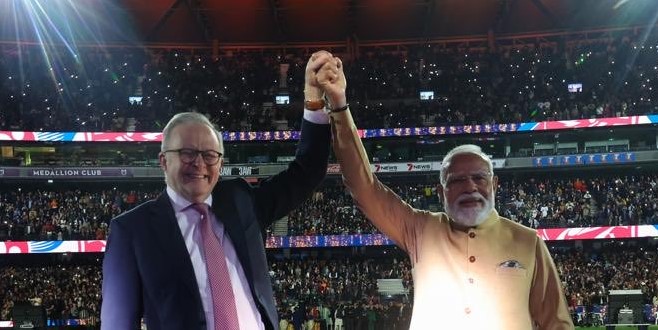
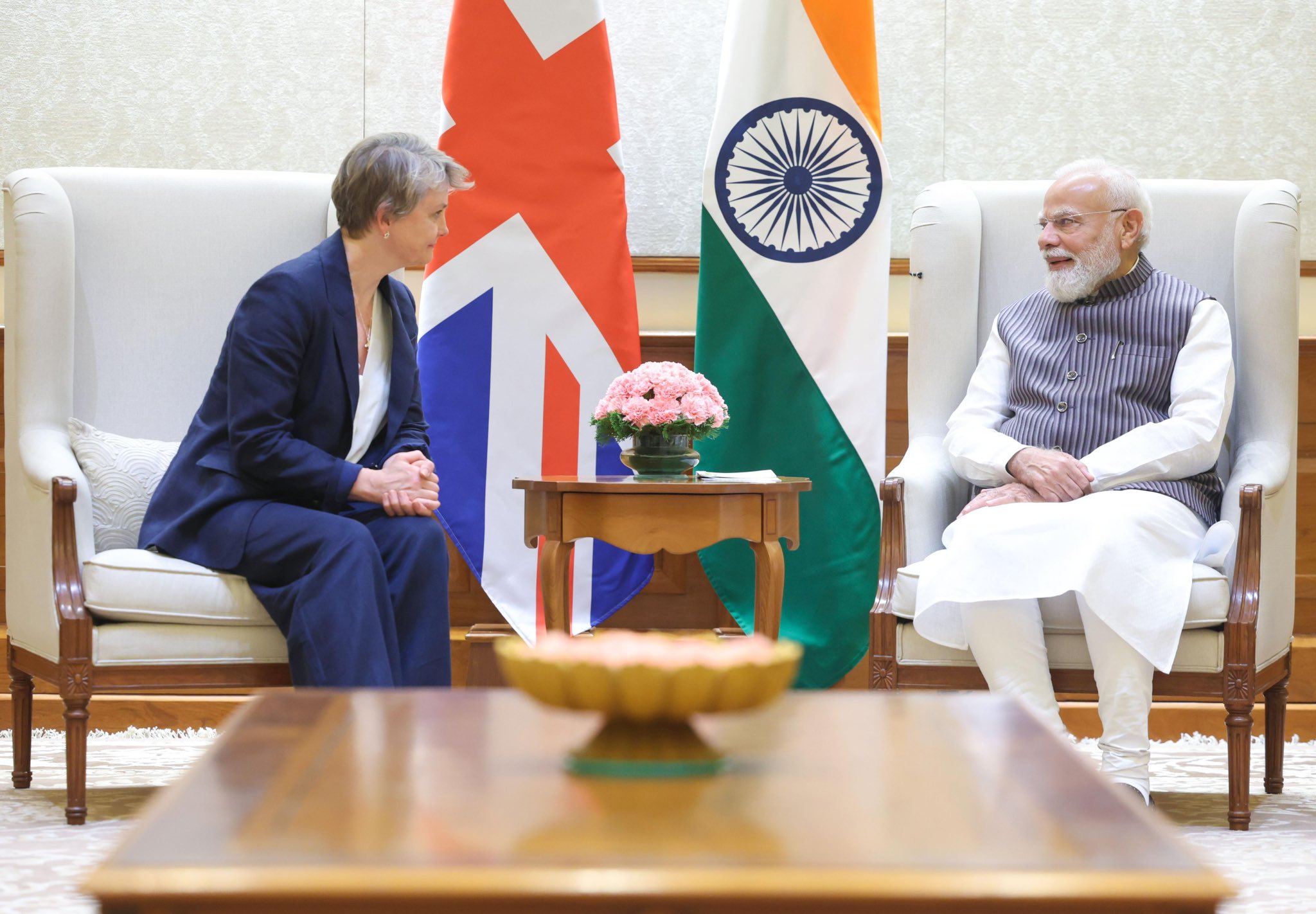
 Prime Minister Narendra Modi with UK foreign secretary Yvette Cooper (Photo: X/YvetteCooperMP)
New Delhi: UK foreign secretary Yvette Cooper concluded his visit to China and India Friday, prioritizing rebuilding ties that had grown strained under the previous Conservative administration. Cooper, who took over as foreign secretary in September 2025, succeeding David Lammy, was in Beijing on June Monday and Tuesday, then in New Delhi on Thursday and Friday.
Cooper met the prime minister, Narendra Modi; and the external affairs minister, S Jaishankar, with maritime security and critical minerals dominating the talks, which were held here in the national capital. The two sides jointly launched the Regional Maritime Security Centre of Excellence (RMSCE), a new institutional framework aimed at bolstering cooperation between Britain and India on protecting shipping lanes and responding to threats at sea.
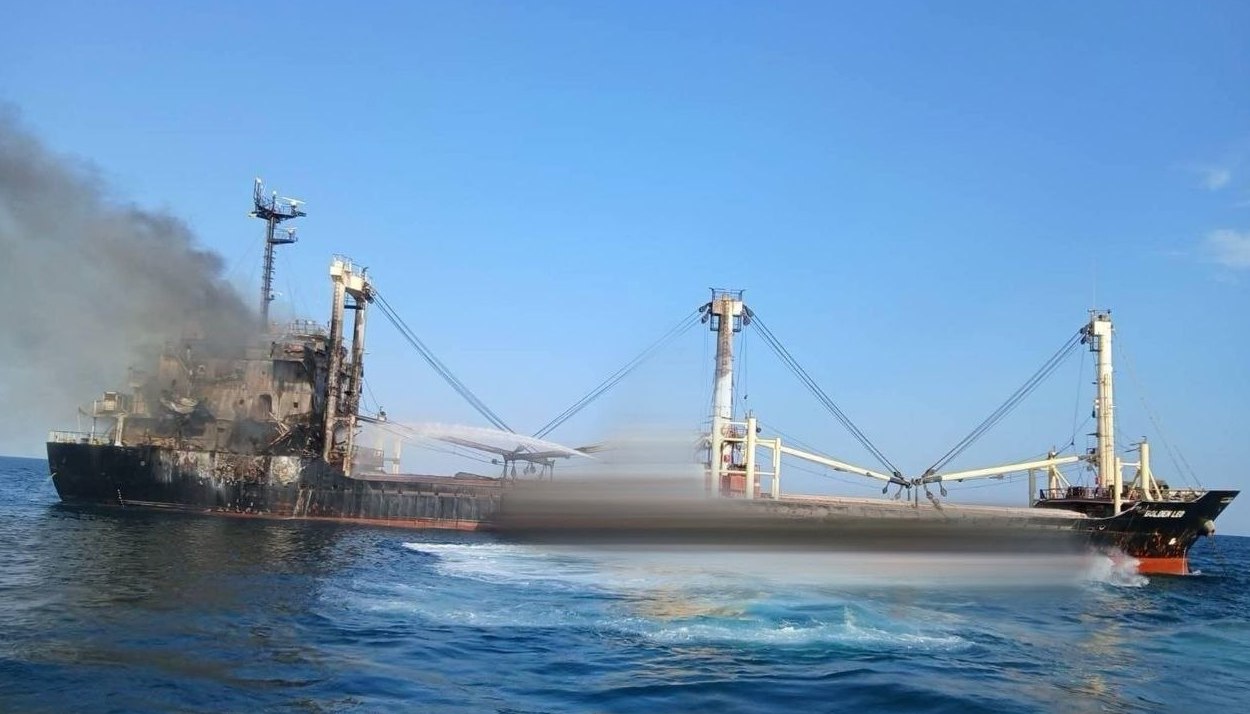
The Strait of Hormuz featured prominently, with both sides agreeing to work together to ease the disruption its partial closure has caused to international shipping.
Cooper also met the minister for coal and mines, G Kishan Reddy, for the launch of the Critical Minerals Global Supply Chain Observatory (GSCO). The GSCO is described as a flagship component of the UK-India Technology Security Initiative.
The tool uses AI to provide real-time data on global critical mineral flows and flag supply chain vulnerabilities. Critical minerals – used in electric vehicles, wind turbines, smartphones, and defence equipment – have become a central battleground in geoeconomic competition, with western governments scrambling to reduce dependence on single suppliers.
Read also: UK PM Keir Starmer’s India visit – Strategic partnership takes concrete shape
Under the GSCO arrangement, India will commit £1.2 million to establish a satellite observatory campus at the Indian Institute of Technology (IIT) in Dhanbad, in partnership with the University of Cambridge. The UK-India relationship has been on an upward trajectory since the two countries signed a comprehensive economic and trade agreement (CETA) last year, aimed at boosting bilateral trade and improving market access.
According to the 2026 India Meets Britain Tracker, trade between the two countries rose to £47.4 billion in 2025, an increase of 11.7 per cent year-on-year. However, implementation of the free trade deal has hit a snag over London’s new steel import curbs, a source of friction that neither side publicly addressed during Cooper’s visit.
Cooper’s engagements in New Delhi also built on the framework of the UK-India Vision 2035, the strategic roadmap that both governments have been using to deepen ties across defence, technology, health, and education.
Cooper in China
Earlier, when Cooper was in Beijing, she met the vice-president of China, Han Zheng; and the foreign minister, Wang Yi, on Tuesday, in talks that covered a broad range of security and economic concerns. She also participated in the 11th China-UK Strategic Dialogue. At the top of the agenda was the Strait of Hormuz, the narrow waterway through which roughly a fifth of global oil supplies pass. Cooper urged China to back efforts to reopen the strait to free navigation without tolls or charges.
She also pressed Wang to withdraw economic support for Russia’s war in Ukraine, calling for an immediate ceasefire and citing China's role as a permanent member of the UN security council. The two sides also discussed preventing nuclear proliferation in Iran, stabilizing the broader Middle East, ending the conflict in Sudan, and a coordinated international response to the Ebola outbreak in the Democratic Republic of the Congo.
A notable commercial outcome was a new partnership between British insurer Prudential plc and the UK’s National Innovation Centre for Ageing (NICA) to set up healthy-ageing hubs across China. The collaboration is intended to open commercial opportunities for British healthcare and life sciences companies in the Chinese market.
From Beijing, Cooper travelled to Shenzhen – the southern technology hub near Hong Kong – where she met senior executives from Chinese technology and artificial intelligence companies. She advocated for international standards on AI safety, arguing that the rapid pace of technological change made cross-border regulatory cooperation essential.
Read also: Become part of India’s growth story – Rajnath Singh to UK companies
Cooper's China visit comes five months after Starmer became the first British prime minister in eight years to visit China, during which he and Chinese president Xi Jinping pledged greater cooperation on trade, investment, and technology. Several senior ministers have since visited Beijing as part of Labour's push to stabilize bilateral ties.
Balancing act
The tour reflects a broader challenge for British foreign policy: maintaining substantive engagement with China – whose support or acquiescence Britain needs on almost every major global issue – while also deepening the strategic partnership with India, which has its own complex, and often fraught, relationship with Beijing.
Cooper did not shy away from the contradiction, telling reporters during the visit: “We're going to be engaging with governments that have different views from us on things. But we can also engage with, work with, and strengthen partnerships with countries at the same time as talking through and engaging on those disagreements.”
From New Delhi’s perspective, Cooper’s visit is one of several recent signals from major western powers seeking closer ties with New Delhi on maritime security and supply chain resilience.
France’s foreign minister, Jean-Noël Barrot, separately spoke with Jaishankar in March 2026 on restoring freedom of navigation in the Strait of Hormuz.
Follow us on social media for quick updates, new photos, videos, and more.
X: https://x.com/indiasentinels
Facebook: https://facebook.com/indiasentinels
Instagram: https://instagram.com/indiasentinels
YouTube: https://youtube.com/indiasentinels
© India Sentinels 2026-27