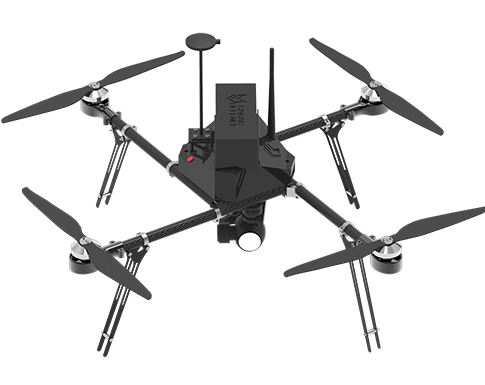
New Delhi: The Ministry of Defence has floated a request for information (RFI) for tactical multi-copter surveillance drones meant to bolster security at naval bases and other sensitive installations. It marks the Indian Navy’s first formal move to induct a dedicated unmanned system for perimeter defence on land.
The procurement, structured under the Buy (Indian-IDDM) category of the Defence Acquisition Procedure (DAP) 2020, requires vendors to source at least half their content domestically. The Navy is looking for a “spotter” drone capable of persistent aerial watch, quick threat detection and sharper situational awareness around facilities that have traditionally relied on fixed observation posts and foot patrols.
The system envisaged has two parts: a vertically launched multi-copter carrying a stabilized electro-optical/infrared camera, and a portable ground control station.
The camera is expected to offer a 360-degree field of view, track more than 30 targets at once, and combine 30x optical, 2x digital and 6x infrared zoom for clear imagery by day and night.
The ground station would include a rugged toughbook computer, a joystick controller, radio equipment, spare batteries and a storage case, letting operators fly the drone even from a moving vehicle or vessel.
Operationally, the specifications are demanding. The drone must fly in all-weather maritime conditions, including rain, up to 2,000 feet, at a cruising speed of at least 40 knots, with a 20km radius and at least two hours of endurance while carrying its camera payload.
It must resist jamming, launch and land on its own in winds up to 30 knots, and return automatically if it loses contact, runs low on battery or is jammed.
The Navy has also asked for satellite-based geofencing, an encrypted datalink good for 30km of line-of-sight range, and the ability to pass control between multiple ground stations mid-flight.
The requirement fits into a wider pattern. The Army issued a similar call earlier this year for drone-interception systems following cross-border drone incidents, while the navy separately sought next-generation expendable aerial targets for live-fire training.
The Navy already operates about 60 ship-launched spotter drones built by Mumbai-based Sagar Defence Engineering, used for anti-piracy and surveillance missions from warships including INS Vikrant; this RFI would extend a similar concept ashore, to bases rather than ships.
The programme sits within the government’s Atmanirbhar Bharat push to reduce dependence on imported defence equipment, and would add to the Navy’s expanding fleet of indigenous unmanned systems.