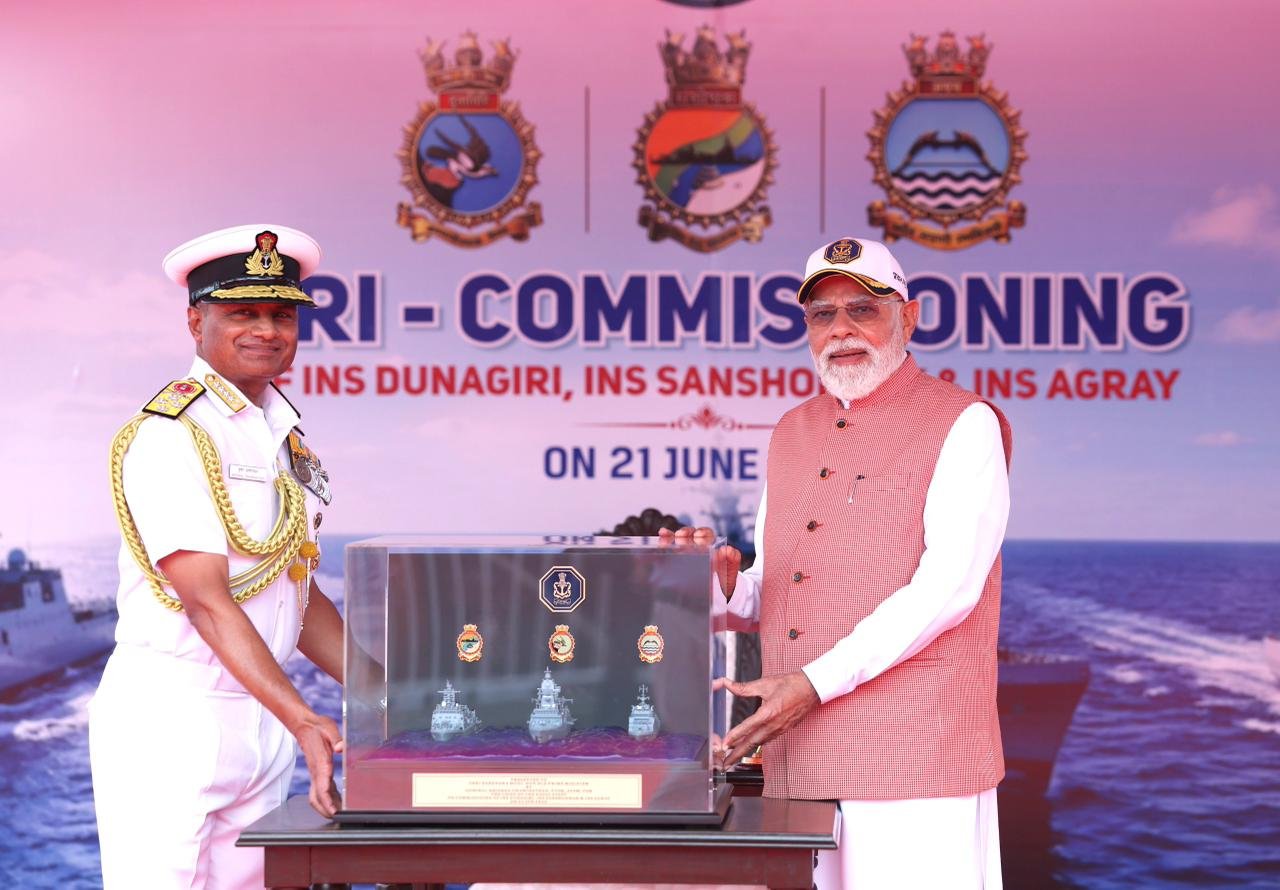
 Prime Minister Narendra Modi and Indian Navy Chief Admiral K Swaminathan (L) during commissioning of three vessels (Photo: Indian Navy)
New Delhi/Kolkata: In only the second such ceremony in recent years, the prime minister, Narendra Modi, on Sunday commissioned three frontline naval vessels into the Indian Navy simultaneously at Kolkata’s Syama Prasad Mookerjee Port in West Bengal.
The vessels were INS Dunagiri, a Nilgiri-class stealth guided-missile frigate; INS Sanshodhak, a large survey vessel; and INS Agray, an anti-submarine warfare shallow-water craft. These vessels were designed by the Indian Navy’s Warship Design Bureau and built by Garden Reach Shipbuilders & Engineers (GRSE) in Kolkata.
The occasion also coincided with World Hydrography Day, lending symbolic weight to the induction of INS Sanshodhak.
From buyer to builder
Addressing the gathering, Modi pointed to the country’s changed position in global defence markets. For decades, he said, India had been among the world’s largest arms importers. Since 2014, a deliberate policy shift had redirected investment toward domestic manufacturing, and the results were visible in the rising value of defence exports, which he said had grown from about ₹40,000 crore to ₹1.80 lakh crore.
“India no longer wants to remain a mere buyer in the defence sector. The recognition of our defence capabilities must not be that of a buyer in a world market, but of our self-reliance,” Modi said, framing the inductions as evidence of progress toward a ‘Viksit Bharat’ (developed India).
INS Dunagiri: a stealth frigate that revives a cold-war name
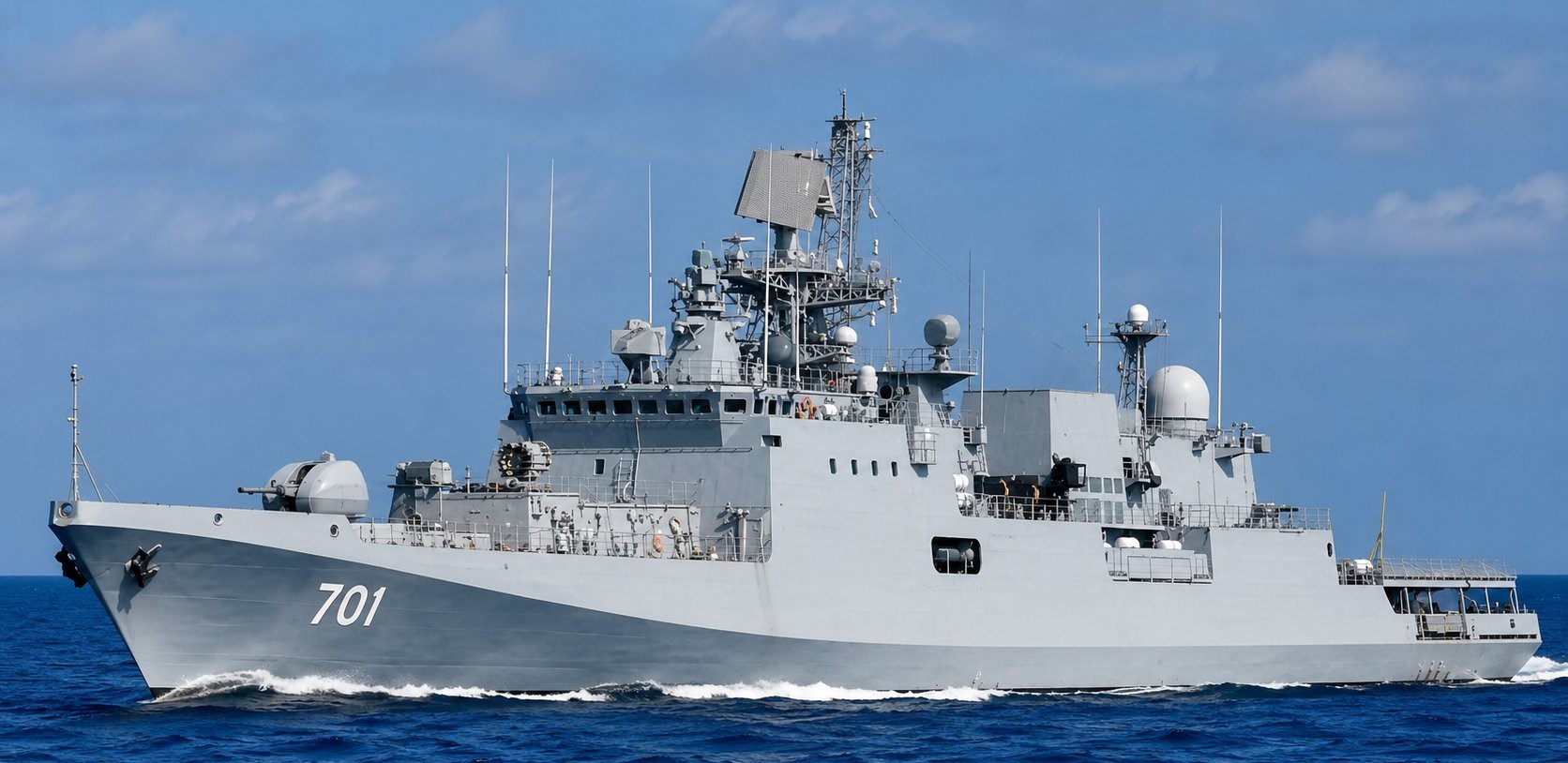
INS Dunagiri is the fifth ship of the Nilgiri-class (Project 17A) stealth frigates and the second of the class to be built at GRSE. Its name carries a previous life: an earlier INS Dunagiri, a steam-powered Leander-class frigate acquired under a British design licence, served from May 1977 until October 2010.
The contrast between the two ships captures India’s journey in shipbuilding. The old vessel displaced 2,692 tonnes and was 113 metres long; the new one displaces 6,670 tonnes and stretches 149 metres, with a beam of 17.8 metres.
The new Dunagiri is built for a fundamentally different kind of warfare. Its hull incorporates radar-absorbent materials and a geometry designed to reduce its radar cross-section sharply, what one official described as being “made to act like a ghost on the water.”
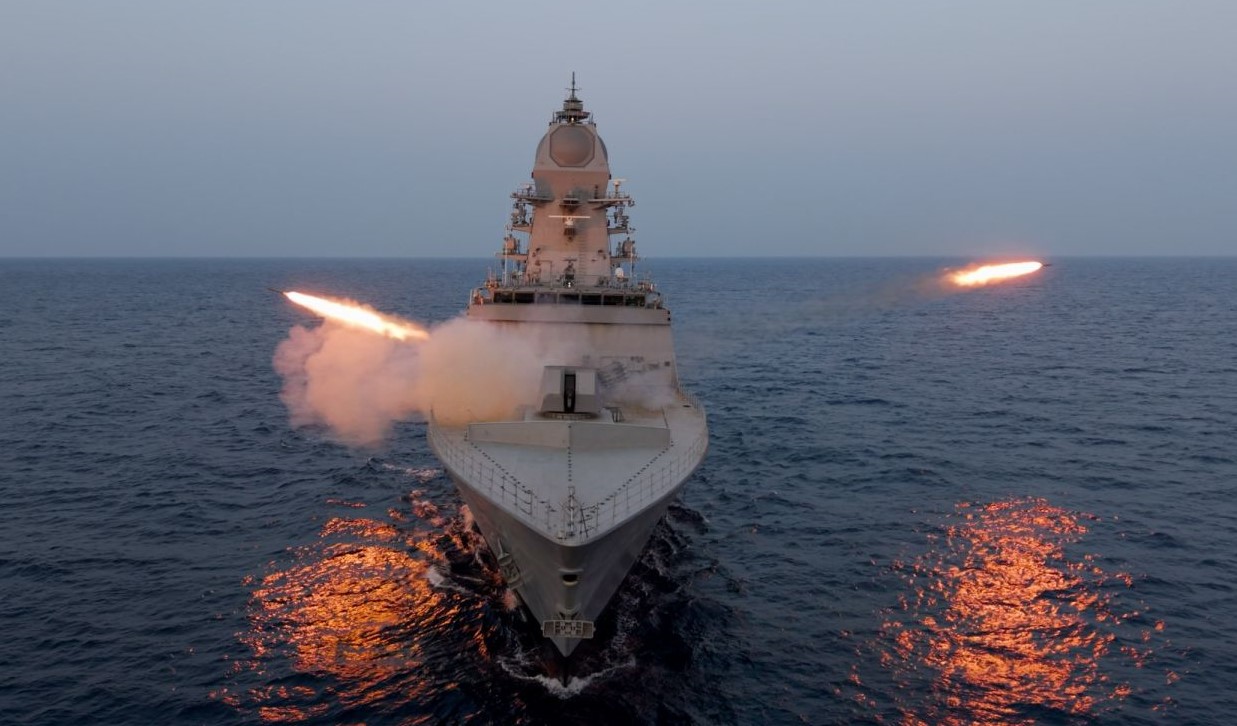
The frigate carries BrahMos supersonic cruise missiles for long-range surface strikes, a Vertical Launch System loaded with medium-range surface-to-air missiles (MRSAMs) for fleet air defence, a 127 mm main gun, a 76 mm Super Rapid Gun Mount and twin 12.7 mm stabilized remote-controlled guns.
The ship can also embark two multi-role helicopters, the MH-60R Seahawk or the HAL Advanced Light Helicopter, and is fitted with the HUMSA-NG sonar suite and the Shakti electronic warfare system.
GRSE delivered the vessel in 80 months, improving on the 93 months taken to build INS Nilgiri, the first ship of the class, commissioned in January 2025.
Two more frigates under the same project, INS Mahendragiri and INS Vindhyagiri, are still to enter service.
INS Dunagiri will join the Eastern Fleet under the Eastern Naval Command, whose area of responsibility covers the Bay of Bengal and the broader Indo-Pacific.
INS Sanshodhak: mapping the ocean floor
INS Sanshodhak is the fourth and final vessel under the Sandhayak-class survey ship programme. At 110 metres long and approximately 3,300 tonnes displacement, it is equipped with autonomous underwater vehicles (AUVs), remotely operated vehicles (ROVs), multi-beam echo sounders and sonar systems for detailed seabed mapping and the production of nautical charts used by both the Navy and civilian shipping.
The data it collects feeds into India’s blue economy agenda, covering the sustainable exploitation of ocean resources, marine biotechnology and offshore energy.
The vessel also has a secondary role in humanitarian assistance and disaster relief, and can be adapted for specialized operations during emergencies.
Its commission on World Hydrography Day was noted by officials as particularly fitting, since accurate hydrographic data underpins safe navigation, fisheries management and the demarcation of maritime zones.
INS Agray: hunting submarines in shallow water
INS Agray is the fifth vessel under the 16-ship Arnala-class anti-submarine warfare shallow-water craft (ASW-SWC) programme, a project that was approved in 2013 specifically to fill a gap in India’s ability to detect and engage submarines operating in coastal and littoral zones.
The craft measures approximately 77.6 metres in length and displaces around 900 tonnes. It uses waterjet propulsion for rapid manoeuvring in confined waters and carries lightweight torpedoes, indigenous anti-submarine rocket launchers and advanced sonar systems.
The programme’s emphasis on indigenous equipment is consistent with the broader procurement policy: where the larger frigates use significant but not exclusive domestic content, the Arnala-class vessels push the boundary of what Indian industry can produce for specialist anti-submarine roles.
Context: a second triple induction in 18 months
Sunday’s event is only the second time in recent years that three major naval platforms have been commissioned together. The previous occasion was in January 2025, when INS Surat, INS Nilgiri and INS Vaghsheer were inducted simultaneously in Mumbai.
Between those two ceremonies, the Navy also commissioned INS Udaygiri and INS Himgiri together in August 2025, the first time two frontline surface combatants built at different shipyards, Mazagon Dock Shipbuilders in Mumbai and GRSE in Kolkata, entered service on the same day.
INS Taragiri, the fourth Project 17A frigate, was commissioned in April 2026 at Visakhapatnam.
Modi cited the momentum generated since the commissioning of the indigenously built aircraft carrier INS Vikrant in 2022, describing Sunday’s inductions as an extension of that trajectory. The Navy currently has over 40 indigenous ships inducted in recent years and dozens more under various stages of construction across Indian shipyards.
The commissioning also increases GRSE’s total warship deliveries to 118 vessels, including 80 supplied to the Indian Navy, cementing its position as one of the country’s most productive defence shipyards.