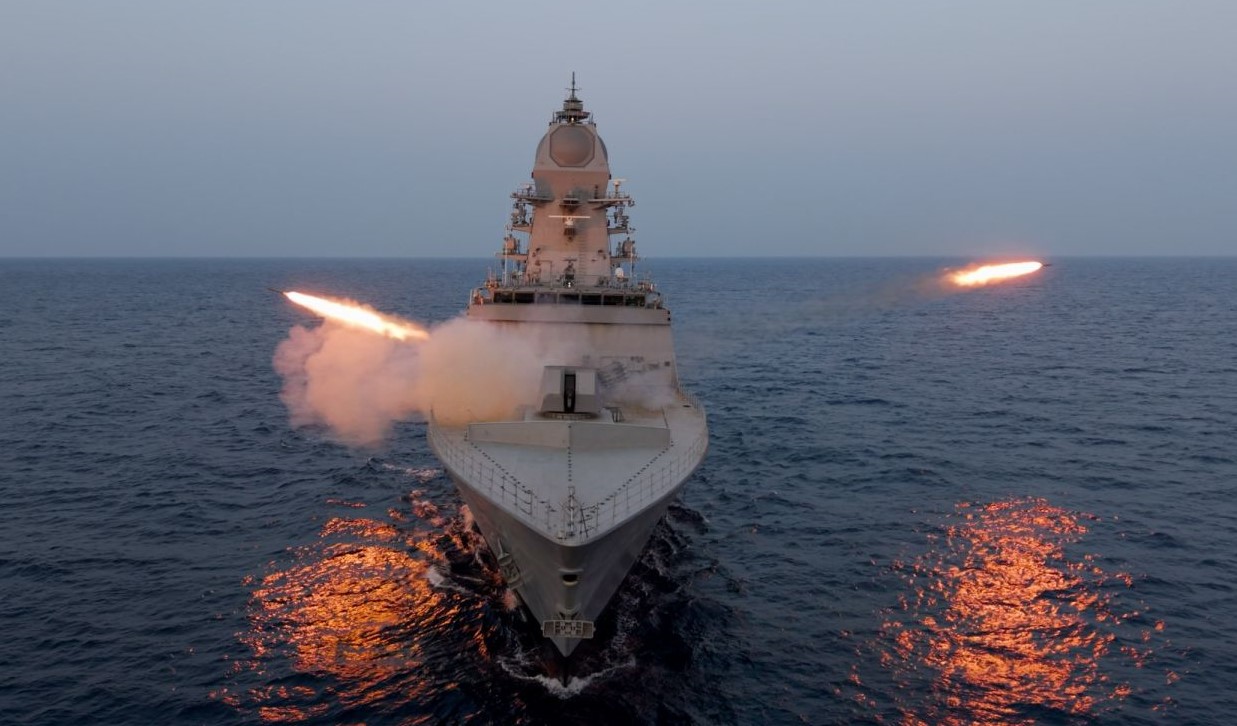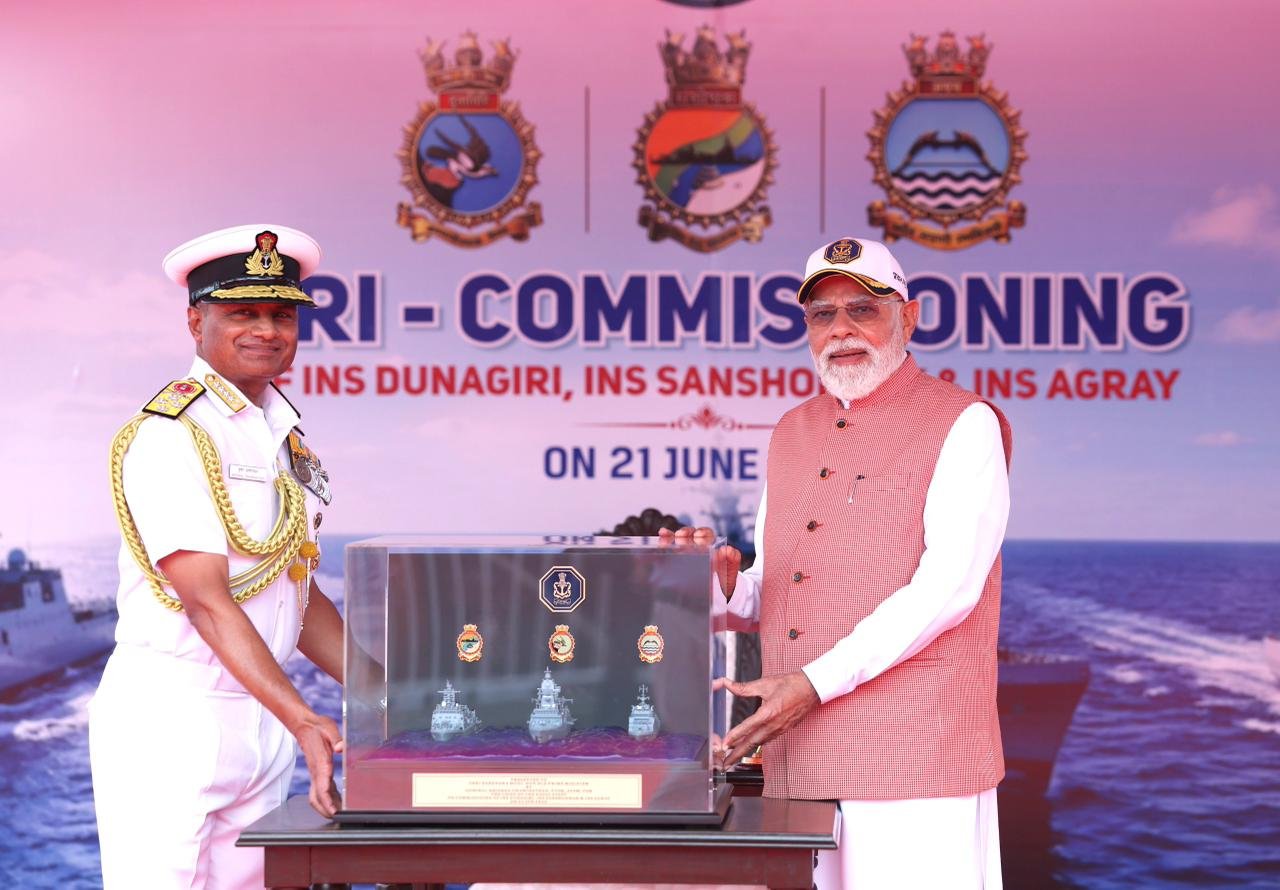
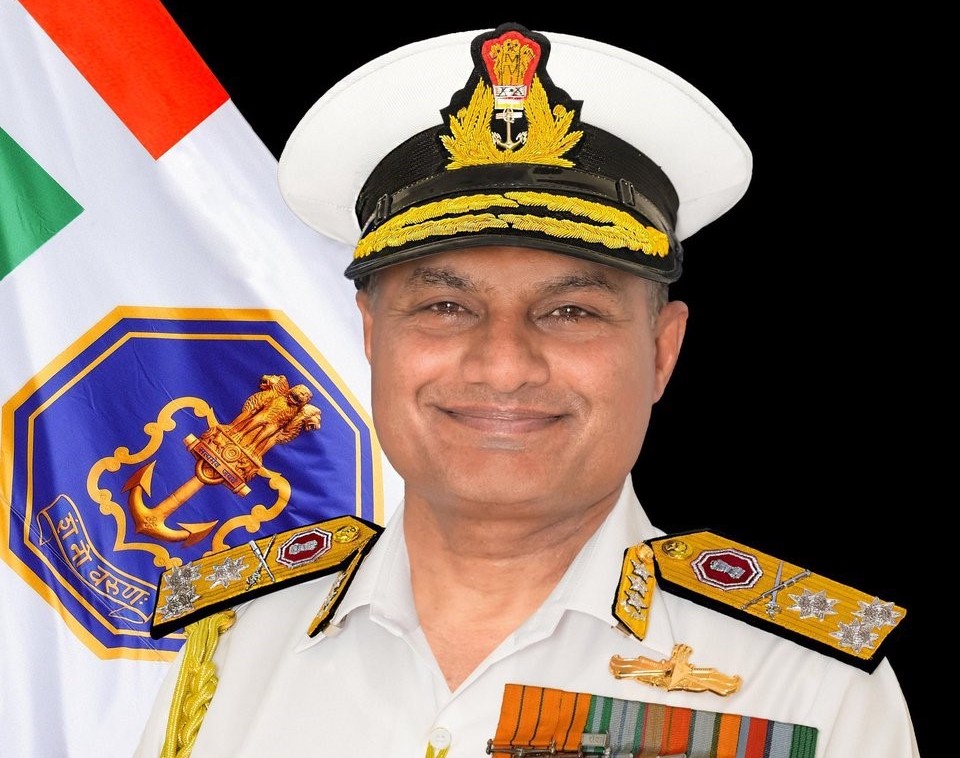
 VAdm Swaminathan currently serves as FOC-in-C of the Western Naval Command (Photo: MoD)
New Delhi: The government has appointed Vice Admiral Krishna Swaminathan as the next chief of naval staff, setting in motion a leadership transition at the top of the Indian Navy. He will succeed Admiral Dinesh Kumar Tripathi, who retires on May 31, 2026.
VAdm Swaminathan, currently serving as the flag officer commanding in chief of the Western Naval Command – a charge he assumed on July 31, 2025 – is among the most decorated and academically credentialed officers in the service.
He was commissioned into the Indian Navy on July 1, 1987 and has spent nearly four decades building expertise in communication and electronic warfare, a domain of growing strategic importance as maritime security becomes increasingly technology-driven.
A career defined by sea command and staff leadership
VAdm Swaminathan has commanded some of the Navy’s most significant vessels: the missile boats INS Vidyut and INS Vinash, the missile corvette INS Kulish, the guided missile destroyer INS Mysore, and the aircraft carrier INS Vikramaditya – India’s principal carrier at the time of his tenure.
Command of the carrier is among the most coveted postings in the Navy, and it placed him at the centre of the service’s carrier aviation capability.
After his promotion to the rank of rear admiral, he served as chief staff officer (training) at the Southern Naval Command in Kochi, where he shaped training frameworks across the Navy.
He also led the establishment of the Indian Naval Safety Team, an institutional body charged with overseeing operational safety across all verticals of the service – a responsibility that has grown in relevance amid an expansion of the Navy’s assets and operations.
He subsequently headed the Navy’s Work Up Organisation as flag officer sea training, then commanded the Western Fleet – known as the sword arm of the Navy, responsible for the country’s western maritime frontier.
Following that command, he was appointed flag officer of the offshore defence advisory group, doubling as adviser on offshore security and defence to the government of India.
On elevation to vice admiral, he served successively as chief of staff of the Western Naval Command, controller of personnel services, and chief of personnel at Naval Headquarters.
Immediately before his Western Naval Command appointment, he was vice-chief of naval staff – the second-highest position in the Navy’s hierarchy – making him a natural candidate to assume the top post.
Decorated officer, strong academic record
Swaminathan is a recipient of the Param Vishisht Seva Medal, the Ati Vishisht Seva Medal, and the Vishisht Seva Medal – the three highest peacetime gallantry-adjacent honours for distinguished service in the Indian armed forces.
His academic qualifications are wide-ranging even by the standards of senior military officers: a BSc from Jawaharlal Nehru University in New Delhi; an MSc in telecommunications from Cochin University of Science and Technology in Kochi; an MA in defence studies from King’s College London; an MPhil in strategic studies from Mumbai University; and a PhD in international studies, also from Mumbai University.
He is an alumnus of the National Defence Academy in Khadakwasla, the Joint Services Command and Staff College in Shrivenham in the United Kingdom, the College of Naval Warfare at Karanja, and the United States Naval War College in Newport, Rhode Island.
The appointment comes at a period of heightened naval activity for India. The service has been expanding its blue-water capabilities, with the indigenous aircraft carrier INS Vikrant commissioned in 2022 and a growing fleet of nuclear-powered submarines in development.
India’s maritime security concerns span the Arabian Sea to the west and the Bay of Bengal and Indian Ocean to the east and south, with Chinese naval presence in the region having drawn sustained attention from strategic planners in New Delhi.
Swaminathan’s background in electronic warfare and communication is particularly relevant in this context, as the Navy accelerates its integration of network-centric warfare capabilities, drone systems, and satellite-linked command infrastructure.
His tenure as vice-chief would have given him direct exposure to the policy and procurement decisions that will shape the fleet over the coming decade.